Charming Mediterranean Patio with Tiled Pool & Rustic Flair
A charming Mediterranean-style outdoor living space offers a small swimming pool adorned with intricate turquoise mosaic tiles that shimmer under the sun, creating a cool and inviting ambiance. The combination of stone floors with colorful pebble and tile inlays around the pool complements the rustic stone façade of the home, tying the design together seamlessly.

The exterior features light-colored stones with warm accents, while green vines with red flowers cascade over an arched doorway. Inside, black-framed glass doors open to a cozy seating area with wicker furniture, a white sofa, a leather pouf, and warm pendant lighting, blending comfort with style.
Terracotta pots brimming with vibrant flowers border the poolside, adding lively color without overwhelming the space. This setup evokes a serene Mediterranean retreat, ideal for relaxed afternoons spent enjoying both indoor and outdoor living.
Mediterranean-Style Small Swimming Pool Design
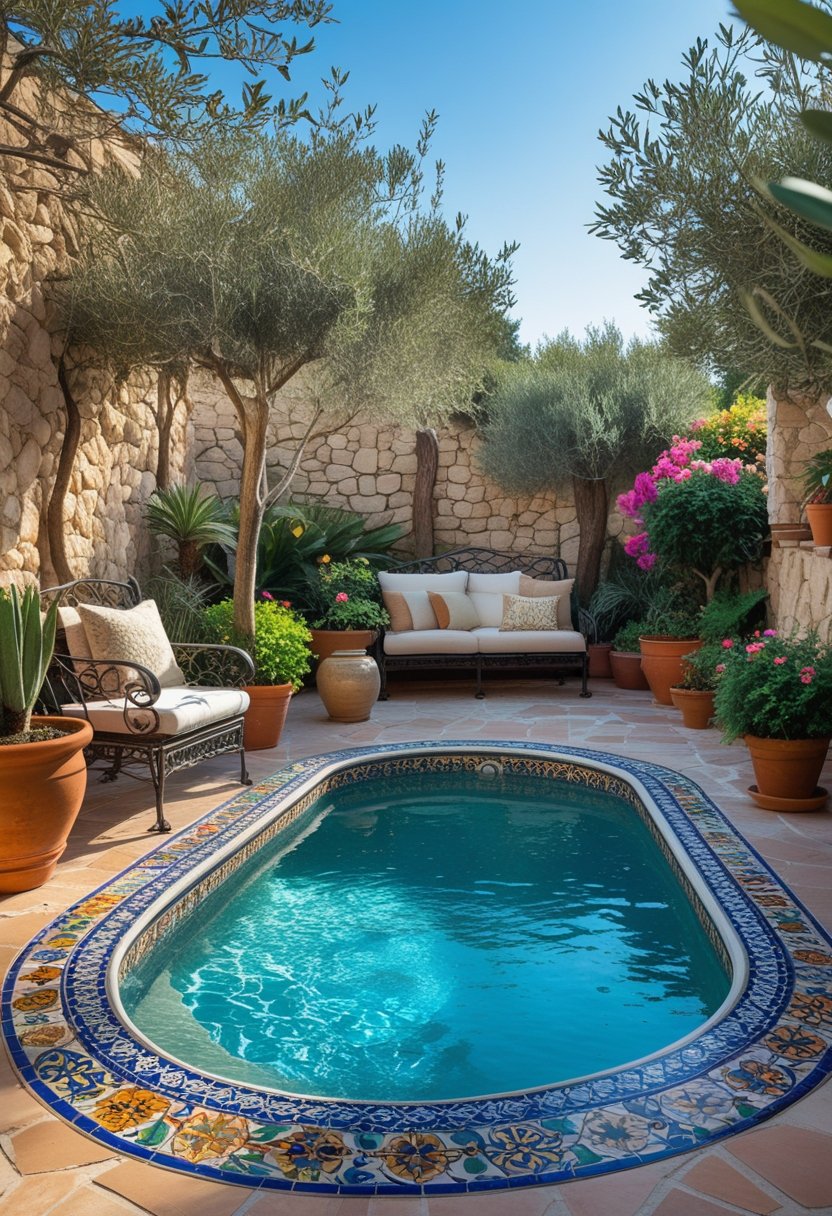
The small Mediterranean-style pool centers on detailed tile work, natural stone elements, and an atmosphere shaped by light and color. The design balances decorative craftsmanship with functional outdoor living elements to create a cohesive backyard setting.
Turquoise Mosaic Tile Selection
The pool’s defining feature is the intricate turquoise mosaic tile. These tiles use varied shades of blue and green to mimic the hues of the Mediterranean Sea. The small scale of the tiles allows for complex patterns that add texture and depth to the water’s surface.
Mosaic tiles are chosen not only for their aesthetic but also for durability and slip resistance. The glossy finish reflects sunlight, creating a shimmering effect that enhances the pool’s refreshing appeal. This tile choice complements Mediterranean outdoor living by evoking authentic coastal water features common in the region.
Stone Flooring with Pebble and Tile Inlays
Surrounding the pool is stone flooring that integrates colorful pebble and tile inlays. The stone has a rustic, weathered look that matches the house’s light-colored stone façade with warm accents. This flooring offers both durability and natural texture.
The pebbles and tiles add subtle color and pattern contrasts without overwhelming the space. Their placement is often arranged in geometric or freeform shapes, echoing traditional Mediterranean craftsmanship. This combination maintains a seamless transition from pool to patio while supporting outdoor activities.
Poolside Ambiance and Sunlight Effects
Sunlight interacts with the pool and surrounding surfaces to shape the outdoor ambiance. The turquoise tiles reflect light in varying intensities throughout the day, enhancing the pool’s inviting appearance. Light filters through vines draping the arched doorway, casting natural shadows onto stone paths.
Terracotta pots with orange and red flowers contribute vibrant color accents that contrast with stone and tile tones. The warm sunlight combined with natural materials creates an atmosphere of tranquility and understated elegance, aligning with the relaxed feel of a Mediterranean backyard retreat.
Authentic Mediterranean Home Exterior Features
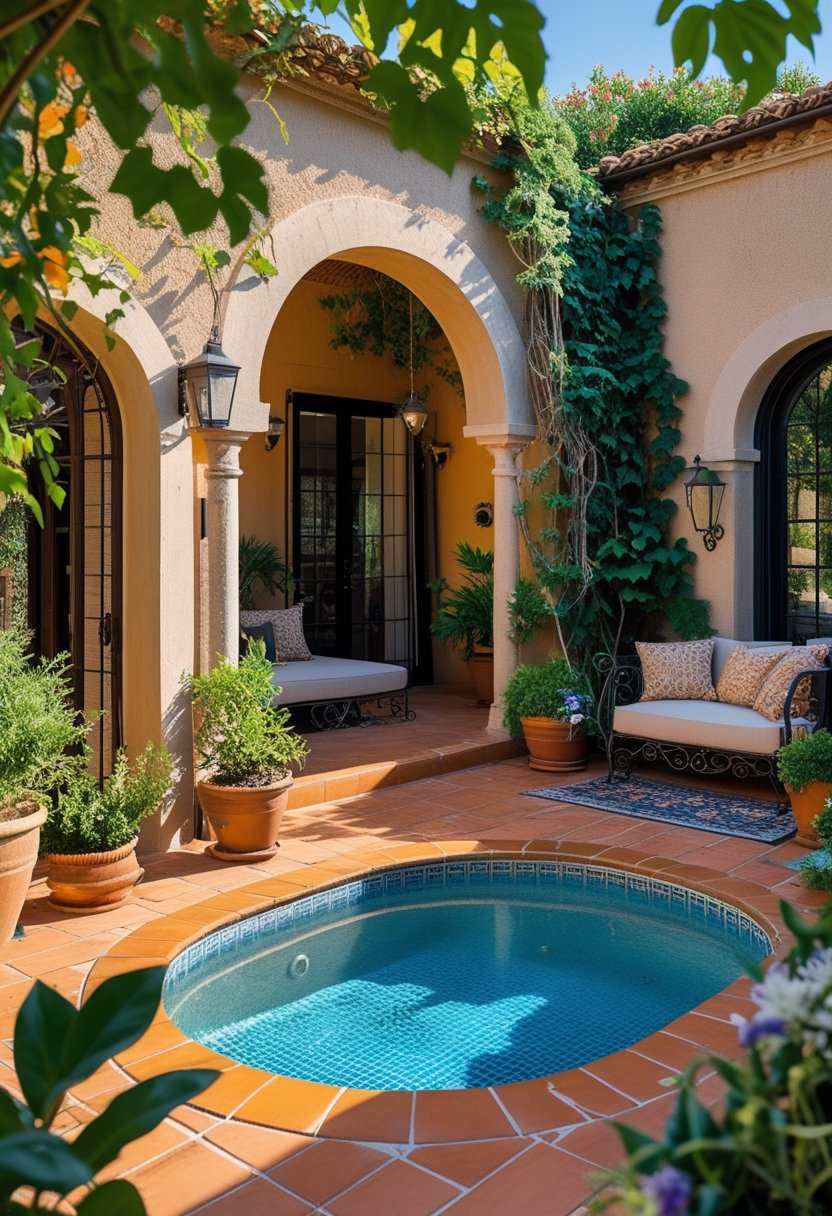
Mediterranean home exteriors emphasize natural materials and architectural details that create warmth and character. The use of light-colored stone walls, elegantly shaped doorways, and thriving greenery adds depth and charm, making the outdoor space both inviting and authentic.
Light-Colored Stone Walls and Rustic Finishes
Walls crafted from light-colored stones form the foundation of Mediterranean exteriors. These stones often have warm, earthy undertones that blend with natural light to create a soft, welcoming appearance. The rustic texture of the stones adds an aged, handcrafted quality, enhancing the sense of permanence and tradition.
Finishes tend to embrace imperfections rather than hide them, celebrating the natural character of the materials. This approach helps the walls harmonize with other exterior elements, such as terracotta roofing and stone floors. The result is a balanced aesthetic that is both sturdy and elegant, serving as a timeless backdrop for outdoor living.
Arched Doorways and Black-Framed Glass Doors
Arched doorways are key visual elements common in Mediterranean architecture. Their gentle curves create a sense of grace and softness. These arches often frame entryways lined with climbing plants and vibrant bougainvillea, reinforcing the organic connection between the home and its surroundings.
Paired with these arches, black-framed glass doors introduce a contemporary touch while maintaining classic appeal. The contrast of black metal against the lighter stone walls draws attention to the transition between indoor and outdoor spaces. When opened wide, they invite fresh air and natural light, enhancing the flow and making indoor areas feel like an extension of the outdoor environment.
Draping Green Vines with Red Flowers
Climbing plants are essential to enriching Mediterranean exteriors. Lush green vines, often adorned with small red flowers, climb walls and wrap around door frames. These vines create depth and soften the hard edges of stone surfaces.
Bougainvillea is a popular choice for accents due to its vibrant, multicolored blooms and vigorous growth. Its presence adds striking color contrasts that enliven the façade. These plants require minimal maintenance once established and contribute both privacy and shade, reinforcing the feeling of a secluded retreat.
Together, these features visually and functionally complete the authentic Mediterranean outdoor atmosphere.
Inviting Indoor-Outdoor Living Flow
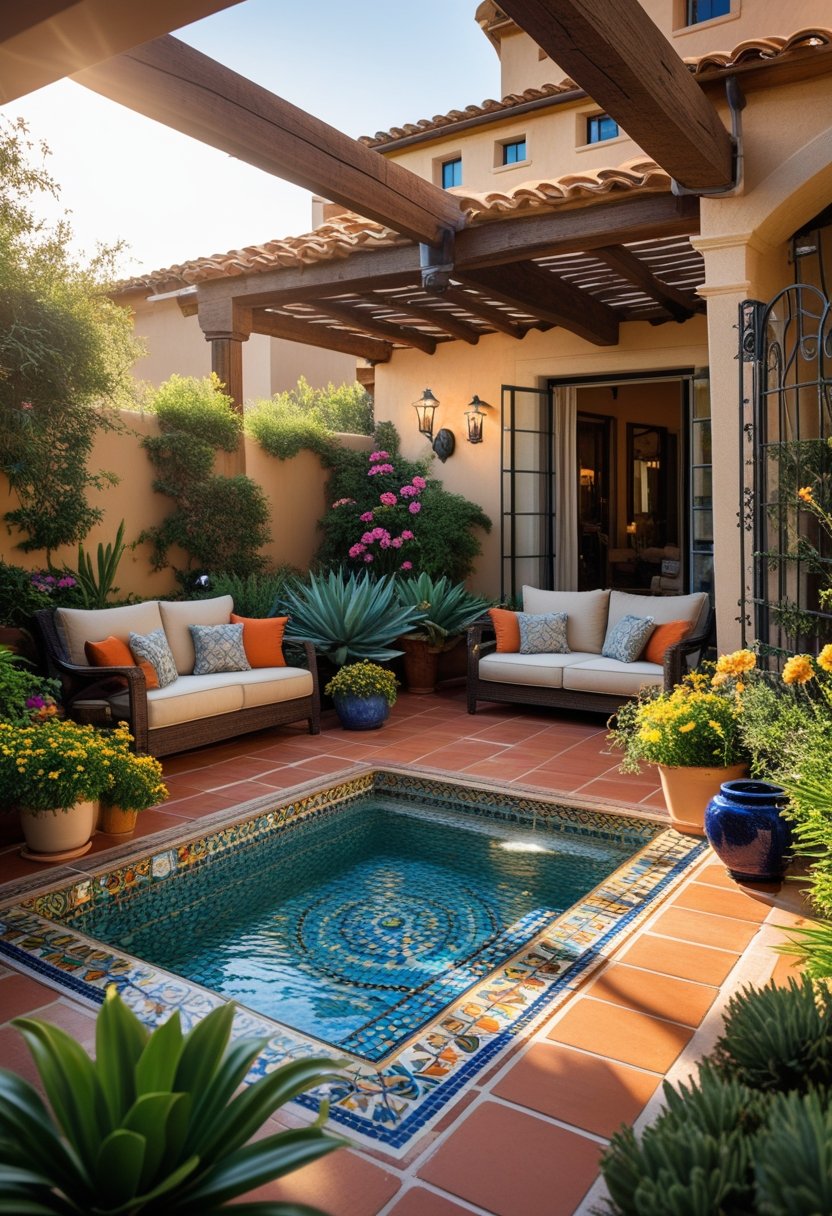
This Mediterranean outdoor living space balances style and function through carefully chosen furniture, thoughtful indoor seating, and effective lighting. Each element contributes to a smooth transition between the interior and exterior while enhancing comfort and visual appeal.
Wicker and Rattan Outdoor Furniture Ideas
Wicker and rattan outdoor furniture suits Mediterranean-style spaces by offering a natural, breathable texture that complements stone floors and lush greenery. These materials are lightweight yet durable, making them ideal for flexible outdoor arrangements.
Built-in seating can be combined with standalone wicker pieces to maximize seating without overwhelming the space. Wicker armchairs and loveseats paired with cushions in neutral tones maintain an inviting yet understated look.
Incorporating rattan coffee tables or side tables adds both practicality and aesthetic harmony. Natural fibers also weather well in open-air settings, ensuring longevity and ease of maintenance for outdoor furniture collections.
Cozy Indoor Seating Area and Accents
Inside, the seating focuses on comfort and simplicity, using a white sofa with clean lines that contrasts against darker elements like a leather pouf. This contrast grounds the space while keeping it warm and welcoming.
Positioned close to the black-framed glass doors, the seating area creates an immediate visual and physical flow to the poolside. The choice of wicker furniture inside echoes the outdoor style, reinforcing the connection between spaces.
Minimalist decor with textured cushions or throws enhances coziness without cluttering. The cohesive use of materials and color keeps the indoor area from feeling detached, inviting occupants to move freely between inside and out.
Enhancing Comfort with Pendant Lighting
Pendant lighting adds focused warmth and intimacy to the indoor seating area. Warm-toned bulbs create soft ambient light that contrasts well with natural daylight outdoors.
Suspended at varying heights, pendant lights can draw attention to seating clusters, defining zones within an open layout. This layering of light allows for atmospheric versatility, suitable for both day use and evening relaxation.
Selecting fixtures with black or bronze finishes complements the home’s rustic stone façade, while maintaining a clean, modern silhouette. Effective lighting balances functionality with ambiance, making the indoor space feel both practical and inviting after sunset.
Colorful Mediterranean Plantings and Greenery
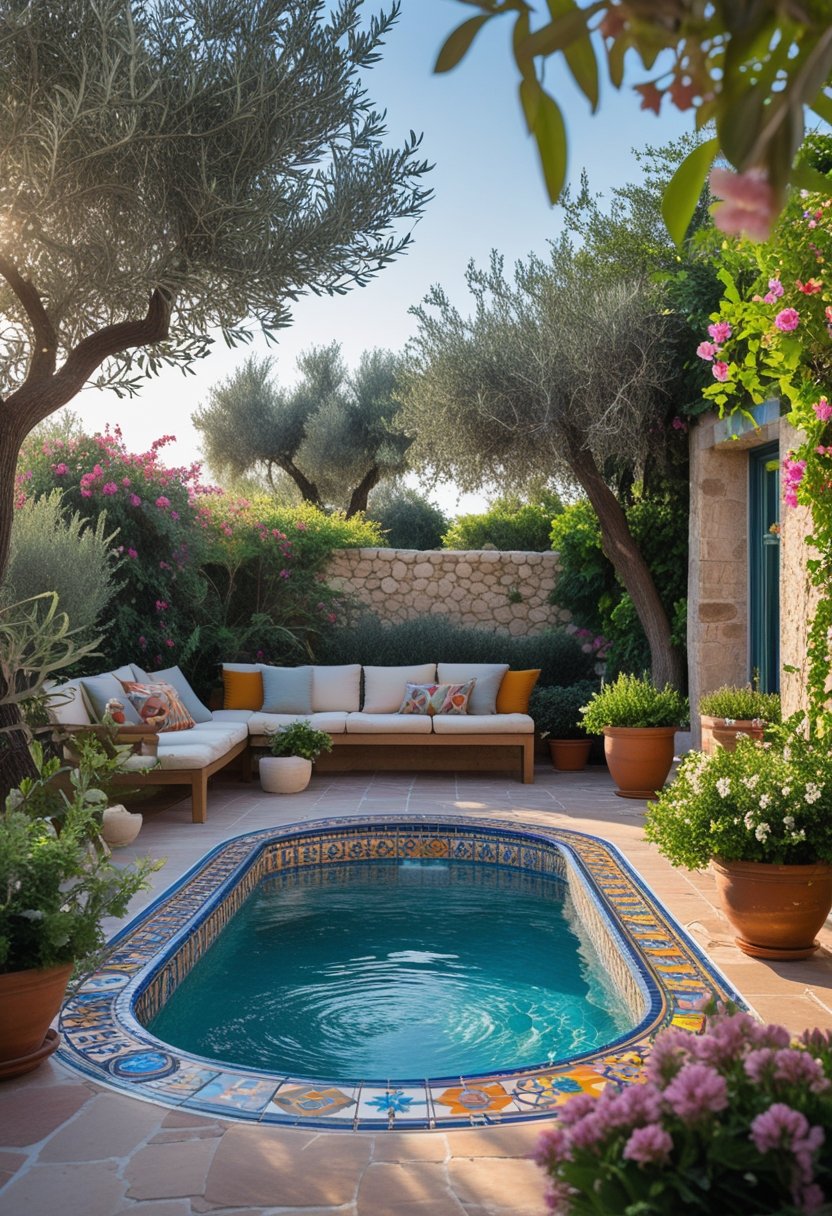
A Mediterranean outdoor space thrives on a mix of bold floral colors, rugged greenery, and classic pottery. Careful selection of plants and containers creates dimension and interest while complementing rustic architectural elements and textured surfaces.
Terracotta Pots for Vibrant Floral Displays
Terracotta pots are essential to Mediterranean garden style, offering porous warmth that benefits plant health. Their earthy tones contrast beautifully with vibrant flowers, making them perfect vessels for bold color accents.
Bright orange and red flowers planted in these pots bring an immediate burst of color that livens stone patios and pathways. The natural clay of terracotta also ages beautifully, developing a patina that adds character over time.
Grouped terracotta pots create defined floral clusters that can be moved to adjust the garden’s layout with seasonal flowering cycles. These pots work well on pool decks, steps, or around seating areas, framing spaces with lively color.
Bougainvillea, Olive Trees, and Grapevines
Bougainvillea is a signature Mediterranean plant, valued for its vibrant bracts and drought tolerance. It often climbs arches or fences, where its bright magenta flowers contrast sharply against stone walls.
Olive trees contribute texture and shade with their silvery-green leaves. Their gnarled trunks provide visual weight, grounding a garden with a timeless Mediterranean feel.
Grapevines add both shade and seasonal interest. When trained over pergolas or trellises, grapevines offer lush foliage in summer and grapes in fall, linking form and function in outdoor living spaces.
These plants together balance vivid color, rich greenery, and structure in a Mediterranean garden.
Using Planters for Layered Greenery
Planters expand planting possibilities, creating layers and depth in outdoor spaces. They enable combining trailing vines, compact shrubs, and flowering plants at different heights.
Several planter sizes encourage vertical diversity, placing low-growing flowers near the ground and taller greenery like herbs or small trees above. This layering creates a lush, dynamic environment.
Terracotta and stone planters align with the rustic aesthetic, while ceramic or metal containers can add subtle texture or color variation. Using multiple planter styles thoughtfully helps form a cohesive yet varied garden design.
Planters also allow flexibility to change site arrangements without disrupting root systems, ideal for evolving garden spaces.
Serene Outdoor Living Elements
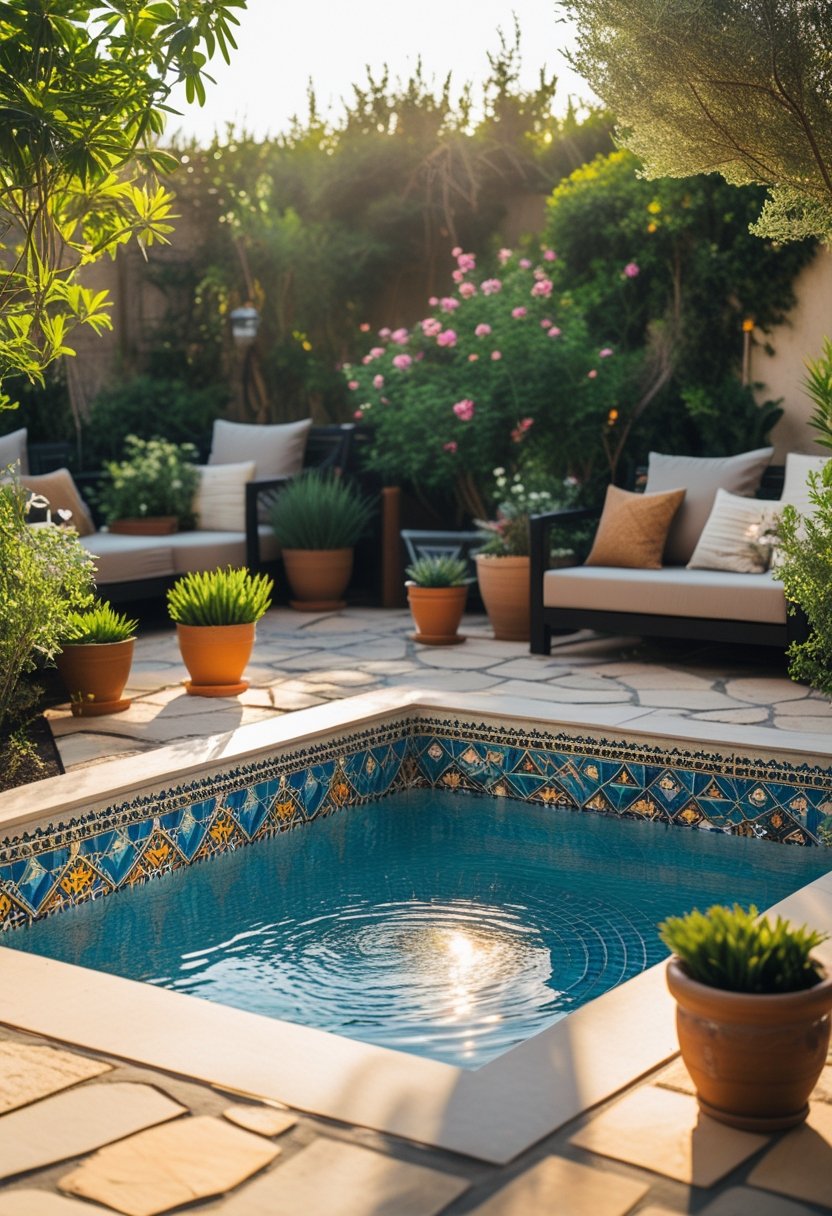
A Mediterranean-inspired outdoor living space balances functionality with tranquil design. Key features like dining placement, lighting, and fire elements shape the comfort and ambiance. Each detail plays a role in extending the indoor warmth outdoors, inviting relaxation throughout the day and evening.
Outdoor Dining Area Placement
The outdoor dining area should be positioned close to the home for convenience and protection from elements. Placing it near the black-framed glass doors allows easy transition between kitchen and patio. This proximity supports serving meals and cleanup without disrupting the relaxed atmosphere.
A shaded spot, such as under an arched doorway draped with vines, creates a natural canopy. This offers shelter from direct sun while letting filtered light enhance the dining experience. Durable furniture in natural materials like wicker or wood fits the rustic Mediterranean style while resisting outdoor wear.
For functionality, the dining area must have enough clearance around the table for comfortable movement. Adding terracotta pots nearby integrates greenery and vibrant color, marking this zone without overwhelming the space.
String Lights for Evening Ambiance
String lights contribute significantly to the evening atmosphere by adding soft, warm illumination. Hanging them above the pool and dining areas creates a gentle glow that complements pendant lighting seen indoors. Black or dark-framed fixtures align with the glass door frames, maintaining visual coherence.
These lights should be strung taut enough to prevent sagging but loose enough to look relaxed and natural. Strategic placement around the arched doorway and outdoor seating accentuates architectural details and draws the eye upward, simulating the openness characteristic of Mediterranean design.
Electrical considerations include weatherproof fixtures and safe wiring paths. Solar-powered or low-voltage LED options improve sustainability while maintaining a steady light source for extended outdoor use.
Cozy Fire Pit and Gathering Spaces
A fire pit anchors social gathering spots, enhancing the outdoor area well beyond daytime hours. A well-chosen design uses natural stone or terracotta materials that mirror the pool’s mosaic and the house’s façade, adding cohesive rustic charm.
Positioning the fire pit near the outdoor seating, but with sufficient space for safety, encourages intimate conversations. Surrounding this feature with comfortable chairs, like the wicker furniture found indoors, invites guests to linger after sunset.
Incorporating a fire pit offers practical warmth on cooler evenings, extending the usability of the outdoor space. It also provides a natural focal point that blends fire, stone, and greenery—key Mediterranean design elements—into one serene scene.
Mediterranean Herb Garden and Culinary Details
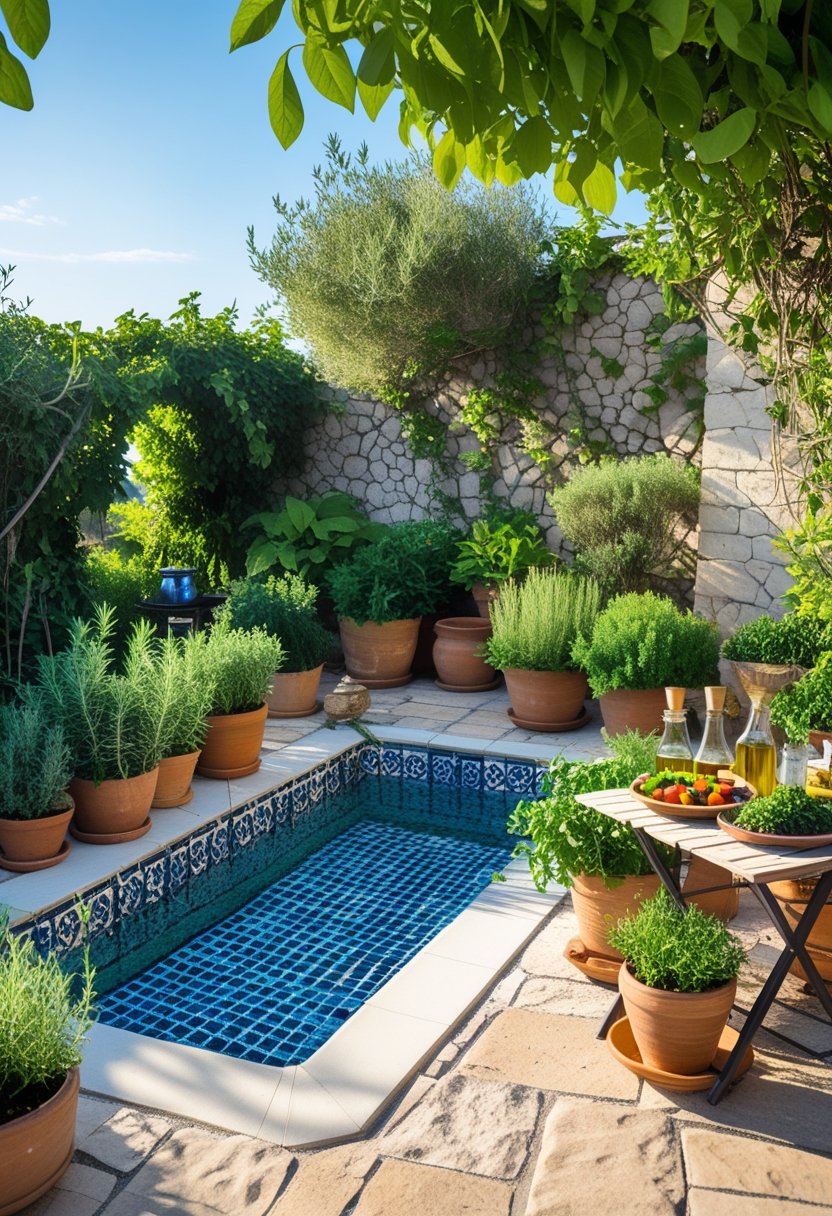
The garden blends functional greenery with aesthetic appeal, using well-chosen herbs that thrive in Mediterranean climates. It balances easy maintenance with fresh, fragrant additions that enhance outdoor living and cooking alike.
Designing a Mediterranean Herb Garden
A Mediterranean herb garden thrives in areas with full sun and well-drained soil. Arranging plants by height and water needs improves growth and visual appeal. Taller herbs like rosemary provide structure, while low-growing thyme creates ground cover.
Incorporating natural stone borders or terracotta pots complements the rustic poolside and stone façade. Grouping herbs near the kitchen or outdoor dining space allows easy access for cooking.
Irrigation should be minimal but consistent, favoring drought-tolerant species. Mulching retains moisture and prevents weeds without overwatering. The design encourages a combination of greenery and blossoms, offering year-round interest.
Growing Rosemary, Basil, Thyme, and Oregano
These herbs are staples in Mediterranean gardens, each with specific needs but broadly suited to sunny, dry climates.
- Rosemary prefers well-drained soil and can grow into a small shrub. It requires occasional pruning to maintain shape.
- Basil grows best in warm weather with frequent watering, ideal for container planting near seating areas.
- Thyme spreads low and tolerates poor soil while adding fragrant foliage; it thrives in rocky places.
- Oregano flourishes in full sun with little water, offering strong flavor for culinary use.
Each herb rewards gardeners with fresh leaves for cooking and aromatic scent for the outdoor space.
Practical and Decorative Herb Planters
Terracotta and ceramic planters suit Mediterranean herbs well due to their breathability and classic appearance. These pots should have drainage holes to prevent root rot.
Cluster planters around the pool and seating zones to visually link spaces and provide easy culinary access. Using varied pot sizes helps create layers and depth.
Planter choice impacts plant health; choosing the right material, size, and placement ensures herbs receive adequate sunlight and air circulation. Arranging herbs in groups by watering needs reduces maintenance complexity.
Combining practical use with visual design, planters contribute to the garden’s inviting, warm atmosphere.
Additional Features to Enhance Outdoor Living
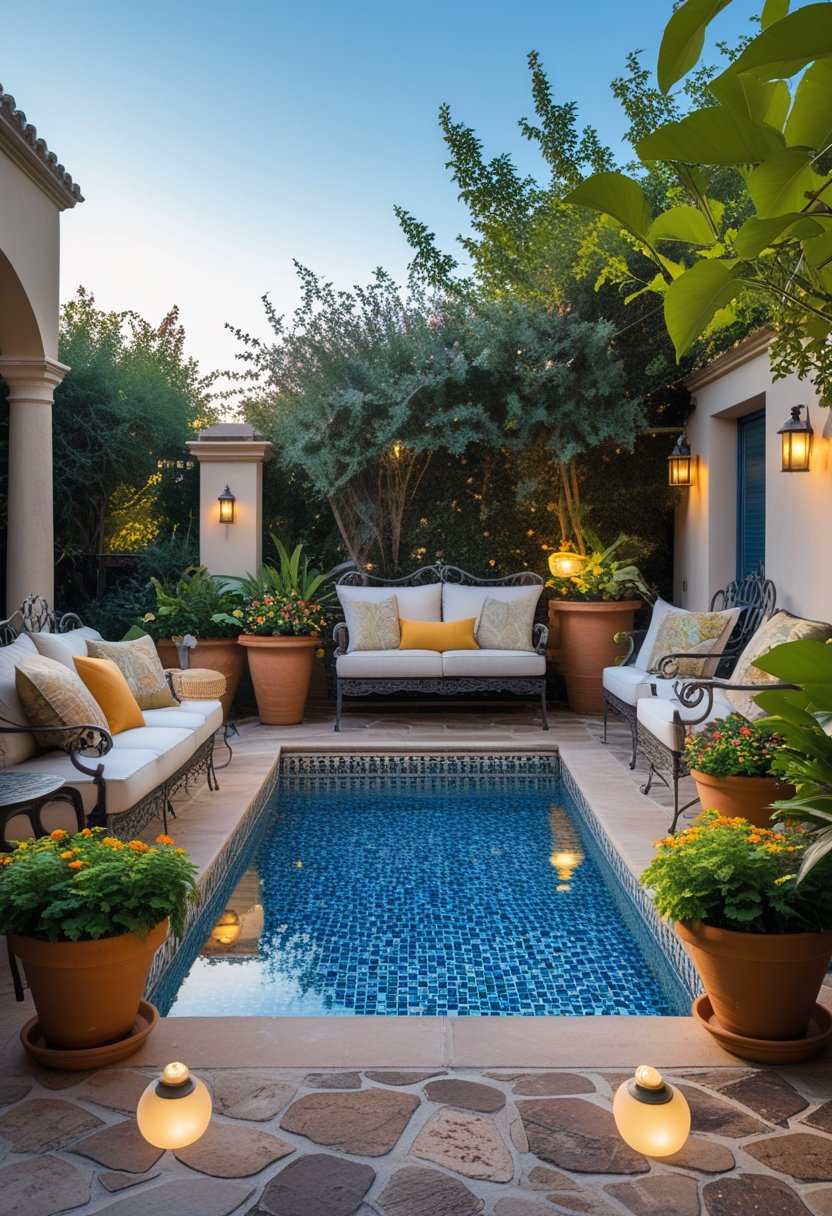
Smart additions can maximize the enjoyment and functionality of a Mediterranean-style outdoor space. Thoughtful design choices help maintain a seamless flow between relaxation, dining, and socializing areas.
Integrating an Outdoor Kitchen
An outdoor kitchen complements Mediterranean outdoor living by making meal preparation and dining convenient and social. Key elements include a built-in grill, stone countertops, and weather-resistant cabinetry. These features echo the rustic stone and terracotta aesthetic typical of the style.
Adding a small refrigerator and sink enhances functionality, allowing food prep and cleanup without frequent trips indoors. Ambient lighting, such as pendant or string lights, provides practical illumination for evening use while enhancing the mood.
Choosing durable, easy-to-clean materials like natural stone or tile for surfaces keeps the kitchen visually harmonized with the pool’s mosaic tiles and stone floors. Comfortable seating nearby encourages guests to gather and interact.
Functional Layouts for Entertaining
Designing the space with clear zones supports smooth movement and flexible use. Position the pool area as a tranquil centerpiece, surrounded by seating clusters for lounging or dining.
Paths made from stone or tile connect key areas, ensuring safety and aesthetic continuity. Grouping furniture close to the black-framed glass doors encourages connection between indoor and outdoor living.
Incorporating cozy seating like wicker chairs and leather poufs near the poolside fosters informal conversation spots. Terracotta pots with bright flowers can define these zones, guiding guests through the space naturally.
Lighting should be layered—soft pendant lights near seating and subtle accent lights around the pool enhance ambiance and safety after dark.