
12 Living Room Office Ideas to Boost Style & Productivity
Creating a functional living room office is achievable with thoughtful design that balances productivity and comfort. Many people struggle to find space for work at home, and integrating a workspace into the living room offers a practical solution without sacrificing style or functionality.

A successful living room office blends efficient layouts, smart storage, and suitable furniture to maximize space while keeping the area inviting and organized. This approach allows users to maintain focus during work hours and relax during downtime, making the most of limited space.
By using smart design choices, the living room can serve dual purposes, supporting both work and leisure comfortably. This article offers 22 practical ideas to transform a living room into a workspace you’ll appreciate spending time in.
Defining Your Living Room Office Goals

Creating a productive workspace in a living room requires clear goals. These include understanding daily tasks, establishing a preferred style, and finding the right balance between comfort and efficiency.
Identifying Daily Work Needs
The workspace should reflect the nature of daily work tasks. For someone focused on computer-based work, a sturdy desk with sufficient surface area and cable management is essential. If meetings or calls are frequent, soundproofing or noise-canceling solutions become priorities.
Storage needs should align with job demands. For example, a graphic designer may require easy access to art supplies, while a writer might need filing space for drafts and notes.
Lighting also plays a role. Tasks that involve concentration benefit from adjustable, bright lighting, while video calls might require soft, balanced light to maintain a professional appearance.
Setting Style Preferences
The design should reflect personal taste while fitting the living room’s existing decor. Deciding between modern, minimalist, rustic, or eclectic styles helps create a cohesive environment.
Choosing color schemes that promote focus and reduce eye strain is important. Neutral tones with pops of color often work well in living room offices.
Furniture types and finishes should be functional but also visually appealing. Mixing materials such as wood, metal, and fabric can enhance style without sacrificing usability.
Balancing Comfort and Productivity
The setup must support long work periods without discomfort. Ergonomic chairs and adjustable desks help prevent strain.
At the same time, the space should invite relaxation during breaks. Incorporating elements like soft rugs or cushions can create a comfortable atmosphere without diminishing productivity.
Footrests, proper monitor height, and keyboard placement contribute to effective ergonomics. Maintaining this balance reduces fatigue and supports ongoing work effort.
Creating a Seamless Office and Living Space

A well-integrated living room office balances comfort and productivity without overwhelming the space. Thoughtful placement, decor alignment, versatile furniture, and adaptable layouts form the foundation for this blend.
Choosing the Right Location
Selecting the office spot within the living room requires attention to natural light and noise levels. Near a window offers ample daylight, enhancing focus and reducing eye strain.
The corner or a less trafficked area helps limit distractions. Proximity to power outlets is essential to avoid clutter from extension cords.
If privacy is limited, consider partitions or shelving to create a visual boundary. Placement should support daily routines while maintaining the living room’s social function.
Ensuring Cohesion With Existing Decor
Matching the office design to the living room’s style prevents a disjointed look. Use a consistent color scheme by selecting office furniture and accessories that complement existing tones.
Textures and materials should align with current decor, such as incorporating wood or metal finishes found in the room. Wall art or plants can tie both zones visually.
Avoid overly bulky or bright office pieces that clash with the living room atmosphere. A coherent design makes the workspace feel like a natural extension of the home.
Using Multipurpose Furniture
Furniture that serves multiple roles maximizes both function and space. Desks with built-in storage or foldable surfaces reduce clutter and save room.
Convertible seating, like storage ottomans or couches with hidden compartments, supports work needs and relaxation. Wall-mounted desks or adjustable tables provide flexible workspace options without permanent fixtures.
A filing cabinet doubling as a side table or a bookshelf functioning as a room divider can blend work and living purposes efficiently. This strategy simplifies organization and keeps the area tidy.
Incorporating Flexible Layouts
Flexible layouts adjust to changing work and leisure demands. Modular furniture allows easy reconfiguration depending on task length or social occasions.
Keeping pathways clear ensures the living room remains functional even when work materials are in use. Positioning the desk on casters or choosing lightweight pieces enhances mobility.
Zoning techniques like rugs or lighting define office boundaries without physical barriers. This adaptability supports productivity while maintaining a comfortable living environment.
Optimizing Space for Productivity

Creating a living room workspace that enhances productivity requires careful consideration of light, layout, and storage. Effective use of these elements minimizes distractions and provides a comfortable environment.
Maximizing Natural Light
Natural light reduces eye strain and boosts alertness, making it essential for a home office. Position the workspace near windows to take advantage of daylight. Avoid direct glare by using sheer curtains or adjustable blinds.
Light colors on walls and reflective surfaces enhance the brightness in the room. If natural light is limited, combine it with task lighting, such as adjustable desk lamps, to maintain consistent illumination throughout the day.
Strategic Desk Placement
The desk should be arranged to minimize distractions and maximize focus. Facing the room’s entry or having a view outside can improve concentration, depending on personal preference.
Avoid placing the desk directly against a wall without any visual relief. Ensure there is enough space for movement and easy access to necessary items. Positioning near power outlets reduces cable clutter, helping maintain an organized workspace.
Smart Storage Solutions
Storage must keep essentials within reach without overwhelming the space. Vertical shelving or wall-mounted organizers save floor space and create neat zones for supplies.
Use multifunctional furniture like ottomans with storage or desks with built-in drawers. Clearly label containers and use drawer dividers to speed up retrieval and reduce clutter buildup. Compact filing systems help keep documents orderly and accessible.
Zoning Your Living Room Office

Creating clear boundaries between work and relaxation areas helps maintain focus and organization. Effective zoning can be achieved through design elements that separate spaces visually and functionally without overwhelming the room.
Visual Room Dividers
Visual room dividers such as folding screens, standing panels, or curtains offer flexible separation of office space. They allow for privacy while still being easy to move or fold away when not needed.
Choosing a divider with a light or translucent material maintains natural light flow. It prevents the office area from feeling closed off or cramped.
Decorative dividers also add an aesthetic element, supporting the room’s style and personalizing the workspace without permanent construction.
Open Shelving Units
Open shelving units act as physical boundaries while providing valuable storage. By placing shelves between the living and work areas, the space is divided without closing it off.
Shelves can hold books, office supplies, or decorative items, keeping work essentials within reach and helping reduce clutter. They also maintain an open feel by allowing light and sightlines through.
This dual functionality enhances productivity and keeps the living room office looking neat and organized.
Rug Placement for Boundaries
Using rugs is an effective way to define workspace boundaries visually and physically. A distinct rug under the desk or seating area signifies a separate zone within the living room.
Choosing a rug with contrasting color or texture helps the office area stand out while complementing the overall decor.
Rugs also add comfort by softening the floor and reducing noise, which is especially useful in open-concept spaces where work and relaxation coexist.
Selecting Functional and Stylish Furniture

Choosing the right furniture is crucial in creating a living room office that balances usability and aesthetic appeal. Pieces should maximize space without sacrificing comfort or style. Prioritizing compact dimensions and adaptability helps maintain a seamless flow between work and relaxation areas.
Compact Desks and Tables
Compact desks are essential in limited living room spaces. A desk with a narrow profile and minimalistic design offers adequate workspace for laptops and documents without overwhelming the room. Look for options with built-in storage such as drawers or shelves to keep supplies organized and reduce clutter.
Tables with foldable or extendable tops provide flexibility. They can contract when not in use, freeing up floor space. Materials like light wood or metal create a clean, modern look while maintaining durability. The desk height should promote comfortable posture to support extended periods of focus.
Ergonomic Office Chairs
Ergonomic chairs combine comfort with support, reducing strain during long work sessions. Features like adjustable seat height, lumbar support, and swivel bases improve posture and mobility. Opt for chairs with breathable upholstery to maintain comfort throughout the day.
In a living room office, style is equally important. Chairs with sleek lines and neutral tones fit well into common areas without clashing with decor. Compact designs help maintain an open feel. Chairs that tuck under the desk when not in use save space and prevent clutter.
Convertible Sofa Beds
Convertible sofa beds offer a dual-purpose solution, serving as seating and a guest bed. These pieces are especially useful in homes with no separate guest room. High-quality mechanisms ensure the sofa converts smoothly between modes without compromising comfort.
Design choices should focus on upholstery that blends with both living and work aesthetics. Neutral colors and durable fabrics withstand daily use. Some models include hidden storage compartments ideal for office supplies or bedding. This multifunctional furniture supports efficient use of limited space.
Enhancing Technology Integration

Integrating technology smoothly into a living room office requires focus on organization, accessibility, and adaptability. Effective solutions manage cables, provide easy device charging, and optimize lighting for various work tasks.
Cable Management
Managing cables is crucial to maintain a clean and safe workspace. Using cable trays or channels under desks keeps wires off the floor and out of sight. Velcro straps or cable ties group cords neatly, preventing tangling and damage.
Furniture with built-in cable runs or grommets allows cords to pass through discreetly. Labeling cables can save time when unplugging or troubleshooting devices. Keeping power strips mounted on the desk’s underside or walls reduces clutter and provides quick access.
Good cable management minimizes distractions and protects equipment from wear.
Hidden Charging Stations
Hidden charging stations keep devices powered without creating visual clutter. These can be built into desks, side tables, or custom cabinetry with concealed USB ports and power outlets.
Wireless charging pads integrated into furniture surfaces offer convenient, cable-free recharging for compatible phones and accessories. Charging docks with storage compartments help organize devices while maintaining a tidy appearance.
Positioning stations close to frequently used seating areas maximizes usability. They reduce the need for visible power cords and encourage keeping frequently used gadgets within reach.
Smart Lighting Solutions
Smart lighting enhances productivity and comfort in a living room office. Adjustable color temperature and brightness help reduce eye strain and match natural light throughout the day.
Using smart bulbs or fixtures controlled via apps or voice assistants allows for easy customization. Task lighting, such as adjustable desk lamps with focused beams, supports detailed work. Ambient lighting options create a balanced environment that prevents harsh contrasts.
Scheduling lighting scenes based on work hours or activities improves focus and adds convenience. Proper lighting integration blends functionality with the room’s aesthetic.
Personalizing Your Workspace

Creating a workspace that feels personal can boost comfort and focus. Small details tailored to individual tastes help transform a working area into a motivating environment. This involves thoughtful choices in art, accessories, and natural elements.
Inspiring Wall Art
Selecting wall art with meaningful imagery or motivational quotes enhances the workspace. Art can serve as a visual break, reducing stress during long work hours. Pieces should reflect personal interests or professional goals to maintain relevance.
Framed prints, canvas paintings, or even pegboards with rotating artwork offer versatility. Consider colors that complement the room’s palette to avoid distraction. Using corkboards or magnetic boards allows easy updates of inspirational visuals or important notes.
Customized Accessories
Accessories tailored to daily workflows improve efficiency and comfort. Custom mousepads, personalized planners, or monogrammed organizers add a unique touch without clutter. They also reinforce a sense of ownership over the workspace.
Ergonomic additions like wrist rests or adjustable stands can be customized for better posture. Choosing desk lamps with adjustable lighting intensity and color temperature helps reduce eye strain, adapting to different tasks and times of day.
Adding Greenery
Introducing plants increases air quality and injects life into the space. Low-maintenance options like succulents, snake plants, or pothos are ideal for busy schedules. They create a calming atmosphere conducive to focus and reduce fatigue.
Placement matters: small plants on desks, taller ones in corners, or hanging planters add depth without crowding. Invest in stylish pots that match the room’s style for a cohesive look. Regular care routines, like watering schedules, maintain plant health and workplace appeal.
Maintaining Comfort and Wellbeing
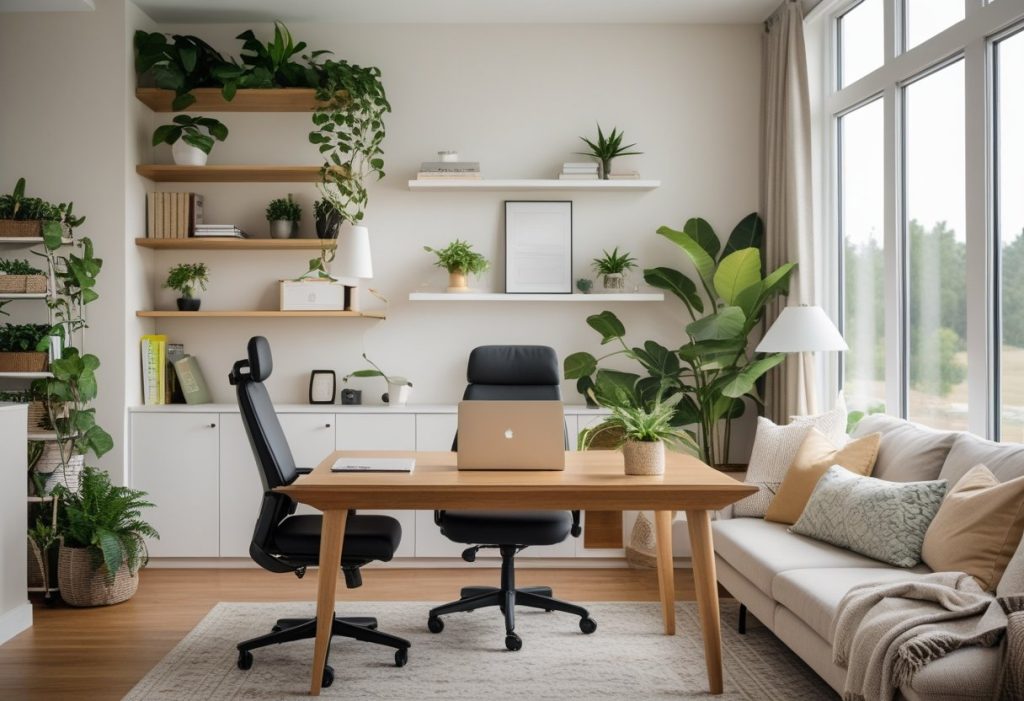
Creating a functional living room office requires attention to comfort and wellbeing. Proper lighting, managing noise levels, and maintaining a suitable temperature are essential for productivity and focus.
Ambient Lighting Options
Effective lighting reduces eye strain and improves mood. Natural light is ideal, so positioning the workspace near a window helps. If natural light is limited, adjustable LED lamps are a practical alternative.
Task lighting, such as desk lamps with dimmable features, allows control over brightness. Warm white bulbs (around 2700K-3000K) create a comfortable atmosphere without being harsh.
Avoid overhead lights that cause glare on screens. Using layered lighting—combining ambient, task, and accent lights—enhances both function and ambiance in the workspace.
Noise Management Techniques
Noise can disrupt concentration in a living room office. Soft furnishings like rugs, curtains, and cushions absorb sound and reduce echo.
White noise machines or apps offer consistent background sounds to mask distractions. Noise-cancelling headphones are effective for isolating work tasks.
Positioning the desk away from noisy areas minimizes interruptions. If possible, adding room dividers or soundproof panels further contains noise.
Temperature Control Solutions
Temperature affects comfort and productivity. Ideal room temperatures for office work usually fall between 68°F and 72°F (20°C to 22°C).
Fans or portable heaters provide quick adjustments without remodeling. Smart thermostats help maintain consistent temperatures aligned with work hours.
Proper ventilation also improves air quality. Opening windows or using air purifiers keeps the environment fresh and supports wellbeing.
Adapting Your Living Room Office Over Time

A living room office should evolve to meet the occupant’s needs, balancing work demands with comfort. Adjustments in décor, storage, and routine ensure the space remains functional and inviting throughout the year.
Seasonal Refreshes
Refreshing a living room office with the seasons helps maintain a comfortable and motivating environment. Swapping out textiles like cushions or rugs for lighter fabrics in summer and warmer tones in winter creates a visually pleasant shift.
Adjust lighting by incorporating task lamps or adjusting window treatments to manage natural light. Plants that thrive in different seasons can be rotated to bring life and freshness.
Small updates like changing artwork or desk accessories also keep the space feeling current without major renovations. These adjustments contribute to both productivity and well-being.
Storage Reorganization
Efficient storage must evolve as work materials and priorities change. Regularly assessing what items are essential helps reduce clutter while keeping needed supplies accessible.
Using modular storage solutions like stackable trays or adjustable shelving allows flexibility. Labeling storage containers aids in quick identification.
Tech cables and peripherals benefit from dedicated organizers to avoid tangles. A clear desk surface can be maintained by relocating infrequently used items to less visible areas.
Accommodating Changing Work Routines
Work habits often shift, requiring adjustments to the living room office layout and tools. If meetings increase, adding soundproofing elements or a comfortable chair for video calls may be necessary.
For employees alternating between work modes, modular desks or fold-away setups provide adaptability. Ergonomic considerations, such as adjustable chairs and monitor stands, support varying hours of use.
Encouraging routine reassessment of workflows helps identify changes needed to maintain comfort and productivity in the evolving workspace.
Budget-Friendly Ideas for Every Home

Creating a functional living room office doesn’t have to be expensive. Smart choices like hands-on projects, reusing existing items, and sourcing affordable furniture can save money while enhancing style and utility.
DIY Decor Projects
DIY decor allows personalized touches without high costs. Simple projects like painting old frames, making fabric-covered bulletin boards, or crafting organizers from recycled materials provide practicality and style.
Adding a few plants in homemade pots or creating a gallery wall with printed photos brightens the space at minimal expense. Lighting upgrades can be as easy as assembling desk lamps from basic kits or swapping out lampshades to fit the room’s look.
These projects boost efficiency and can be done gradually, which helps spread out expenses while adapting the space to changing needs.
Repurposing Existing Pieces
Repurposing saves money by adapting what’s already available. An unused side table can become a printer stand. A bookshelf may be reorganized to hold office supplies or technology.
Old chairs can be recovered or repainted to fit the office aesthetic. Even storage boxes or baskets from other rooms can be relocated for better organization.
This approach minimizes waste and often requires only small purchases, like paint or hardware, to refresh the items, making the home office functional without large investments.
Affordable Furniture Finds
Finding cost-effective furniture involves prioritizing multifunctional pieces. Look for desks with built-in storage or foldable options that free space when not in use.
Secondhand markets and online platforms offer quality finds like ergonomic chairs or compact desks at reduced prices. Retailers often have seasonal sales on minimalist office furniture that fits small living rooms.
Investing in durable, versatile furniture maximizes long-term value, supporting comfort and productivity without overspending.
Sustainable Choices for Modern Offices

Sustainable living room offices focus on materials and technology that reduce environmental impact while maintaining functionality. Selecting the right supplies and devices helps balance eco-consciousness with daily productivity.
Eco-Friendly Materials
Choosing sustainable materials means prioritizing resources with low environmental costs. Recycled wood, bamboo, and reclaimed metals offer durability without the high carbon footprint of traditional options.
Furniture made from certified sustainable sources, like FSC-certified wood, ensures responsible forest management. Using non-toxic, low-VOC paints and finishes improves indoor air quality, benefiting health and comfort.
Textiles such as organic cotton or wool for cushions and drapes reduce chemical use and last longer. Even small choices like biodegradable desk organizers or recycled paper promote a greener workspace.
Energy-Saving Devices
Energy-efficient lighting is critical. LED bulbs consume significantly less electricity than incandescent alternatives and have longer lifespans. Dimmer switches and motion sensors further optimize energy use.
Modern office equipment with Energy Star certification guarantees lower power consumption during use and standby. Using laptops instead of desktop computers also reduces energy needs.
Smart power strips prevent phantom electricity drain by shutting off devices when not in use. Incorporating natural light strategically reduces dependency on artificial lighting, cutting energy costs.