
Cozy Balcony Garden with Lights & Flower Pots
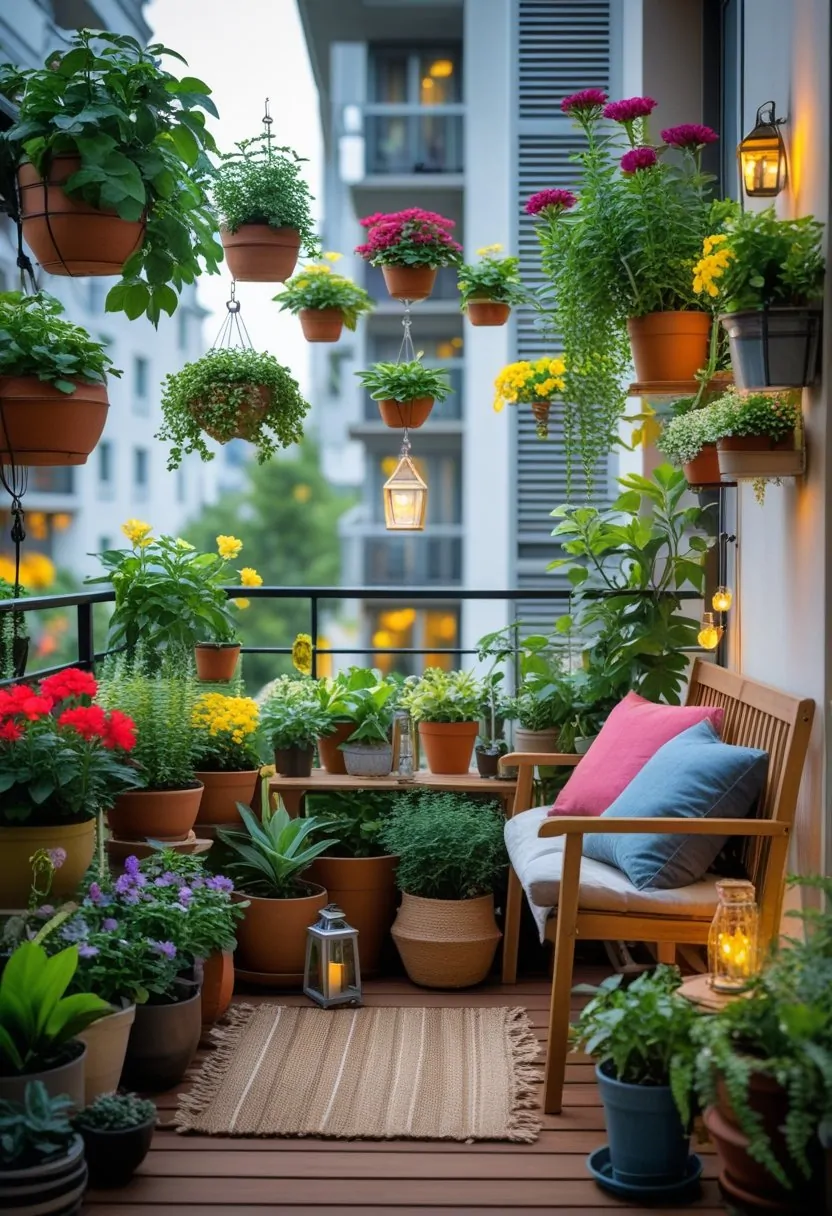
Transforming a small balcony into a cozy and vibrant garden is a practical way to create an urban oasis. This setup uses a mix of colorful flowering plants and lush greenery that bring life and warmth to the limited space. Soft lighting, including string lights draped across the railing and backdrop, adds a relaxing ambiance ideal for evening enjoyment.

A wooden vertical plant stand maximizes space by holding a range of potted plants and decorative lanterns, adding visual interest and height to the garden. The seating area, with plush cushions in yellow and white patterns and a red patterned rug, enhances comfort while making the balcony feel inviting. This combination of thoughtful design elements turns an urban balcony into a peaceful retreat that radiates charm and relaxation.
Design Principles for a Cozy and Vibrant Balcony Garden
Creating a functional and visually appealing balcony garden requires careful planning of space, color, and comfort. Integrating practical elements with aesthetic choices ensures the area is both relaxing and lively. Each design aspect contributes to making a small balcony feel like a welcoming urban oasis.
Maximizing Small Space Functionality
In a balcony garden, every inch counts. Using vertical plant stands, shelves, or wall-mounted planters helps utilize height rather than limited floor area. This approach frees space for seating or walking while allowing for a diverse array of plants.
Compact furniture that doubles as storage can also enhance usability. For example, benches with built-in boxes or foldable tables maintain open space without sacrificing function.
Lighting is another key element. String lights or solar lamps hung overhead brighten the area without cluttering surfaces, extending usability into the evening while maintaining a cozy atmosphere.
Balancing Color and Greenery
A vibrant balcony garden balances lush greenery with pops of colorful flowers. Combining plants like hydrangeas, petunias, and geraniums adds variety and draws the eye without overwhelming the space.
Using pots and planters in bright shades complements flower colors and boosts visual interest. Incorporating different plant heights and textures, such as trailing vines and upright grasses, creates a dynamic, natural feel.
Rotating seasonal plants can maintain color throughout the year. This practice keeps the garden lively, reflecting changes in the environment while ensuring continuous visual appeal.
Blending Comfort and Visual Appeal
Comfortable seating is essential in a small balcony garden for true relaxation. Plush cushions in warm tones, such as yellows or whites, add softness and brightness to the space.
Layering textiles with patterns that contrast the rug beneath—a red patterned rug in this setup—grounds the seating visually and adds warmth. Choosing weather-resistant fabrics ensures durability.
Decorative elements like lanterns and string lights enhance ambiance but also add stylistic touches. Selecting materials that complement the natural tones of wood and plants creates a harmonious, inviting atmosphere suited to urban living.
Choosing the Perfect Plants for Warmth and Charm

Selecting the right plants involves balancing color, texture, and care requirements to create an inviting balcony garden. Flowering plants bring vibrant hues, while greenery adds depth and softness. Choosing compact, manageable pots and low-maintenance varieties ensures the space remains both beautiful and easy to care for.
Colorful Flowering Plants Selection
Flowering plants are key to warming the balcony with bursts of color and subtle fragrance. Popular choices include petunias, geraniums, and marigolds. These blooms thrive well in containers and offer long-lasting color throughout the growing season.
Hydrangeas are excellent for a cottage-style charm, offering large, lush blooms that enhance visual appeal. They require moderate watering and prefer partial shade, making them ideal for urban balconies with variable sunlight.
For added interest, combining annuals like petunias with perennial geraniums can ensure continuous flowering. Bright colors such as reds, purples, and yellows foster a cheerful environment. Regular deadheading improves bloom longevity and overall garden tidiness.
Lush Greenery and Trailing Vines
Greenery balances floral colors and brings textural contrast. Trailing vines like pothos and ivy work well on railings or vertical structures, cascading naturally for softness and privacy.
Plants such as ferns add a delicate, feathery texture that complements bolder foliage. Snake plants or banana plants offer architectural height and clean lines, enhancing structure without overwhelming small spaces.
Trailing plants also reduce the need for floor space while creating a layered look. They tolerate varying light conditions and help shield the balcony from winds and urban noise.
Ideal Potted Plants for Small Balconies
Pots and containers must fit the limited balcony size while providing enough room for root growth. Compact plants such as succulents, cacti, and small herbs like basil or thyme add greenery without crowding.
A wooden vertical plant stand maximizes vertical space, holding a mix of decorative pots with flowering plants, succulents, and small decorative lanterns. This setup creates dimension while keeping the floor area clear.
Choosing plants with varying heights and textures—like tall snake plants beside short, bushy marigolds—adds visual interest. Using lightweight pots facilitates easy rearrangement and cleaning.
Low-Maintenance Options
For those seeking minimal upkeep, drought-tolerant plants such as succulents, cactus, and snake plants are excellent. These require less frequent watering and tolerate bright sun or indoor light.
Low-maintenance flowering plants like geraniums and marigolds survive well with basic care and occasional feeding. Many herbs, including rosemary and mint, are also hardy and double as fresh additions to the kitchen.
Low-maintenance plants reduce the time needed for regular pruning or deadheading. They help maintain a vibrant, healthy look without constant attention, making them ideal for busy urban dwellers.
Vertical and Layered Planting Techniques

Maximizing vertical space and layering plants are essential to creating a vibrant balcony garden. Using different structures and planting methods increases greenery without crowding the floor area. Combining multiple vertical elements also adds depth and visual interest to compact outdoor spaces.
Implementing Vertical Gardens
Vertical gardens use tall structures to arrange plants upward rather than outward. A wooden vertical plant stand is ideal for balconies, offering multiple tiers to display potted flowers, herbs, and greenery. This approach keeps plants organized and easily accessible.
Plant towers and stacked planters can hold a variety of species, from flowering plants to trailing vines. This setup encourages cascading greenery that softens edges. Careful selection of plants with different heights and textures enhances the layered effect.
Vertical gardening allows for better air circulation and efficient sunlight exposure. It also frees up floor space for seating or decor, making small balconies feel less cluttered while packed with life.
Utilizing Plant Walls and Trellises
Plant walls or living walls consist of wall-mounted planters supporting a dense arrangement of plants. These use thin profiles to hold soil and plants securely against a flat surface. A wooden trellis attached to a balcony wall offers structure for climbing plants like ivy or jasmine.
Trellises and plant walls introduce height and texture while maintaining a neat footprint. They enable vertical gardening by supporting cascading vines or flowering climbers that add color and fragrance. These features turn plain walls into green focal points without taking up floor space.
Choosing a variety of wall-friendly plants—succulents, herbs, or trailing flowers—creates a vibrant mosaic. The wooden frame of trellises also adds natural warmth to the balcony’s aesthetic.
Creative Hanging and Railing Planter Ideas
Hanging planters are excellent for small balconies, allowing plants to occupy airspace above seating areas. They come in different materials like ceramic, metal, or woven baskets, and can be grouped for variety and color contrast.
Railing planters clip or rest on balcony edges, making use of otherwise unused space. These planters are perfect for trailing plants or compact herbs, contributing to a lush border around the balcony.
Combining hanging and railing planters introduces multiple layers of greenery at various heights. This technique maximizes planting area without overcrowding surfaces. It also enhances the cozy atmosphere with soft lighting weaving through the plants and decorations.
Creating a Magical Evening Ambiance
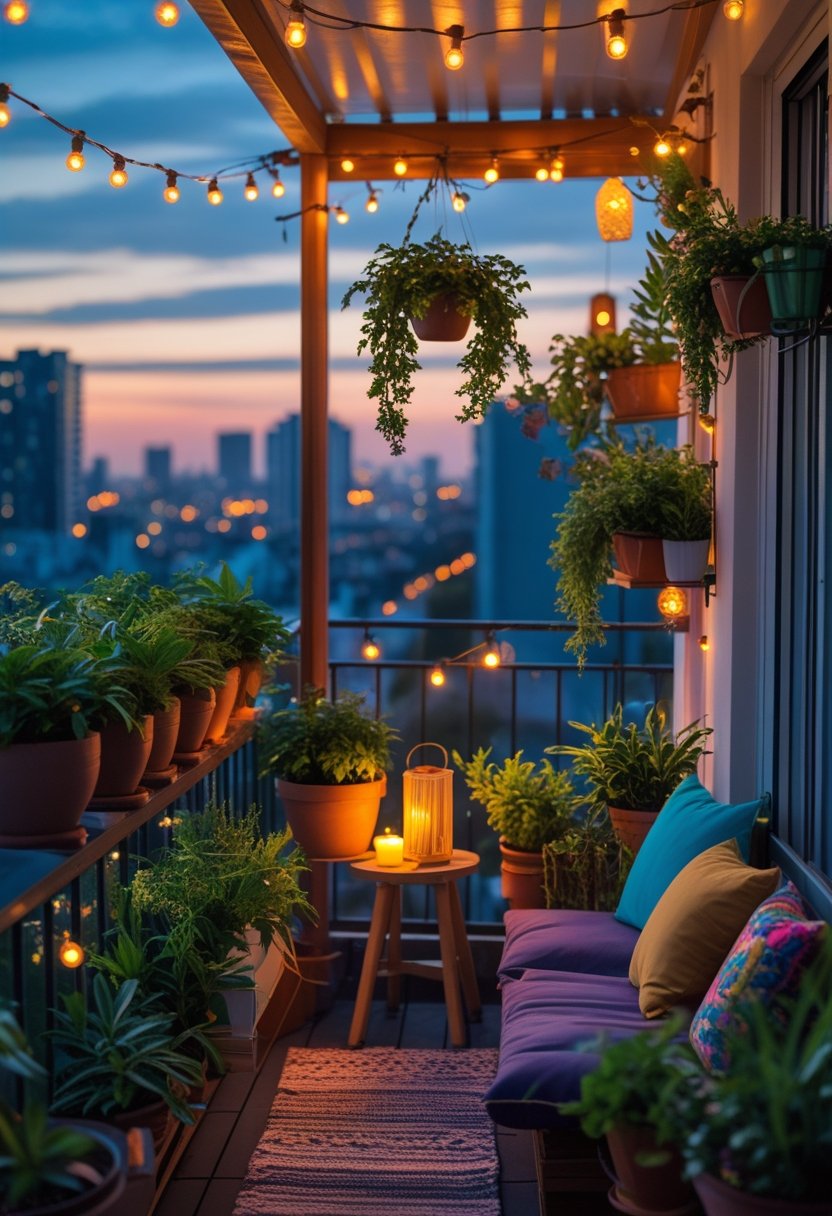
A balcony garden’s evening charm depends largely on carefully chosen lighting. Blending different light sources enhances warmth and depth while maintaining a soft, inviting glow. Thoughtful placement and layering of lights bring out the space’s natural beauty without overwhelming it.
String Lights and Soft Lighting Solutions
String lights are essential for adding gentle illumination. They work well draped across railings or overhead, creating a canopy of light. Choose warm white bulbs to produce a cozy atmosphere that complements plant colors and textures.
Soft lighting options include LED candles or low-wattage bulbs. These provide enough light to navigate comfortably while preserving relaxation. String lights with dimmer controls give flexibility, allowing adjustments based on mood or activity.
Decorative Lanterns and Fairy Lights
Lanterns add visual interest and a rustic touch. Placing them on shelves or the floor around plants integrates well with natural elements. Battery-operated or solar lanterns avoid cords, making setup easier and safer.
Fairy lights, smaller and more delicate, can be woven through foliage or around the vertical plant stand. Their subtle sparkle enhances the magical feel without excess brightness. Both lanterns and fairy lights contribute layers of light that increase depth and warmth.
Cozy Lighting Placement Tips
Effective light placement balances function and aesthetics. Lights should highlight seating areas and plant clusters without causing glare. Installing string lights along the balcony railing ensures even illumination across the space.
Grouping lanterns at varying heights adds dimension and interest. Fairy lights work best when included within pots or trailing along the plant stand. Positioning lights to minimize shadows creates a smooth, inviting glow throughout the garden oasis.
Balcony Furniture and Comfort Elements

This balcony garden setup balances comfort and style through thoughtful seating choices, vibrant textiles, and space-saving furniture. Each element enhances the inviting atmosphere while maximizing the limited area’s functionality.
Inviting Seating Arrangements
A wooden bench serves as the primary seating, offering sturdy support and a natural look that complements the garden’s greenery. Its clean lines and solid design provide a stable base for a cozy outdoor retreat. Alternatively, a compact bistro set with a small round table and two chairs fits neatly into tighter corners, perfect for enjoying morning coffee or evening relaxation without overcrowding.
Positioning the seating near the wooden deck area allows easy access and integrates well with the vertical plant stands around. Both options create comfortable social or solitary spots, suitable for reading or casual conversations.
Adding Plush Cushions and Vibrant Rugs
Plush cushions are essential to elevate comfort on the wooden bench or bistro chairs. Cushions with yellow and white patterns bring brightness and a cheerful tone, harmonizing with the garden’s colors. They soften the seating experience while visually tying into the larger decor scheme.
A red patterned rug beneath the seating area adds warmth and texture. It defines the space clearly and provides a cozy underfoot feel. This combination of textiles balances utility with aesthetics, enhancing the overall cozy vibe.
Functional Furniture for Small Spaces
To optimize the small balcony, compact and multi-functional furniture is key. Lightweight pieces like foldable bistro tables or stackable chairs offer flexibility for changing arrangements. The wooden bench can double as a storage unit underneath, keeping gardening supplies or cushions nearby but out of sight.
Incorporating vertical elements ensures floor space stays open. A slim wooden plant stand with shelves holds potted plants and decorative lanterns, adding height and interest without clutter. Each piece is chosen to support comfort while respecting spatial limits.
Finishing Touches and Personalization

A well-designed balcony garden balances practical elements with personal style. Thoughtful choices in planters, natural materials, and seasonal decor bring texture and character to the space, making it uniquely inviting and comfortable.
Choosing Planters and Decorative Accessories
Planters are functional yet pivotal design elements. Terracotta pots are popular for their breathability and classic look, ideal for colorful flowering plants and herbs. Mixing pot sizes adds depth and visual interest.
A wooden vertical plant stand maximizes space by layering plants at different heights. It also serves as a display for decorative lanterns, which enhance the garden’s evening ambiance.
Small details like lanters in weather-resistant materials and carefully chosen pot colors complement the garden’s vibrant theme without overwhelming the space.
Incorporating Natural Materials
Natural materials create warmth and authenticity. Bamboo accents, such as blinds or small fence panels, add texture while blending with greenery.
Wooden elements like the plant stand or seating frame tie the space to nature and offer functional durability. Combining wood with glass railing surfaces maintains openness while providing safety and style.
Soft textiles in natural fibers, placed on seating or as rugs, complete the look and improve comfort without detracting from the garden’s organic feel.
Seasonal Decor Ideas
Seasonal changes offer opportunities to refresh the balcony’s look. In spring and summer, bright flowers in terracotta pots bring color and fragrance.
Autumn calls for richer tones with pumpkins or dried floral arrangements on the wooden stand. Soft, warm string lights enhance the cooler evenings.
Winter can feature evergreen plants and lanterns with LED candles for a cozy atmosphere. Swapping decor elements based on season keeps the garden feeling dynamic and relevant year-round.