
Plant-Filled Apartment Interiors & Cozy Urban Jungle Ideas
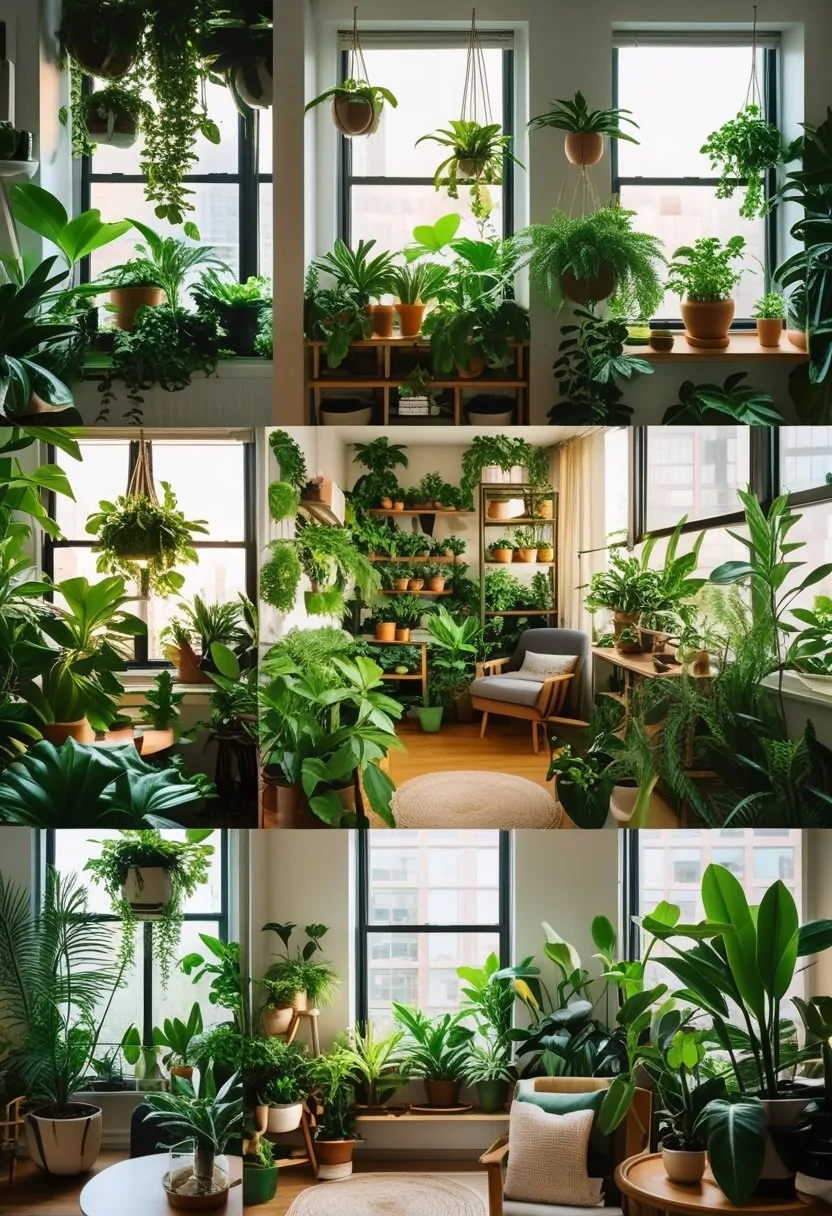
A vibrant collage of plant-filled apartment interiors highlights how lush greenery can transform urban living spaces into calming green retreats. The combination of diverse houseplants, natural materials, and cozy decor creates environments that balance style and comfort. Incorporating plants like pilea, philodendron, and ferns enriches interiors while enhancing air quality and promoting well-being.

Each space presents a unique interpretation of urban jungle design, from a wooden shelf brimming with trailing vines to a bathroom accented by hanging ferns. Warm, earthy tones and textures in the reading nook complement a living plant wall, offering a peaceful spot for relaxation. Meanwhile, the sunlit bedroom blends exposed brick and abundant potted plants with soft bedding and a grass-style rug, demonstrating how greenery adapts to different styles.
This collection showcases practical ways to bring nature indoors, proving that even city apartments can embrace greenery without sacrificing function. By integrating plants thoughtfully with furniture and decor, it’s possible to create inviting, fresh spaces that make everyday urban living feel more connected to nature.
Key Elements of Plant-Filled Apartment Interiors

A successful plant-filled apartment combines rich greenery, smart plant placement, and optimal light conditions. These components work together to create interiors that feel both vibrant and inviting, enhancing both aesthetics and wellbeing.
Embracing Lush Greenery
Lush greenery is the foundation of any urban jungle interior. Selecting a variety of plants with different leaf shapes, sizes, and textures adds depth and interest. For example, combining broad-leafed philodendrons with delicate trailing vines creates a dynamic visual contrast.
Strategic grouping, such as dense clusters on shelves or layered plants at varying heights, helps mimic natural environments. Incorporating statement plants like large monsteras or ferns can anchor a space visually while smaller species fill in gaps. The goal is to achieve a balanced, thriving indoor garden that feels organic rather than cluttered.
Incorporating Indoor Plants in Every Room
Indoor plants should be integrated thoughtfully throughout all living areas. In bathrooms, hanging ferns or air plants thrive in humidity while adding softness to tile and fixtures. Living rooms benefit from a mix of floor-standing plants, hanging baskets, and tabletop greenery to create a layered look.
Bedrooms gain a calming effect from potted plants placed near windows or alongside natural textures like exposed brick and wood. Even small spaces like balconies or nooks can transform into lush retreats by using vertical planters or plant walls. Consistency in plant style and pots can unify different rooms for a cohesive indoor garden experience.
Utilizing Natural Light for Healthy Growth
Natural light is critical for maintaining healthy indoor plants. South- or east-facing windows provide ample indirect sunlight, ideal for most tropical indoor species. Placing plants closer to these light sources ensures vibrant foliage and steady growth.
In low-light areas, selecting shade-tolerant plants like pothos or snake plants prevents stress and browning leaves. Reflective surfaces like white bedding or light walls can amplify available light and brighten darker corners. Rotating plants periodically also promotes even light exposure, maintaining a balanced indoor garden.
Urban Jungle Design Principles
Creating a thriving urban jungle interior requires thoughtful layering of plants, varied species selection, and a color palette rooted in natural tones. These elements together establish a balanced, inviting environment that feels both vibrant and calming.
Layering and Plant Placement Strategies
Effective layering involves arranging plants at different heights and depths to build dimension and fullness without overcrowding. Larger foliage plants like philodendrons and monsteras often form the base layer. Medium-height plants, such as ferns or snake plants, add mid-level interest. Trailing vines, including pothos or pilea, cascade from shelves or hanging planters to soften edges and fill vertical space.
Strategic placement near natural light enhances plant health and the room’s atmosphere. Corner groupings and dedicated plant walls maximize greenery without compromising usable space. Using wooden or natural materials for shelves supports the organic feel and anchors the layers visually.
Maximizing Visual Interest With Plant Diversity
A mix of plant species with varied shapes, textures, and leaf colors creates contrast and depth within an urban jungle. Combining broad-leaf tropical plants, spiky succulents, and delicate trailing vines avoids monotony.
Diversity includes:
- Leaf size and shape variation
- Different shades of green
- Plants with unique textures, like fuzzy leaves or glossy surfaces
This variety encourages a lush, wild appearance reminiscent of actual jungles, while still feeling curated and intentional. Plant diversity also benefits air quality and overall vitality of the space.
Color Palettes: Earthy Tones and Soft Greens
Urban jungle interiors balance rich greenery with earthy tones and soft, muted greens to ground the design. Earthy colors such as warm beige, terracotta, and natural wood complement plant life without overwhelming it.
Soft greens function as secondary hues, softening transitions between plant leaves and the room’s architecture. For example, incorporating a grass-style rug or soothing olive accents enhances cohesion.
Using a limited, natural palette ensures that the plants remain the focal point while creating a calm, cohesive atmosphere across different room elements.
Natural Materials and Textures in Apartment Décor

Incorporating natural materials and textures into apartment interiors adds warmth and depth, creating a grounded environment. The careful choice of elements like wood, stone, and rattan complements lush greenery and enhances cozy, nature-inspired spaces.
Integrating Natural Materials: Wood, Rattan, and Stone
Wood is a primary natural material that brings both texture and warmth to interiors. Shelving, furniture, and flooring made from solid or reclaimed wood provide visual interest through grain variations and organic imperfections. Rattan furniture introduces a lightweight, woven element that adds tactile appeal, especially in seating and storage.
Stone surfaces—such as countertops, tiles, or decorative accents—offer a cool, durable contrast to softer materials. Their raw textures reinforce the connection to nature. Together, these materials establish a layered, multidimensional space that feels both authentic and inviting.
Selecting Décor With Organic Textures
Textile choices significantly impact the tactile experience of a room. Natural fibers like jute, linen, and cotton add subtle texture while maintaining an earthy aesthetic. These materials come in neutral and warm tones that harmonize with greenery and wood.
Adding textured pillows, woven throws, or rugs brings visual depth without overwhelming a space. Varying surface finishes—from smooth linen to coarse jute—can balance one another. This approach keeps interiors dynamic, encouraging a sensory connection to the natural elements present.
Balancing Greenery With Neutral Backdrops
Neutral backdrops composed of earthy tones—soft beige, warm tan, muted greens, or deep browns—create calm settings for prominent plant displays. Walls, rugs, and furniture in these colors allow the vibrant greens of plants to stand out sharply without clashing.
This balance enhances a room’s tranquility and invites relaxation. Combining organic textures and neutral colors with flourishing greenery produces harmony, emphasizing the natural elements while ensuring the space feels cohesive and uncluttered.
Room-by-Room Green Styling Ideas
This plant-filled collage highlights distinct ways to incorporate greenery in various apartment spaces. Each room uses curated plant selections and design elements that enhance comfort, natural beauty, and space efficiency.
Living Room: Green Walls and Inviting Corners
A living plant wall serves as a bold focal point, transforming an ordinary wall into a lush, textured backdrop. Arranged with a variety of small to medium-sized plants like philodendrons, pothos, and trailing vines, this green wall maximizes vertical space without cluttering the floor.
Adding wooden shelves filled with leafy plants such as pilea and trailing ivy creates layered interest. These shelves can also act as natural room dividers or accent pieces. Comfortable seating nearby encourages relaxation and engagement with nature.
Incorporating various planter styles—from ceramic pots to woven baskets—adds warmth to the overall ambiance. Proper lighting, ideally indirect sunlight or grow lights, helps maintain plant health and vibrant foliage.
Bathroom: Enhancing Spaces With Hanging Ferns
Hanging ferns bring softness and natural freshness to the bathroom environment. Placing large ferns above the tub area creates a dramatic draping effect, emphasizing texture and vertical greenery.
This placement benefits from the bathroom’s humidity, which ferns favor, promoting healthy growth. Using sturdy hanging planters or macramé holders keeps the plants secure and visually appealing.
The contrast between the greenery and sleek, tiled surfaces brightens the space and turns the bathroom into a mini oasis. Choosing plants with trailing qualities allows foliage to cascade naturally, adding motion and softness in a typically hard-lined room.
Bedroom: Creating a Calming Plant Oasis
A bedroom styled with abundant potted plants invites calm and a connection to nature. White bedding combined with exposed brick walls offers a neutral backdrop, allowing greenery to stand out without overwhelming the eye.
A variety of plants, including snake plants, ferns, and small palms, can be arranged on floors, window sills, and bedside tables to promote air purification and a serene mood. Adding a grass-style rug enhances the sense of being outdoors.
Compact planters paired with low-maintenance plants suit bedroom conditions where natural light may be limited. Keeping plants uncluttered and spaced encourages restful energy, aiding in relaxation and sleep quality.
Reading Nook: Cozy Retreat With Plant Walls
A living plant wall forms the centerpiece of a warm, boho-style reading nook. Placed behind a plush beige chair, it creates a secluded and cozy atmosphere infused with natural vibrancy.
Earthy décor like woven baskets, wood accents, and soft textiles complement the greenery, enhancing the inviting feel. Dense, layered greenery including ferns and trailing vines adds depth and a sense of enclosure.
Proper care includes watering strategies suited to the variety of plants to prevent overwatering. This nook leverages green walls to maximize foliage presence while keeping the footprint minimal, creating a relaxing escape within limited space.
Houseplant Selection for Urban Apartments
Choosing the right houseplants can transform urban apartments into vibrant, inviting spaces. Consider plants that thrive indoors with moderate light, fit small footprints, and offer a variety of textures and growth habits.
Top Plant Choices: Pothos, Philodendron, and Pilea
Pothos, philodendron, and pilea stand out for their adaptability and striking foliage. Pothos thrives in low to medium light, requires minimal watering, and offers glossy heart-shaped leaves that vary in color from green to variegated yellow. Philodendron shares similar care needs and has a bushier habit, making it ideal for shelves or corners.
Pilea, often called the Chinese money plant, features round, coin-shaped leaves and grows compactly, perfect for tabletops or window sills. All three are resilient to indoor conditions and improve air quality, making them popular choices for urban settings.
Cascading Vines and Trailing Plants
Trailing plants like pothos and certain philodendron varieties add dynamism through cascading vines. These can be positioned on high shelves, hanging baskets, or mounted planters to maximize vertical space. Trailing vines soften edges and create lush layers, especially in tight urban apartments.
Regular pruning encourages fuller growth and prevents legginess. Trailing vines also adapt well to indirect natural light, common in city environments. Their ability to drape and cascade helps enhance cozy, jungle-like interiors without requiring much floor room.
Cacti and Drought-Tolerant Picks
Cacti and other drought-tolerant plants suit urban dwellers who prefer low-maintenance greenery. These plants need minimal watering and can tolerate bright, direct sunlight often found near apartment windows.
Besides various cactus species, succulents like haworthia and echeveria are common choices. Their firm structure offers contrast to leafy plants like philodendrons and pilea. These plants also help diversify the visual interest in an apartment, especially when paired with lush greenery and trailing vines.
Styling Tips for a Cohesive Apartment Jungle
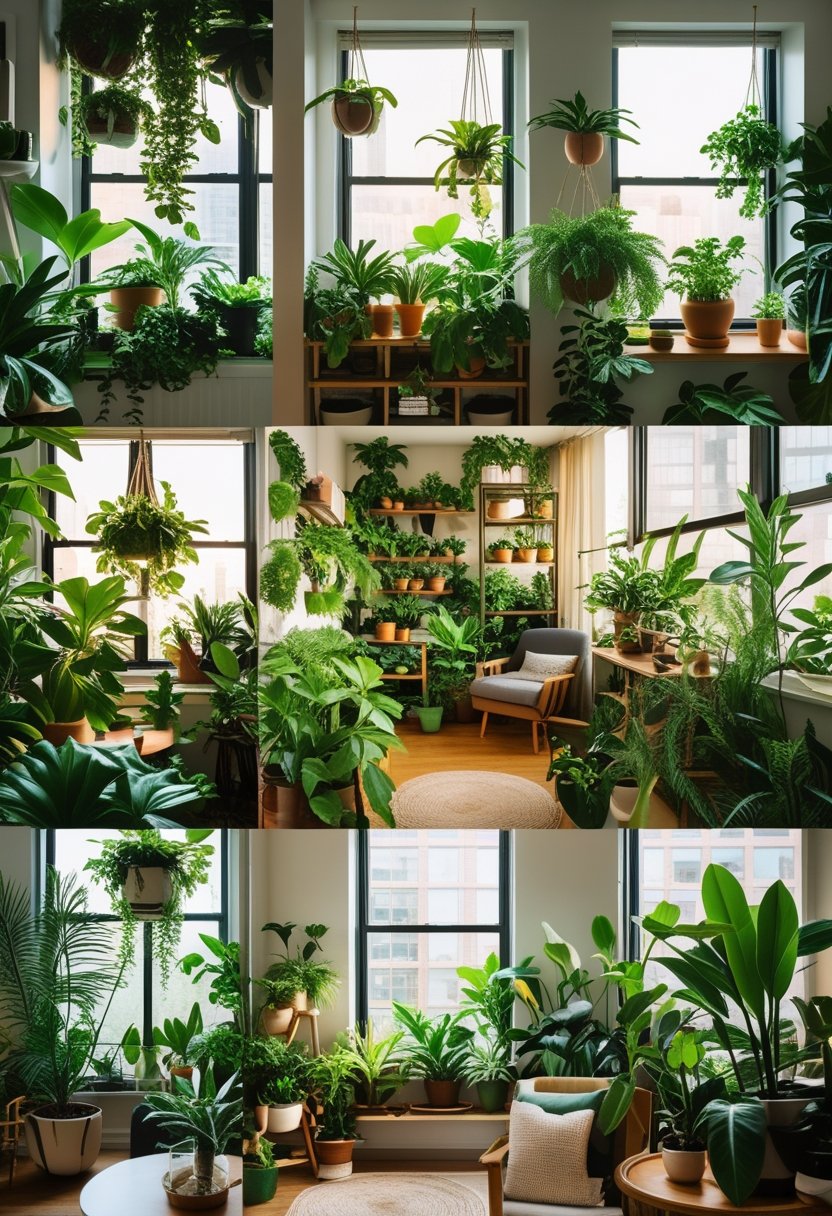
A successful plant-filled interior depends on thoughtful layering, complementary textures, and unified color tones. Combining varied heights and natural materials with soft green palettes creates a harmonious urban jungle that feels both lively and inviting.
Creating Balance: Arrangement and Height Variations
Balancing plants of different sizes prevents visual monotony and promotes depth. Mixing tall species like philodendrons or monstera with medium and trailing plants such as pilea and vines adds dimension.
Vertical space can be optimized by incorporating hanging planters or shelf gardens, which allow greenery to cascade downward. Grouping plants in odd numbers, such as 3 or 5, enhances natural asymmetry while maintaining cohesion.
Placement near natural light sources supports healthy growth and highlights foliage texture. Keeping clear sightlines around key pieces—like a plush chair or tiled bathroom—ensures plants enhance rather than clutter the room.
Using Grass-Style Rugs and Soft Furnishings
Soft, nature-inspired textiles complement greenery by adding tactile warmth. Grass-style rugs mimic outdoor textures, anchoring a room with earthy hues that echo plant tones.
Neutral or beige seating with natural fabrics, such as linen or cotton, reinforces an organic feel without competing with vibrant plants. Layering cushions or throws in soft green shades ties furnishings to the overall palette.
These elements contribute to a cozy atmosphere, making the apartment jungle inviting for relaxation or reading. They act as subtle visual bridges between planted areas and bare surfaces.
Mixing Decorative Pots and Planters
Selecting planters with varied materials and styles adds interest while maintaining harmony. Terracotta, ceramic, and woven baskets each introduce natural textures that complement leafy greenery.
Using a mix of heights, shapes, and finishes avoids uniformity but keeps the collection purposeful. Glazed pots in muted green tones or matte earth hues emphasize subtlety over brightness.
Grouping planters on shelves or floors in clusters unifies the look and creates a curated yet lush effect. Switching planter styles occasionally can refresh the space without overwhelming it.


