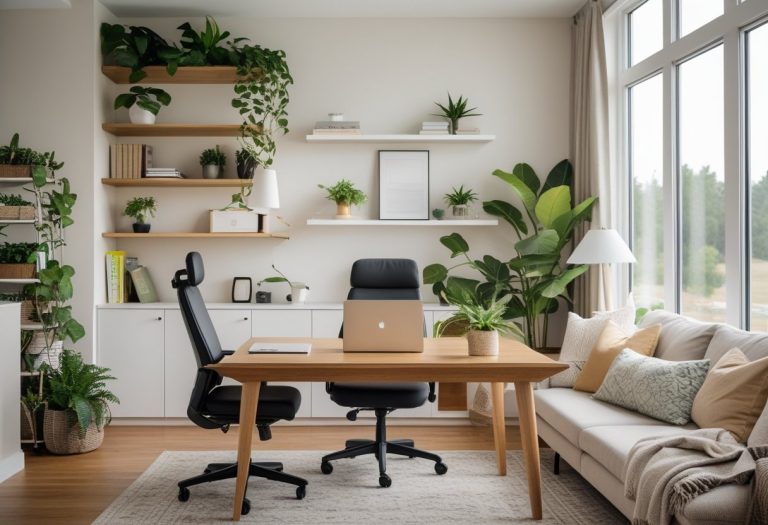
Cozy Modern Home Office with Natural Warm Aesthetic
A cozy and modern home office can balance comfort with functionality by incorporating natural materials and thoughtful design. An L-shaped wooden desk anchors the space, providing ample surface area for a sleek desktop computer, papers, and carefully placed potted plants. Large windows allow natural light to brighten the room, enhancing focus and wellbeing throughout the workday.

The use of hanging wicker pendant lights and floating wooden shelves, combined with greenery spread across the desk, shelves, and overhead, creates a warm and inviting atmosphere grounded in biophilic design. This blend of minimalism and nature promotes a serene environment that supports productivity without unnecessary clutter. A wooden chair with a woven backrest completes the setup, reinforcing the natural aesthetic while offering ergonomic support.
Key Elements of a Cozy and Modern Home Office Setup

Creating a warm, natural home office depends on selecting functional furniture, thoughtful placement, and ergonomic support. The integration of wooden elements and natural light enhances comfort and focus. Each choice invites productivity while maintaining a calm, uncluttered atmosphere.
Choosing the Right Wooden Desk
Selecting a wooden desk is central to this aesthetic and function. An L-shaped design maximizes workspace, allowing room for a computer, documents, and plants without feeling crowded. Opt for natural wood finishes to emphasize warmth and texture, fitting both minimalist and cozy styles.
A live edge or smooth surface can elevate the desk’s appeal. Durability matters: solid wood or high-quality veneer endures everyday use. Built-in storage or floating shelves nearby keep clutter hidden while maintaining easy access to essentials.
Selecting an Ergonomic Wooden Chair
Comfort and health support are vital, especially for extended work hours. A wooden chair with an ergonomic design ensures proper posture. Features such as a contoured seat and backrest help reduce fatigue.
A woven backrest enhances breathability and contributes to the natural theme. The chair should have the right height relative to the desk to prevent strain. Combining form and function in wooden furniture creates a cohesive and supportive seating solution.
Optimizing Desk Placement for Productivity
Where the desk is placed shapes the room’s atmosphere and efficiency. Positioning it near a large window provides natural light, which reduces eye strain and boosts mood. An L-shaped desk set up to face or sit adjacent to the window allows for varied views and movement.
Surrounding the workspace with plants enhances air quality and adds visual calm. Hanging plants or shelves above the desk free up floor space while keeping greenery within sight. This balanced setup integrates minimalism with biophilic design, making working from home more pleasant and productive.
Natural Light and Room Layout

A well-designed home office balances natural light and spatial arrangement to enhance productivity and comfort. This setup leverages large windows and thoughtful furniture placement to create an inviting and efficient workspace that feels open yet focused.
Maximizing Natural Light with Large Windows
Large windows serve as the primary source of natural light, brightening the room and reducing reliance on artificial lighting. Positioning the wooden L-shaped desk near these windows ensures consistent daylight exposure, which helps reduce eye strain during long work sessions.
Using sheer curtains or blinds allows control over glare while maintaining brightness. The natural light also highlights the room’s warm, wooden textures and living greenery, reinforcing the nature-inspired aesthetic. Reflective surfaces or light-colored walls can amplify this effect, spreading light deeper into the space.
Designing an Open and Airy Workspace
Creating an open space around the desk is key to maintaining a sense of airiness and preventing clutter. The L-shaped desk outlines a clear work zone without isolating the user, encouraging smooth movement within the room.
Floating wooden shelves keep items organized without consuming floor space, adding to the room’s uncluttered feel. The use of minimalist furniture paired with natural materials helps sustain the open atmosphere while supporting functionality and style.
Creating a Quiet Nook for Focus
A quiet nook within the home office provides a dedicated area for concentrated work or breaks without distractions. Placing this nook away from the main entrance and high-traffic areas limits noise and interruptions.
Soft lighting, such as the hanging wicker pendant lights, sets a warm mood in the nook, making it inviting for focused tasks. Incorporating plants around this area boosts air quality and fosters a calming environment that supports concentration.
Incorporating Greenery for a Fresh Environment

A well-planned selection and placement of plants enhance the overall atmosphere of a home office. Strategic use of greenery not only adds visual interest but also supports focus and well-being. Knowing how to incorporate different types of plants creates an inviting and productive workspace.
Choosing and Placing Potted Plants
Selecting the right potted plants depends on light availability, space, and maintenance preferences. Low-maintenance options like succulents and snake plants fit well on desks or shelves, requiring minimal care and thriving in indirect light. Larger plants, such as fiddle leaf figs or rubber plants, can be placed near windows where they receive more natural light.
Plants positioned on the desk should be small enough not to clutter the workspace yet noticeable to introduce natural elements up close. Grouping plants by size and type helps maintain balance and prevents overwhelming the area. Using neutral-colored pots or natural materials like terracotta or ceramic complements a wooden desk and keeps the aesthetic cohesive.
Using Hanging and Shelf Plants
Hanging plants increase greenery without sacrificing desk or floor space. Trailing varieties such as pothos, string of pearls, or ivy can be suspended from ceiling hooks or attached near windows to catch light. These plants soften the room’s edges and add layers of texture.
Floating shelves are ideal for layering plants alongside books and decorative items. Small pots with succulents, ferns, or air plants can be spaced evenly or clustered for visual appeal. Using shelves of natural wood ties into the warm, earthy office theme and helps plants blend into the overall decor.
Benefits of Indoor Greenery for Productivity
Indoor plants improve air quality by filtering pollutants, which supports clearer thinking and reduces fatigue. Their presence creates a calming atmosphere that lowers stress and heightens focus during work hours.
Studies show that having plants nearby can increase productivity by up to 15%, partly because greenery encourages breaks and mental relaxation. The tactile nature of caring for plants—including watering and pruning—also offers brief, refreshing pauses that improve overall work performance.
Lighting Design for Warmth and Ambience

The lighting in this home office blends function with a warm, natural feel. It combines stylish fixtures and layered sources to deliver both ample illumination and a soothing atmosphere.
Selecting Wicker Pendant and Ambient Lighting
Wicker pendant lights add texture and a rustic charm that complements the wooden furniture and greenery. Their natural material softly diffuses light, reducing harsh shadows and creating a gentle glow.
Choosing warm-toned bulbs enhances this effect by casting a cozy, inviting hue. Positioning the pendants above the desk ensures focused light while maintaining an organic aesthetic.
Ambient lighting plays a critical role in filling the room with uniform light. Recessed ceiling lights or wall sconces with dimmers can provide adjustable illumination levels, making the space adaptable for various tasks and times of day without overpowering the natural light.
Layering Lighting for Comfort and Style
Layered lighting balances ambient, task, and accent sources to enrich both comfort and visual appeal. Ambient lighting provides overall brightness, while task lighting—such as an adjustable desk lamp—focuses on work areas to reduce eye strain.
Accent lighting highlights the plants and decorative items on shelves, enhancing the room’s biophilic design. Using different light temperatures and intensities in layers creates depth and warmth, preventing the space from feeling flat or clinical.
This approach allows the user to control the mood and functionality of their workspace precisely, supporting productivity and relaxation simultaneously.
Organizational Solutions with Shelving

Effective shelving enhances both storage and aesthetics in this warm, natural home office. Thoughtful placement and selection of shelves help manage space while maintaining the room’s cozy, organic feel.
Arranging Floating Wooden Shelves
Floating wooden shelves optimize vertical space without adding bulk, keeping the work area open and airy. Strategically mounted above the desk, they offer easy access to essentials while preserving clean lines.
To maintain balance, grouping shelves in uneven layouts—such as staggered heights or varied lengths—adds visual interest. Using durable, natural wood complements the room’s earthy tones and supports a biophilic atmosphere.
Easy to install and customize, floating shelves allow for flexible organization from everyday work tools to personal keepsakes, maximizing functionality without crowding the desk surface.
Integrating Built-In and Open Shelving
Built-in shelves provide seamless integration with the room, creating a permanent storage solution that blends with the overall design. They offer ample space for larger items, documents, and equipment, maintaining the desk’s uncluttered zone.
Open shelving units complement this by providing quick visibility and accessibility. These shelves help highlight decorative elements and greenery, contributing to a relaxing workstation environment.
Combining both shelving types allows for diversified storage. For example, built-in cabinets can house files discreetly, while open shelves display frequently used materials and plants, striking a practical and inviting balance.
Displaying Books, Decorative Items, and Plants
Shelving offers an ideal platform to arrange books, decorative objects, and plants in a coherent, organized manner. Books can be stacked vertically or horizontally, grouping by size or color to maintain order.
Decorative items should be spaced thoughtfully to prevent visual clutter, using small sculptures or framed art to personalize the workspace. Integrating plants on shelves softens the look and supports air quality, reinforcing the natural theme.
Positioning plants at varying heights—including hanging pots—creates depth and liveliness. This combination not only enhances aesthetics but also promotes a calming ambiance suitable for focused work.
Color Palettes and Decor for a Calming Aesthetic

The warm natural vibe of the home office benefits from thoughtful color choices and decor that promote focus without distraction. Balanced tones and carefully selected elements contribute to a space that feels open yet cozy, clean yet inviting.
Choosing a Calming Color Palette
Calming color palettes often rely on cool and warm tones balanced to reduce visual stress. Earthy hues like warm taupe, soft beige, muted greens, and gentle peach create a grounded, soothing background. These colors support concentration and restfulness, avoiding brightness that can overstimulate.
Designers recommend combining warm browns or taupe with lighter neutral shades to enhance natural light and create depth. Using a palette that blends subtle contrasts between wood tones and soft wall colors reinforces the natural aesthetic while maintaining calmness.
A sample palette might include:
- Warm taupe (#B7A99A)
- Soft peach (#F2D4C2)
- Creamy beige (#EFE6DD)
- Light sage green (#A3B18A)
This selection complements wooden furniture and greenery, keeping the overall atmosphere serene yet lively.
Incorporating Neutral Tones for Minimalism
Neutral tones form the base for minimal decor, preventing clutter from overwhelming the senses. Shades like ivory, greys, and off-whites provide a clean canvas that highlights natural wood textures and plant life without competing visually.
Using neutrals on larger surfaces, such as walls or the desk, enhances brightness and openness. This simplicity fosters productivity, as the eyes can rest easily within the space. Neutral tones also adapt well to light changes throughout the day, sustaining comfort over longer working hours.
Selecting neutral fabrics and finishes, such as a woven-back chair in natural fibers, ties the design together with tactile warmth. The balance between soft neutrals and natural materials keeps the workspace minimalist yet inviting.
Using Minimal Decor and Wall Art
Minimal decor supports focus by limiting distractions while adding meaningful character. Keeping surfaces uncluttered, with carefully chosen objects like a few potted plants and neat stacks of papers, maintains utility and aesthetics.
Wall art should remain understated. Abstract pieces in muted colors or natural textures echo the calm palette. These avoid overpowering the room while providing visual interest.
Floating wooden shelves enhance this approach by offering organized display areas for books, small decor items, and additional greenery. The selection of simple, cohesive pieces keeps the environment uncluttered and cohesive.
Final Touches to Enhance Comfort and Well-Being

A well-designed home office can benefit significantly from sensory and personal elements that boost comfort and focus. Introducing subtle scents and thoughtful personal touches creates an environment that supports both mental clarity and relaxation.
Adding Aromatherapy and Candles
Incorporating aromatherapy through essential oils or scented candles can improve mood and concentration. Scents like lavender and eucalyptus help reduce stress, while citrus and peppermint stimulate alertness.
When using candles, opt for soy or beeswax varieties without synthetic fragrances to maintain air quality. Place them safely away from flammable materials but within view to add a soft glow and a calming atmosphere.
A diffuser with essential oils offers a flameless alternative, providing consistent scent without distraction. Regularly switching scents can keep the workspace feeling fresh and engaging without becoming overwhelming.
Personalizing for Maximum Productivity and Serenity
Personal items should reflect interests and values without cluttering the space. Photographs, meaningful artwork, or small souvenirs can inspire motivation and comfort.
Organizing tools like stylish trays or containers help maintain a tidy desk, which supports focus. Adding a cozy throw or cushion to the chair improves physical comfort during long work sessions.
Plants are key elements here; varying species and placements contribute to a sense of vitality and calm. Combining natural textures with minimalistic design encourages productivity while aligning with the room’s earthy aesthetic.