
Modern Studio Apartment Layout Inspiration
Small spaces require thoughtful design to function comfortably and reflect personal style. This curated collection offers the best studio apartment layout ideas, small space decorating tips, and practical tiny apartment hacks that optimize every inch. It highlights stylish multi-functional furniture, minimalist decor, and clever organization solutions to make a small apartment feel open and inviting.
Consider these modern studio apartment layout concepts that utilize multifunctional furniture and open space.

A versatile studio apartment layout can enhance your living experience while maximizing space.
Explore how effective studio apartment layout can transform your space into a stylish retreat.
Utilizing a smart studio apartment layout can significantly enhance the functionality of small living spaces.
With an efficient studio apartment layout, you can create a harmonious and functional living environment.
The focus is on space-saving layouts that blend aesthetics with functionality, including cozy Scandinavian influences and modern, neutral palettes. These ideas suit a variety of small living environments, from dorm rooms to micro lofts, with adaptable solutions that address common challenges like storage and zoning.
Readers will find inspiration for trending Pinterest apartment aesthetics and learn how to create a modern studio setup where no space is wasted. This guide helps transform limited square footage into a practical, stylish home.
Applying unique studio apartment layout strategies can help define your personal style within limited space.
Choosing the right studio apartment layout will ensure your space feels both spacious and inviting.
Implementing creative studio apartment layout ideas can maximize your living space effectively.
Essential Studio Apartment Layout Ideas
Innovative studio apartment layout solutions cater to various needs and lifestyles.

Maximizing a studio apartment’s functionality hinges on clear spatial organization, smart use of partitions, and adaptable furniture. These strategies help define distinct zones without sacrificing openness while keeping every item purposeful in tight quarters.
Zoning Techniques for Open Spaces
Creating separate living areas within a single open room is key to a practical studio apartment layout. Zoning can be achieved through rugs, furniture placement, and lighting. For example, a sofa positioned to face away from the bed naturally divides seating from sleeping spaces.
Using contrasting textures and colors further distinguishes each zone. Task-specific lighting, such as floor lamps for reading and pendant lights over dining areas, enhances separation without physical walls.
A well-planned layout balances flow and privacy, ensuring zones feel connected yet distinct. This approach helps the apartment feel larger and more organized, avoiding clutter and visual confusion.
Clever Room Divider Solutions
Incorporating smart storage into your studio apartment layout can significantly improve usability.
Room dividers are critical tools for studio apartment layouts. They provide privacy and help create defined spaces while maintaining openness. Popular options include:
- Bookshelves: Open shelving units that offer storage and act as visual barriers.
- Curtains: Easy to install and flexible, allowing for temporary separation.
- Sliding panels: Space-saving and stylish, perfect for creating adaptable boundaries.
- Foldable screens: Portable and inexpensive for renters or frequent reconfiguration.
Choosing dividers that double as storage or display units increases functionality. Materials like translucent acrylic or bamboo let light pass through, preventing the area from feeling boxed in.
Understanding the fundamentals of studio apartment layout design is essential for maximizing space.
Flexible Multi-Purpose Layouts
Multi-functional furniture plays a crucial role in studio apartment layout ideas. Pieces like sofa beds, expandable dining tables, or ottomans with storage support versatile living.
Different studio apartment layout choices can enhance your living experience and style.
Furniture on wheels or foldable designs enable quick reconfiguration between work, relaxation, and dining areas. This flexibility adapts the apartment to changing needs during the day.
Incorporating vertical storage and wall-mounted desks further frees floor space. The goal is to ensure every item serves more than one purpose, optimizing limited square footage efficiently.
Smart Space-Saving Furniture for Small Apartments
When selecting furniture for your studio apartment layout, consider how each piece functions.
A well-planned studio apartment layout can make the most of every square foot.

Effective space-saving furniture combines versatility, functionality, and style without overwhelming limited square footage. It ensures that living areas remain open and organized, with pieces adapting to multiple uses or freeing floor space when not in use.
Multi-Functional Furniture Choices
Multi-functional furniture is essential in small apartments because each piece serves more than one purpose. Examples include ottomans with hidden storage, coffee tables that expand into dining tables, or desks that fold into walls. These choices reduce clutter and provide essential functions without extra bulk.
Materials and design also matter; lightweight, modular items are easier to rearrange and adapt as needs change. Prioritizing furniture with integrated storage options, such as shelves within a bench or drawers built into a bed frame, further maximizes usability.
Transform your home with a thoughtful studio apartment layout that emphasizes both style and function.
Investing in multifunctional pieces tailored to daily activities—work, dining, and relaxation—helps maintain a streamlined, efficient environment.
Murphy Bed and Loft Bed Solutions
Murphy beds and loft beds are proven solutions for reclaiming floor space in compact living. A Murphy bed, which folds vertically into a wall or cabinet, frees up the bedroom or living room during the day. This allows for dual-purpose rooms, such as a home office or lounge.
Loft beds raise the sleeping area above ground level, creating usable space underneath for a desk, seating, or storage. These are especially effective in studio apartments and micro lofts.
Both options require secure installation and measuring the ceiling height carefully. They work well when combined with other space-saving furniture, enabling the apartment to feel less cramped and more versatile.
Choosing a Sofa Bed or Daybed
Sofa beds and daybeds offer flexible seating that easily converts into a sleeping area for overnight guests. A high-quality sofa bed balances comfort and function without sacrificing style or taking up extra space compared to a regular sofa.
Daybeds serve as seating by day and guest beds by night, often with built-in storage drawers underneath. They fit well into corners or serve as room dividers, adding both function and design appeal.
When selecting these pieces, consider mattress thickness, mechanism ease, and fabric durability. The right sofa bed or daybed enhances a small apartment’s usability, supporting both everyday living and occasional guests.
Creative Storage and Organization Hacks

Maximizing storage in a studio apartment requires smart use of vertical space, efficient wall-mounted systems, and hidden compartments. Each solution is designed to keep belongings accessible without cluttering limited floor area.
Vertical Storage Done Right
Vertical storage transforms unused wall space into active storage zones. Tall shelving units, ladder shelves, and stackable cubbies make use of height rather than floor area, essential in compact studio apartments.
When arranging vertical storage, grouping items by category, such as books, kitchen supplies, or decor, improves accessibility. Adding hooks or pegboards to vertical structures offers space for hanging bags, hats, or tools.
Furniture pieces with built-in vertical storage, such as wardrobes with overhead compartments or bookcases, optimize functionality and aesthetics. This approach minimizes clutter and keeps the living area open and airy.
An effective studio apartment layout not only saves space but also enhances your lifestyle.
Floating Shelves and Wall-Mounted Systems
Floating shelves provide visible, versatile storage without taking up floor space. They are ideal for displaying frequently used items or decorative objects, helping maintain an organized and stylish environment.
Wall-mounted systems with adjustable brackets and shelves allow customization to fit changing storage needs. Combining open shelving with enclosed cabinets maintains a balance between display and hidden storage.
In kitchens or bathrooms, floating shelves keep essentials within reach while preserving countertop space. In living areas, they free up floors for larger furniture, promoting flow in small apartments.
Under-Bed Storage Ideas
Under-bed storage maximizes overlooked space, ideal for seasonal clothes, shoes, or seldom-used items. Low-profile bins, rolling drawers, or vacuum-sealed bags fit neatly under most beds, keeping floors clutter-free.
Elevating the bed on risers creates additional vertical space underneath. This can accommodate larger storage solutions like plastic drawers or storage ottomans.
Using clear containers or labeling under-bed storage boxes improves organization and prevents unnecessary digging. This method takes advantage of often-wasted space without disrupting the room’s layout or style.
Decorating Tips for Modern and Minimalist Studio Apartments
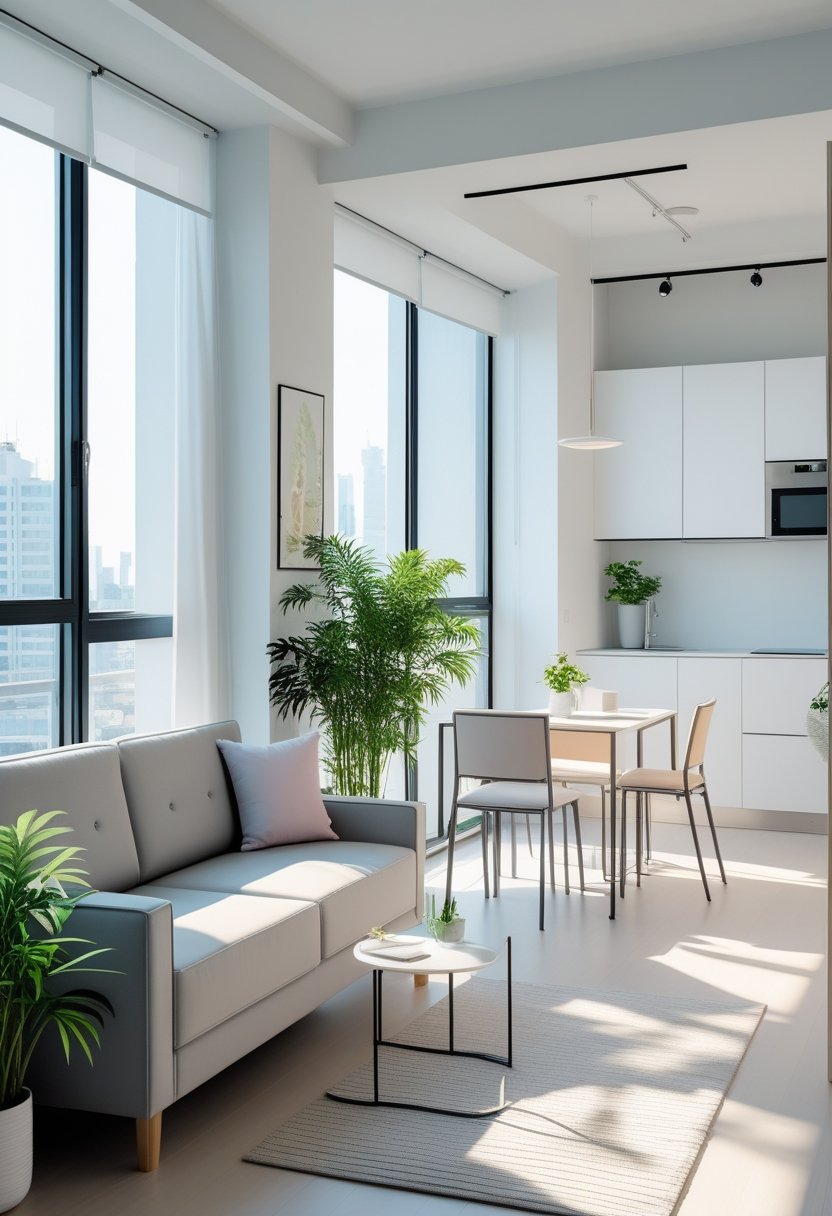
Creating a balanced, functional studio apartment involves careful choices in style and organization. The right combination of decor, colors, and textiles can define the space without overwhelming it. Smart use of minimalism and accents enhances comfort and visual interest while keeping clutter at bay.
Minimalist Decor Inspiration
Minimalist decor focuses on clean lines, essential furniture, and limited accessories. The goal is to create an uncluttered, calm environment that feels spacious. Pieces with multi-functional use—such as storage ottomans or foldable desks—help maintain simplicity while maximizing usability.
Choosing furniture with slim profiles and neutral materials like light wood, glass, or metal reinforces the minimalist aesthetic. Avoid overcrowding; instead, select a few statement items that serve clear purposes, like a sleek sofa or a compact dining set. Minimalist decor thrives on intentionality, ensuring every piece adds to both function and form without excess.
Neutral Color Palettes
Neutral color palettes are foundational for modern and minimalist studios. Shades of beige, gray, white, and soft taupes provide a versatile backdrop that enhances natural light and expands visual space. These colors also create a seamless flow between different zones of the studio.
Using a variety of textures within the neutral palette adds depth and warmth. For example, pairing matte walls with soft linen curtains or a woven chair can break monotony without introducing bold colors. This approach makes the space feel cohesive and calming while allowing accent pieces or plants to stand out effectively.
Accent Walls & Area Rugs
Accent walls bring personality to a minimalist studio without heavy visual clutter. A single painted wall in a subtle tone like muted blue or charcoal creates focus and contrast. Textured wallpaper or wood paneling also works well for adding dimension and style.
Area rugs define separate zones in open floor plans, such as a living area or sleeping space. Choosing rugs in neutral tones or simple geometric patterns complements minimalist themes. They also provide softness underfoot and prevent floors from feeling bare. Proper placement of rugs enhances layout flow and helps anchor furniture groupings for a pulled-together look.
Cozy and Functional Scandinavian Studio Design
Utilize a contemporary studio apartment layout to create an inviting and functional atmosphere.

A thoughtful studio apartment layout can seamlessly integrate living, dining, and sleeping areas.
Scandinavian studio design emphasizes clean lines, neutral palettes, and purposeful use of space to create a warm, inviting atmosphere. It balances minimalism with cozy details, making even the smallest apartments feel open yet lived-in.
Layered Lighting for Ambiance
Layered lighting is essential in Scandinavian design to enhance both function and mood. It typically involves a combination of overhead lights, task lighting, and accent sources. Overhead fixtures provide general illumination, while table lamps and floor lamps add warmth and softness.
Using dimmable or adjustable lighting allows control over the room’s ambiance. Soft, warm bulbs help replicate natural light’s calming effect, which is crucial in studios with limited windows. Including candles or string lights can further contribute to a relaxed vibe without cluttering the space. Layered lighting areas, like a reading nook or dining spot, make the studio multi-functional and comfortable throughout the day and evening.
Simple Furniture Arrangements
Furniture in a Scandinavian studio prioritizes functionality and clean design. Multi-purpose pieces like sofa beds, expandable tables, and storage ottomans are typical choices. Arranging furniture to keep pathways open maximizes space and flow.
Positioning key items against walls opens the central area, making the room feel larger. Low-profile furniture maintains sightlines and prevents overcrowding. Neutral-toned furniture with natural wood accents supports the minimalist aesthetic while adding visual warmth. Clear separation of zones—sleeping, dining, and working—with minimal dividers or rugs helps maintain an organized feel without sacrificing openness.
Incorporating Natural Elements
Natural elements are central to creating a cozy Scandinavian studio. This includes incorporating wood, textiles, and plants to add texture and softness. Light wood flooring or furniture pieces bring warmth and an earthy tone to the neutral backdrop.
Explore various studio apartment layout ideas that prioritize both comfort and functionality.
Textiles such as wool throws, linen curtains, and cotton cushions add layers of comfort and tactile contrast. Green plants improve air quality and introduce life to the space, increasing a sense of well-being. Placement near natural light sources maximizes their effect. Together, these organic materials counterbalance the room’s minimalism to foster a calming, inviting environment.
Incorporating innovative solutions into your studio apartment layout can elevate your living experience.
Trending Studio Apartment Aesthetics and Modern Ideas

Many small apartment designs now emphasize clean lines, versatile furnishings, and subtle personalization that maximizes functionality without overwhelming space. Popular aesthetics combine minimalist foundations with carefully chosen accents that enhance comfort and style. This approach helps create open, airy environments even in limited square footage.
Current Pinterest Apartment Trends
Pinterest trends currently highlight neutral color palettes with shades like soft beige, muted gray, and warm whites. These tones serve as a versatile backdrop that visually enlarges compact rooms. Layering with natural textures such as wood, linen, and jute adds subtle depth while maintaining simplicity.
Multipurpose furniture is in high demand. Pieces like fold-away desks, expandable dining tables, and beds with built-in storage are commonly pinned for their space-saving benefits. Organizers that blend seamlessly into decor—such as stylish baskets and shelving units—also feature prominently.
Plants continue to be a staple, especially compact varieties suitable for window sills or shelves. They introduce life and color without clutter. Lastly, there’s a tilt toward Scandinavian-inspired layouts that combine form and function efficiently, emphasizing openness and coziness.
Gallery Walls & Decorative Touches
Gallery walls serve as focal points in studio apartments by creating visual interest without sacrificing floor space. They typically feature a curated mix of art prints, photographs, and textured elements arranged in balanced, grid-like patterns or dynamic clusters.
Using slim frames in black, white, or light wood enhances the focused feel. Many designers recommend mixing sizes and orientations but maintaining a consistent color or theme to avoid visual chaos. This technique elevates blank vertical surfaces while reflecting personality clearly.
Other decorative touches often include textured throw pillows, area rugs with subtle patterns, and sculptural light fixtures. These elements add warmth and tactile richness without overwhelming a minimalist setup. Together, they create a layered look that is inviting and stylish.
Sliding Doors, Acrylic Chairs, and Modern Solutions
Sliding doors are favored in studio layouts for their space efficiency and modern appeal. Unlike traditional doors, sliding panels do not require clearance to swing open, allowing better furniture placement and flow. They can be frosted or mirrored to add privacy and light manipulation.
Acrylic chairs exemplify modern design with their transparency, contributing to a less cluttered visual environment. Their durability and sleek silhouette make them ideal for dining or work areas in tiny spaces.
Modern studio setups increasingly incorporate these elements alongside smart storage units and modular furniture to tailor layouts. Designers focus on flexibility—such as movable partitions and convertible seating—to adapt rooms for multiple uses without crowding.


