
Vibrant Garden Wall Painting Ideas with Bold Murals
A vibrant collage Pinterest-style pin captures a range of garden wall painting ideas designed to inspire creativity and enhance outdoor spaces. The central bold title, “Vibrant Garden Wall Painting Ideas You Shouldn’t Miss,” immediately draws attention to the variety and uniqueness of each art piece. The top section features a large, colorful mural with floral and abstract elements, combining bright pinks, purples, turquoise, and green hues with whimsical bee-like creatures to create a lively focal point.

The bottom section showcases six smaller murals, each offering a distinct style. These include minimalist pastel shapes, a detailed portrait with 3D embellishments, vibrant mandala patterns, a neon-like lion face, a muted storytelling scene, and a black-and-white abstract butterfly design. This collage presents a diverse selection of garden wall art that can transform any outdoor wall into a personalized and visually striking space.
Essential Tips for Creating Garden Wall Murals

Successful garden wall murals depend on choosing the right materials, preparing the wall properly, and selecting colors that complement the space. Each step contributes to a mural that lasts and enhances the outdoor environment.
Choosing Weather-Resistant Paints
Selecting paints designed for outdoor use is crucial. Weather-resistant paints, such as acrylic latex or exterior enamel, withstand rain, sun, wind, and temperature changes. These paints resist fading, cracking, and peeling much better than interior paints.
It is important to use UV-resistant pigments to keep colors vibrant over time. Many brands offer paints specifically formulated for masonry, brick, or concrete — the common surfaces for garden walls. Choosing these ensures proper adhesion and durability.
Applying a clear protective topcoat can further increase resistance to moisture and dirt. This layer also makes cleaning easier and prolongs the mural’s lifespan without altering its appearance.
Preparing Wall Surfaces
Proper surface preparation affects paint adhesion and the mural’s durability. Clean the wall thoroughly to remove dirt, mold, and loose paint using a pressure washer or wire brush.
Repair cracks, holes, and uneven textures with suitable fillers or patching compounds. Sand the area smooth once dry to create an even canvas for painting.
Priming the wall with an appropriate outdoor primer seals porous surfaces and enhances paint grip. For brick or concrete, a masonry primer improves durability and prevents moisture penetration.
Allow the primer to dry completely before starting the mural to avoid peeling or uneven coverage.
Balancing Color Schemes
Color selection impacts both the mural’s visual appeal and its harmony with the garden surroundings. Using complementary colors creates balance and draws attention without overwhelming the space.
Incorporating bright, bold colors in focal areas works well alongside softer, more muted tones on the background. For example, placing vivid pinks and turquoise flowers against gentle greens helps maintain clarity.
Consider the natural colors in the garden, such as plants and paving, to avoid clashes. A color palette limited to three to five main hues often achieves the best cohesion.
Testing paint samples on the wall at different times of day helps observe how light affects the colors outdoors.
Vibrant Floral and Abstract Garden Wall Murals

These murals combine lively floral imagery with abstract designs to create dynamic garden spaces. Bold color choices and imaginative motifs provide both visual interest and a sense of personality. Attention to detail in pattern, form, and thematic elements enhances outdoor walls effectively.
Large Colorful Floral Artworks
Large floral murals use bright, saturated hues like pink, purple, turquoise, and green to produce immediate visual impact. The flowers are often oversized and stylized, emphasizing shapes over realism to appeal from a distance.
This approach allows for creating focal points in the garden, turning plain walls into engaging art pieces. The use of vibrant color palettes not only enlivens the space but also complements natural garden tones. Textured brushwork or layering can add depth and make the designs pop.
Abstract Garden Elements
Abstract shapes inspired by plants and garden life lend a modern touch to garden walls. These often include simplified leaves, stems, and geometric plant forms rendered in pastel and muted tones.
By focusing on form and color contrast, abstract designs create subtle movement and rhythm. They also offer versatility, as they suit various wall surfaces like brick, concrete, or wood. Such murals serve to enhance garden ambiance without overwhelming the natural elements.
Incorporating Whimsical Bee Motifs
Adding whimsical bee-like creatures adds charm and narrative to murals. These small, animated figures often hover around flowers, symbolizing pollination and garden vitality.
Bees rendered in playful styles with bright accents break up floral scenes pleasantly. They introduce lightheartedness and a storytelling aspect, engaging viewers beyond mere decoration. This motif also reinforces a connection to the ecological role of gardens.
Minimalist Pastel Garden Murals

This style uses gentle shapes and muted colors to create calm, pleasing visuals. The focus remains on simplicity paired with nature-inspired elements in soft, approachable tones.
Abstract Plant Shapes
Abstract plant shapes rely on simplified forms to suggest leaves, stems, and blooms without intricate detail. This approach allows the mural to blend easily with various garden styles, avoiding visual clutter.
The designs often emphasize flow and balance, using curved lines and organic shapes. These elements evoke a natural feeling while maintaining a clean, modern look that is easy to paint and maintain.
This minimalism supports relaxation and does not overwhelm the outdoor space. It also works well on different surfaces like wood, brick, or concrete.
Soft Orange and Green Palettes
Pastel oranges and greens create a soothing, earthy contrast that complements outdoor greenery. These colors provide warmth and freshness while remaining subtle enough not to dominate the scene.
Orange tones typically lean toward muted peach or apricot shades, which inspire feelings of comfort without boldness. Greens in pastel form mirror young leaves and new growth, reinforcing a garden’s natural vibe.
Together, this palette produces a harmonious and inviting atmosphere. It’s particularly effective when used on simple geometric or abstract plant designs, enhancing the mural’s understated elegance.
Portrait-Style Garden Wall Art

Portrait-style garden murals combine figurative expression with artistic detail to create striking focal points for outdoor spaces. These works often feature human faces enhanced with decorative elements that add depth and visual interest.
Colorful Female Portrait Murals
These murals typically depict a woman’s face with vivid colors and dynamic contrasts. Artists use bright tones such as reds, blues, and yellows to highlight facial features, creating both emotion and vibrancy.
The style often incorporates realistic shading alongside abstract patterns. This blend brings a modern, artistic edge to traditional portraiture while maintaining warmth and personality.
Using large-scale canvases like brick or concrete walls allows for bold impact in garden settings. The murals can serve as central pieces that invite viewers to engage closely with the artwork’s detail and color interplay.
Butterfly and Embellishment Details
Butterflies and decorative touches enhance portraits by adding symbolic meaning and texture. They often appear as painted wings or 3D-like elements surrounding the figure’s head or shoulders.
These embellishments provide contrast by introducing delicate, organic shapes next to more rigid facial features. They also evoke themes of transformation and nature, relevant to outdoor spaces.
Artists often apply layering techniques to create depth, using bright colors and shadows. This complexity encourages viewers to explore the mural from different angles and distances.
Mandala and Circular Pattern Garden Murals

Circular and mandala-inspired murals often use intricate shapes and layered patterns to create focal points that draw the eye. These designs balance complexity and harmony, making them ideal for garden walls where they can complement natural surroundings.
They typically feature symmetrical layouts and detailed motifs that invite closer viewing while enhancing the garden’s aesthetic appeal.
Vivid Mandala Wall Designs
Vivid mandala murals are characterized by bright, contrasting colors and finely detailed patterns arranged in concentric circles. These designs often blend floral and geometric elements to evoke a sense of unity and balance.
The layering of shapes and colors encourages a meditative or calming effect. Artists commonly incorporate shapes like petals, triangles, and spirals that radiate outward from a central point, enhancing the sense of rhythm.
These murals work well as centerpieces in garden spaces, providing both visual interest and a thematic link to natural cycles. Their bold palettes can enliven brick or concrete walls without overwhelming the overall environment.
Combining Blue, Orange, and Purple Tones
The combination of blue, orange, and purple tones creates dynamic contrasts while maintaining visual cohesion in garden murals. Blue provides a calming, cool foundation, orange adds warmth and energy, and purple introduces depth and richness.
This color trio manipulates light and shadow effectively, which can give 3D-like effects to circular designs. The vibrancy of orange and purple highlights intricate details within the blue background, making patterns stand out without clashing.
This palette suits artists aiming for bright yet balanced compositions. It also complements natural greens and earthy garden tones, ensuring the mural integrates smoothly into outdoor settings while still serving as a vibrant landmark.
Animal-Inspired Vibrant Garden Murals

Animal-themed murals often combine natural imagery with bold colors and sharp detail to catch the eye and add dynamic energy to garden walls. These artworks frequently use powerful motifs like animal faces and imaginative color schemes to evoke strength and creativity.
Multicolored Lion Face Art
The multicolored lion face mural stands out for its vivid use of diverse hues that reflect both vibrancy and majesty. This design often incorporates shades like purple, green, orange, and blue, creating a lively and layered effect. The lion’s mane is typically rendered with flowing strokes or geometric patterns.
Such murals can serve as a focal point in any garden by symbolizing courage and nobility. The use of multiple colors also helps to break from traditional monochrome wildlife art, giving the mural a modern, artistic flair. The neon-like saturation adds an energetic feel, making the mural vivid during both day and night.
Creative Use of Neon Shades
Neon colors in garden murals bring a striking brightness that transforms dull walls into engaging displays. Artists use neon purples, greens, oranges, and blues to accentuate features like animal fur, eyes, or abstract elements. This choice highlights details that might otherwise be overlooked.
Neon shades also enable murals to pop against natural garden greens and browns, increasing visibility and impact. When paired with detailed line work or textured paint techniques, these colors add depth and illusion of movement. Neon colors are especially effective on large-scale animal portraits, where contrast and vibrancy are essential.
Storytelling and Thematic Wall Murals

This style of wall mural often uses detailed imagery and symbolic elements to convey stories or represent deeper themes. The designs integrate characters and motifs that invite viewers to reflect on the narrative or the emotions portrayed. The thematic approach adds complexity and engagement to garden or urban wall murals.
Bearded Man in Muted Scenes
The mural featuring a bearded man employs subtle color schemes to highlight its narrative focus. Muted tones reduce visual noise, allowing the painted storytelling elements to stand out. These elements often include objects or symbols surrounding the figure that hint at personal history or broader cultural themes.
His expression and posture contribute to the mural’s depth, providing a focal point that evokes contemplation. The use of chiaroscuro or shadowing enhances the realistic yet stylized effect, emphasizing mood over vivid color. This mural style appeals to viewers interested in layered meanings and understated visual impact.
Narrative Elements in Garden Murals
Garden murals with storytelling integrate natural elements in ways that symbolize growth, renewal, or harmony. Bees, flowers, and abstract shapes act as motifs representing life cycles and interconnectedness. These features are often arranged to create flow and movement, guiding the eye across the mural’s thematic message.
Color choices in these murals—such as bright pinks, turquoises, and greens—highlight vitality and vibrancy while maintaining a cohesive narrative. Whimsical creatures like stylized bees add personality and reinforce the mural’s symbolic references to nature’s role in storytelling. This approach enriches garden walls beyond decoration, turning them into narrative canvases.
Black-and-White Abstract Garden Wall Designs

This style uses contrasting tones to emphasize shapes and forms, creating bold visual interest without color. The designs balance modern minimalism with expressive artistry, making them suitable for various garden atmospheres.
Symmetrical Butterfly-Inspired Patterns
These murals focus on precise symmetry, using mirrored shapes to evoke the natural form of a butterfly. The balance between black and white highlights intricate details, making the design appear both delicate and striking.
Artists often employ sharp lines and soft curves in equal measure, producing a sense of harmony that fits well on large, flat surfaces like garden walls. The repeated elements create a calming rhythm, providing a focal point without overwhelming the space.
This style works well in gardens that value subtle complexity, blending nature’s form with abstract artistry. It can complement greenery by adding a crisp, graphic layer.
Monochrome Statement Pieces
Bold monochrome murals rely on stark contrasts to create a strong impact. These pieces often feature large abstract shapes or organic forms that draw the eye from a distance.
They serve as visual anchors in the garden, bringing structure and a modern edge. Many incorporate fluid lines or geometric patterns to balance softness with precision.
Such artworks fit with minimalist or contemporary outdoor designs. They transform plain walls into compelling art installations that remain timeless through changing styles.
Collage Techniques for Pinterest-Style Garden Wall Pins
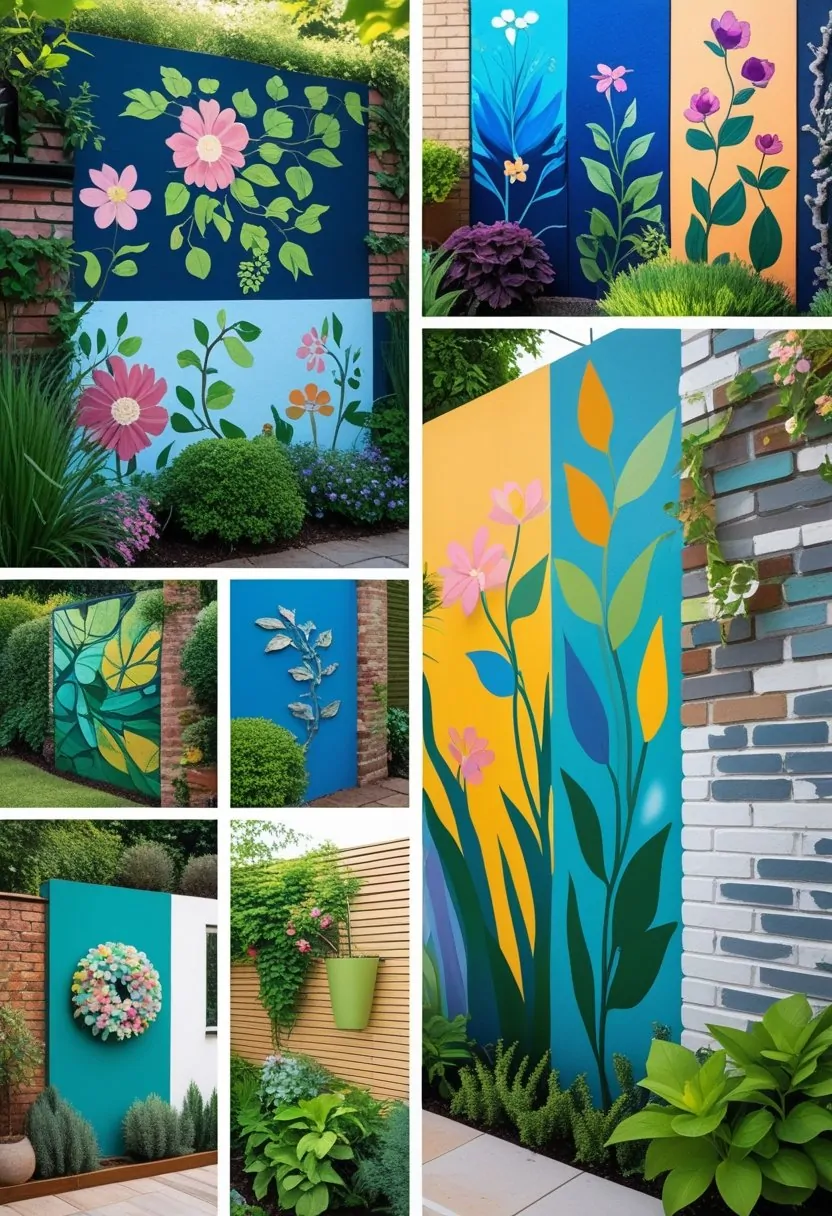
Effective garden wall pins use clear image arrangements and bold titles to draw attention and communicate ideas quickly. Successful collage pins balance visual interest with readability, ensuring each mural stands out while supporting the central theme.
Arranging Multiple Mural Images
Strategic placement of images enhances visual flow and theme cohesion. The collage should group mural images in a way that guides the viewer’s eye smoothly across the design.
Using a grid or asymmetrical layout works well for garden wall paintings. For example, positioning larger, colorful images at the top creates a strong focal point, while smaller murals along the bottom add variety without overwhelming the viewer.
Spacing between images is crucial. Consistent margins avoid clutter and maintain clarity, making each mural distinct yet connected. Color coordination between images also helps unify the collage, especially when using a limited palette or complementary shades.
Creating Eye-Catching Central Titles
The title serves as the main anchor and must be clear and readable. Placing it in the center provides balance and draws immediate attention.
Using bold, contrasting colors for the text enhances visibility against complex mural backgrounds. Sans-serif fonts with clean lines work best for digital pins, ensuring quick readability on mobile screens.
Text size should dominate but not overpower the surrounding images. Adding subtle effects like drop shadows or outlines can improve legibility without distracting from the artwork.
The title’s wording should be concise and impactful. Phrases like “Vibrant Garden Wall Painting Ideas You Shouldn’t Miss” convey relevance and urgency, encouraging viewers to engage further.


