Warm Wood Staircase with Cream Runner & Natural Light
This staircase design blends elegance and warmth to create an inviting focal point in the home. Featuring stained wooden treads and a textured cream runner, it balances comfort with classic style. The white risers and balustrade with traditional spindles enhance its timeless appeal.

Floor-to-ceiling windows fill the stairwell with natural light, emphasizing the rich hardwood grain and making the space feel open and airy. Vertical wall paneling adds depth, while a matching hallway runner ties the design together for a cohesive look. This approach suits modern farmhouse, coastal, or transitional interiors.
Fundamentals of Elegant and Warm Staircase Design

An elegant and warm staircase balances materials, lighting, and details to create both a visual anchor and a welcoming atmosphere. Attention to the interplay of wood tones, texture, and comfort elements elevates the practical function of staircases into an architectural feature.
Defining a Well-Designed Staircase
A well-designed staircase serves as a functional pathway and a key design element. It must address safety and durability while integrating seamlessly with the overall interior style.
Key aspects include scale, proportion, and flow within the home. The staircase should complement surrounding architecture without overwhelming the space.
Light plays a crucial role by highlighting materials and enhancing openness. Proper detailing, such as the choice of balustrades and risers, ensures visual balance and cohesion.
Core Elements: Wood Tones and Texture
Wood tones form the foundation of warmth in staircase design. Rich, natural stains on wooden treads emphasize grain patterns and craftsmanship, adding depth and character.
Contrasting tones between treads and risers create visual interest; for example, darker treads paired with light, white-painted risers maintain brightness while grounding the structure.
Texture enhances tactile appeal and design complexity. A thick, textured runner introduces softness and reduces noise, creating an inviting path underfoot.
Mixing finishes, such as matte wood with gloss-painted trim, can emphasize architectural lines and add subtle elegance.
Blending Comfort and Style in Staircases
Balancing comfort with style involves materials and layout decisions that foster a welcoming experience without sacrificing sophistication.
Runners and rugs provide warmth and traction, helping prevent slips. When paired with classic balustrades featuring traditional spindles, they reinforce a refined, timeless look.
The interplay between soft textiles and sturdy wooden elements creates a harmonious environment. This blend is crucial for styles like modern farmhouse or coastal that prioritize openness yet seek refined charm.
Subtle accents, like coordinating hallway runners and matching wall paneling, connect the staircase to adjacent spaces for a unified presentation.
Key Architectural Details

This staircase design highlights key architectural features that balance traditional elements with subtle comfort. The choice of materials, colors, and textures work together to emphasize both durability and refined style. Each detail plays a specific role in enhancing the stairway’s character and functionality.
Classic White Risers and Balustrade
The use of classic white risers is essential to define the staircase’s clean and timeless look. White risers create contrast against the stained wooden treads, enhancing the grain and warmth of the wood.
The balustrade, painted in crisp white, maintains this fresh and polished aesthetic. Its clean lines help frame the staircase without overwhelming the space. This neutral palette emphasizes light and openness, especially under natural illumination.
Together, the white risers and balustrade provide a foundation that supports varied interior styles, from farmhouse to transitional. They introduce a subtle brightness that complements the runner’s soft texture and the stair’s solid wood structure.
Traditional Spindles and Their Impact
The traditional spindles present a classic touch that reinforces a sense of craftsmanship and detail. Their evenly spaced, slender forms give the balustrade a delicate, rhythmic pattern that contrasts with the bold lines of the stair treads.
This detail is not purely decorative—it adds safety without sacrificing style. The white spindles integrate with the balustrade’s overall color scheme, ensuring continuity while offering an open, airy feel.
By using traditional spindles, the staircase keeps a familiar, inviting quality that fits well within classic and transitional homes. Their design subtly nods to heritage without appearing outdated.
The Role of Runner Rugs in Design
The thick, textured cream runner on the stairs serves both functional and aesthetic purposes. It cushions foot traffic, reducing wear on the wood and adding comfort underfoot.
Visually, the runner softens the strong lines of the staircase, balancing the warm wood and cool white elements. Its neutral tone ties the different components together without competing for attention.
In the hallway, a narrow runner rug complements the stair runner, enhancing flow and consistency throughout the space. This pairing creates a cohesive look, grounding the staircase while adding subtle warmth to the overall home design.
Maximizing Natural Light and Openness

Maximizing natural light and openness involves careful window placement, balustrade materials, and stair construction. Each element plays a key role in enhancing visual space, improving safety, and complementing interior style.
Benefits of Floor-to-Ceiling Windows
Floor-to-ceiling windows bring abundant daylight into stairwells, creating a bright and welcoming environment. They eliminate dark corners and reduce the need for artificial lighting during the day. The continuous glass surface also frames outdoor views, visually extending the interior space.
These windows work well with hardwood flooring and natural textures, highlighting grain and detail. Additionally, large glass panels improve circulation by allowing light to travel freely across multiple floors or areas. This increased visibility can also enhance safety by making the staircase and adjacent spaces easier to navigate.
Enhancing Spaces with Glass Balustrade
Glass balustrades contribute to an open and modern look by minimizing visual barriers along staircases. Their transparency allows light to pass through, maintaining the brightness provided by windows and preventing shadows.
Glass railings, when paired with solid wood treads or floating wood treads, create a balanced contrast between warmth and sleekness. They also support clean lines in design while ensuring safety without appearing bulky. Frameless or slim metal frames further enhance this unobtrusive appearance, promoting a seamless flow between different areas.
Use of Open Risers and Floating Staircases
Open risers reduce the staircase’s visual mass by removing vertical elements between treads. This creates a feeling of lightness and allows light to filter through, enhancing the sense of openness. Floating staircases take this concept further by securing wood treads directly to walls or hidden supports, eliminating visible stringers.
Such designs promote airflow and visibility, connecting spaces while maintaining structural integrity. Floating wood treads combined with subtle lighting can emphasize stair geometry, adding a modern touch without sacrificing warmth or safety. This approach suits contemporary and transitional interiors aiming for spaciousness without clutter.
Integrating the Staircase with Surrounding Interiors
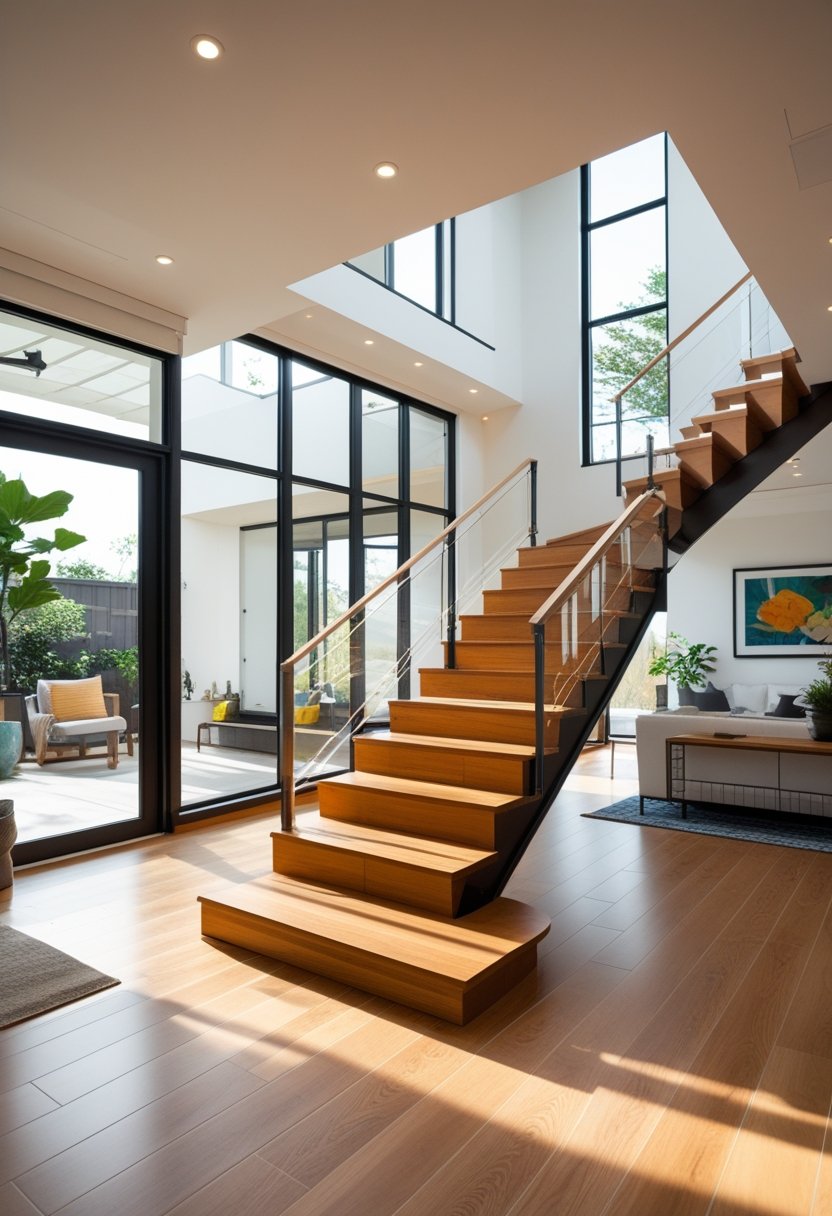
The staircase design extends beyond its own structure, connecting visually and texturally with the surrounding areas. Strategic choices in flooring, wall treatments, and textiles create continuity and coherence throughout the space.
Seamless Transition with Hardwood Flooring
Using consistent hardwood flooring from the stair treads into adjacent hallways creates a smooth, uninterrupted flow throughout the home. The rich grain of reclaimed wood adds character and warmth, enhancing the natural aesthetic. This choice prevents visual breaks that can make areas feel disjointed or cramped.
Careful finishing preserves the wood’s texture and color, maintaining balance with the cream runner and white risers. The hardwood’s durability also supports heavy traffic near stairs and in hallways, combining longevity with elegance. This foundation invites easy movement and showcases craftsmanship.
Using Vertical Wall Paneling for Visual Interest
Vertical wall paneling along the stairwell adds subtle depth without overwhelming the space. Its clean lines emphasize height and draw the eye upward, enhancing the staircase’s architectural presence. The paneling’s texture contrasts with smooth painted surfaces, breaking monotony and adding dimension.
A painted finish matching the balustrade keeps the look cohesive, enabling the paneling to complement rather than compete with other elements. It also offers a fitting backdrop for a gallery wall, where framed art or photographs can personalize the area around the stairs.
Coordinating Hallway and Stairway Rugs
Using a narrow runner rug in the hallway that echoes the stair runner’s cream tone creates visual unity between the two spaces. Both rugs share similar texture but differ slightly in pattern or pile to define their separate areas while keeping a harmonious connection.
This coordination softens foot traffic zones and protects hardwood surfaces from wear. The hallway runner’s size maintains scale for a narrow passage, while the stair runner provides safety and style on the steps. Together, they frame the transition from floor to stair in one continuous statement.
Styling for Popular Home Aesthetics

This staircase design balances traditional elements with bright, textured finishes that work well across several popular home styles. Attention to coordinating materials and light creates a unified look that enhances the character of each aesthetic.
Modern Farmhouse Staircase Ideas
The use of stained wooden treads and a cream runner fits perfectly within modern farmhouse interiors. Wood brings warmth and natural texture, while the runner adds softness and comfort underfoot. White-painted balustrades with classic spindle details emphasize simplicity and craftsmanship central to farmhouse style.
Incorporating rustic touches like distressed wood or wrought-iron accents complements this look. Neutral tones in wall paneling and flooring ground the space, allowing the staircase to become both a functional feature and a visual anchor.
Transitional and Coastal Style Considerations
Transitional style benefits from the balance between classic white risers and textured runners. This mix of clean lines and soft materials creates a versatile backdrop that pairs well with coastal elements such as light, airy color palettes and natural fibers.
In coastal homes, it is common to see brighter finishes and minimal clutter around staircases. Adding vertical wall paneling helps maintain architectural interest without overwhelming the space. Coordinating the stair runner with hallway rugs ties the design to common transitional goals—comfort, balance, and elegance.
Incorporating Modern Minimalism
For modern minimalism, the focus shifts to streamlined shapes and reduced ornamentation. The thick cream runner can remain, but paired with simple, unadorned balustrades painted in white or black for contrast. The wood tones should be lighter or even matte for restrained warmth.
Avoiding excessive detailing in spindles or wall treatments aligns better with minimalist ideals. Instead, light and openness are emphasized through floor-to-ceiling windows that highlight open stair designs like floating treads or sleek metal railings. This maintains comfort without sacrificing simplicity.
Striking Design Alternatives

Various staircase designs offer unique ways to combine form and function, enhancing any interior’s character. These alternatives range from sculptural curves to bold structural choices, each creating distinct visual appeal and architectural interest.
Inspiration from Spiral and Curved Staircases
Spiral staircases optimize space while providing a sculptural focal point. Their compact footprint makes them ideal for areas with limited room, yet their circular flow adds softness to angular interiors.
Curved staircases extend this concept on a larger scale. They feature sweeping arcs that can complement grand foyers or more intimate settings. The gentle curve invites movement and adds fluidity to a home’s layout. Materials such as wood or glass enhance elegance while maintaining openness.
Both styles emphasize verticality and grace, often paired with minimalist railings to avoid cluttering the design. Lighting plays a key role in highlighting these staircases, emphasizing shadows and form.
Cantilevered and Zigzag Staircase Variations
Cantilevered staircases appear to float, with treads fixed directly into the wall and no visible support beneath. This design creates the illusion of weightlessness and maximizes open space beneath the stairs.
Zigzag staircases present a geometric alternative, identifiable by sharp angles and a rhythmic pattern. This linear yet dynamic form adds architectural interest through its repetition and clean lines. Often, they incorporate materials like steel or wood to sharpen the visual impact.
Both designs suit modern interiors where minimalist aesthetics and functional openness are priorities. They can serve as eye-catching sculptural elements without overwhelming the space.
Wide and Industrial Metal Staircases as Focal Points
Wide staircases offer a grand presence and emphasize comfort, accommodating multiple people at once whether ascending or descending. Their generous proportions suit homes with ample space, providing both practicality and an inviting feel.
Industrial metal staircases bring raw, utilitarian textures into the home. Steel railings and open risers define this style, often paired with wooden treads for warmth. The blend of materials balances ruggedness with refinement.
Such staircases are prominent visual anchors, especially in lofts or converted warehouse spaces. Their durability and striking lines create a bold statement in urban or contemporary settings.
Bringing the Outdoors In: Vertical Gardens and Lush Greenery
Incorporating vertical gardens alongside staircases introduces natural elements that soften architectural lines. Lush greenery enhances air quality and adds organic texture within interior spaces.
Vertical gardens can be positioned on walls flanking the stairwell or integrated into the balustrade design. This approach merges functionality with biophilic design principles, promoting wellness and visual interest.
Plants selected for indoor stair areas should tolerate varying light conditions. Choices like ferns, pothos, or succulents offer low-maintenance options that thrive in stairwells illuminated by natural or artificial light.
Together, greenery and staircases create inviting, tranquil environments that bridge indoor and outdoor living aesthetics.