
Victorian Powder Room Makeover: Elegant & Timeless Charm
Transforming a tiny, dark, and outdated half bathroom into a stunning Victorian-style powder room is achievable by carefully selecting elements that bring charm and character without overwhelming the space. Using painted Anaglypta wallpaper, gold-toned radiator pipes, antique-style fixtures, and a vintage mirror creates a rich, layered look that balances old-world elegance with thoughtful modern updates. Deep, moody hues paired with warm metallic accents set a dramatic yet inviting tone that feels both authentic and fresh.
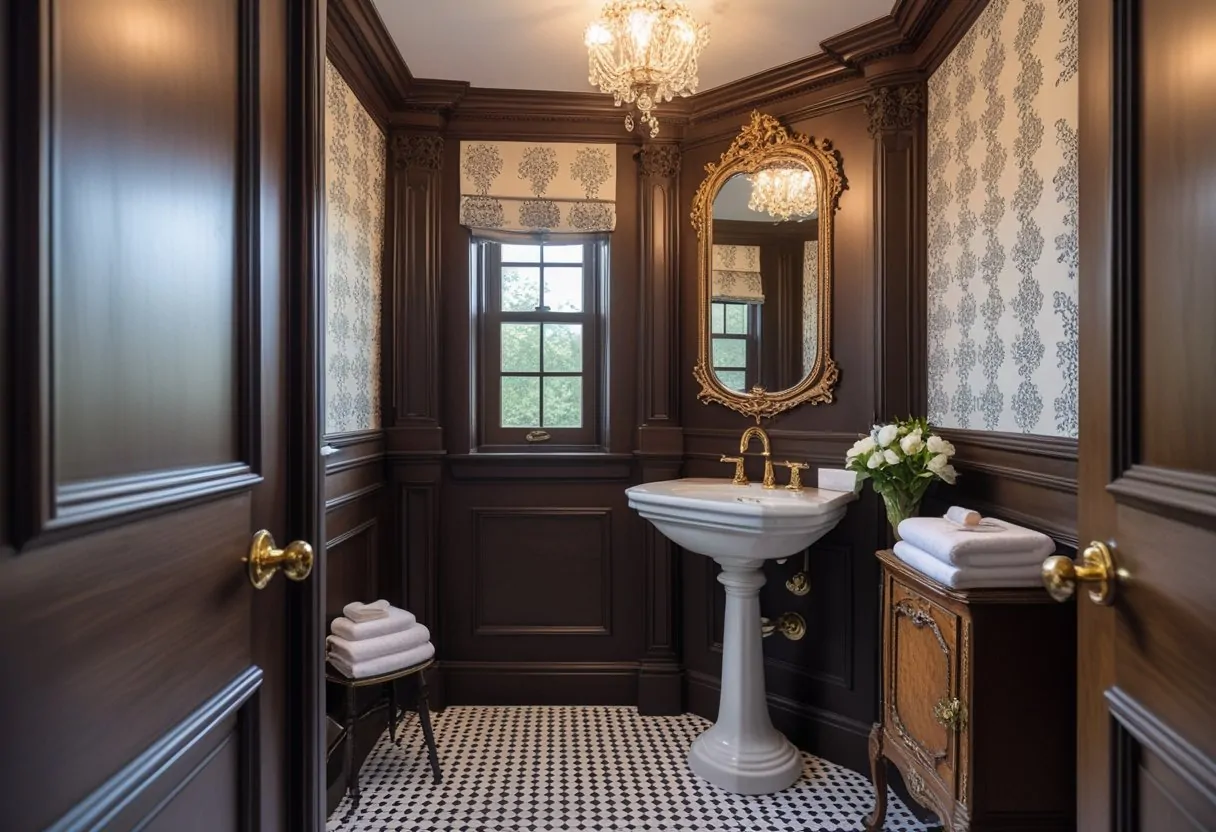
Every detail, from period-appropriate lighting to deliberate color choices, must work together to enhance the room’s size and ambiance. This approach ensures that even a compact powder room can embody the opulence and intricate style of the Victorian era, making every corner feel intentional and full of character. The result is a space that feels elegant, timeless, and uniquely tailored despite its limited footprint.
Victorian-Style Design Principles

Victorian design in a powder room focuses on creating richness through layered textures, deep colors, and intricate details. The style balances historical motifs with modern functionality. Subtle warmth from metallic accents and carefully chosen fixtures add depth, while maintaining elegance in a small space.
Characteristics of Victorian Powder Rooms
Victorian powder rooms are known for their compact elegance with detailed ornamentation. Walls often feature textured or patterned wallpaper, such as painted Anaglypta, to add depth and tactile interest. Rich, moody tones like deep greens, burgundy, or navy set a dramatic backdrop.
Fixtures are typically antique-style with brass or gold finishes, complementing the gold-toned radiator pipes. Vintage mirrors with ornate frames add character and a focal point. The ceilings are often kept high or visually raised through lighting and trim work to counterbalance the small footprint.
Blending Historical Influence With Modern Living
Integrating Victorian elements into a modern powder room requires thoughtful balance. Authentic period features like radiator pipes and antique-look fixtures are paired with contemporary materials for durability and ease of maintenance.
Lighting is updated with period-appropriate designs that include LED bulbs, offering efficiency without sacrificing style. The color palette adopts deep, layered hues but avoids overwhelming the space by limiting excessive patterns to one or two walls. This approach maintains Victorian charm while meeting current lifestyle needs.
Key Elements of Opulence and Drama
Opulence in a Victorian powder room comes from layering textures and finishes that draw the eye. Painted Anaglypta wallpaper adds a subtle relief, providing ornate detail without being busy. Gold-toned radiator pipes and fixtures introduce warmth and reflect light, enhancing the room’s richness.
Period-style lighting, such as wall sconces or small chandeliers, creates focal points and highlights architectural details. The vintage mirror, often gilded or carved, amplifies light and visually enlarges the space. Together, these elements create a dramatic yet inviting atmosphere that reflects Victorian grandeur within modern constraints.
Optimizing Small Half Bathroom Layouts
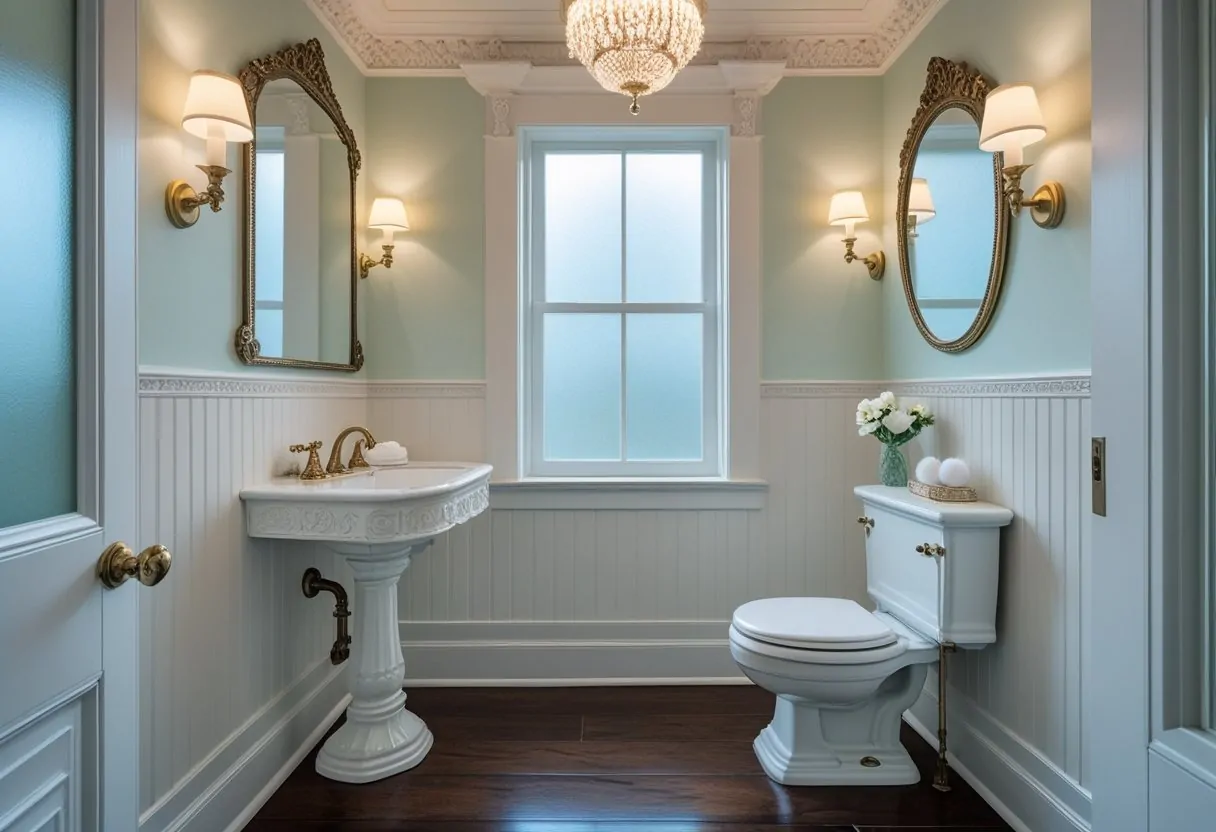
Maximizing both function and style in a tiny Victorian-inspired half bathroom requires careful attention to layout, layering textures and finishes, and using visual tools to expand the sense of space. Thoughtful arrangement and design elevate the room without crowding it.
Space Planning for Efficiency and Elegance
Planning should begin with prioritizing key fixtures that fit the scale without overwhelming the space. A wall-mounted or floating vanity frees floor space and reinforces a streamlined look.
The toilet placement should maintain easy movement while leaving room for decorative elements like a vintage mirror or an accent radiator. Narrow countertops with storage beneath keep clutter at bay.
Plumbing pipes painted in gold tones can serve as design features rather than eyesores, integrating practical elements into the decor. Position lighting to enhance both function and ambiance without adding bulk.
Creating Layers Within Compact Dimensions
In a small Victorian powder room, layering textures adds richness and depth. Painted Anaglypta wallpaper introduces subtle relief and period-appropriate detail on walls.
Combining matte deep hues like emerald or navy with warm metallic accents adds visual warmth. Antique-style fixtures in brass or gold create focal points and connect layers.
Flooring can incorporate patterned tiles in muted tones for old-world elegance. Layer wall treatments, fixtures, and textiles—such as a plush hand towel—to bring dimension without cluttering.
Maximizing Visual Impact in Tight Quarters
Mirrors are essential for enlarging the feeling of space. A vintage mirror with ornate framing acts as both a functional piece and a Victorian statement.
Lighting designed for drama and softness, like wall sconces with frosted glass, supports a moody, inviting atmosphere. Reflective surfaces multiply natural or artificial light.
Small details, including exposed gold-toned radiator pipes and carefully chosen hardware, serve as accents that catch the eye. These elements create complexity and interest, maintaining Victorian opulence within a compact footprint.
Color Palette for Depth and Atmosphere
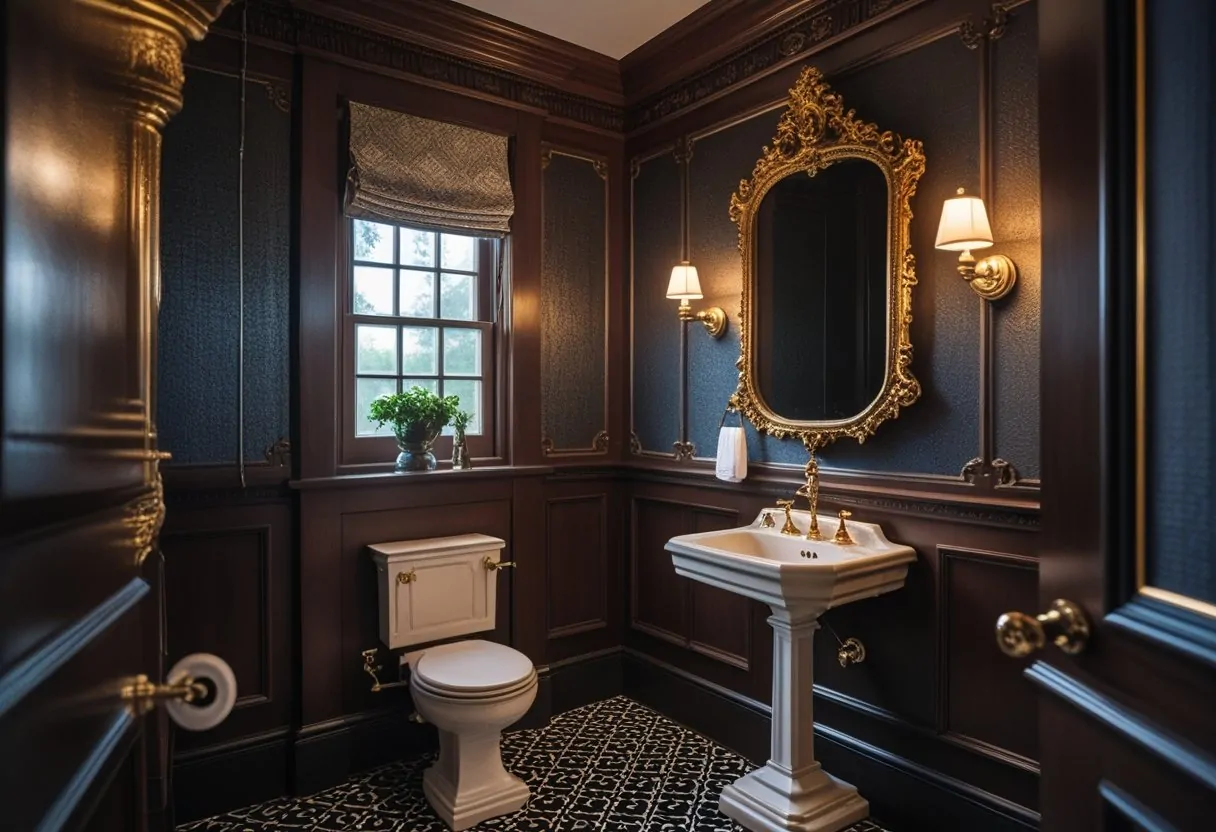
The color palette sets the mood and layers the visual richness necessary in a Victorian-inspired half bathroom. It balances deep, moody tones with elements of warmth and metallic highlights to evoke elegance and intimacy in a compact space.
Selecting Deep, Moody Hues
Deep hues such as rich emerald greens, navy blues, or charcoal grays create a solid backdrop that enhances the room’s layered, Victorian character. These colors add depth and make the small space feel enveloping rather than cramped.
Matte or eggshell finishes work best on walls to absorb light subtly, while a dark base contrasts effectively with lighter molding or ceiling details. This contrast highlights architectural elements typical of Victorian design and prevents the room from feeling flat.
Avoid overly bright or saturated colors in large areas—they can overwhelm the tiny bathroom. Instead, reserve bold shades for focal walls or accent features that draw interest without reducing the sense of space.
Incorporating Touches of Warmth
Warmth softens the intensity of dark walls and prevents the room from feeling cold or heavy. Deep burgundy, warm taupe, or muted terracotta complement the rich palette while adding inviting undertones.
Soft, warm hues can appear in smaller details such as hand-painted Anaglypta wallpaper, fabrics, or trim. These bring texture and subtle visual interest, helping to balance the coolness of moody shades.
Warmth also extends into the choice of wood finishes or textiles with gold or red undertones, echoing Victorian luxury and enhancing the welcoming atmosphere.
Using Metallic Accents to Elevate the Space
Metallic accents are essential for adding the period-appropriate luxury and brightness needed in a moody Victorian design. Gold-toned radiator pipes, brass fixtures, and vintage-style lighting serve both decorative and functional purposes.
Brushed or antique gold finishes feel timeless and coordinate with the warm undertones, creating cohesion. These metals catch light to break up dark areas and introduce sparkle without glare.
Strategically placed metallic elements, like a gilded mirror frame or ornate switch plates, reinforce the room’s character. They emphasize detail and craftsmanship, which is critical for achieving an elegant and intentional aesthetic.
Wall Treatments and Painted Anaglypta Wallpaper
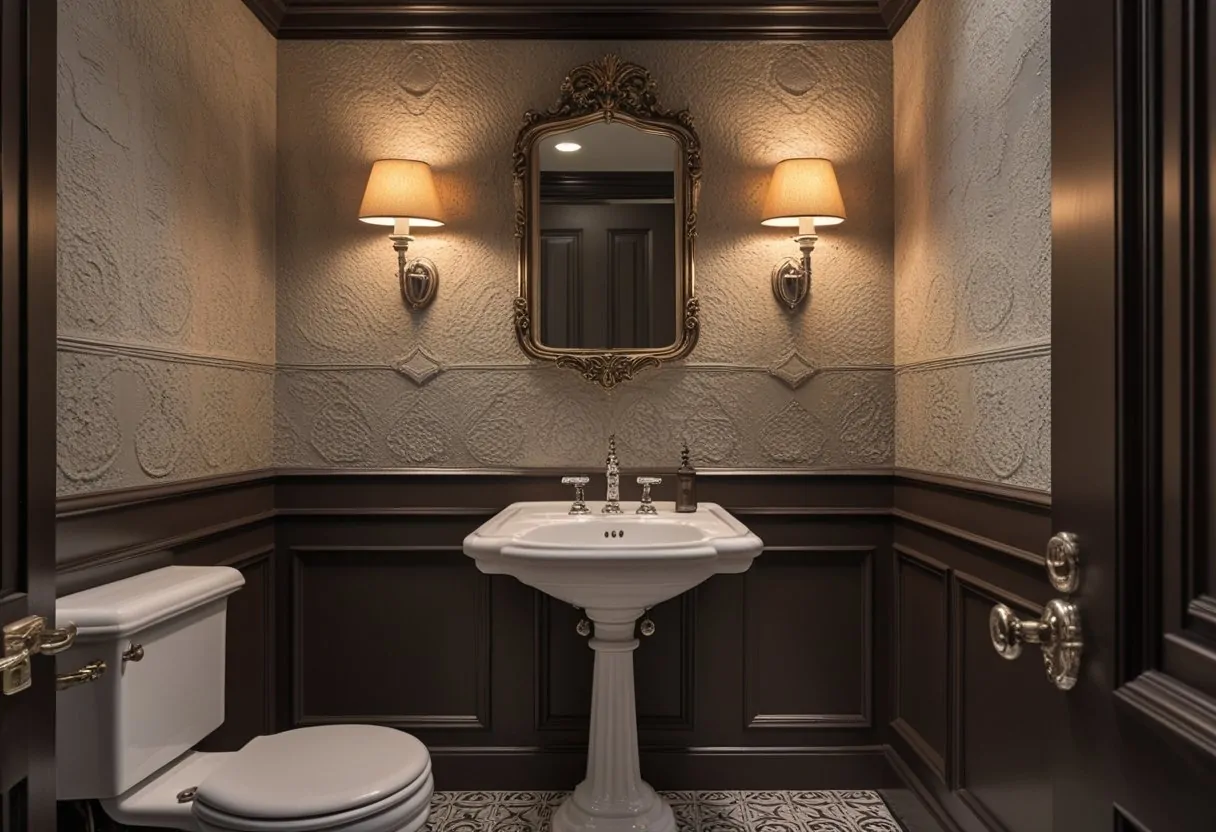
Creating a textured, layered wall surface is essential to evoke Victorian charm in a small powder room. A paintable embossed wallpaper, combined with careful color choices and traditional wall detailing techniques, brings depth and authenticity to the space. The texture must work in harmony with rich, moody hues and metallic accents to elevate the room’s character.
Choosing and Painting Anaglypta Wallpaper
Anaglypta wallpaper offers both texture and versatility, making it ideal for Victorian-style rooms. It features deep embossing that replicates heritage patterns like plaster friezes or carved wood. This wallpaper can be tinted or fully painted to suit the chosen color palette.
To prepare, the walls should be primed to ensure proper adhesion. Applying a base coat in a warm neutral color helps the embossing stand out before adding the main paint color. Using quality eggshell or satin finish paint highlights texture without overly reflecting light. Metallic paints or subtle glazes may be applied selectively on raised areas to introduce warmth and dimension.
Victorian-Era Wall Detailing Techniques
Victorian interiors often included elaborate moldings, borders, and layered wall treatments. Adding a simple dado rail or picture rail above the wallpaper enhances the historic feel without crowding the small space.
Booking techniques—where the wallpaper is folded carefully before hanging—ensure the embossed paper adheres smoothly without bubbles. The wallpaper requires at least 24 hours to cure fully for maximum durability. Period-authentic details such as stenciling or light gilding along edges can add subtle decorative interest.
Balancing Texture With Color
A deep, moody color palette—such as rich greens, navy blues, or charcoal grays—works well behind embossed wallpaper. These tones create a dramatic backdrop while making the texture prominent.
To avoid visual heaviness, balance the richness with touches of gold on pipes and fixtures, and incorporate warm, muted metallics through paint finishes or lighting fixtures. Keeping ceilings and trim lighter, typically in soft creams or aged whites, frames the walls and prevents the room from feeling cramped.
This balance focuses attention on the walls’ physical depth while allowing other elements like mirrors and antique-style lighting to contribute to the layered Victorian elegance.
Antique-Style Fixtures and Gold-Toned Radiator Pipes
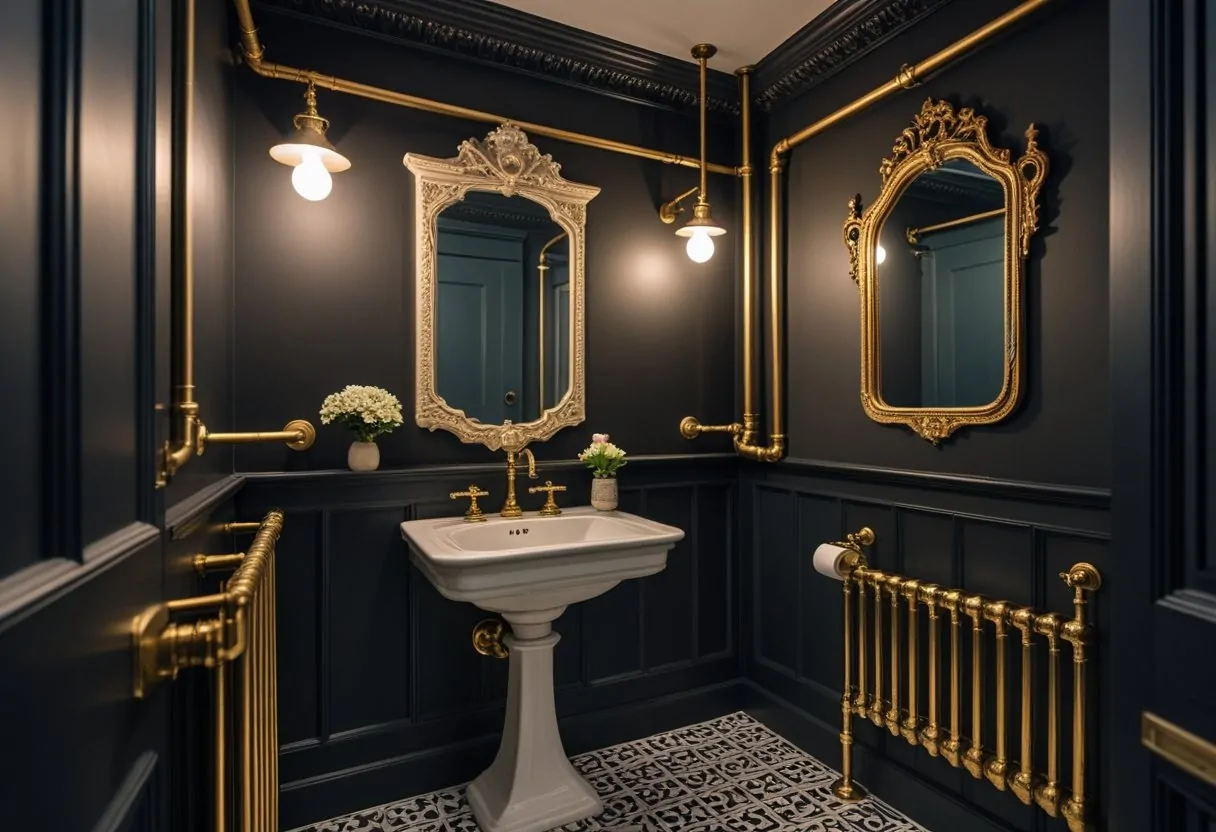
The incorporation of antique-style fixtures alongside gold-toned radiator pipes adds authenticity and richness to the Victorian powder room. Thoughtful selection and blending of these elements contribute to an elegant, historic feel while accommodating modern needs.
Selecting Period-Appropriate Faucets and Hardware
Choosing faucets and hardware that reflect late 19th-century design ensures the space stays true to Victorian aesthetics. Look for cross-handle taps, porcelain accents, and detailed cast brass finishes that showcase craftsmanship.
Finish options like polished nickel or oil-rubbed bronze complement the deep, moody palette. Avoid overly shiny chrome to maintain an antique vibe.
Hardware should have decorative elements—fluted edges, rosettes, or claw-foot details—to echo the era’s style. This extends beyond faucets to towel bars, toilet paper holders, and cabinet knobs, which should feel cohesive yet refined.
Integrating Gold-Toned Radiator Pipes
Exposed radiator pipes painted in warm gold tones serve both functional and decorative purposes. The metallic finish adds warmth and luxury, contrasting effectively with dark wallpaper and painted Anaglypta textures.
The pipes should be coated with heat-resistant paint formulated for metal to ensure durability and color retention. Matte or satin finishes prevent glare, preserving the vintage feel.
Position the pipes to emphasize architectural lines without cluttering the small space. Highlighting the radiator with gold piping draws attention and reinforces the Victorian character.
Blending Antique Finishes With Modern Functionality
Antique fixtures often require updates to meet current plumbing standards. It’s essential to select vintage-inspired pieces designed for contemporary water pressure and efficiency.
Hidden modern valves and ceramic disc cartridges can be integrated without altering the visible antique style. This ensures reliability and ease of maintenance.
Using authentic materials like brass or bronze hides wear better than cheaper alloys, promoting longevity. Balancing aged patinas with polished surfaces allows for a fresh but period-appropriate look that suits daily use.
Statement Vintage Mirrors
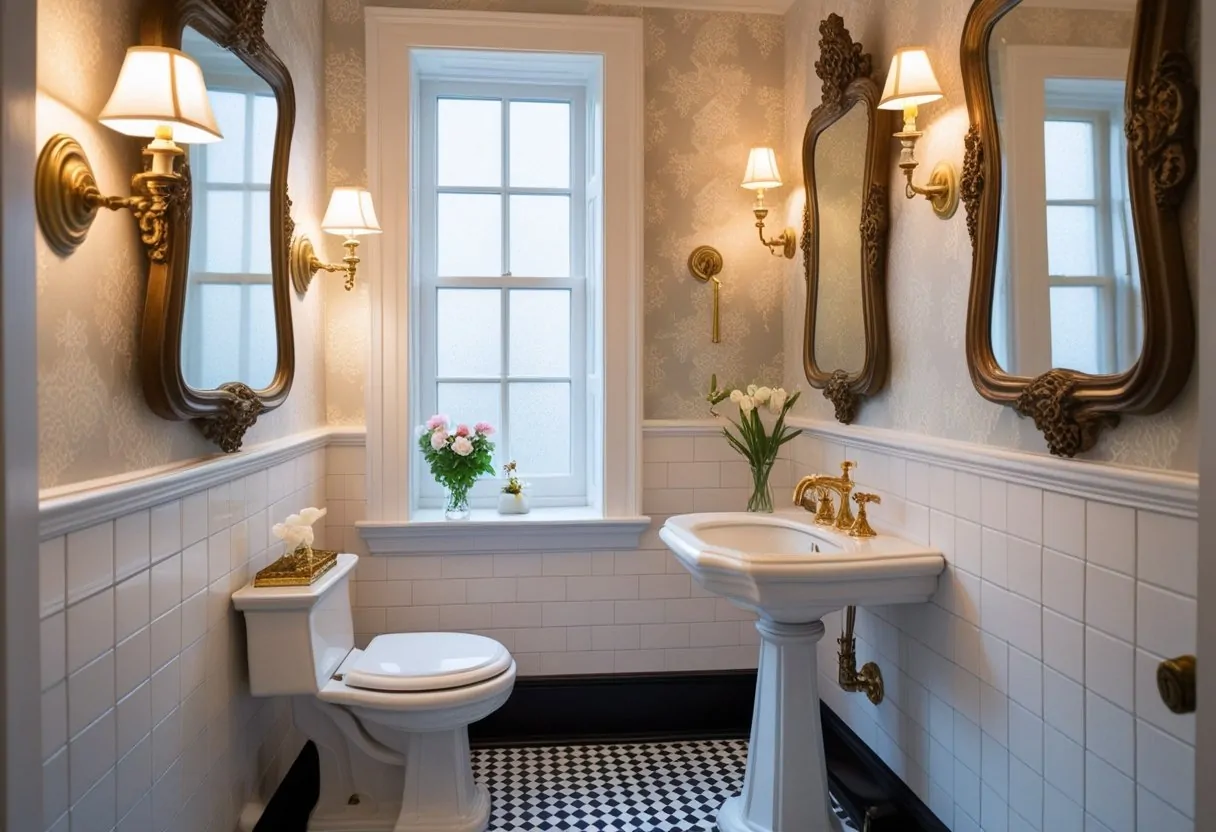
A vintage mirror anchors the powder room’s Victorian charm and enhances its depth and elegance. Selecting the right style involves balancing period accuracy and visual impact. Where the mirror is placed can amplify natural and artificial light, creating a sense of space in a small, moody setting.
Choosing the Right Victorian Mirror Style
Victorian mirrors typically feature ornate details such as carved wood, gilt frames, and intricate scrollwork. Opt for a mirror with a gold or bronze finish to complement the warm metallic accents in the bathroom.
Shapes like arched tops, oval, or heavily framed rectangles suit the period. Avoid minimalistic or overly plain designs that clash with the layered Victorian aesthetic.
Size matters: a mirror slightly larger than usual works well in a tight room, becoming a focal point without overwhelming the space.
Positioning Mirrors for Light and Space Enhancement
Place the mirror directly across or adjacent to the light source—such as a sconce or window—to maximize reflection and brighten the area.
Mounting it above the sink or radiator pipes draws attention to those elements while enlarging the room’s perceived size.
Using a vintage mirror with a beveled edge enhances reflections subtly. This detail catches light differently, adding dimension and visual interest without harsh glare.
Period-Appropriate Victorian Lighting
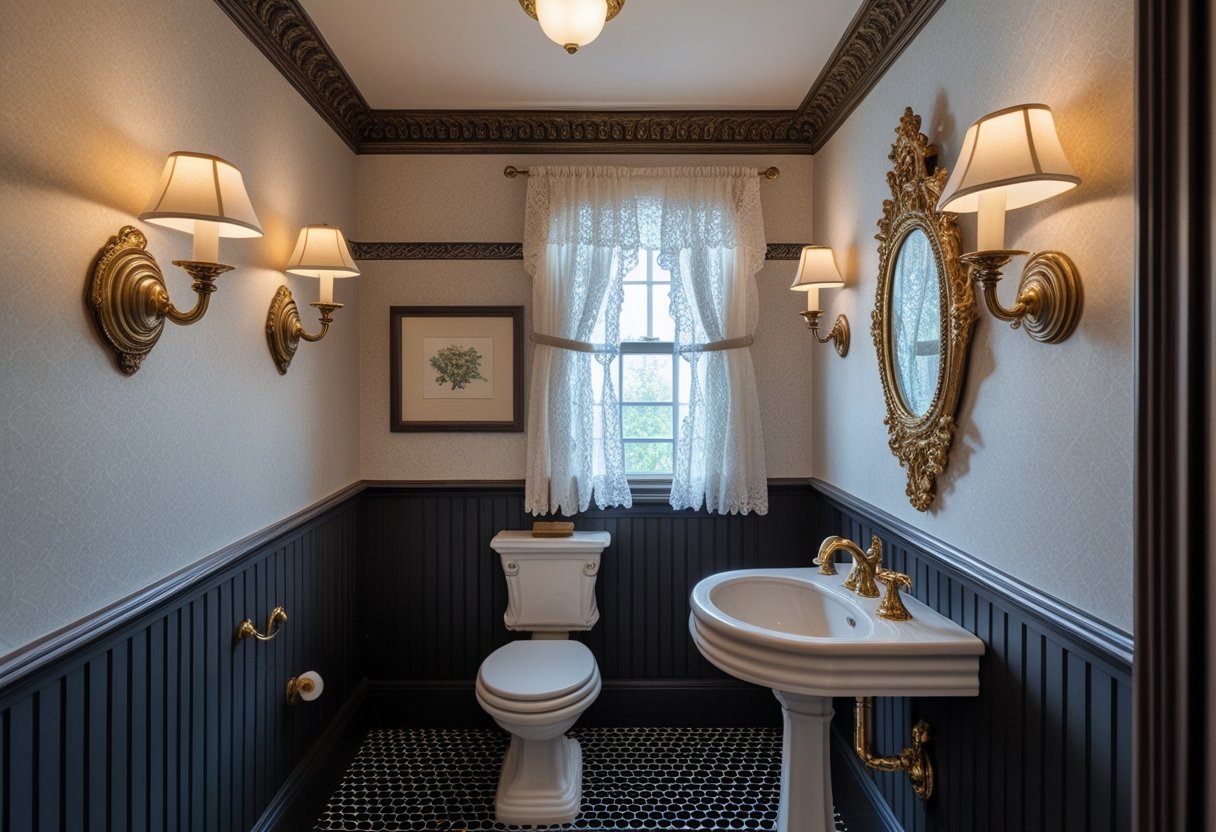
Victorian lighting should blend ornate design with functional layers of light. It often involves mixing different fixture types, combining ambient and accent sources, and using warm tones to enhance mood. Proper lighting ensures the small powder room feels both rich and inviting.
Types of Victorian Lighting Fixtures
Victorian fixtures typically include crystal chandeliers, gaslight-style wall sconces, and antique brass pendants. Chandeliers add elegance and serve as a focal point, especially scaled down for a powder room’s size. Wall sconces provide decorative side lighting with intricate metalwork or frosted glass shades.
Antique-style fixtures with brass or gold finishes complement the gold-toned radiator pipes. Using dimmable bulbs or LED equivalents designed to mimic candlelight enhances the historic feel. Fixture shapes often feature curved arms, floral motifs, and etched glass.
Mixing Ambient and Accent Lighting
Layering light is essential to highlight the wallpaper texture and vintage mirror while maintaining overall brightness. Ambient lighting comes from ceiling pendants or chandeliers with soft, warm bulbs that distribute light evenly.
Accent lighting focuses on key features like the mirror and wallpaper pattern. Wall sconces flanking the mirror can add glow without glare. Small table lamps or LED strips hidden behind moldings create subtle highlights and make the space appear larger.
This balance prevents shadows and ensures the half bath feels intentional and well-curated.
Achieving the Perfect Mood
The mood hinges on warm, golden light balanced with the room’s deep, moody palette. Bulbs with a color temperature around 2700K recreate the soft glow of Victorian gaslight, promoting intimacy and elegance.
Gold-tone fixtures enhance warmth, reflecting light subtly. Dimmer controls allow adjustment from bright illumination for cleaning to a gentle ambiance for guests. Light layering combined with a reflective vintage mirror magnifies glow, creating a cozy, refined atmosphere within the compact powder room.
Furnishings and Accessory Selection
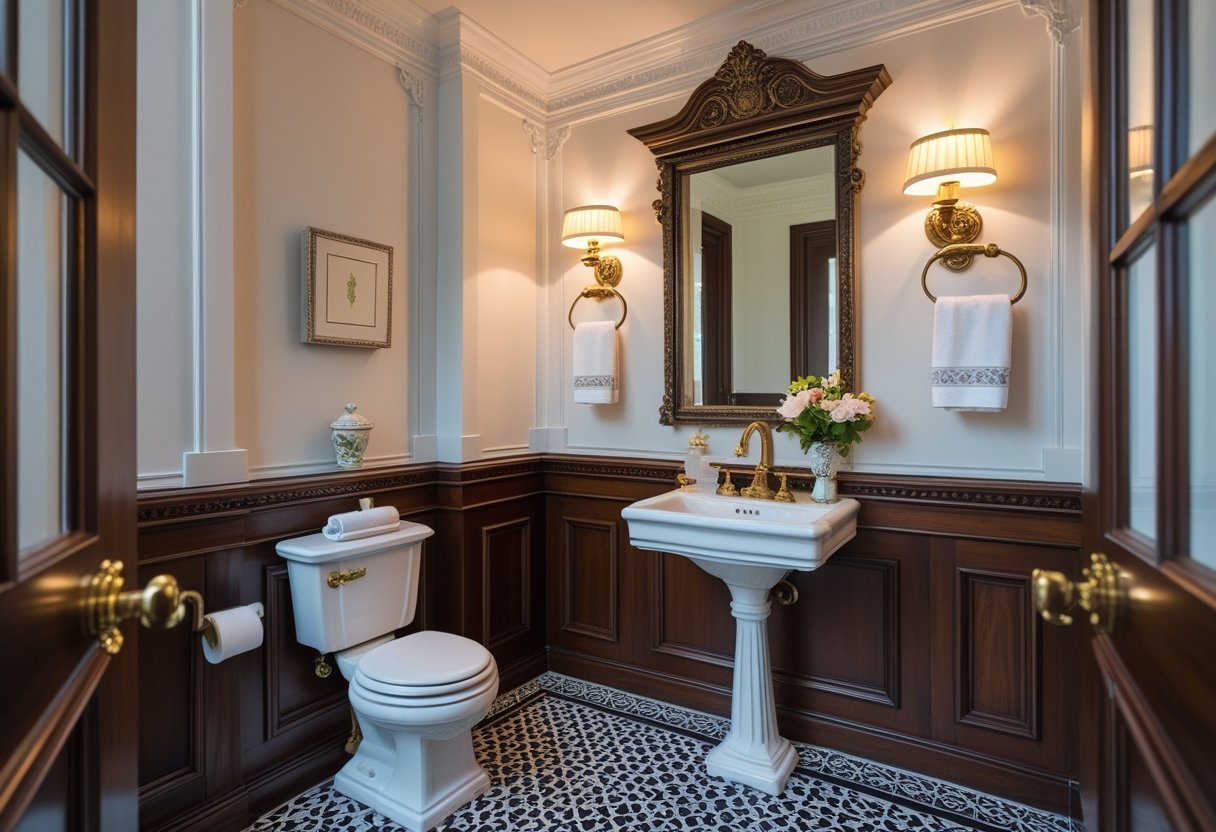
The half bathroom’s decorative elements must balance form and function while upholding a historic Victorian theme. Each piece plays a role in enriching the atmosphere without overcrowding the compact layout.
Selecting Compact Yet Elegant Furniture
Furniture should be scaled thoughtfully to preserve space. A small, pedestal sink or a narrow console table with ornate legs suits the style and keeps the floor visible, preventing the room from feeling cramped.
Wood finishes with dark stains complement the deep color palette. Avoid overly modern lines; instead, choose curves and subtle carvings typical of the Victorian era.
Fixtures with a polished brass or gold finish harmonize with the gold-toned radiator pipes, providing cohesion. Compact seating, like a small tufted stool with wooden legs, can add both function and old-world charm without overwhelming the space.
Choosing Decorative Accessories With Character
Accessories create visual interest and contribute to the room’s layered richness. A vintage mirror with a detailed frame acts as a focal point above the sink.
Select period-appropriate lighting fixtures such as wall sconces with frosted glass or brass detailing for warm, inviting illumination. These should support the moody palette and add subtle highlights.
Incorporate small decorative objects like antique-style soap dishes or crystal perfume bottles. Use rich textiles, like a velvet hand towel or a patterned runner, to add texture and warmth.
Incorporating Victorian-Style Storage Solutions
Storage must be discreet yet stylistically consistent. Consider a wall-mounted cabinet with beveled glass doors or a small freestanding armoire featuring ornate hardware.
Open shelves framed in dark wood can display neatly arranged toiletries in glass jars or ceramic containers, enhancing the vintage feel while keeping essentials within reach.
Hooks and towel racks with detailed metalwork in gold tones should be both functional and decorative. Utilize narrow baskets or trays to organize under-sink spaces without disrupting the overall design cohesion.
Styling and Layering for Drama
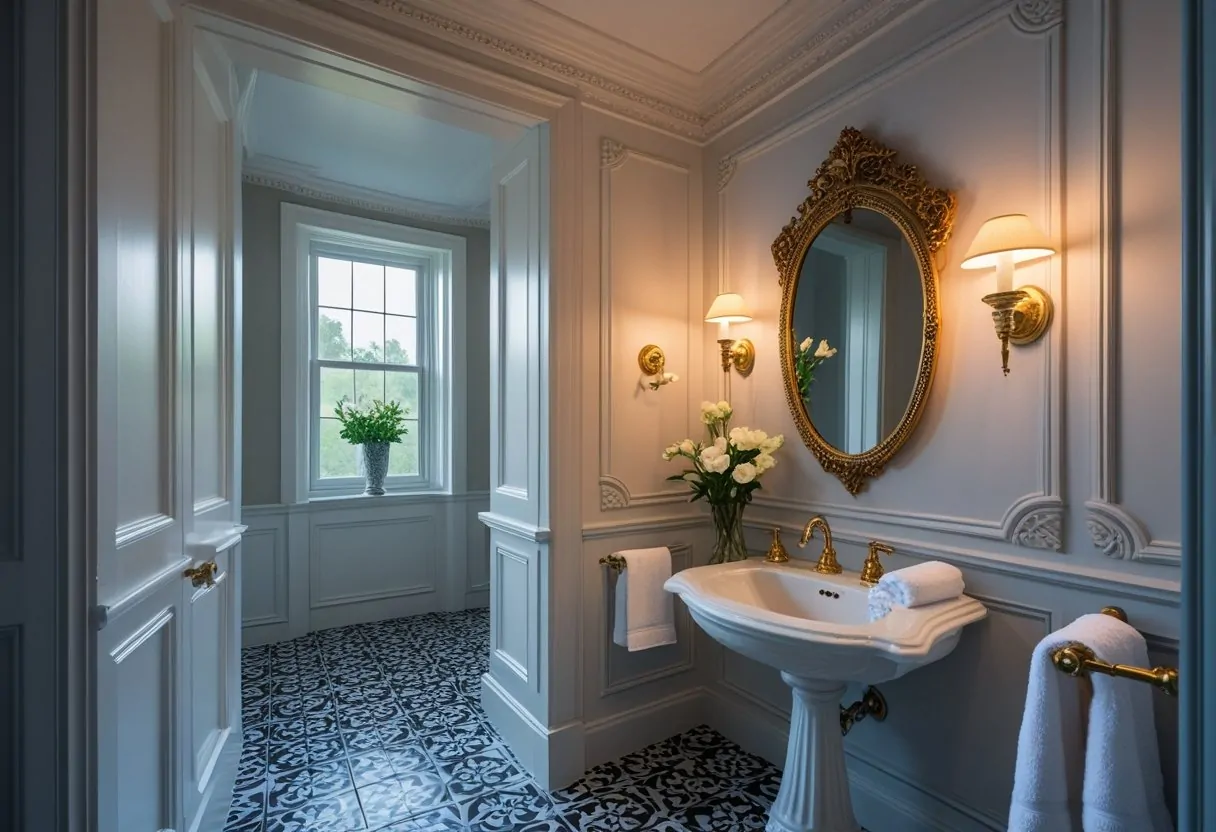
Creating a Victorian-style powder room requires careful selection of rich textures, layered design elements, and a refined sense of balance. Every choice, from wall treatments to fixtures, contributes to an intentional atmosphere of opulence and warmth.
Curating Rich, Layered Details
Layering begins with texture and material contrasts. Painted Anaglypta wallpaper introduces a tactile element that complements the walls’ deep, moody hues. The embossed patterns add vintage charm while allowing the paint’s richness to shine through.
Gold-toned radiator pipes act as subtle metallic highlights, drawing the eye without overwhelming the space. Antique-style fixtures like ceramic taps and drawer pulls reinforce period authenticity.
Accents such as a vintage mirror with an ornate frame amplify the layered effect by reflecting light and enhancing the room’s depth. Small, curated accessories—consider a dark wood tray or velvet hand towel—complete the textural story.
Orchestrating a Cohesive, Opulent Look
Consistency across color, material, and style creates cohesion. Choose a palette centered on deep navies, emerald greens, or burgundy, balanced by warm golds and brass finishes.
Lighting fixtures should combine form and function, favoring period-appropriate sconces or a small chandelier with warm bulbs to provide soft, inviting illumination. This pairing reinforces the Victorian aesthetic while improving usability.
All elements—fittings, wallpaper, and accessories—must share details such as patina or subtly distressed finishes. Such consistency avoids clutter and confusion, uniting old-world charm with modern practicality.
Balancing Old-World Charm With Fresh Appeal
To prevent the powder room from feeling dated or heavy, fresh elements need incorporation. Glossy finishes on tiles or cabinetry introduce a contemporary sheen that counters the more intricate wallpaper.
Modern plumbing concealed behind gold-toned pipes keeps the space functional but unobtrusive. Minimalist shelving or clean-lined accessories can counterbalance elaborate details, ensuring the room remains inviting.
This balance keeps the space dramatic and rich yet approachable, offering a nuanced take on Victorian style suitable for today’s small but stylish powder rooms.
Maintenance and Preservation of Finishes
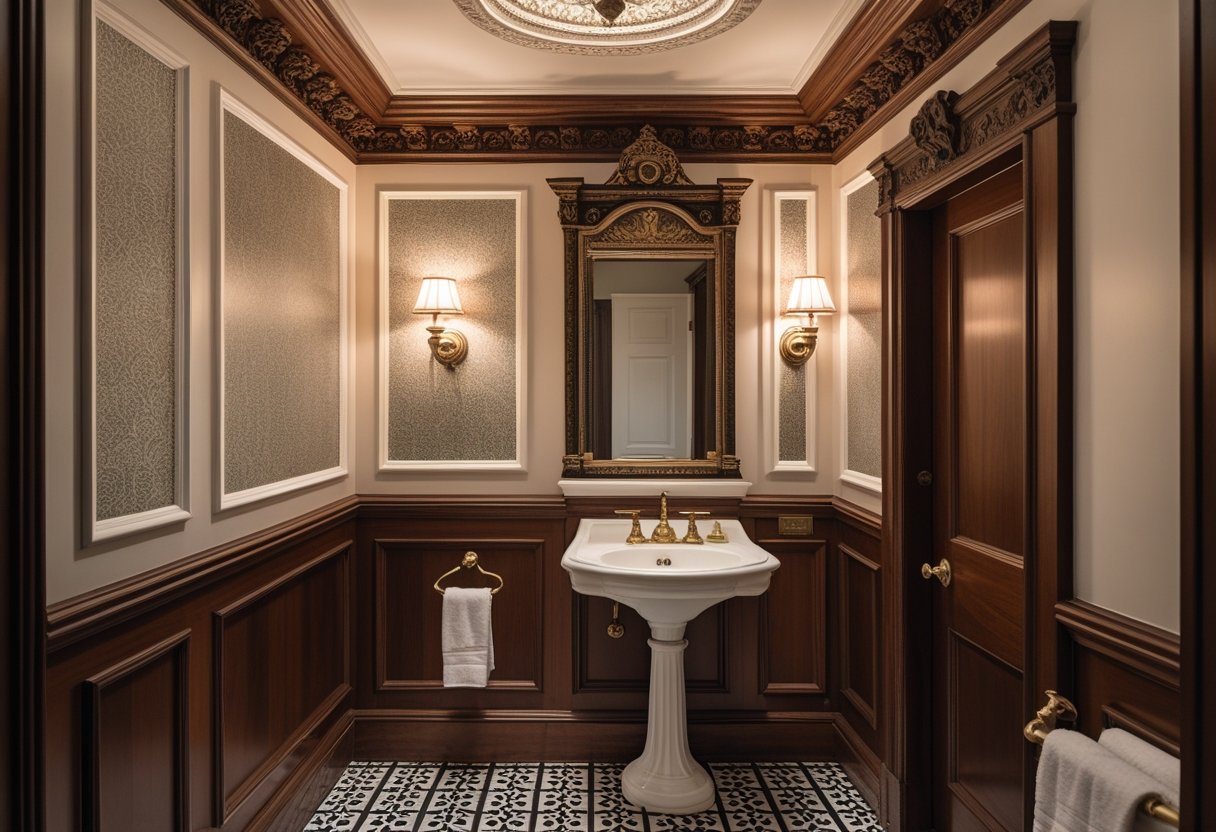
Maintaining the finishes in a Victorian-style powder room requires specific care to preserve its delicate details. Both the wallpaper and painted surfaces need gentle cleaning and protection from moisture. Antique and metal fixtures demand routine attention to avoid tarnish and mechanical wear while retaining their original luster.
Protecting Wallpaper and Painted Surfaces
Wallpaper, especially textured types like painted Anaglypta, is vulnerable to moisture and abrasion. Use a soft, dry cloth to dust regularly. Avoid harsh cleaners or excessive water, which can cause peeling or discoloration. Spot clean stains with a damp cloth and mild soap if necessary, testing on a hidden area first.
Humidity control is essential. Installing a vent or using a dehumidifier reduces dampness that damages both wallpaper and paint. Applying a protective clear varnish compatible with the wallpaper can add durability without altering the texture.
Caring for Metal and Antique Fixtures
Gold-toned radiator pipes and antique fixtures require specific cleaning products designed for metals. Use a mixture of mild soap and warm water applied with a soft cloth. Avoid abrasive scrubbers or chemical cleaners that can strip finishes or cause pitting.
For ongoing preservation, a gentle metal polish tailored to the fixture’s metal type can be used sparingly. Regular inspection of moving parts such as taps or hinges prevents damage from wear. Lubricate mechanisms lightly to maintain smooth function while avoiding excess moisture buildup that leads to corrosion.