Cozy & Practical Nursery Room for Calm & Comfort
This nursery room combines comfort, warmth, and practicality through its carefully chosen elements. A white crib with soft, colorful bedding is placed against a muted sage green wall, accented by framed art that adds personality without overwhelming the space. Natural light from large windows enhances the room’s calm atmosphere, making it suitable for both rest and play.
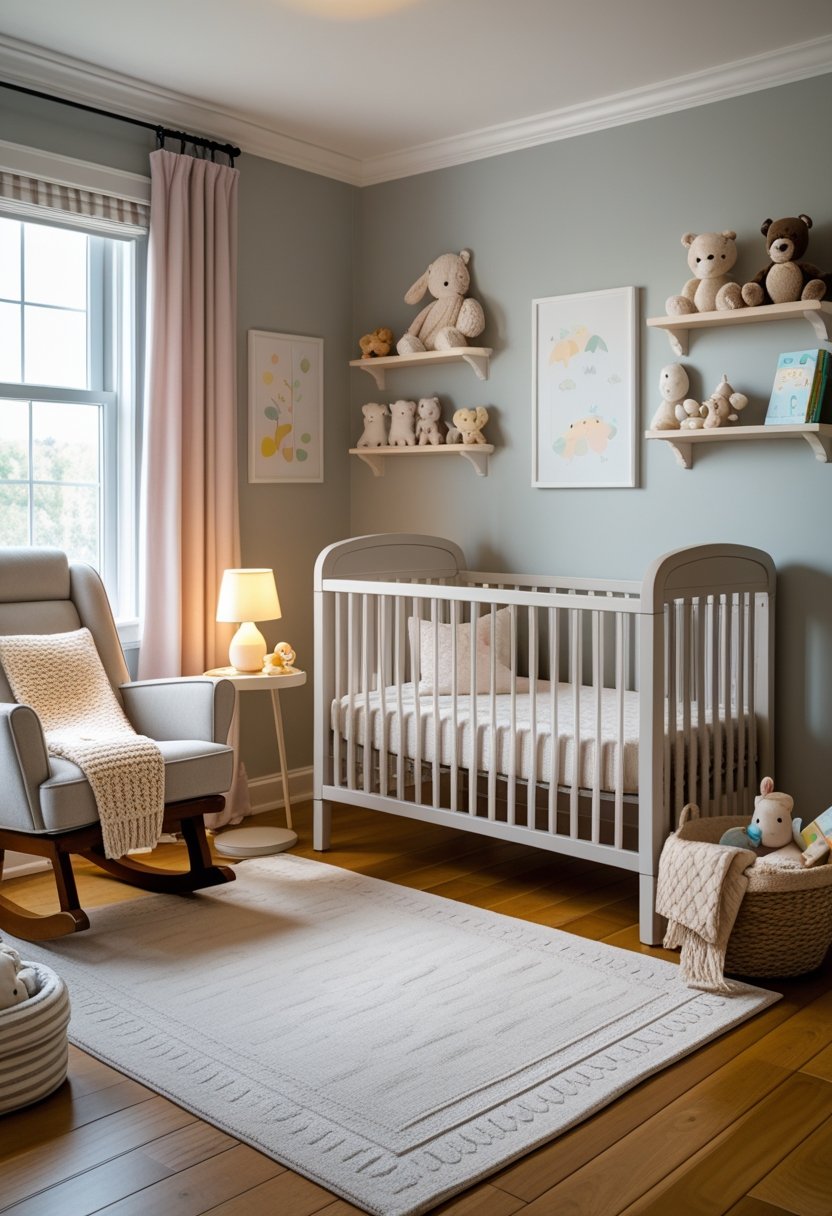
Storage and texture are balanced with a compact bookshelf holding children’s books and woven baskets, while a plush patterned rug in earthy tones anchors the area. A cushioned armchair with decorative pillows and a knitted pouf provide seating options that encourage relaxation and bonding during storytime or quiet moments.
Key Elements of a Cozy Nursery Design
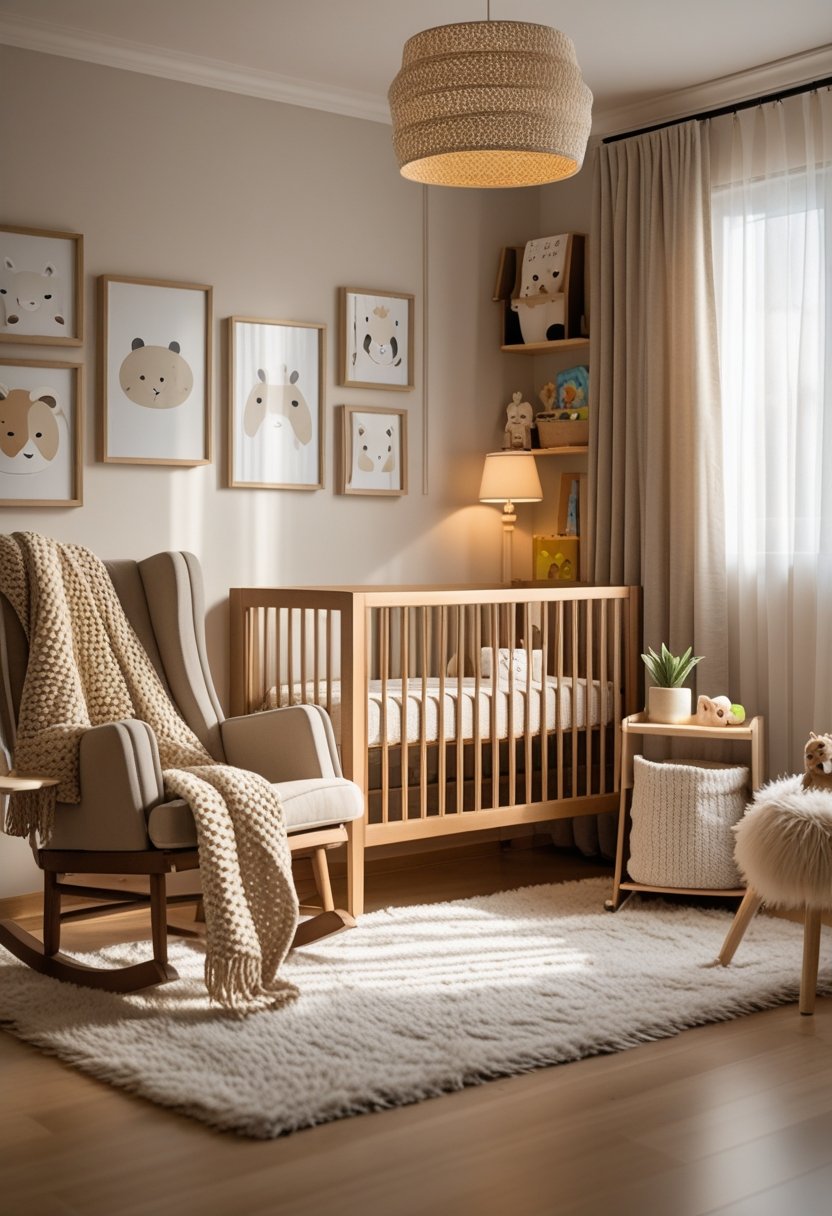
Creating a nursery that feels both inviting and practical depends on careful choices in comfort, warmth, and functional elements. The balance of soft lighting, thoughtful textures, and efficient use of space shapes a serene environment where both baby and caregiver can feel at ease.
Blending Comfort and Warmth
Comfort in a nursery begins with soft and gentle materials, such as plush bedding and cushioned furniture. These elements provide tactile warmth and create an environment that encourages relaxation and bonding.
Warm colors like muted sage green or earthy tones on walls and rugs add subtle coziness without overwhelming the space. Natural light filtering through large windows complements this warmth, offering a serene atmosphere throughout the day.
Using layered textiles—like soft blankets, decorative pillows, and knitted throws—enhances tactile variety and invites comfort. Soft lighting, from table lamps or dimmable overhead fixtures, completes the mood with gentle illumination.
Practicality and Functionality
A cozy nursery also demands functional design elements that support daily routines. Compact storage solutions, such as bookshelves combined with woven baskets, organize toys and books while maintaining a natural, textured aesthetic.
Furniture choices often focus on scalability and multi-use items. Convertible cribs and cushioned armchairs serve dual purposes: comfort and adaptability as the child grows. Seating areas, including poufs or ottomans, create flexible spaces for feeding or storytime.
Clear pathways and uncluttered layouts promote safety and ease of movement. Functional yet stylish furniture pieces extend the room’s utility while preserving serenity and warmth.
Incorporating Signature Textures
Texture is central to infusing a nursery with personality and sensory engagement. Combining materials like soft knits, woven baskets, and patterned rugs adds depth without disrupting the calm.
A plush area rug grounds the space and delivers warmth underfoot, making it inviting for play and quiet moments. Natural fibers and handcrafted items introduce organic texture, reinforcing an atmosphere of comfort and tactility.
Framed art prints or wall hangings, especially those with varying textures or subtle patterns, add visual interest without clutter. These textural choices balance aesthetics with a gentle sensory experience, contributing to the room’s cozy appeal.
Focal Points and Layout
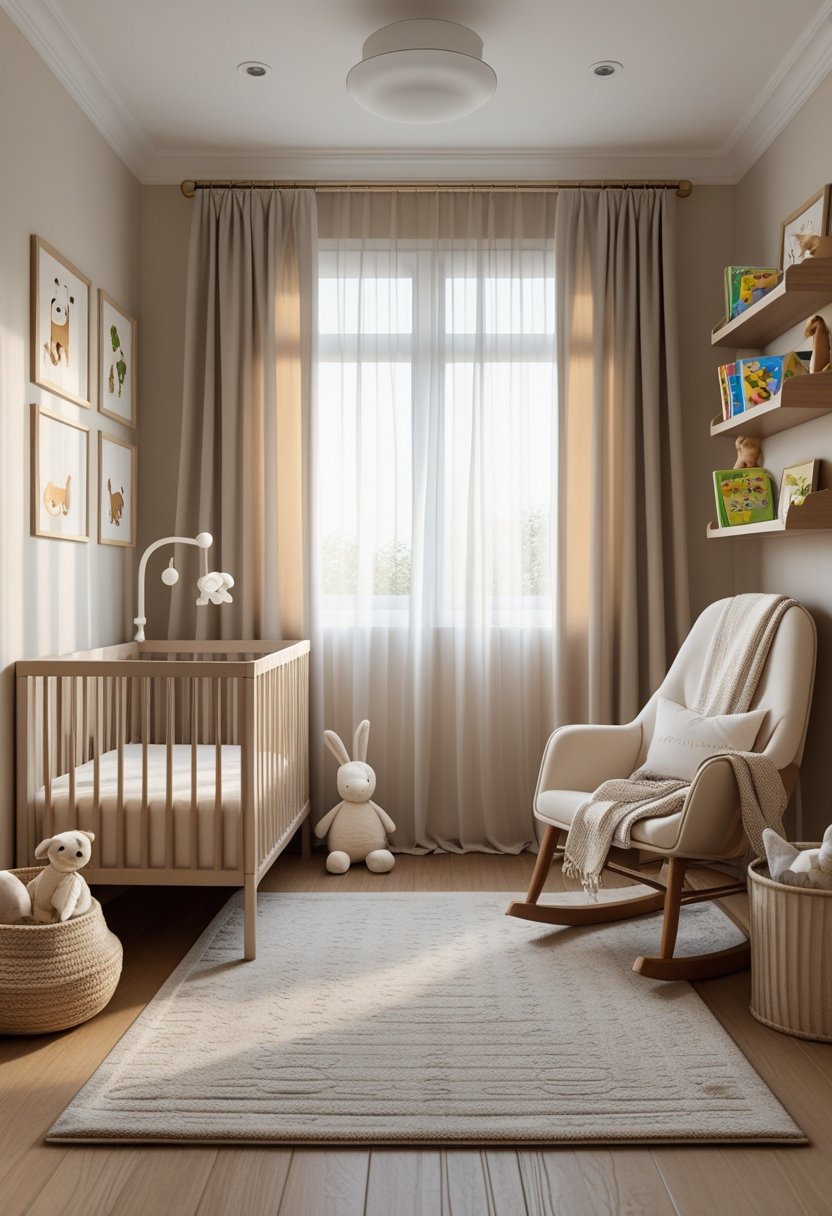
The nursery creates balance by focusing on key design elements that anchor the room while promoting easy movement and comfort. Thoughtful placement enhances both the sense of calm and the practical use of space, ensuring the room functions well by day and night.
The White Crib and Bedding
The white crib serves as the primary focal point, standing out against the muted sage green wall. Its clean, crisp lines offer a sense of order and simplicity, reinforcing a calm atmosphere. Soft, colorful bedding adds subtle warmth and personality without overwhelming the space.
The crib’s position encourages visibility from multiple angles, making it easy to keep a watchful eye. This focal point combines comfort and functionality by providing a safe, restful place for the child to sleep while contributing to the room’s overall aesthetic harmony.
Arranging the Nursery for Flow
Furniture placement prioritizes open pathways to maintain a smooth flow throughout the room. The area rug grounds the space, visually connecting the crib, armchair, and bookshelf while defining zones for play and rest.
Seating options like the cushioned armchair and knitted pouf create a cozy corner without obstructing movement. Storage solutions, including woven baskets on the bookshelf, keep the room tidy and accessible. This layout supports nighttime routines with convenient access to essentials and seating for caregiving.
Natural Light and Large Windows
Large windows bring abundant natural light, which enhances the nursery’s warm and nurturing feel. Daylight highlights the room’s soft colors and textures, helping to create a vibrant yet soothing environment.
The arrangement allows sunlight to gently diffuse across key areas, supporting daytime activities and maintaining a clean, airy atmosphere. Window placements also ensure privacy and comfort, integral for both playtime and restful nights.
Decor and Color Palette
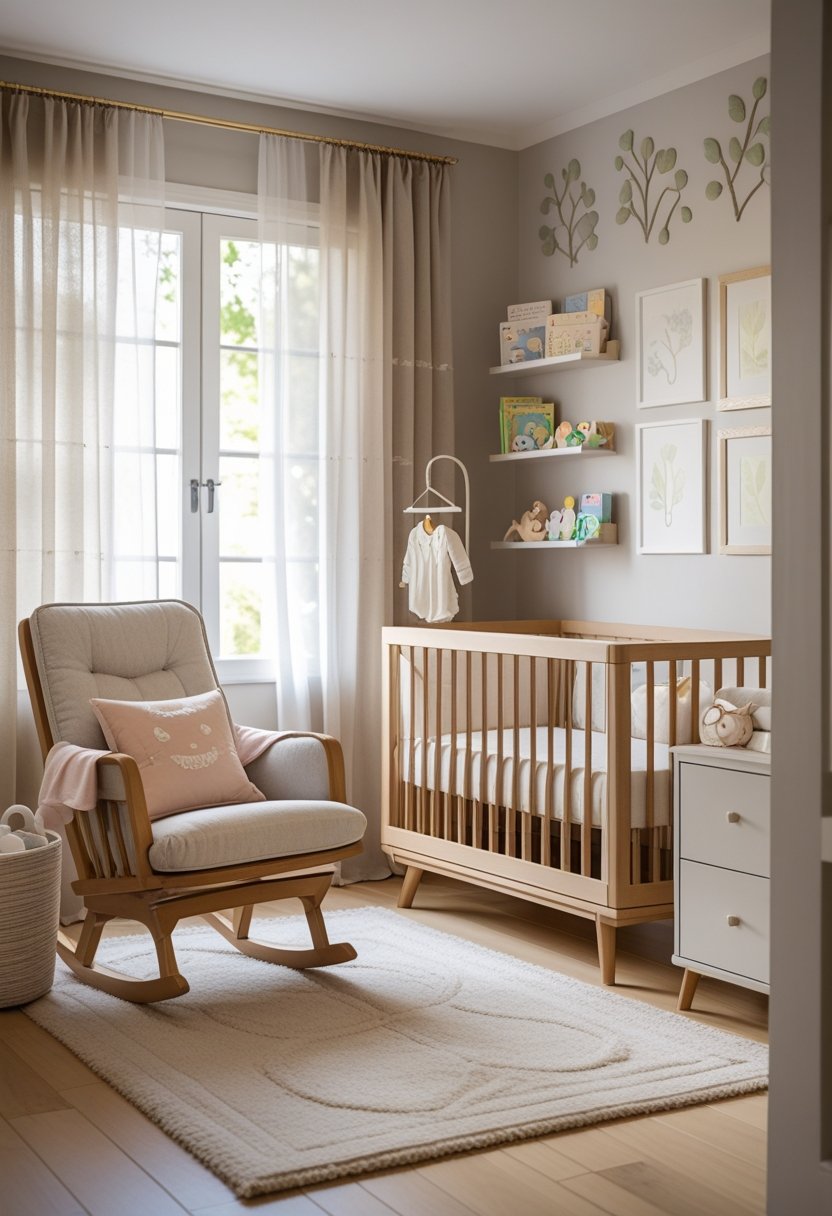
The nursery’s design focuses on soft, muted colors and carefully selected decor to create a warm, inviting ambiance. The combination of sage green walls, personalized art pieces, and earthy-toned textiles forms a cohesive and practical space that balances comfort with style.
Muted Sage Green Walls
The choice of muted sage green as the wall color provides a calm and soothing background, ideal for a nursery. This shade offers a subtle earthiness that pairs well with natural wood and woven textures, grounding the room without overpowering it.
Sage green supports a peaceful atmosphere, promoting relaxation and restful sleep. It also acts as a versatile backdrop that complements both colorful accessories and neutral furnishings. The color works well with soft lighting, enhancing the room’s warmth without creating visual clutter.
Framed Art Prints for Personality
Framed art prints add a personal and whimsical touch to the nursery. Opting for illustrations or prints inspired by magical or fantasy themes can spark imagination while keeping the decor gentle and age-appropriate.
Framing the art in simple, clean-lined frames maintains a minimalist look that suits the calm wall color. Arranging the prints at eye level for both adults and children encourages engagement with the imagery, turning the walls into a subtle storytelling element.
Choosing Earthy Tones for Rugs
The area rug in earthy tones anchors the space by adding texture and warmth underfoot. Choosing muted browns, soft beiges, or gentle terracotta shades enhances the natural theme set by the sage walls and woven storage baskets.
An earth-toned, patterned rug can subtly mimic organic forms, complementing the fantasy-inspired decor without becoming visually overwhelming. It helps define the play and rest areas, providing comfort and warmth for a child’s daily activities.
Functional and Stylish Storage Solutions

The nursery uses practical storage that also enhances the room’s cozy and inviting feel. Thoughtful choices balance easy access and aesthetic appeal while supporting organization.
Bookshelves for Children’s Books
The compact bookshelf holds a curated collection of children’s books within easy reach. Its low height encourages independent exploration and early reading habits.
Open shelving displays colorful spines and covers, adding visual interest against the muted green wall. It creates an organized, approachable library without overwhelming the space.
Bookshelves made of light wood or painted white maintain a fresh, clean look. Rounded edges and sturdy construction keep them safe for little ones.
Shelves can include adjustable heights to accommodate growing collections and accommodate larger items like board games or toys.
Woven Baskets for Texture and Storage
Woven baskets serve dual purposes: practical storage and natural textural contrast. Their organic fibers introduce softness and warmth against smooth surfaces and textiles.
Baskets store diapers, blankets, or small toys while keeping clutter hidden yet accessible. Their neutral tones harmonize with the earthy color palette, enhancing the room’s calm atmosphere.
Choosing varied shapes and sizes allows grouping by item type, improving overall organization.
Placement on open shelves or tucked next to furniture maximizes space without disrupting flow. The baskets add subtle visual depth through pattern and weave texture.
Creating Inviting Spaces for Play and Rest
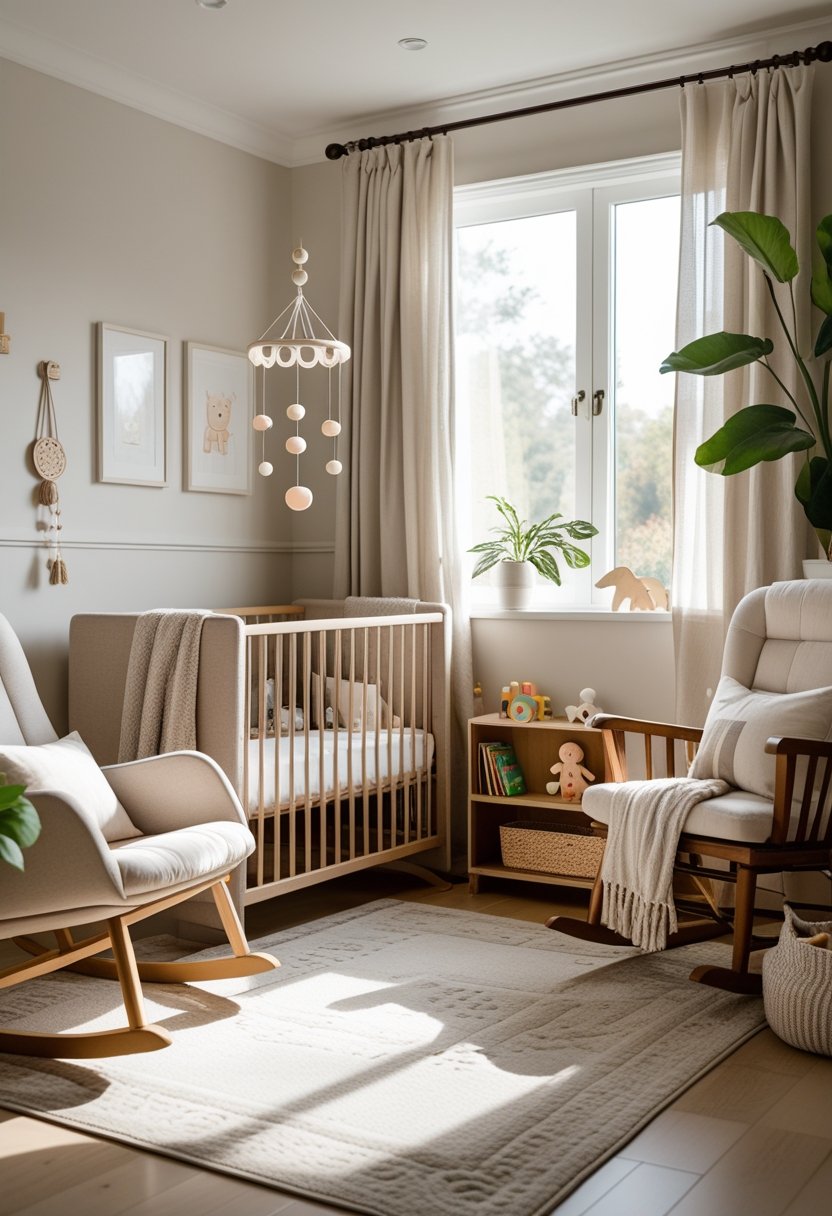
The nursery balances both comfort and practicality through intentional furniture placement, natural lighting, and textured accents. Each area encourages relaxation or activity, supporting different needs throughout the day.
Cozy Reading Nook Design
A cozy reading nook is essential for quiet time and bonding. Placing a cushioned armchair beside large windows maximizes natural light, making this spot inviting and calming. Adding decorative pillows enhances comfort and visual appeal, encouraging longer, relaxed reading sessions.
A knitted pouf offers flexible seating or a footrest, combining function with soft texture. Surrounding the nook with bookshelves or storage keeps reading materials accessible, promoting independence. Choosing warm, soft fabrics and incorporating natural elements like woven baskets helps create a nurturing atmosphere.
Setting Up an Interactive Play Area
An interactive play area should foster independent exploration while keeping toys neatly organized. Using a patterned area rug in earthy tones defines the space and adds warmth underfoot, encouraging children to engage comfortably.
Storage solutions like low shelves and baskets enable easy access to toys and materials, supporting self-directed play. The layout should allow flexibility and free movement, connecting indoor activities with a nearby outdoor space when possible. Soft, durable surfaces and diverse textures help stimulate sensory development.
Adding Playful Patterns and Accessories
Introducing playful patterns can enliven the nursery without overwhelming the calm environment. Patterns on rugs, cushions, or bedding add visual interest through muted, natural colors that complement the overall palette.
Textured accessories, such as knitted poufs or woven baskets, create tactile variety. Framed art prints on walls personalize the space, balancing simplicity with charm. Thoughtful selection of patterns and accessories supports a cozy, yet stimulating atmosphere conducive to rest and play.
Enhancing Ambiance and Atmosphere
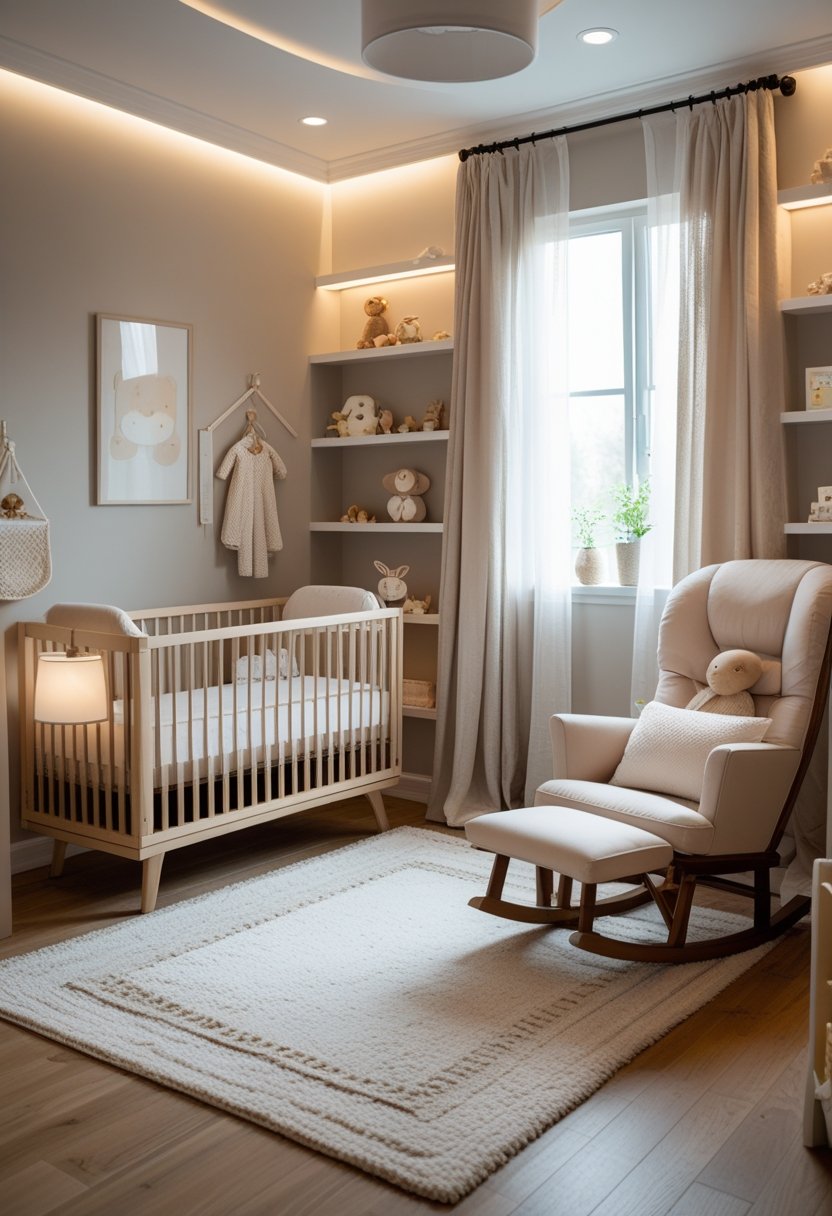
Creating the right atmosphere in a nursery involves layering textures, colors, and motifs to support a nurturing and calming environment. Thoughtful lighting and thematic elements like celestial or underwater designs contribute to a space that feels both inviting and inspiring.
Utilizing Soft, Ambient Lighting
Soft, ambient lighting is essential for maintaining a tranquil nursery atmosphere. Using dimmable lamps or LED fixtures with warm tones helps avoid harsh brightness that can disturb rest or play.
Strategically placed nightlights or string lights provide gentle illumination during nighttime feedings or diaper changes without fully waking the child. Materials like fabric lamp shades or frosted bulbs diffuse the light for a soothing effect.
Incorporating layered lighting—combining a main overhead fixture with smaller lamps or sconces—allows caregivers to adjust brightness levels depending on the time of day or activity. This flexibility supports relaxation and comfort throughout the nursery.
Bringing in Celestial and Nighttime Motifs
Incorporating celestial themes can stimulate a child’s imagination while reinforcing a calming atmosphere. Elements like star-shaped wall decals, moon-phase art prints, or constellation patterns work well on muted backgrounds.
These motifs often use soft whites, blues, and gentle metallics, which complement the nursery’s color palette while evoking night skies and quiet evenings. They provide visual interest without overwhelming the soothing ambiance.
Such nighttime designs subtly support bedtime routines by connecting the child’s environment to natural rhythms and familiar symbols of rest and peace. They can also serve as educational touchpoints as the child grows.
Incorporating a Touch of the Cosmic and Underwater
Cosmic and underwater elements introduce depth and texture to nursery decor, balancing whimsy with calmness. Patterns featuring gentle waves, bubbles, or nebula-inspired swirls add movement without distraction.
Colors drawn from the ocean’s blues and greens or from the cosmos’ dark hues create a serene backdrop that pairs well with earthy, natural accents. This combo enhances the room’s warm and cozy feel.
Using decor items such as starry mobiles or fish-shaped pillows can engage a child’s curiosity while supporting a restful environment. This approach merges fantasy with comfort, offering visual appeal that remains peaceful and practical.