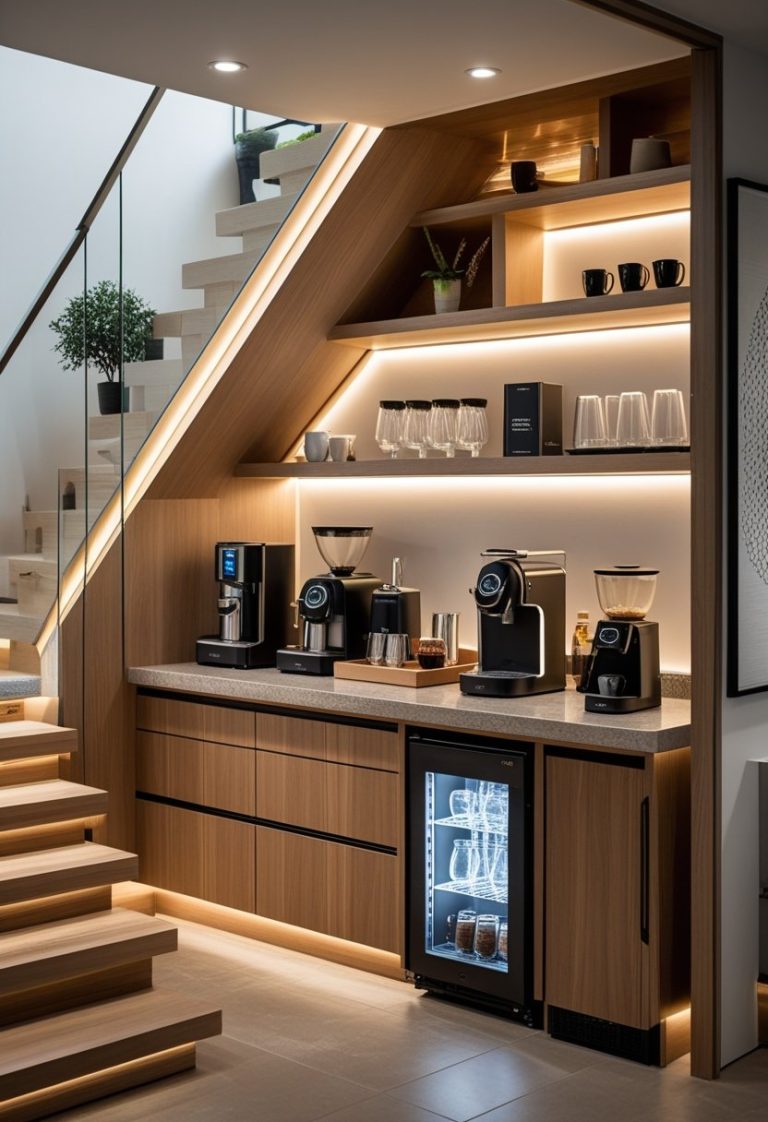
Colorful Tile Staircase with Patterned Risers & Wood Steps
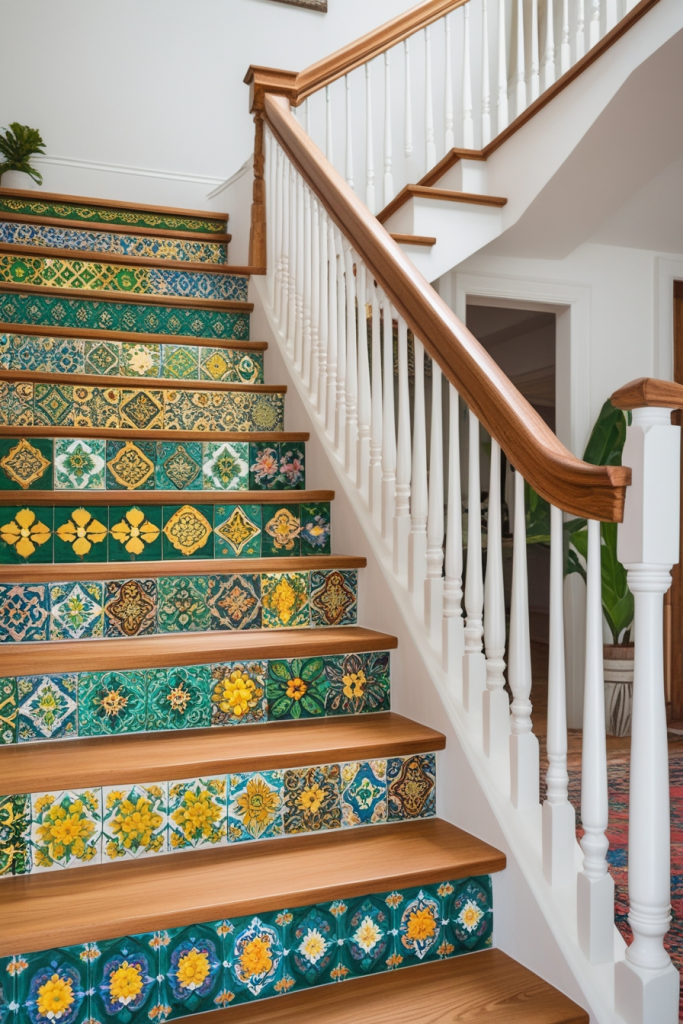
A beautifully decorated staircase can transform a space, and this one does so with colorful, patterned tiles on each riser. Featuring intricate designs, floral motifs, and geometric patterns in vibrant greens, yellows, blues, and earthy tones, the staircase creates visual interest at every step. The natural wood treads provide a warm, contrasting base that highlights the eclectic tilework.
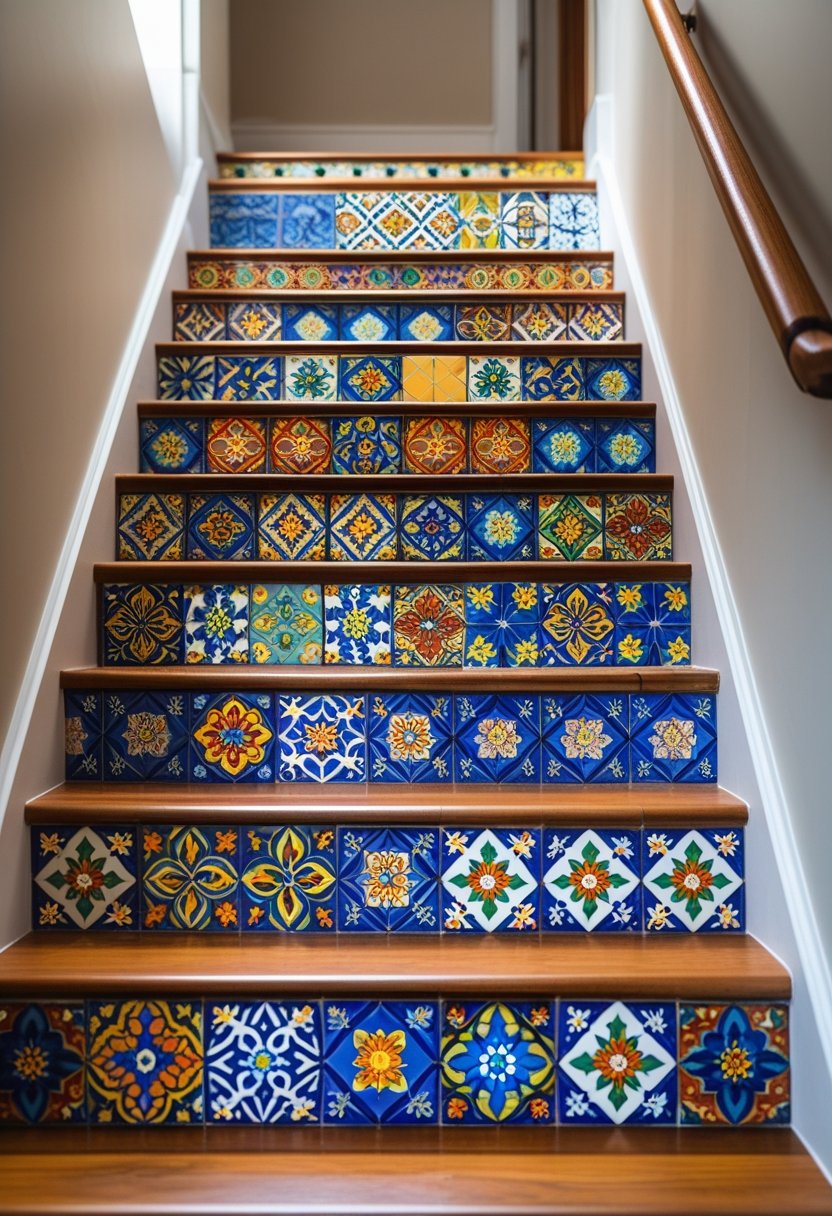
The wooden railing with white vertical balusters adds a clean, classic element that balances the bold, artistic risers. This combination of materials and patterns creates a bohemian, vintage, and eclectic style, making the staircase a striking focal point within the home. The mix of color and texture invites the eye to explore the detail while maintaining harmony through thoughtful design.
The Appeal of Decorated Staircase Risers
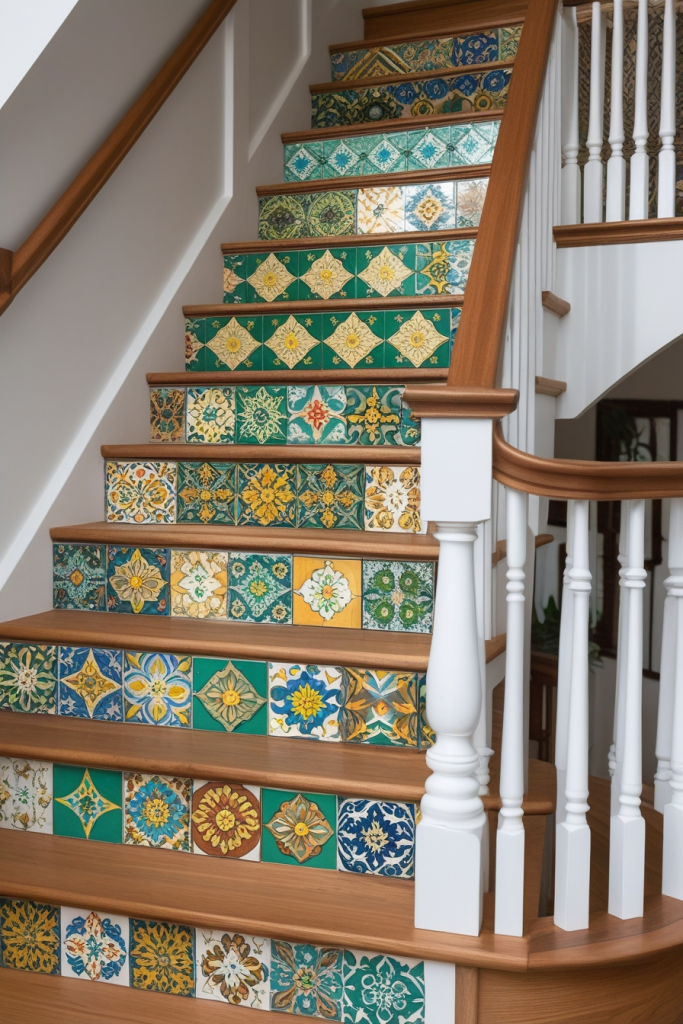
Decorating stair risers transforms an ordinary staircase into a distinctive design element. It offers a way to enhance visual interest, communicate style, and incorporate diverse influences without overwhelming the entire space.
Visual Impact and Focal Point
Decorated stair risers create a striking visual contrast, especially when paired with natural wood steps. The mix of vibrant colors and intricate patterns draws the eye upward, turning the staircase into a central feature.
This focus can redefine a room’s atmosphere by adding depth and texture where plain risers might be overlooked. The geometric, floral, and abstract tile patterns provide movement and rhythm, contributing to dynamic interior design. Homeowners can leverage this to add character without resorting to bulky or expensive architectural changes.
Expressing Personal Style
Customizing stair risers serves as a unique form of self-expression. Choices like colorful tiles or patterned designs allow individuals to showcase artistic taste and cultural influences within their homes.
The flexibility in materials and motifs means each staircase can reflect specific preferences or heritage. This customization extends interior design beyond furniture or paint, utilizing often-neglected spaces to convey personality. It appeals to those wanting distinctiveness and craftsmanship visible in everyday household features.
Bohemian, Vintage, and Eclectic Influences
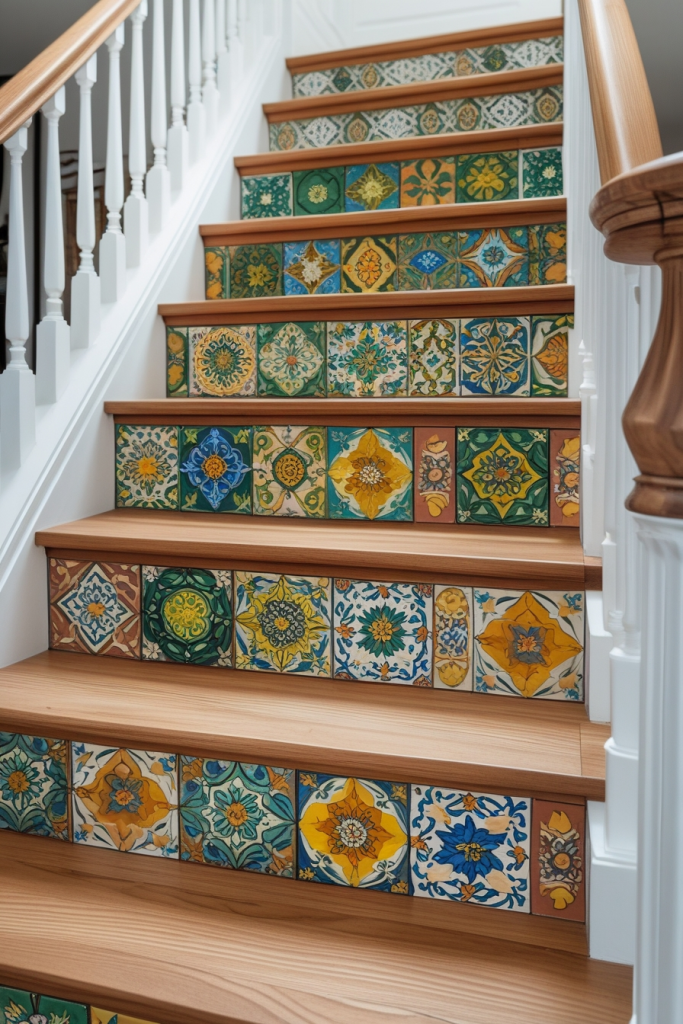
The combination of patterned tiles and natural wood steps fits seamlessly within bohemian, vintage, and eclectic styles. These design approaches emphasize individuality, warmth, and collected aesthetics.
Bohemian stair risers often incorporate earthy tones, global patterns, and textured finishes, enhancing a relaxed but curated environment. Vintage influences appear through traditional motifs and hand-painted tile effects. The overall eclectic blend balances bold colors with classic wooden railings, producing harmony between old-world charm and artistic flair. It complements diverse interior design schemes seeking to avoid uniformity.
Selecting Colorful and Patterned Tiles
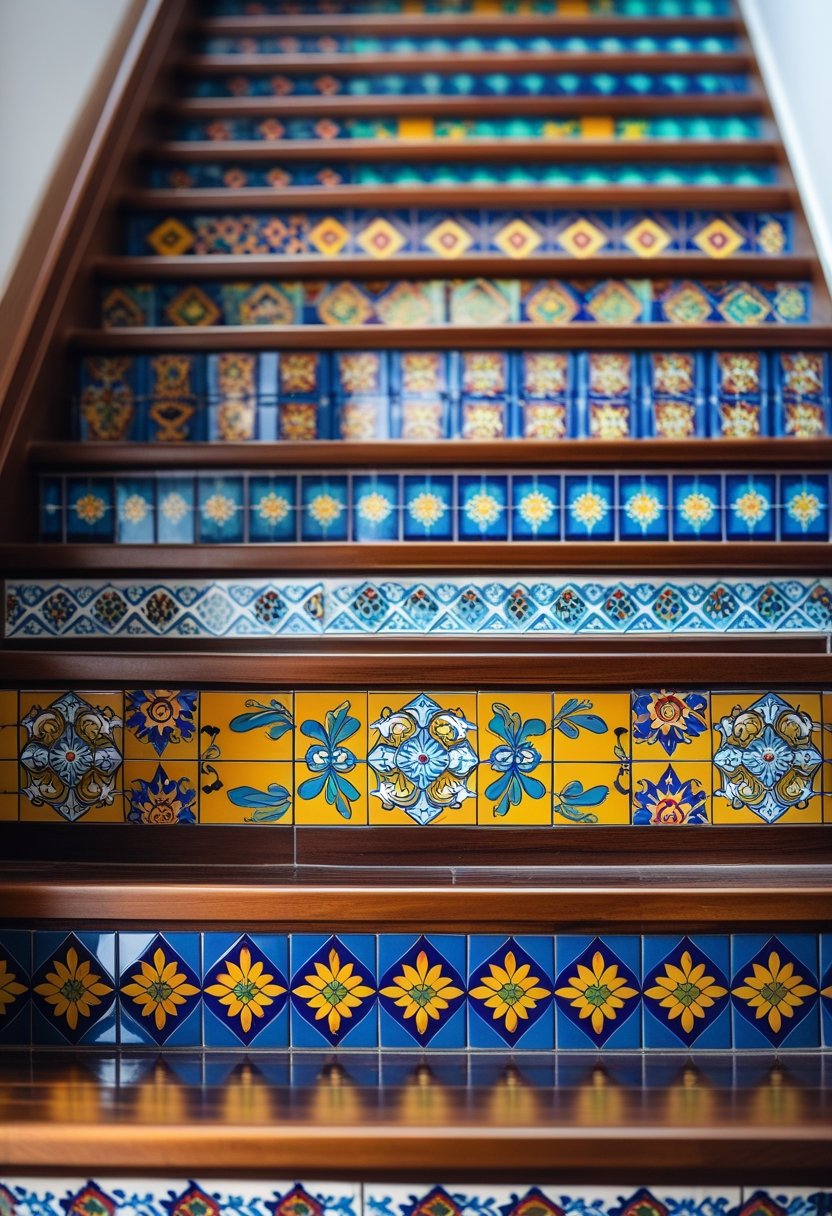
The choice of tiles shapes the personality and harmony of a decorated staircase. Balancing diverse patterns with a cohesive color range and exploring custom options ensures the staircase stands out while fitting the home’s style.
Mixing Intricate Designs and Motifs
A well-curated mix of intricate designs on stair risers brings depth and interest. Combining floral motifs with geometric shapes offers contrast without overwhelming the eye.
Floral patterns add softness and a vintage touch. Geometric shapes contribute structure and modernity. The key is alternating or grouping tiles thoughtfully to maintain flow and avoid clutter.
Using varied textures and scales in patterns helps maintain balance. For example, pairing a large geometric tile with smaller floral details creates rhythm. This approach enhances the eclectic, bohemian feel typical of such staircases.
Choosing a Bold Color Palette
Selecting a color palette focused on green, yellow, blue, and earthy tones ensures vibrancy without chaos. These colors complement natural wood steps and maintain visual warmth.
It is important to limit bright colors to the risers only, which keeps the design grounded. Incorporating muted or natural hues among brighter tiles softens the overall look.
Color placement can follow a pattern or be randomized for a playful effect. Consistent repetition of key colors across multiple risers helps unify the design. This technique avoids visual dissonance while celebrating variety.
Hand-Painted and Custom Tile Options
Hand-painted tiles provide unique character through subtle imperfections and artisan details. They often feature rich glazes and varied hues, making each riser distinct.
Custom tile creation allows homeowners to tailor designs, mixing specific floral and geometric elements or matching precise color shades. This flexibility supports a personalized staircase that fits exact tastes.
Such options typically require more lead time and budget but enhance authenticity. Incorporating custom or hand-painted tiles helps maintain artistic integrity and reinforces the staircase’s role as a key design feature.
Balancing Wood and White Elements
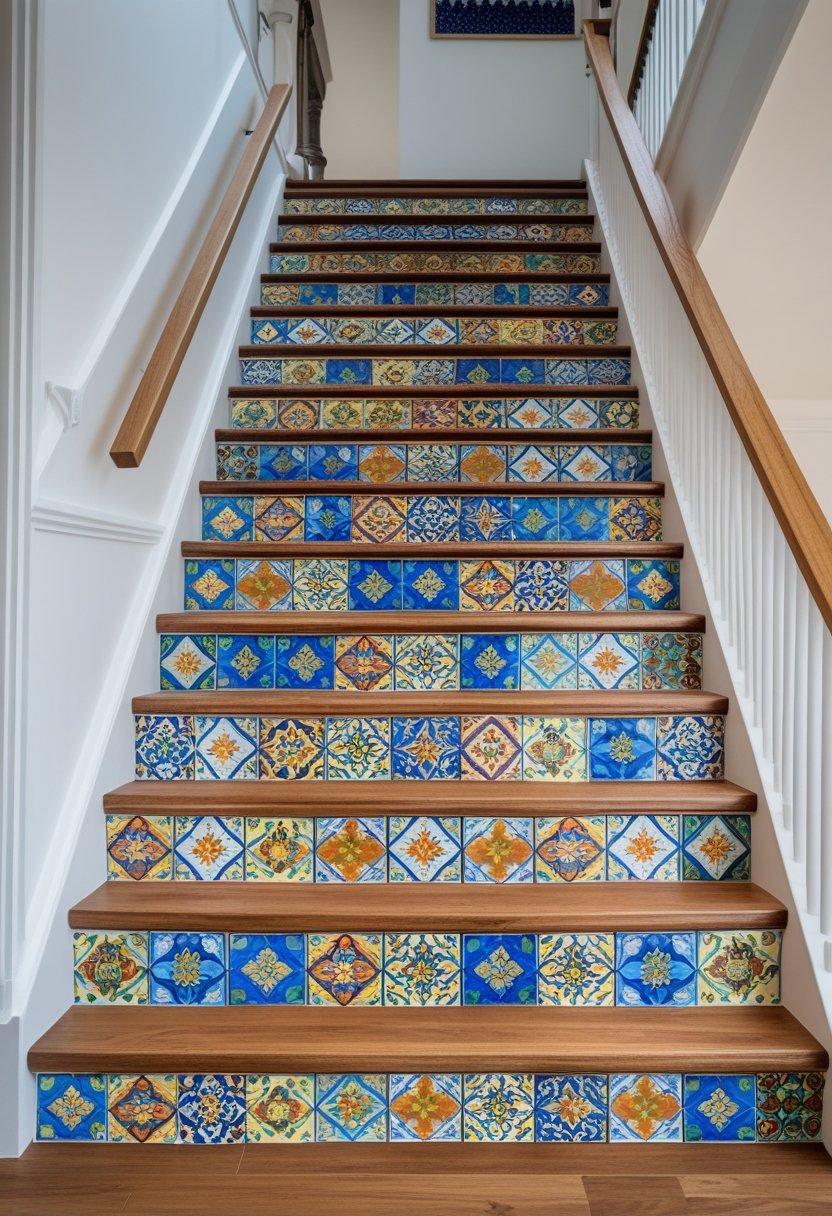
This staircase uses natural wood and white accents to create warmth, contrast, and a timeless look. The wood tones provide organic depth, while the white balusters and risers brighten the space and add architectural clarity. Together, these elements highlight the vibrant tile risers without overwhelming the room’s design.
Natural Wood Steps for Warmth
The natural wood steps anchor the staircase with rich, earthy tones. Their organic grain and texture bring warmth that complements the colorful tiles. Choosing wood with medium to dark stains enhances the depth and offers durability, making each step both functional and visually appealing.
Wood’s natural color balances the boldness of the patterned tiles by softening the overall effect. It also ties the staircase to other wooden elements in the home, such as flooring or furniture, supporting a cohesive aesthetic throughout interior spaces.
White and Wood Combinations for Contrast
Combining white risers or balusters with wooden steps is effective in creating a crisp visual contrast. The white surfaces reflect light, brightening darker or narrow stairways, and help each wood step stand out with clear definition.
This white and wood combination works well against white walls, making the staircase feel open and spacious. It establishes a balanced backdrop that allows the tile’s patterns and colors to command attention without clashing or seeming too busy.
Maintaining Classic Appeal with White Balusters
The white balusters provide a clean, traditional touch that balances the eclectic and bold tile work. Their vertical, slender form maintains architectural order and rhythm.
Traditional balusters in white harmonize well with wood railings, preserving a classic and timeless feeling. This pairing keeps the staircase grounded rather than overly modern, ensuring it complements a wide range of interior styles while enhancing safety and visual structure.
Staircase Styles That Enhance Tile Risers
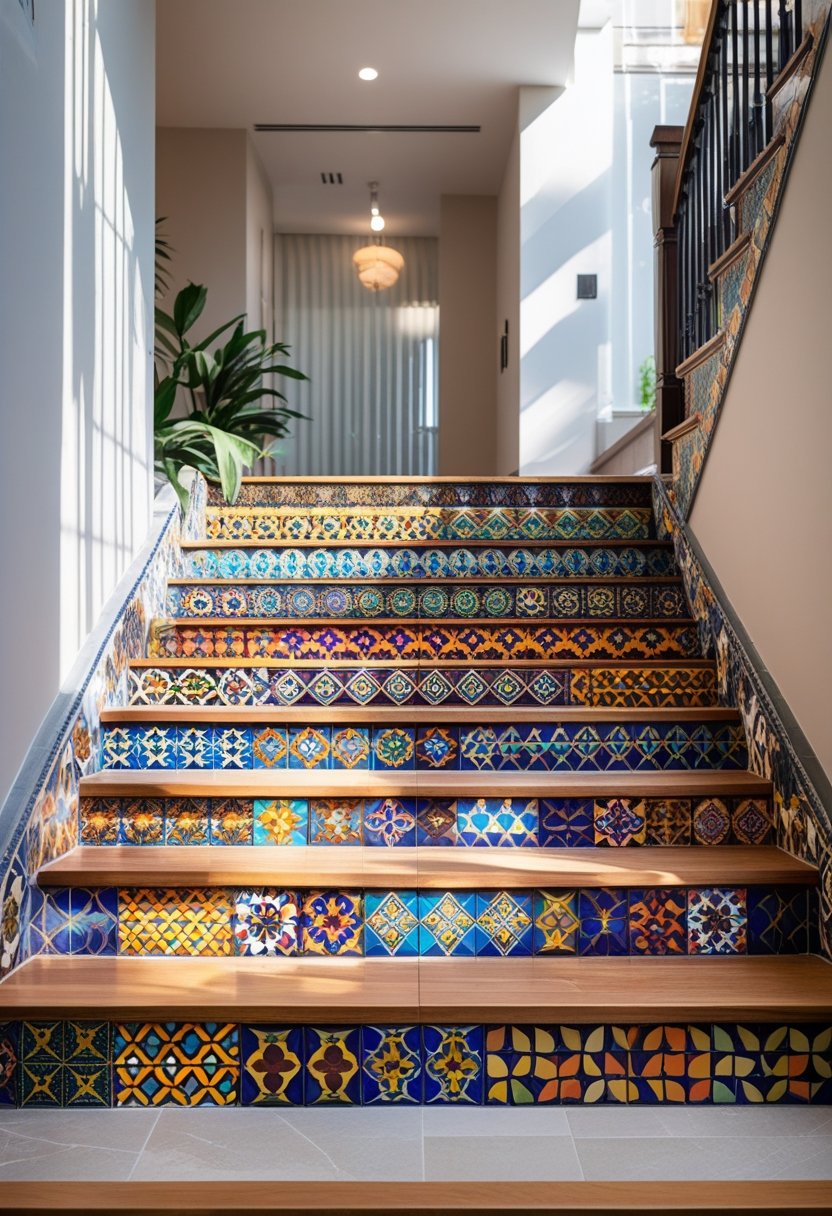
Certain staircase designs naturally highlight the decorative potential of tile risers by offering distinct shapes and structural elements. These styles emphasize the patterns and colors, complementing or contrasting with the material qualities of the tiles.
Straight and Curved Staircases
Straight staircases provide a clean, linear canvas for tile risers, allowing patterned tiles to create a rhythmic visual impact. The simplicity of the straight form emphasizes each individual riser’s design, especially when vibrant colors and intricate motifs are used. Natural wood steps paired with colorful tiles enhance this effect by bringing warmth and texture without overwhelming the detail in the tiles.
Curved staircases introduce fluidity and movement, which can elevate the design impact of tile risers. The arching shape creates a natural flow that guides the eye along the staircase. Patterned or geometric tiles on curved risers establish a dynamic interplay between organic curves and precise tile shapes. This style suits eclectic or vintage aesthetics where contrast between structure and decoration is prized.
Spiral and Floating Staircase Applications
Spiral staircases offer a compact, sculptural form that intensifies focus on every riser. Tile designs here become key visual elements in a limited space, where colorful patterns stand out against narrow wooden or metal treads. The upward spiral movement enhances the presentation of the tiles by offering glimpses from multiple angles, making tile choice crucial for both color harmony and durability.
Floating stairs provide an open, airy framework that draws attention to risers without the bulk of traditional supports. When combined with tile risers, the minimalism of floating stair designs highlights the craftsmanship of each tile detail. Modern staircases with floating steps often use subtle colors or natural materials, making vibrant or patterned tiles an effective way to introduce personality and artistic flair.
Artistic Details and Statement Lighting
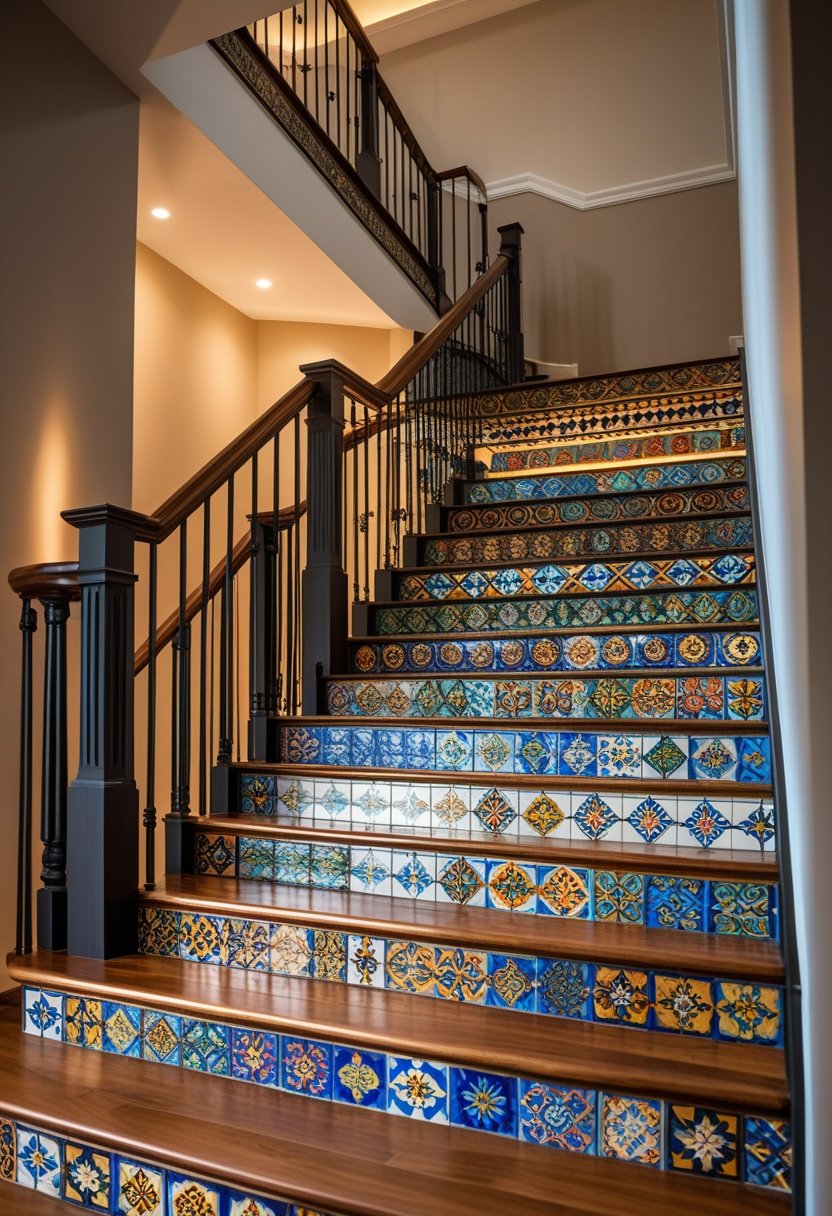
The interplay of structure and illumination is essential to highlight the staircase’s vibrant tile work while maintaining balance with its natural wood steps. Thoughtful choices in railing design and lighting fixtures enhance the staircase’s visual impact, emphasizing its eclectic and vintage charm.
Choosing the Right Staircase Railing
A wooden railing with white vertical balusters perfectly balances the vivid colors and intricate patterns on the risers. The natural warmth of the wood complements the earthy tones in the tiles, while the white balusters add a clean, timeless element.
Selecting a railing that is simple and classic ensures it does not compete with the bold tile designs. It also provides structural clarity and safety. Smooth finishes and rounded edges prevent visual clutter, making sure the railing supports rather than distracts from the staircase’s artistic focal point.
Adding Chandelier or Pendant Lights
Installing a chandelier or pendant lights above the staircase can create a strong statement that draws attention upward, enhancing the staircase’s presence. Fixtures with vintage or bohemian styling—such as those with exposed bulbs or wrought metal accents—blend well with the eclectic tile aesthetic.
Pendant lights with adjustable heights allow precise lighting focus on different stair sections. They add depth by casting shadows that accentuate the tile patterns. Positioning is critical; lights should illuminate both the risers and treads without creating harsh glare or dark spots.
Enhancing Ambience with Brass Sconces
Brass sconces mounted along the staircase walls add warmth and sophistication to the space. Their reflective metallic finish complements the earthy and vibrant palette of the tiles, reinforcing the vintage character.
Sconces provide subtle, diffuse light ideal for evening use, boosting safety without overwhelming the delicate tile designs. They work well when spaced evenly and placed at eye level, creating an inviting glow that frames the staircase and highlights its artistic details.
Decor Ideas and Coordinating the Surrounding Space
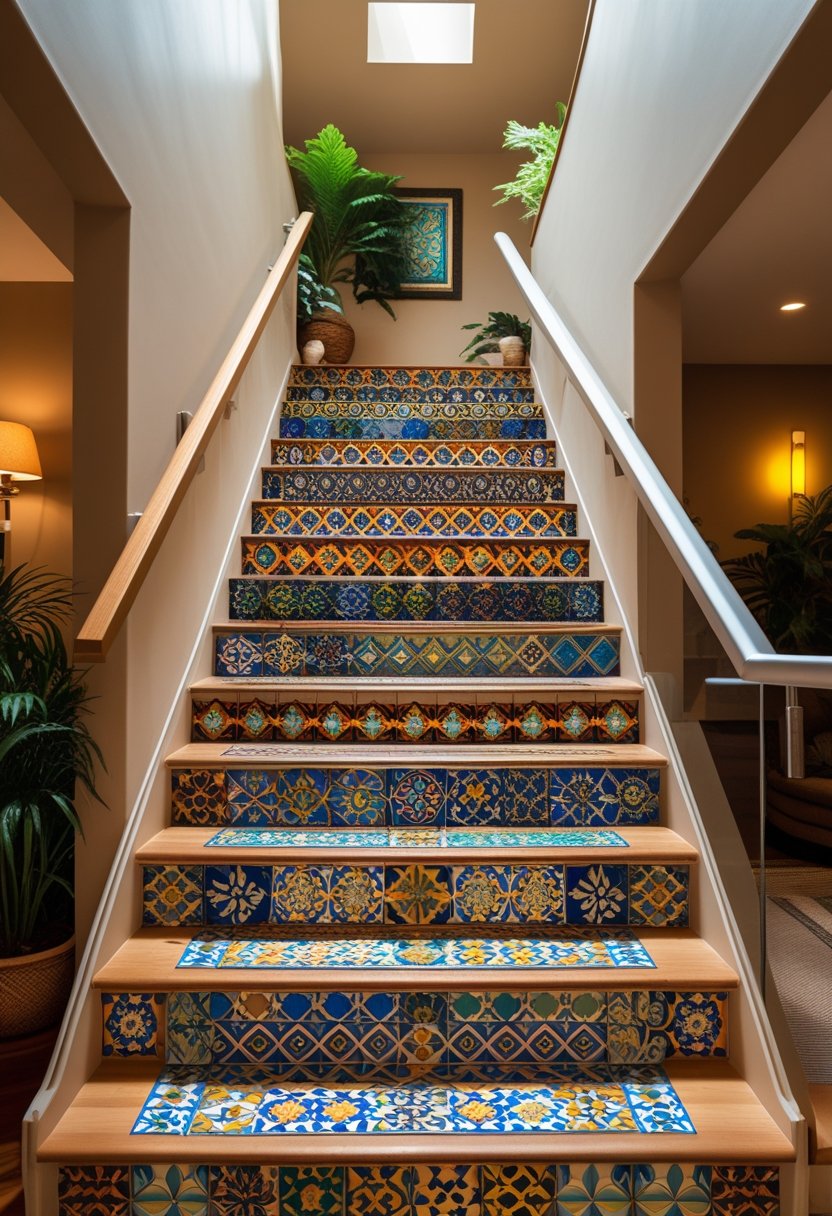
A staircase with colorful, patterned tiles and natural wood steps makes a strong visual statement. The surrounding area should complement this bold feature, enhancing the overall style without competing with the detailed risers. Thoughtful additions like stair runners, art placement, and entryway accents help create a cohesive and inviting atmosphere.
Stair Runner and Floor Styling
A stair runner can add texture and protect the wooden steps while softening the look. For this style, a neutral or earth-toned runner works best to avoid clashing with the vibrant tiles. Materials like jute or sisal add subtle natural texture without overwhelming the design.
The flooring at the base of the stairs should maintain balance. Natural woods, muted stone tiles, or simple rugs in coordinating earthy hues will support the bohemian and vintage feel. Avoid overly bright colors or patterns that compete with the risers’ detailed motifs.
Integrating Gallery Walls and Art
Gallery walls near the staircase offer a way to extend artistic expression without detracting from the tile designs. Frames in white or light wood mirror the railing’s color, reinforcing a clean, classic look.
Select prints or photos with botanical themes, geometric shapes, or abstract art that echo the patterns and colors of the tiles. Keeping the artwork united by color palette or frame style creates harmony and draws the eye upward, enhancing the staircase’s sculptural effect.
Creating Cohesion with Entryway Decor
Entryway decor should echo the stair design’s eclectic and bohemian qualities in subtle ways. Woven baskets, ceramic planters with greenery, and soft, earthy textiles enhance warmth and texture.
Additional wooden furniture pieces with simple lines, such as benches or console tables, establish rhythm with the staircase’s natural wood. Lighting with warm tones, like matte brass fixtures or pendant lamps, adds to the vintage vibe without overwhelming the space.