

Balcony gardens offer a practical solution for those looking to add greenery to limited outdoor spaces.
With the right approach, even small balconies can become vibrant, functional retreats.
By using space-saving techniques like vertical planting and container gardening, anyone can create a thriving balcony garden regardless of size or climate.

These gardens can serve multiple purposes, from growing fresh herbs and vegetables to creating a relaxing natural escape.
Careful plant selection and smart arrangement help maximize both aesthetics and utility.
Whether the balcony is narrow or wide, sunny or shaded, there are numerous ideas suited for different conditions and lifestyles.
Getting Started With Balcony Gardens

Setting up a successful balcony garden begins with understanding the specific conditions of the space.
Choosing a balcony design that suits both the environment and the gardener’s needs ensures healthy plants and efficient use of space.
Assessing Light and Weather Conditions
Light exposure is the most critical factor for any balcony garden.
Balconies facing south typically receive the most sun, ideal for sun-loving plants like tomatoes, herbs, and flowering plants.
East-facing balconies get morning sun and afternoon shade, which suits plants requiring moderate sunlight.
North-facing balconies have limited direct sunlight and are better for shade-tolerant plants such as ferns or ivy.
Wind and weather also affect the garden.
Balconies exposed to strong winds may need windbreaks or sturdy containers to prevent damage.
Knowing if the area gets frost or heavy rain guides the choice of plant species and protective measures.
Choosing The Right Balcony Design
The design of an apartment balcony garden should maximize limited space while allowing easy care.
Vertical gardening options, such as wall-mounted planters or trellises, increase green area without taking floor space.
Containers should be proportionate to the balcony size and plant type, ensuring proper drainage and stability.
Balcony furniture and storage solutions can be integrated with planters to create a multifunctional space.
Modular or movable containers help adjust the garden layout according to seasonal changes or sun exposure.
Selecting the appropriate materials, such as weather-resistant pots and corrosion-proof fixtures, enhances durability.
Smart Plant Choices for Balcony Spaces
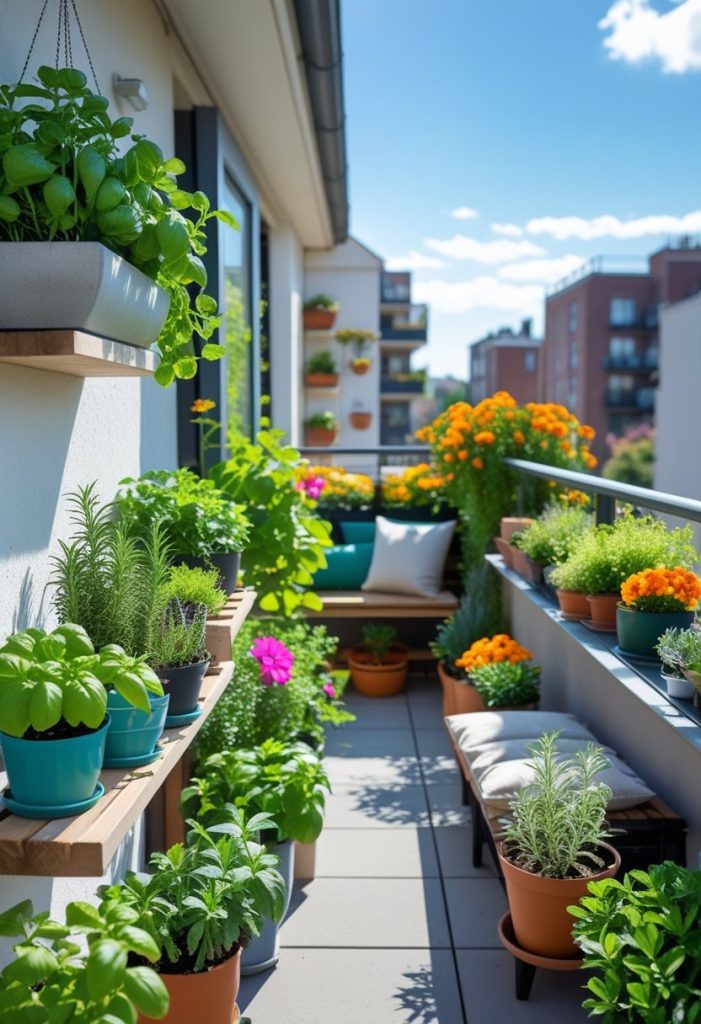
Selecting the right plants is essential for success in balcony gardening.
Choosing species suited to limited space, sunlight variations, and container growth optimizes both appearance and productivity.
Best Herbs for Balcony Gardens
Herbs offer an ideal mix of compact growth and frequent harvests for balcony gardeners.
Basil, mint, rosemary, thyme, chives, and oregano are popular options that thrive in containers with moderate sunlight.
Basil prefers 6 hours of sun daily and benefits from regular pruning to encourage bushiness.
Mint grows vigorously but requires its own pot to avoid overtaking other plants.
Rosemary and thyme are drought-tolerant and suited for sunny, well-drained spots.
Chives adapt well to partial shade and are low-maintenance.
Growing fresh herbs on a balcony supports easy access for cooking while adding greenery and fragrance.
Regular harvesting promotes ongoing growth, making herbs sustainable and productive balcony plants.
Edible Vegetables and Fruits
Compact vegetables and fruits provide both beauty and practical yield in balcony gardens.
Lettuce, cherry tomatoes, and strawberries are among the best choices for small spaces.
Lettuce grows quickly in shallow containers and can thrive in cooler shade or partial sun.
Cherry tomatoes require a sunny location and vertical support like a trellis to maximize space.
Strawberries prefer sunny spots and well-drained soil; they also grow well in hanging baskets.
These plants need balanced watering and occasional fertilizing to maintain productivity.
Colorful Flowers for Visual Impact
Vibrant flowers can transform a balcony into a striking visual retreat.
Gardeners often select petunias, geraniums, lavender, fuchsias, roses, ferns, and jasmine for their color, form, and scent.
Petunias and geraniums provide continuous color and tolerate container life well.
Lavender adds both fragrance and drought resistance while attracting pollinators.
Fuchsias prefer shaded spots and offer elegant, delicate blooms.
Roses can flourish in larger containers with full sun, adding classic appeal.
Ferns and jasmine bring lush greenery and subtle fragrance, enhancing ambiance.
Incorporating native plants also supports local ecology and is easier to maintain over time.
Creative Balcony Garden Ideas
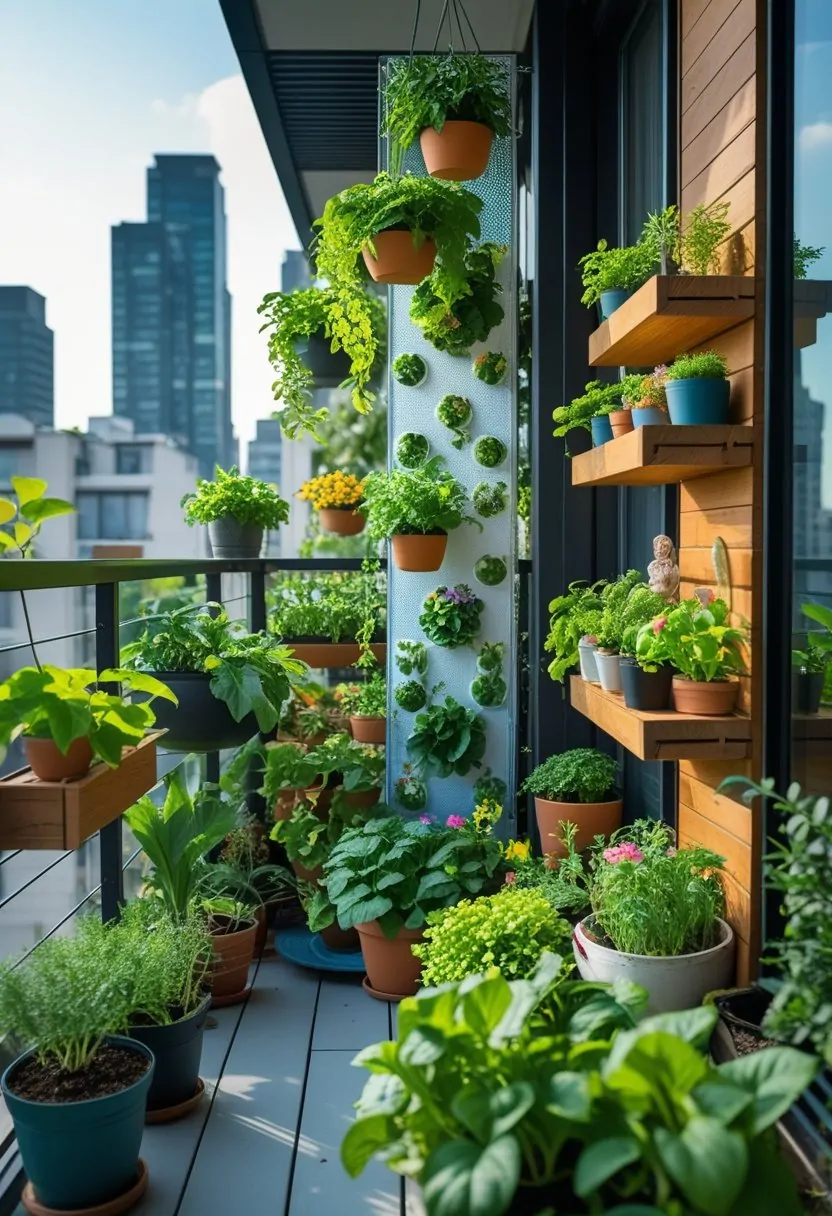
Optimizing limited balcony space requires thoughtful use of vertical and hanging elements.
Well-planned potted plant arrangements help maximize greenery without overcrowding and add layers of texture and color to any outdoor area.
Vertical Gardening Solutions
Vertical gardens use walls, fences, or specially designed vertical planters to grow plants upward rather than outward.
This method is ideal for small balconies.
Using stackable planters or modular systems, a variety of herbs, flowers, and vegetables can be grown in a compact footprint.
Installing vertical planters on balcony railings or against walls preserves floor space while creating a vibrant green backdrop.
Many vertical gardens include pockets or shelves for easy watering and maintenance.
Trailing vines work well, cascading down to soften edges and create a lush appearance.
Plants suited to vertical gardening include succulents, ferns, and compact herbs like basil or thyme.
These need minimal root depth and thrive in these setups.
Hanging Basket Displays
Hanging baskets efficiently use overhead space, drawing attention upward and freeing up surface areas.
They can be attached to balcony ceilings, railing hooks, or wall brackets.
Hanging baskets accommodate trailing plants such as petunias, ivy, and fuchsias, adding movement and color.
They also allow for varied plant heights and groupings, creating visual layers.
To maintain hanging plants, lightweight baskets with good drainage are preferred.
Self-watering baskets help reduce the watering frequency, especially in warm months.
Potted Plant Arrangements
Potted plants remain the most flexible option, allowing rearrangement and customization of the balcony layout.
Combining different pot sizes and styles—such as ceramic, terracotta, and plastic—adds texture and interest.
Balconies with railing planters can effectively grow flowers, small vegetables, and herbs in contained spaces.
Grouping pots by light and water needs ensures healthier plants and simplifies care.
Plants with compact growth habits or trailing tendencies should be mixed for balance.
Using multi-tiered plant stands or shelves can maximize vertical space while maintaining easy access to each pot.
Essential Balcony Gardening Setup
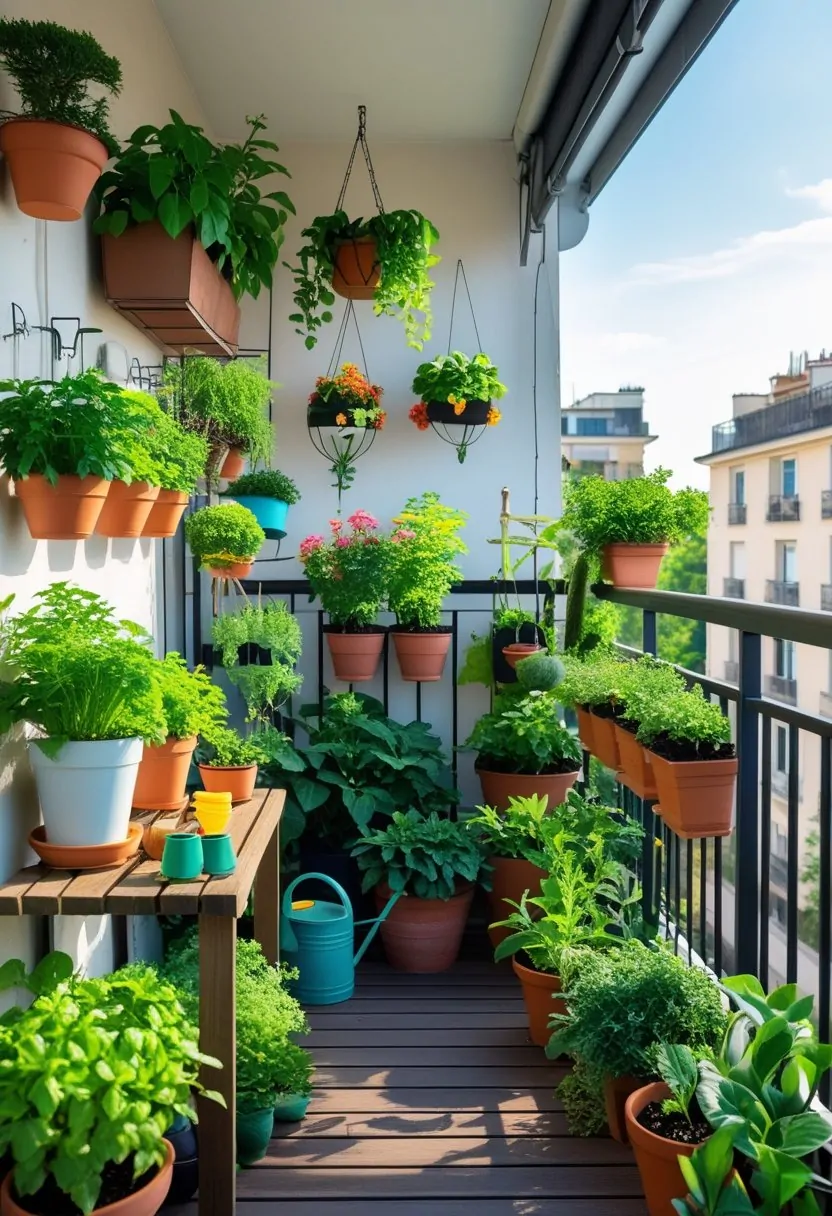
Creating a functional balcony garden starts with selecting the right containers, soil, and watering solutions.
These elements work together to support healthy plant growth while fitting the limited space and outdoor conditions typical of balconies.
Choosing Containers and Materials
Containers must balance durability, weight, and aesthetics.
Terracotta pots are popular for their breathability, which helps prevent root rot, but they can be heavy and fragile.
Ceramic pots offer a decorative touch and retain moisture well but often lack drainage holes, requiring modification.
Wooden planters provide natural insulation, keeping roots cool, and suit many styles.
They need to be treated to resist weathering and pests.
Lightweight plastic containers are practical for balconies with weight limits, but may degrade under strong sun.
Size matters: pots should be large enough to accommodate root growth.
Using containers with drainage holes is essential to avoid waterlogging.
Optimizing Potting Mix and Drainage
A well-draining potting mix is critical for balcony plants.
It should hold moisture without becoming soggy.
Mixes that include peat moss, perlite, and vermiculite provide good aeration and water retention.
Adding small stones or broken pottery shards at the bottom of containers can improve drainage, preventing standing water.
Avoid using garden soil as it compacts easily and can carry pests.
Regularly checking soil moisture ensures plants receive adequate water without drowning.
Adjust the mix with organic compost or slow-release fertilizers for nutrient supply.
Efficient Irrigation Systems
Balconies benefit from irrigation systems tailored for small spaces. Self-watering pots use reservoirs to supply plants consistent moisture.
This reduces watering frequency. Drip irrigation kits conserve water by delivering it directly to the roots.
They can be connected to timers for automated schedules. This is useful for busy gardeners or when away.
Manual watering with a watering can remains effective but requires attention to avoid over- or under-watering. Incorporating moisture sensors can help monitor soil conditions precisely.


