
Creative Under-Stairs Pet Room Ideas: Cozy & Modern Designs
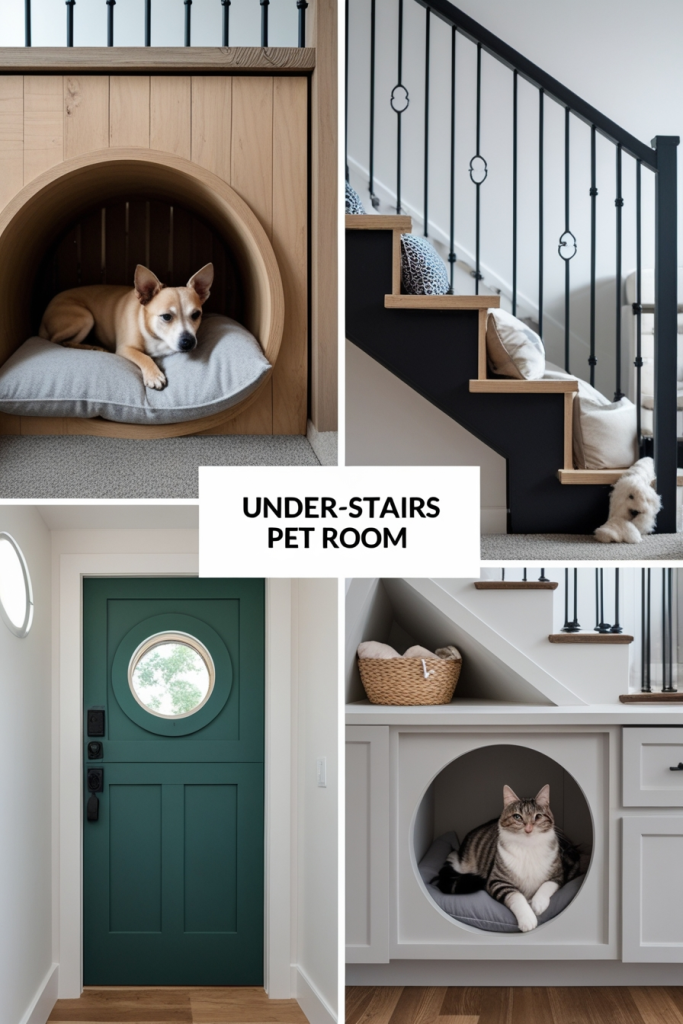
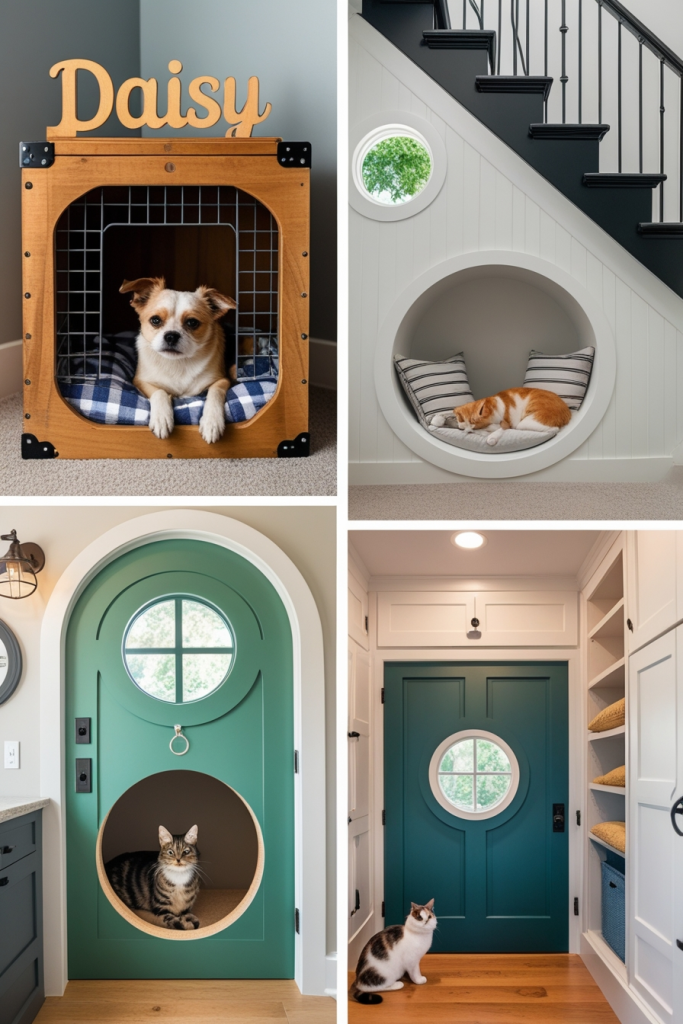
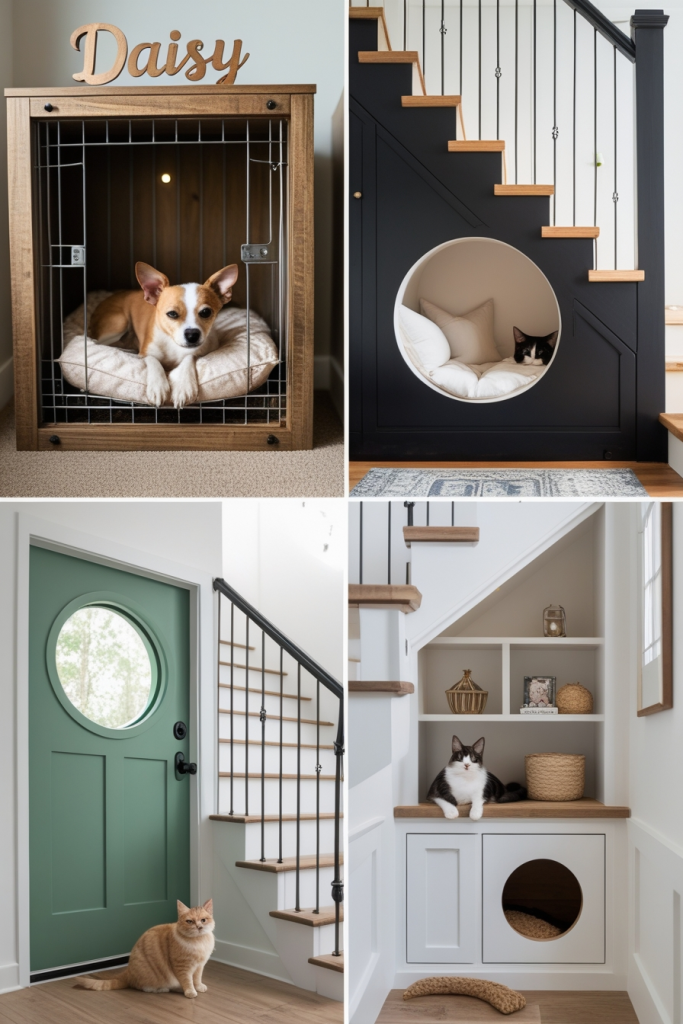
A collage highlighting creative under-stairs pet rooms showcases practical and stylish ways to use often-overlooked space for pets. The top section features two distinct cozy setups: a crate-style nook with a personalized wooden name sign and a modern circular cutout filled with cushions beneath sleek black metal stairs.
The bottom section offers more varied ideas, including a farmhouse-inspired pet door painted green with a round opening, and a cat lounging comfortably near built-in storage cabinets featuring a circular pet entrance. These designs demonstrate how under-stairs areas can be efficiently transformed into functional, comfortable, and visually appealing spaces tailored specifically for pets.
Creative Under-Stairs Pet Room Inspirations
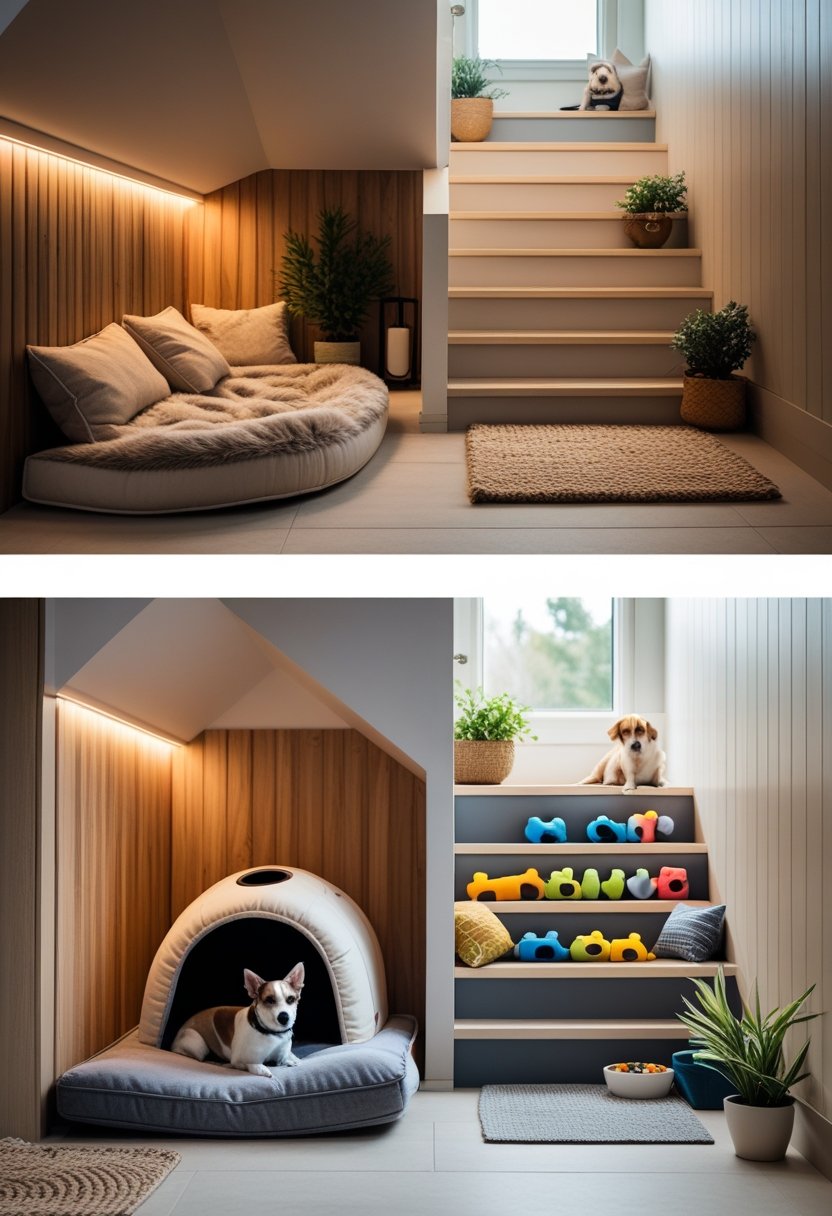
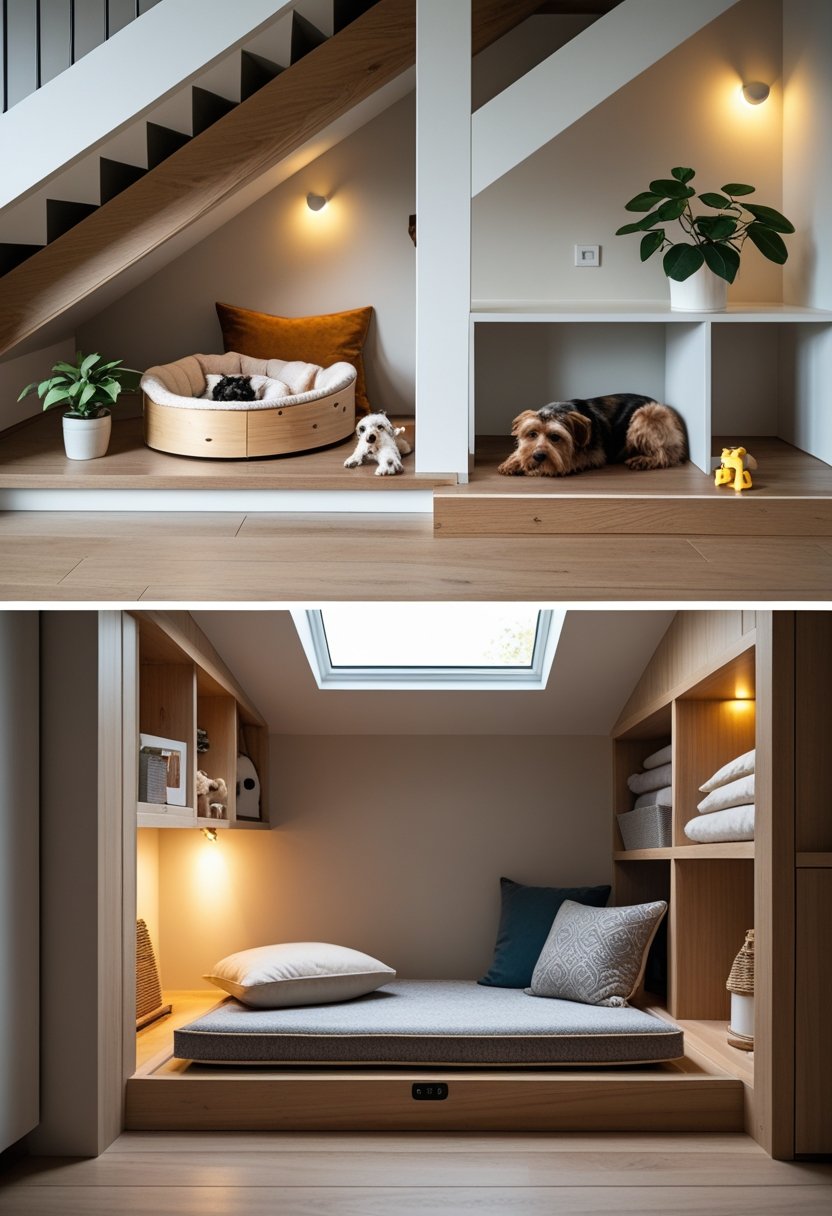
Under-stairs pet rooms can serve diverse needs, from simple resting spots to multifunctional areas with built-in storage. Designs vary in style and functionality, offering options for different spaces and pet types. Each idea balances comfort, space efficiency, and aesthetic appeal.
Cozy Crate-Style Nooks
Crate-style nooks provide a secure, den-like environment for dogs. These spaces often feature wooden frames with personalized touches like carved name signs to create a homey feel. The crate design offers clear boundaries, which many dogs find comforting.
Soft bedding and a snug fit enhance coziness. This style works well in smaller under-stairs areas where space is limited but security and warmth remain priorities. It also allows for easy cleaning and maintenance, making it practical for pet owners.
Modern Circular Cutout Spaces
Circular cutouts add a contemporary touch to under-stairs designs. These entrances soften edges and create a visually appealing contrast, especially when paired with black metal railings or minimalist décor. Pillows or cushions inside offer a plush resting spot.
The rounded shape can accommodate cats and smaller dogs comfortably. It merges functionality with style, suited for homes with a modern aesthetic. Lighting and texture choices play important roles in maintaining a cozy yet sleek environment.
Farmhouse-Inspired Pet Rooms
Farmhouse styles emphasize rustic charm with natural wood finishes and painted doors. A green farmhouse door with a round opening provides an inviting entrance that blends with traditional home elements. This look often incorporates vintage hardware and soft colors.
Such pet rooms add character and warmth, reflecting a countryside vibe. They frequently include weathered materials and handcrafted details, appealing to owners who prefer a classic, homely feel. The design accommodates pets by ensuring easy access and a spacious interior.
Built-In Storage With Pet Access
Built-in storage integrates pet spaces seamlessly into functional cabinetry. Circular pet entrances leading to lounging areas near or inside cabinets combine practicality and comfort. This layout maximizes under-stairs utility by storing household items without sacrificing pet comfort.
The design supports multi-pet homes by allowing separate zones within the storage system. It often includes soft seating areas and organized shelves for pet supplies. This approach helps maintain tidiness while giving pets their own dedicated retreat.
Designing a Functional Under-Stairs Dog House
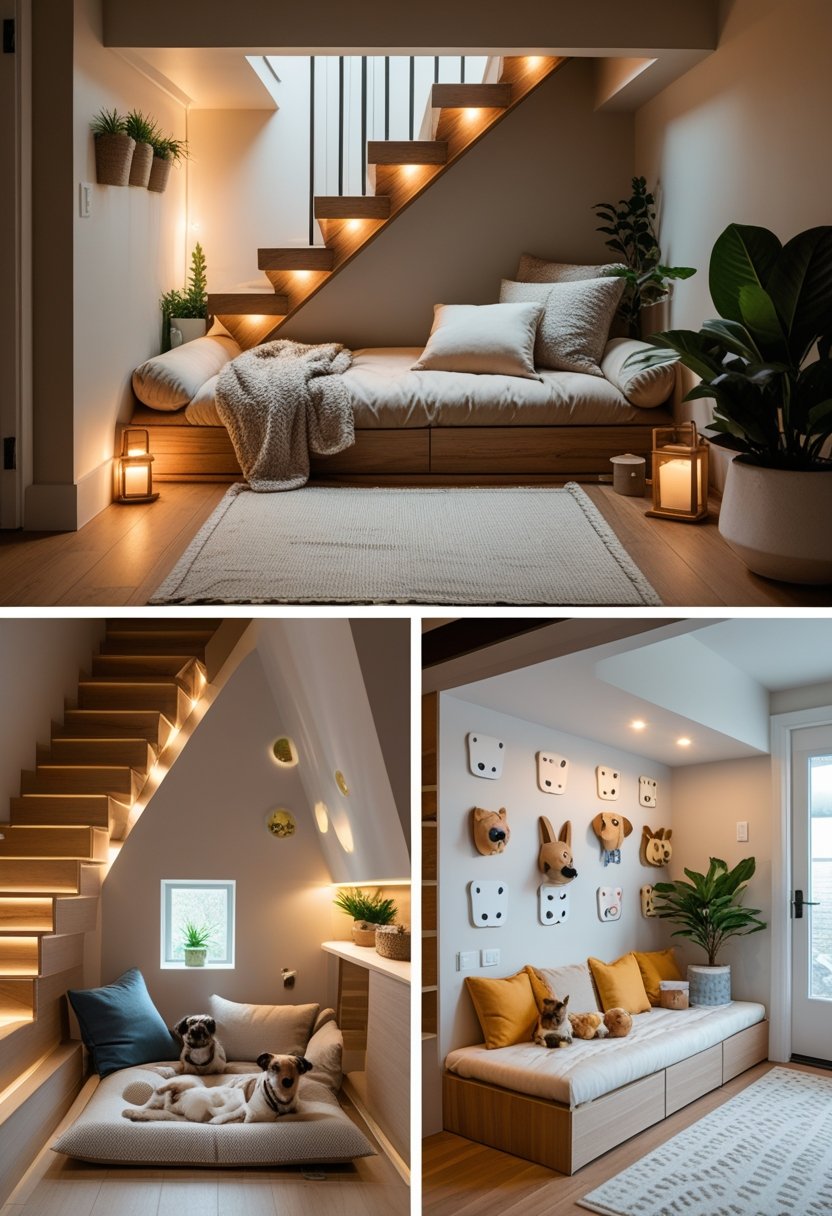
Creating a functional under-stairs dog house requires careful attention to the pet’s size, comfort, and safety. Proper use of space, ventilation, and material choice all play a role in ensuring the dog bed fits well and endures daily use.
Space Planning for Different Dog Sizes
The design must be tailored to the dog’s size and habits. Small to medium dogs need a cozy space where they can comfortably lie down and turn around. For larger breeds, the under-stairs area must be more open or customized with partial extensions.
Measuring the dog bed’s length and width accurately is essential. A good rule of thumb is to allow at least 10-15% more space than the dog’s typical sleeping posture. This prevents the dog house from feeling cramped and supports restful sleep.
In addition to sleeping space, consider entryway height and accessibility. Low door openings or awkward angles may limit use for bigger dogs or those with mobility issues.
Ventilation, Lighting, and Safety Features
Proper airflow is critical to prevent odors and ensure comfort. Small vents or open slats integrated into the dog house walls or door improve ventilation without compromising privacy.
Natural or soft lighting can be added, especially in deep, enclosed nooks. LED strips or small windows help the dog feel secure while avoiding harsh brightness.
Safety requires smooth edges, non-toxic finishes, and secure construction. Avoid sharp corners or exposed hardware. If the dog house includes storage, ensure doors or drawers can’t accidentally trap paws or tails.
Choosing Materials for Comfort and Durability
Materials should balance durability with comfort. Hardwood or quality plywood offers structural strength and resists wear. For interior surfaces, moisture-resistant paint or sealants extend longevity.
Adding a soft dog bed inside improves comfort. Foam or memory foam cushions with washable covers are practical choices, supporting joint health and ease of cleaning.
Avoid materials that absorb odors or can splinter. Fabrics should be breathable and resistant to scratching or chewing. Durable pet-safe finishes keep the dog house attractive over time.
Personalization and Style Tips for Pet Rooms
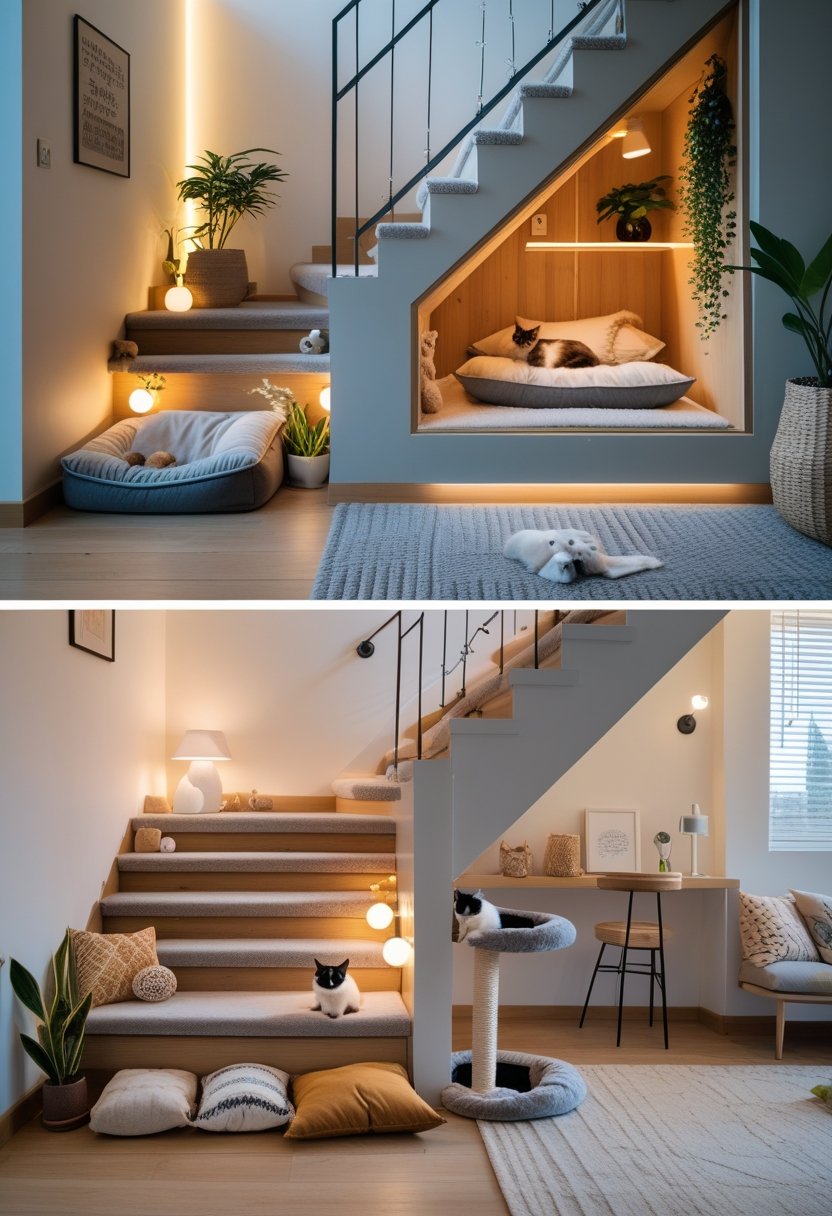
Creating an under-stairs pet room that reflects both the owner’s style and the pet’s comfort requires thoughtful design choices. Elements like custom signage, carefully chosen colors, and seamless integration with the home’s decor elevate these small spaces from basic to distinctive. Attention to detail shapes the experience for pets and owners alike.
Custom Name Signs and Decorative Touches
Name signs add a personalized, welcoming feel to a pet’s space. A simple wooden plaque with the pet’s name, like “DAISY,” instantly turns a crate-style nook into a special retreat.
Decorative touches such as small framed photos, paw print decals, or seasonal ornaments create personality without clutter. Using natural materials like wood or metal ensures the design remains durable and pet-safe.
Owners aiming for dog house ideas can include custom cushions or blankets featuring the pet’s name or favorites to increase comfort and personalization.
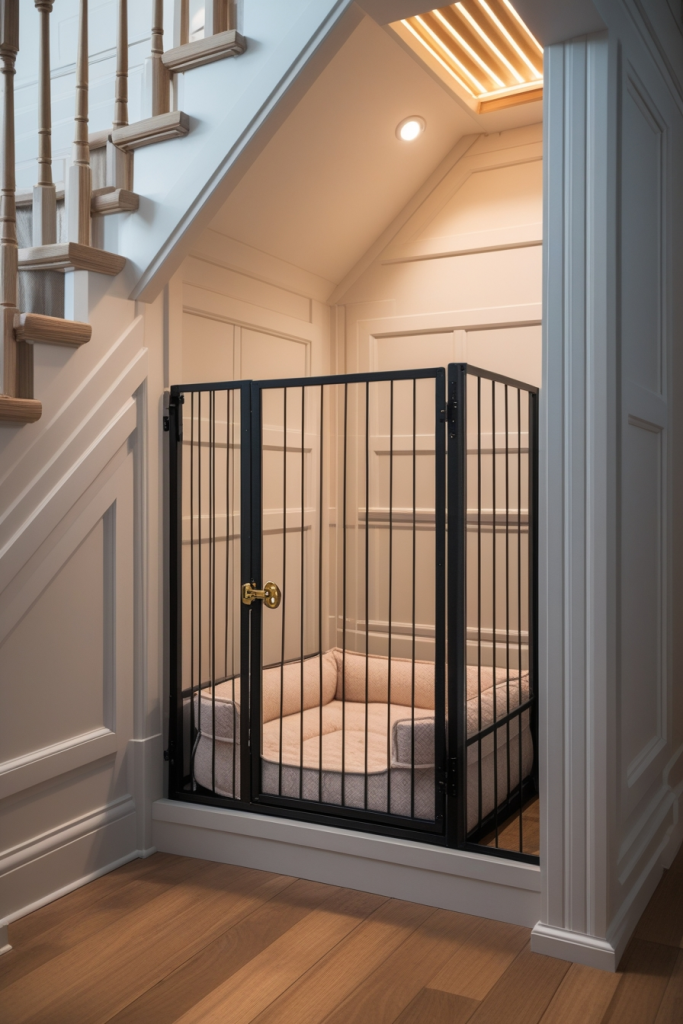
Incorporating Color Schemes and Doors
Choosing color schemes tailored to the home’s existing palette ensures the pet room blends in but still stands out subtly. Earth tones, soft greens, or muted blues provide a calm atmosphere ideal for pets.
Farmhouse-inspired green doors or matte black metal elements under stairs create both style and function. Doors with circular openings offer easy access while adding architectural interest.
Matching the pet room’s colors with the surrounding walls or stair finishes gives a cohesive look, which is important when designing small under-stairs areas that shouldn’t clash visually.
Blending Pet Spaces With Home Decor
Successful pet rooms under stairs should feel like an intentional extension of the home, not an afterthought. Built-in storage cabinets with pet entrances keep the area tidy and functional.
Designers can use sleek finishes that mimic adjacent cabinetry or integrate pet furniture with minimalist lines to maintain style consistency.
Incorporating pet spaces into overall home decor means selecting features that complement rather than compete with furnishings, creating harmony between living areas and pet zones. This approach enhances usability and aesthetics simultaneously.
Modern and Minimalist Under-Stairs Pet Spaces
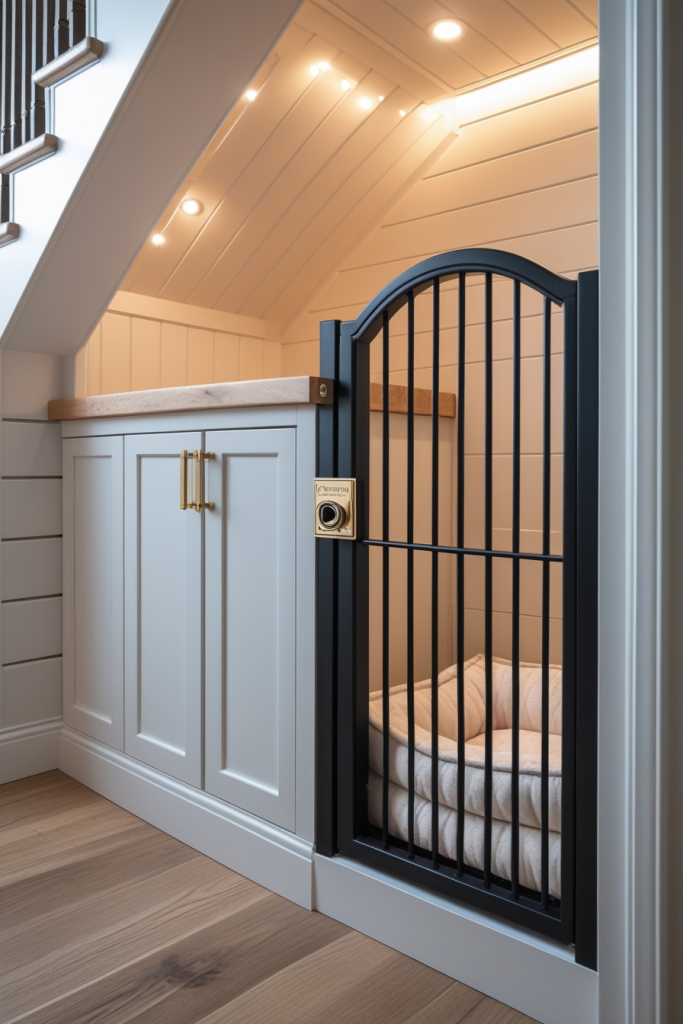
Modern under-stairs pet spaces prioritize simplicity and functionality while blending seamlessly with home interiors. These designs often use neutral tones, clean edges, and integrated storage. Comfort and style are balanced for pets and owners alike.
Clean Lines and Built-In Designs
Built-in pet nooks under stairs focus on sharp, clean lines and minimal decoration. Materials like light wood or matte paint create a sleek look that fits modern homes. These dog houses typically feature smooth surfaces and recessed spaces to avoid clutter.
Incorporating custom shelves or drawers around the nook enhances storage without sacrificing aesthetic. The pet area feels like part of the home’s structure rather than an add-on. Neutral colors, such as grays, whites, or blacks, keep the design subdued and versatile.
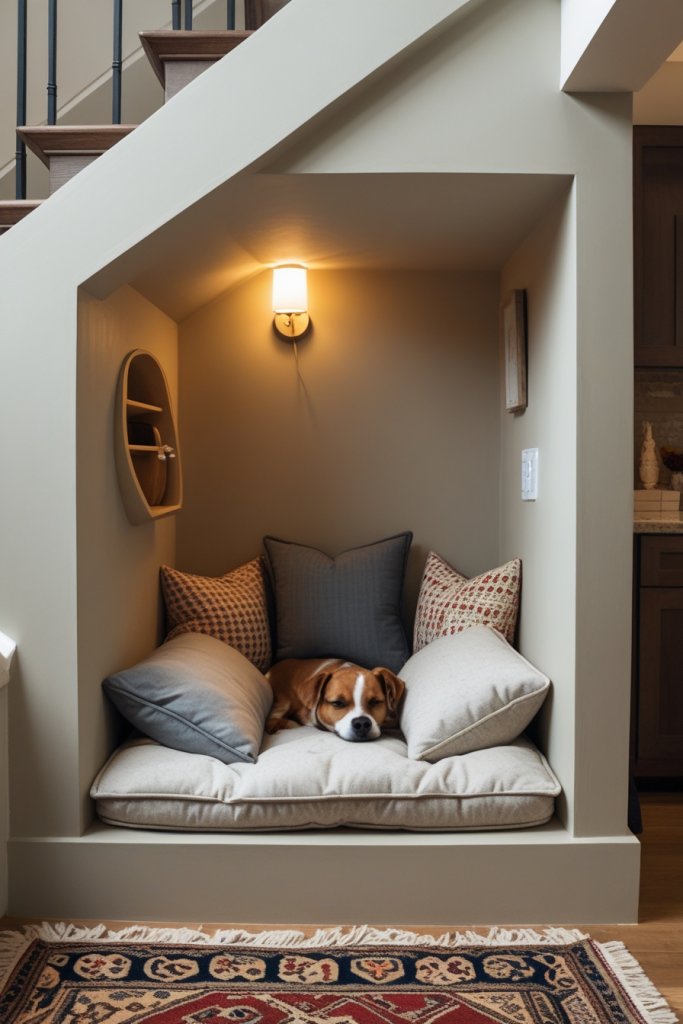
Soft bedding and subtle lighting improve comfort. A wooden nameplate or small accents personalize the space while maintaining the minimalist aesthetic.
Open-Concept Lounges for Larger Breeds
Open-concept designs adapt under-stairs areas for bigger dogs needing more room to stretch. These spaces use fewer barriers and larger openings for easy access. A circular or arch-shaped entry often replaces traditional doorways, creating an inviting feel.
They include cozy cushions or mats, with enough floor space to accommodate a dog’s natural movements. Often, the pet area extends into the overall under-stairs zone, maximizing usable space without crowding other home elements.
Metal or wood railings above ensure ventilation and visibility. These pet lounges balance openness with a sense of security, making them suitable for dogs that prefer less confinement yet still enjoy their own corner.
Farmhouse and Rustic-Themed Dog House Designs
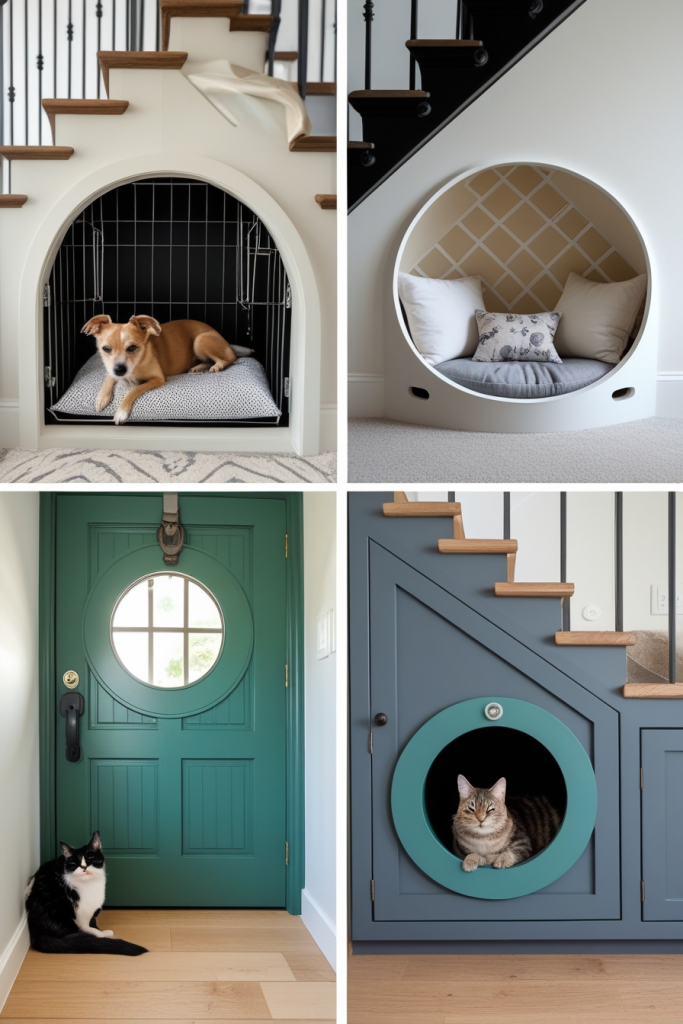
Farmhouse-style dog houses often combine functional design with warm, inviting aesthetics. Rustic touches like natural wood and vintage features create pet spaces that fit seamlessly into homes with traditional or country decor. These designs prioritize comfort, durability, and charm.
Green Door and Round Entry Aesthetics
A signature element of farmhouse pet rooms is the use of painted wooden doors, often in muted tones like green. These doors typically feature a round or arched opening, providing easy access for pets while adding visual interest.
The rounded entry softens the structure’s look and can resemble classic barn doors on a smaller scale. It balances privacy and openness, giving pets a designated retreat without feeling confined.
This style suits dog house ideas where exterior appearance and integration with home decor matter. The green door can be complemented with hinges, latches, or small nameplates to enhance the rustic appeal.
Wood Accents and Shiplap Details
Wood is a fundamental component in rustic dog house designs, especially shiplap paneling. Shiplap walls add texture and character, mimicking farmhouse interiors and creating a cozy atmosphere for pets.
Natural wood finishes or whitewashed treatments emphasize simplicity and durability. These details can be paired with vintage hardware, like wrought iron handles or lattice gates, for both style and functionality.
Including wood accents such as carved name signs or trim enhances personalization. Soft cushions and proper ventilation complete the design by ensuring comfort without compromising the rustic look.
Maximizing Storage and Utility in Pet Rooms
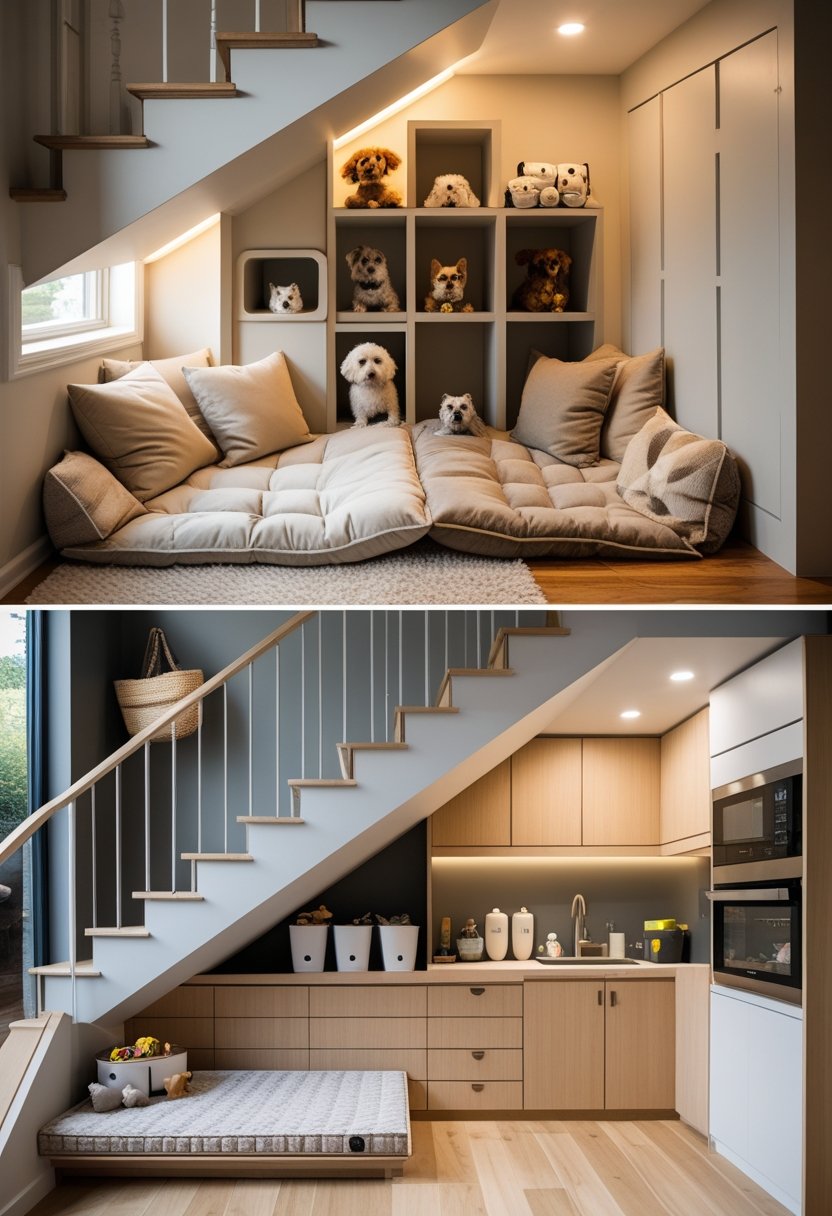
Effective use of the space under stairs often involves combining storage solutions with pet comfort. This approach keeps supplies organized while maintaining an inviting environment for pets. Customizing this area enhances both functionality and aesthetics for dog houses or general pet rooms.
Built-In Cabinets and Organizers
Built-in cabinets provide a streamlined solution for storing pet essentials like food, toys, grooming tools, and leashes. Installing adjustable shelves inside these cabinets allows for flexible storage that adapts as needs change.
Cabinet doors can be designed with pet-friendly features such as built-in feeding stations or small entry points for easy access. Using materials that are easy to clean, like laminated wood or sealed MDF, helps maintain hygiene.
Additionally, integrating pull-out drawers keeps smaller items visible and reachable, reducing clutter. These built-ins can blend seamlessly into the home’s style while offering ample space to keep the dog house area organized and functional.
Efficient Use of Nooks and Drawers
Unused nooks and small spaces under the stairs can be fitted with custom drawers or cubbies tailored to pet items. These compartments can serve dual purposes, such as providing storage alongside cozy resting spots.
Drawers mounted on smooth slides allow for easy access without disrupting the pet’s space. Utilizing vertical space within nooks maximizes storage without encroaching on the pet’s comfort area.
Incorporating baskets or removable bins within these drawers makes it simple to sort items by type for quick retrieval. Efficient use of these small areas supports a clutter-free pet room layout that balances practicality and design.