
Stylish Living Room Bookshelf Ideas for Smart Storage
Bookshelves in the living room serve both practical and aesthetic purposes. They provide organized storage for books and accessories while enhancing the overall design of the space. A well-chosen bookshelf can transform a living room by adding personality, functionality, and style.

Whether built-in, freestanding, or floating, living room bookshelves offer versatile solutions for any layout or size. They help maximize wall space and create focal points that reflect the homeowner’s taste. Thoughtful design ensures these shelves contribute to a balanced and inviting atmosphere.
More than simple storage units, bookshelves become a showcase for cherished items and a way to define the room’s character. Integrating the right style—from minimalist to rustic or industrial—can elevate the room’s visual appeal without compromising on practicality.
Choosing the Right Bookshelves for Your Living Room
Selecting bookshelves involves balancing style, function, and space. It requires attention to the type of shelves, the size and shape of the room, and the materials and finishes that best match the living room’s design.
Built-In vs. Freestanding Shelves
Built-in bookshelves offer a seamless, custom look that fits precisely into wall niches or along entire walls. They maximize available space and can be tailored to height and depth requirements. They often add value to a home but require professional installation and are not easily moved.
Freestanding shelves provide flexibility to change layout or relocate. They come in various sizes and styles, like ladder shelves or classic bookcases, suited for renters or those who prefer a non-permanent solution. They may not use space as efficiently but often provide a more varied design selection.
Assessing Room Size and Layout
The dimensions and flow of the living room determine the ideal bookshelf size and placement. In small rooms, narrow or vertical shelves keep floor space open while increasing storage. Corner units or floating shelves free up walking areas.
Larger rooms allow for expansive shelving such as wall-to-wall units or grand freestanding pieces. Consider traffic patterns and sightlines to avoid clutter and maintain visual balance. Use a tape measure and sketch layout options before purchasing.
Material and Color Considerations
Wood bookshelves—solid hardwood or veneer—offer durability and warmth, fitting traditional or rustic decors. Metal or glass shelves suit sleek, modern interiors but may need extra care.
Color choice impacts how the bookshelf integrates with the living room. Light colors expand a space visually, while dark shades add contrast and sophistication. Matching the finish to existing furniture or creating a deliberate contrast can define the room’s style.
Popular Types of Living Room Bookshelves

Bookshelves come in a variety of styles designed to meet different space and aesthetic needs. Each type serves distinct purposes, whether maximizing wall space, adding visual interest, or fitting into tight corners.
Floating Shelves for Modern Spaces
Floating shelves offer a minimalist and contemporary option for living rooms. They attach directly to the wall without visible supports, creating a clean and open look that suits modern interiors. These shelves are ideal for displaying books, decorative items, or small plants without taking up floor space.
They come in various materials, including wood, metal, and glass. Floating shelves work well in smaller rooms or apartments where space conservation is key. Their installation height can be customized to suit different arrangements, providing flexibility in styling.
Ladder and Leaning Bookshelf Options
Ladder and leaning bookshelves lean against the wall at a slight angle, combining ease of installation with a casual style. These units typically have wider shelves at the base that narrow toward the top, offering sturdy storage for books and decorative pieces while requiring minimal floor footprint.
Their open-back design helps them blend into diverse decors, from rustic to industrial. Ladder shelves are portable and can be moved easily, making them practical for renters or homeowners who like to refresh their layouts regularly.
Corner and Nook Bookshelf Designs
Corner and nook bookshelves efficiently utilize underused spaces within a living room. These shelves fit snugly into corners or awkward recesses, turning dead space into functional storage without disrupting room flow.
They come in built-in or freestanding versions. Corner bookshelves often feature triangular or curved shapes to maximize capacity. This design is especially useful for rooms where wall space is limited but extra storage is necessary.
Creative Bookshelf Placement and Arrangement Ideas

Effective bookshelf placement can enhance both function and style in a living room. Positioning bookshelves strategically maximizes space and integrates storage seamlessly with décor. Careful arrangements can define areas or make architectural features stand out.
Maximizing Vertical Space
Using tall bookshelves that reach toward the ceiling makes the most of vertical space, especially in rooms with high ceilings. This approach increases storage without taking extra floor area, keeping the room open.
Adding a rolling ladder or step stool provides easy access to upper shelves. Grouping books by color or size creates visual order. Leaving some shelves open for art or plants prevents a crowded look. Vertical storage also directs the eye upward, giving the room a sense of height and sophistication.
Bookshelves as Room Dividers
Freestanding or open-back bookshelves can divide a large living area into functional zones without closing off space. These shelves maintain light flow and can create cozy reading nooks or separate work areas.
To keep the division subtle, shelves can be stocked with a mix of books and decorative objects. Placing shelves back-to-back establishes clear boundaries while allowing access from both sides. Choosing lower shelves here preserves sightlines, preventing the room from feeling boxed in.
Wall-to-Wall and Floor-to-Ceiling Solutions
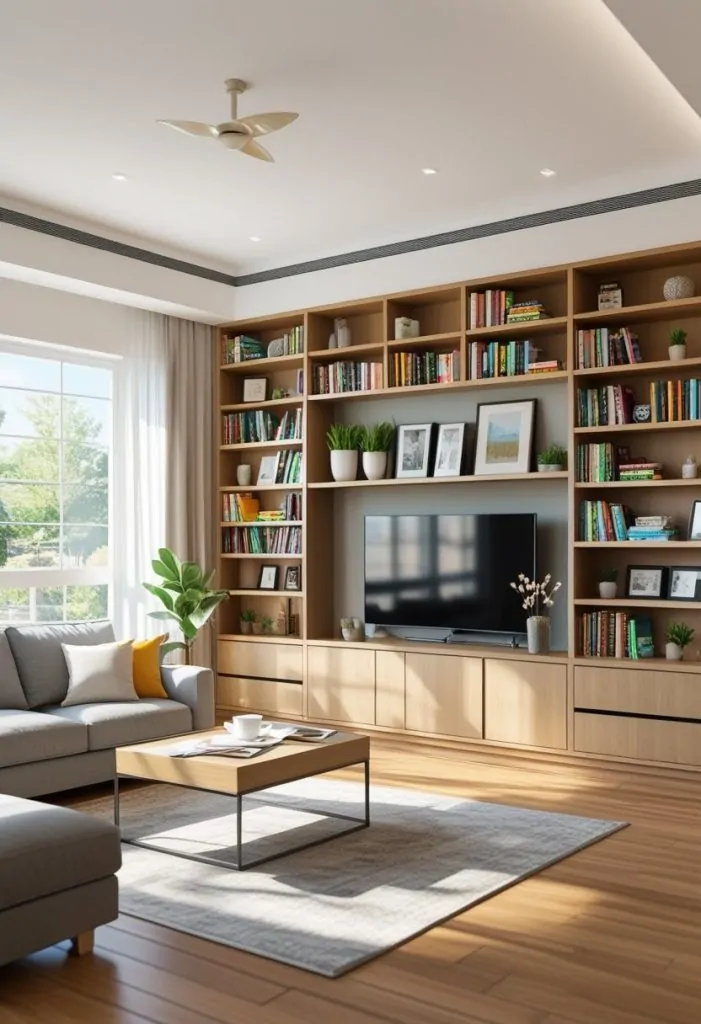
Installing continuous shelves along a full wall maximizes storage and creates a striking focal point. Floor-to-ceiling bookshelves offer ample room for large collections and display items in one cohesive unit.
Built-in bookshelves tailored to the room’s dimensions use space efficiently—including corners and alcoves. Incorporating lighting within the shelves highlights key items. This approach works best in larger living rooms where the bookshelf becomes an integral architectural element rather than just furniture.
Styling and Decorating Living Room Bookshelves

Creating an appealing bookshelf involves balancing practical storage with visual appeal. Attention to layout, materials, and complementary elements enhances the overall look. Bookshelves, whether traditional or floating, serve as both functional fixtures and style focal points.
Mixing Books with Art and Decor
Combining books with art and decorative objects adds personality and breaks visual monotony. A good approach is to place eye-catching titles at eye level for easy browsing while interspersing framed photos, small sculptures, or ceramics on adjacent shelves.
Grouping items in odd numbers, such as sets of three or five, creates a natural balance. Avoid overcrowding by leaving some negative space to let key pieces stand out. Stacking books horizontally can add variety and serve as pedestals for smaller decor items.
Incorporating Plants and Greenery
Adding plants introduces natural color and texture, softening the rigid shapes of shelves. Small potted plants, like succulents or ferns, fit well on floating shelves or as fillers beside books. Trailing plants, such as pothos, can be used to create visual flow by draping down the sides.
Maintenance-friendly greenery is preferred for low light rooms. Careful placement prevents plants from overwhelming the shelf but encourages a lively, organic feel. Plants also enhance air quality and introduce calm to the living room environment.
Using Color and Texture for Visual Interest
Color coordination and texture variety enhance bookshelf appeal. Grouping books by spine color can create striking visual themes, from monochrome to rainbow arrangements. Incorporating textured objects, such as woven baskets or wooden boxes, adds depth and tactile contrast.
Alternating materials like glass, metal, and fabric alongside books offers a layered look. Floating shelves often highlight minimalist color schemes to emphasize their sleek lines, while traditional shelves allow more diverse textures and hues.
Integrated Lighting for Ambiance
Adding lighting highlights key areas and elevates the shelf’s presence. LED strip lights installed under each shelf provide even illumination without bulk. Adjustable spotlights can focus on artwork or special book collections.
Integrated lighting helps create ambiance by casting warm or cool tones depending on the room mood. It also improves visibility in dim spaces, making the shelves functional as well as decorative. Careful wiring preserves clean lines, especially on floating shelves.
Functional and Space-Saving Bookshelf Ideas

Maximizing storage while maintaining comfort and style is essential in living room bookshelf design. Practical choices often include built-in shelves, multi-purpose units, and creative layouts that optimize available space without clutter.
Creating a Cozy Reading Nook
A reading nook benefits from bookshelves that frame the space, providing easy access to a favorite collection. Built-in shelves around a window seat or a small corner create an inviting, compact area for reading.
Using vertical shelves enables storage without occupying too much floor space. Adding soft lighting and cushions complements the nook, making it both functional and comfortable. This approach enables a quiet retreat while keeping books within arm’s reach.
Hidden Storage and Baskets
Incorporating baskets or concealed compartments within bookshelves helps reduce visual clutter. Baskets are ideal for storing smaller items or accessories that don’t fit neatly on shelves.
Bookshelves with cabinet doors or drawers can also hide less attractive objects while preserving overall order. This combination of open shelving and hidden storage balances display and tidiness, especially in busy living rooms.
Compact Solutions for Small Living Rooms
For limited spaces, slim vertical bookshelves or floating wall-mounted shelves save floor area while providing ample storage. Corner bookshelves utilize often-overlooked areas effectively.
Foldable or modular shelving units offer flexibility, allowing adjustment or expansion as needed. These options maximize storage capacity without overwhelming the room, making them suitable for small living rooms with diverse needs.
Personalizing Your Bookshelves in the Living Room

Personalization transforms bookshelves from simple storage into expressions of style and personality. It involves thoughtful arrangement of items that reflect tastes, memories, or current moods, making the living room feel more inviting and unique.
Showcasing Collections and Memorabilia
Displaying collections and memorabilia on living room bookshelves adds character and meaningful detail. Items like vintage books, travel souvenirs, framed photos, or art pieces create focal points among books.
To balance aesthetics and function, group similar objects by color, size, or theme. Use varied heights and textures to break visual monotony. For example, placing a small sculpture beside stacked books can add depth.
Incorporating meaningful objects encourages conversation and reflects personal interests. It also enriches the bookshelf’s role beyond storage, serving both as decor and a gallery that tells a story.
Theme and Seasonal Decor Integration
Integrating themes or seasonal decor brings freshness to bookshelves without drastic changes. Themes such as coastal, rustic, or modern can be reflected through specific colors, materials, and accessory choices.
Seasonal decor like small pumpkins in fall or minimalist white ornaments in winter adds timely visual interest. Switching out decorative elements periodically keeps the living room feeling current.
Using baskets or decorative boxes for smaller seasonal items maintains order. Bookshelves benefit from this method by becoming dynamic spaces that adapt to changing styles or holidays while remaining functional.