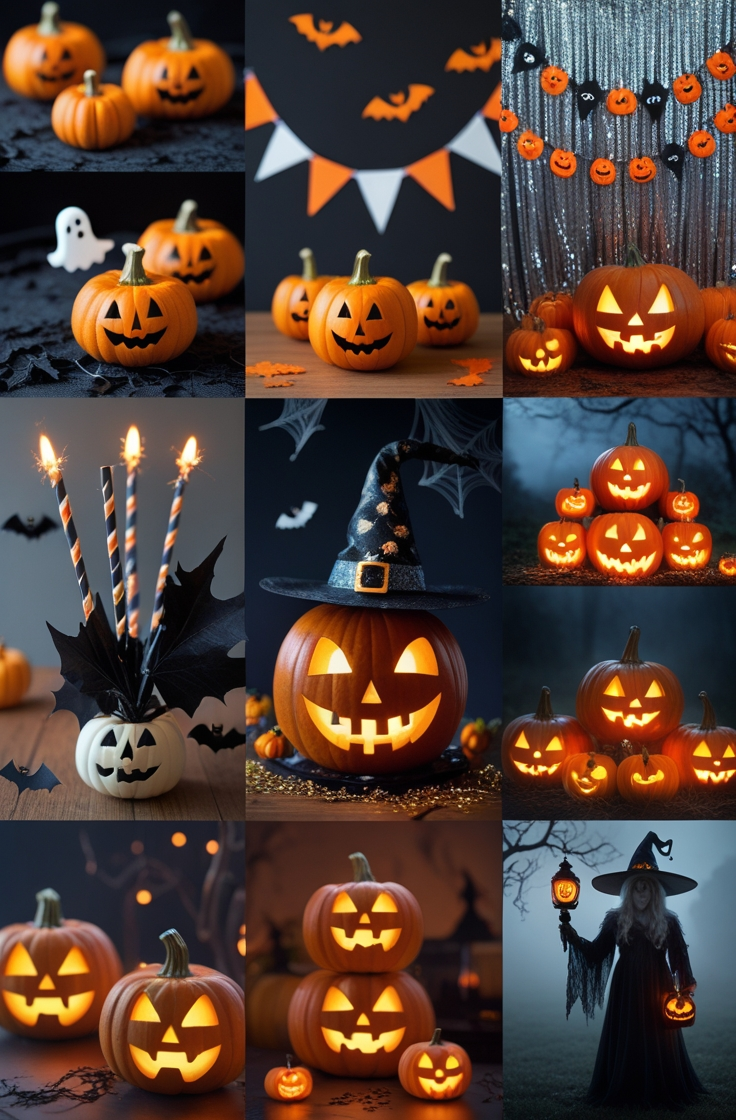

Spooky Halloween Decor Ideas: Entrance, Table & Living Room
Creating a spooky Halloween ambiance starts with a haunting entrance that sets the tone for the entire experience. A corridor lined with glowing red and purple lights, wrapped in fake spider webs and crawling black spiders, immediately immerses guests in an eerie atmosphere. This combination of neon lights, cobwebs, and thematic props transforms an ordinary passage into a chilling Halloween entryway that captures attention from the first step.

Inside, the haunted theme continues with a party table designed to impress with glowing green punch and eerie decorations. Skeletons in black cauldrons, finger-shaped snacks, and an eerie forest backdrop enhanced by blue and green lights create a visually captivating and spooky setting.
The living room completes the environment with life-sized skeletons lounging on furniture, walls draped in cobwebs, and glowing orange and blue lighting. Pumpkin accents and Halloween art add layers of festive detail, while TV screens showing skeleton imagery contribute to the unsettling yet festive mood.
Creating a Haunted Halloween Walkway
A haunted Halloween walkway combines lighting, decorations, and thematic props to create an immersive spooky experience. Key elements include eerie lighting, realistic cobwebs with spiders, festive signs, and carefully placed pumpkins and skulls to complete the entrance atmosphere.

Lighting and Color Schemes for Maximum Spookiness
Red and purple lights are effective colors for a haunted walkway. These glowing hues cast shadows and create an unsettling mood. Stringing LED lights along the pathway or mounting spotlights helps maintain consistent illumination without overwhelming brightness.
Neon or colored bulbs positioned low to the ground add depth and highlight props. Combining these with flickering effects simulates candlelight or firelight to evoke classic horror themes. Blue or green accent lights can also be used to evoke ghostly and unnatural tones.
Decorating with Cobwebs, Spiders, and Creepy Props
Fake cobwebs spread across walls and ceilings establish a forgotten and abandoned feeling. Using stretchable cobweb material allows coverage of large areas quickly. Large black plastic spiders, placed strategically on webs and corners, heighten the creepy factor.
Additional props like hanging bats or skeleton hands reaching out from surfaces can surprise visitors. Keeping these decorations natural in color and texture avoids an overly cartoonish appearance, supporting a more authentic haunted house vibe.

Festive Halloween Signs and Themed Doorways
The entrance door should act as a focal point, framed by Halloween-themed signs or banners. These can include classic phrases like “Beware” or “Enter if you Dare,” accompanied by silhouettes of witches, ghosts, or haunted houses.
Using weather-resistant materials ensures decorations hold up outdoors. Mixing printed signs with handmade elements adds personality to the setup. Door frames can also be outlined with string lights or garlands to draw attention and mark the threshold.
Using Pumpkins and Skulls to Enhance the Entrance
Pumpkins, especially those lit from inside with candles or LED lights, provide traditional and welcoming Halloween elements. Positioning glowing pumpkins along the path guides guests while contributing to the spooky mood.
Skulls and bones placed near pumpkins create contrast and elevate the haunted theme. Realistic props in varying sizes add visual interest. Grouping these with cobwebs and shadowy lighting enhances their chilling impact, making the walkway feel like part of a larger spooky story.
Designing a Spooky Halloween Party Table

The Halloween party table should create a striking contrast with dark linens and eerie lighting. Glowing centerpieces and themed snacks add layers of visual interest. Strategic use of props and lighting enhances the haunted atmosphere, making the table a memorable focal point.
Choosing Dark Table Linens and Backdrops
Dark tablecloths set the tone for a spooky atmosphere. Black or deep purple fabrics work best as they highlight the glow of decorations and lighting. Adding a torn black runner or spread of fake cobwebs across the table introduces texture and a haunted effect.
The backdrop behind the table can elevate the entire setup. Using dark curtains or walls decorated with spider webs, hanging branches, or Halloween-themed wall art supports the theme. These elements create depth and draw attention to the table’s details.

Eerie Centerpieces: Glowing Punch Bowls and Cauldrons
Centerpieces are the main attraction. A glowing green punch bowl lit from within serves as both a decorative and functional element. Surrounding it with matching cups and eerie decorations maintains a cohesive look.
Cauldrons filled with plastic bones or skeleton decorations add a sinister touch. The contrast between the dark containers and glowing objects enhances the spooky feel. Incorporating flickering candles or LED lights into these displays intensifies the haunted vibe.
Themed Snacks and Finger Foods
Themed snacks amplify the Halloween experience. Rolled finger-shaped treats with almond nails create a creepy, edible detail. Dark-colored snacks like black olives or purple-hued candies complement the overall color scheme.
Display snacks on black platters or inside mini pumpkins to tie food presentation into the decor. Labels with Halloween fonts or describing eerie names for foods increase engagement and encourage guests to explore the offerings.

Creepy Table Accessories and Lighting
Accessories tie the whole table together. Fake spider webs draped over plates and cups add a consistent haunted texture. Branches arranged vertically or horizontally provide a forest-like, eerie backdrop.
Lighting is critical; blue and green LED lights work well to cast chilling glows. Hanging candles or floating tealights in glass holders add soft flickering effects. Combining these lighting elements creates multi-dimensional shadows and highlights, enhancing the spooky mood.
Transforming the Living Room into a Haunted Scene

Creating a haunted living room relies on a careful blend of props, lighting, themed decorations, and multimedia elements. Each feature plays a role in setting the chilling, immersive atmosphere essential for a Halloween experience.
Skeleton Arrangements and Life-Sized Props
Life-sized skeleton figures are key to establishing a spooky vibe. Positioning skeletons on couches and around the floor gives the room a sense of eerie presence, as if the dead have come to life. Using varied poses, such as seated or sprawled, adds realism and depth.
Additional props like skulls and bones enhance the theme. Placing these elements within black cauldrons or on side tables contributes to the macabre setting. Fake cobwebs draped around the skeletons and nearby surfaces complete the scene, visually linking each piece.
Atmospheric Lighting Effects
Lighting sets the mood in any Halloween decoration. Combining glowing orange and blue lights creates contrasting warmth and chill that deepen the haunted effect. Positioning LED string lights around pumpkins or along the ceiling heightens visual interest.
Subtle use of colored uplighting across walls or behind props further accentuates shadows. This deliberate lighting manipulation casts unsettling silhouettes and highlights textures, such as cobweb strands or skeletal features. Low lighting also encourages a more immersive and mysterious space.

Wall Art and Thematic Decor
Halloween-themed wall art enhances the spooky ambiance without cluttering the room. Images of skeletons, haunted mansions, or classic horror motifs evoke a ghostly presence. Selecting frames with distressed or dark finishes complements the eerie aesthetic.
Additional decorations like hanging bats, spider webs, or vintage Halloween signage add layered detail to the walls. Positioning these elements asymmetrically avoids neatness, emphasizing a disordered, haunted look. The goal is visual cohesion focused on unsettling themes.
Interactive TV Displays and Media
Using TV screens to show skeleton imagery or spooky stories reinforces the haunted environment. Looping silent videos of flickering candlelight, crawling spiders, or ghostly shadows adds dynamic motion. This keeps guests engaged without requiring sound.
Screens placed at eye level integrate with room props for a seamless experience. Controlling brightness ensures the visuals contribute to the atmosphere rather than overpower it. This modern media element modernizes traditional Halloween decorations effectively.
Incorporating Classic Halloween Symbols

Many Halloween decorations rely on traditional symbols to create an authentic spooky atmosphere. Using these symbols strategically enhances any space with recognizable elements that are both eerie and festive.
Bats and Black Cats in Decor
Bats are often linked with Halloween due to their nocturnal nature and association with darkness. They embody the mysterious and eerie qualities that fit well in haunted settings. Incorporating bat silhouettes or hanging bat decorations adds a dynamic, unsettling feel to entrances or party spaces.
Black cats symbolize superstition and are frequent Halloween icons. Their sleek shapes and piercing eyes create a sense of foreboding. Placing black cat figures near entrances or on tables can evoke this traditional symbolism while adding visual interest.
Both bats and black cats bring a layer of folklore to Halloween decorations, reinforcing the holiday’s themes of superstition and mystery. Their use is effective in illuminating stories behind the spooky ambiance.

Pumpkins and Jack-o’-Lantern Displays
Pumpkins are one of the most iconic Halloween symbols. Carving jack-o’-lanterns with glowing faces offers a classic touch that instantly signals the holiday. The light from inside a pumpkin creates an inviting yet eerie glow perfect for walkways or windows.
Using a mix of traditional orange pumpkins and creatively lit variations adds depth to displays. Grouping pumpkins with skulls or skeleton props can heighten the haunted effect, blending festive cheer with spookiness.
Pumpkin decorations also work well as centerpieces for tables or living room setups. Their rustic, natural look contrasts effectively with synthetic elements like cobwebs or neon lights, balancing warmth and the macabre.
Haunted House and Ghostly Accents
Haunted house imagery taps into the fear of the unknown, making it a core element of Halloween decor. Incorporate ghost cutouts, tattered curtains, or dilapidated signs to create a worn, haunted feel in corridors or rooms.
Ghosts symbolize spirits and the supernatural, playing on Halloween’s roots in honoring the dead. Hanging translucent ghost figures or placing glowing ghost lanterns helps establish an eerie, otherworldly presence.
Combining haunted house elements with cobwebs and skeleton props fosters a narrative of a haunted space. This builds a convincing environment that enhances the chilling spirit of Halloween celebrations.
Activities for a Spooky Celebration

A well-planned Halloween gathering engages guests through immersive activities that maintain a chilling tone. These include interactive experiences like trick-or-treating adapted for all ages, storytelling sessions with eerie themes, and effective use of props to build an unsettling ambiance.
Trick-or-Treating Experiences
Trick-or-treating remains a classic activity that can be adapted for indoor or controlled outdoor settings. Hosts can create stations where trick-or-treaters collect candy or themed treats, such as finger-shaped snacks, adding a playful yet spooky dimension.
Pathways lined with glowing pumpkins and skull decorations guide participants safely while maintaining a haunted atmosphere. Glow-in-the-dark elements and dim, colored lighting enhance the experience, making each stop feel more immersive.
Adults and children alike can enjoy a thematic route where actors or decorations portray friendly ghosts or skeletons. Clear signage and a well-lit path ensure safety without diluting the eerie effect.
Spooky Stories and Halloween Writing Prompts
Storytelling is essential for deepening the Halloween mood. Sessions should include classic spooky tales or newly crafted stories focusing on ghosts, haunted houses, or supernatural events to captivate listeners.
Halloween writing prompts encourage creativity, especially for children or teens. Prompts might ask participants to describe encounters with ghosts or invent their own haunted tales. This activity stimulates imagination while reinforcing the festive theme.
A comfortable seating area with eerie lighting, such as blue and orange glows, sets the tone. Incorporating skeleton or ghost-themed decor nearby adds visual context to the stories, enriching the overall environment.
Creating a Ghostly Atmosphere with Props
Strategic use of props transforms any space into a haunted setting. Large skeleton figures positioned on furniture and scattered bones create an unsettling presence without causing discomfort.
Cobwebs stretched across ceilings and walls covered with artificial spiders add texture and depth to the scene. Branches and hanging candles create an eerie forest-like backdrop when lit with low green and blue lights.
Illuminated pumpkins and skulls placed throughout enhance visibility while keeping the theme intact. Adding elements like flickering candles or glowing punch bowls offers dynamic lighting to maintain suspense during the celebration.
Final Touches for a Memorable Halloween Event

Attention to detail enhances the visitor experience, making the event both enjoyable and safe. Thoughtful balance between spooky and fun elements, clear safety measures for decorations and lighting, and opportunities for guests to express creativity all contribute to a well-rounded Halloween party atmosphere.
Balancing Scary and Fun for All Ages
A Halloween event should offer thrills without overwhelming younger or sensitive guests. Incorporate decorations that are eerie, like glowing pumpkins and cobwebs, but avoid themes that may cause distress, such as overly graphic horror scenes.
Use a mix of lighting—purple and red tones set a spooky mood while softer orange fairy lights keep it approachable. Include playful props, such as skeletons and faux spider webs, to create intrigue without excessive fright.
Designate areas for different age groups if possible. Adults may enjoy more intense themes like haunted houses or horror movie props, while children benefit from gentle scares and interactive elements like themed snacks shaped like fingers or bones.

Safety Tips for Decor and Lighting
Safety is essential, especially when using glowing lights and hanging decorations. Secure all props firmly to avoid falls or accidents along walkways or near the party table.
Use LED lights to reduce heat risk and electrical hazards. Avoid candles unless they are battery-operated and placed away from flammable materials, like fake cobwebs or paper decorations.
Ensure walkways and entry corridors are well-lit to prevent tripping. Clear clutter and cords from high-traffic areas. Check that electrical outlets are not overloaded and keep all wires taped down or hidden to avoid trips.
Encouraging Creativity and Personalization
Personal touches make a Halloween party more memorable. Encourage guests to contribute by bringing their own decorations or themed treats, such as spooky finger foods or custom pumpkin designs.
Host a costume contest or a decorating challenge to engage attendees and inspire creativity. Provide basic supplies like colored lights, props, and craft materials for those who want to add to the décor.
Offer photo opportunities with life-sized skeleton figures or eerie backgrounds illuminated in orange and blue. This allows guests to capture their experience and share their personal take on the Halloween celebration.