
25 Cozy Green Bedrooms with Warm Natural Style
This collage showcases six bedrooms designed around cozy green-themed interiors, each using a unique shade from soft pastels to deep forest hues. The rooms balance warmth and calm through thoughtful use of wooden furniture, plush bedding, modern wall art, and natural lighting.
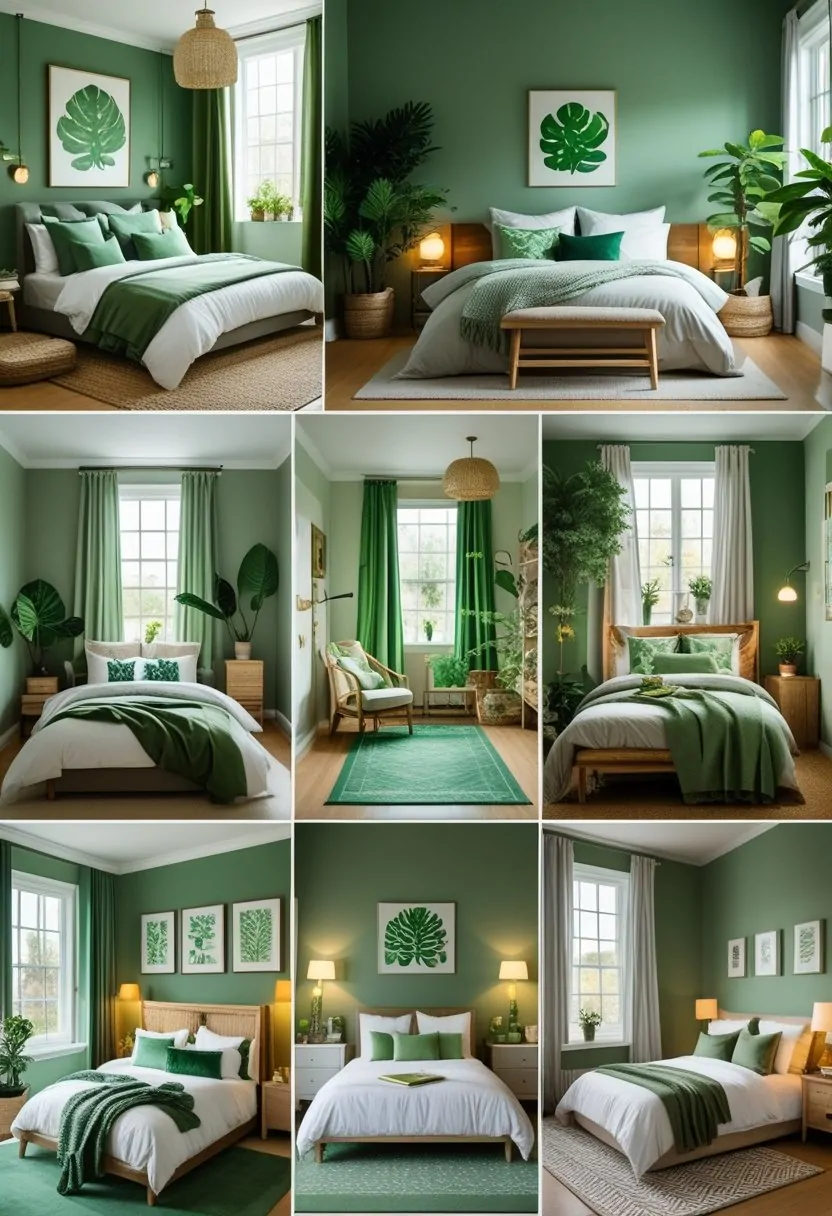
Green tones create a serene and inviting atmosphere, making them a versatile choice for comfortable bedroom designs. Indoor plants and textures complement these shades, enhancing the feeling of tranquility and connection to nature.
The bold navy-blue label reading “15 Cozy Green Bedroom Ideas” signals this image is part of a broader inspiration guide. It invites readers to explore practical and stylish ways to incorporate green into their own bedroom spaces.
Why Green Bedrooms Are Trending

Green bedrooms blend aesthetics with function, appealing to those seeking both style and wellness in their personal spaces. The color green’s ability to reduce stress and promote relaxation plays a significant role, alongside a growing desire to reconnect with nature indoors.
Emotional and Psychological Benefits of Green
Green is known to have calming effects on the mind, reducing anxiety and stress. It creates a sense of balance and harmony in a bedroom, which is essential for restful sleep and mental clarity. Shades like sage and mint encourage tranquility, while deeper tones such as forest green provide a grounding atmosphere.
People often choose green-themed bedrooms to foster positive moods, making the space feel safe and rejuvenating. The color’s association with renewal and growth also helps occupants feel refreshed. This soothing effect contributes to why green remains a top choice for bedroom palettes.
Connection to Nature and Biophilic Design
Incorporating green aligns with biophilic design principles, which emphasize the human need to connect with nature. Green bedrooms often feature natural elements such as wooden furniture and indoor plants that enhance this connection.
This approach promotes wellbeing by bringing aspects of the outdoors inside, supporting relaxation and improving air quality. The color green evokes landscapes and vegetation, reinforcing a feeling of calmness linked to natural environments. This trend responds to growing urban lifestyles that lack regular contact with nature, making green bedrooms especially appealing.
Choosing the Perfect Green Palette for Your Bedroom
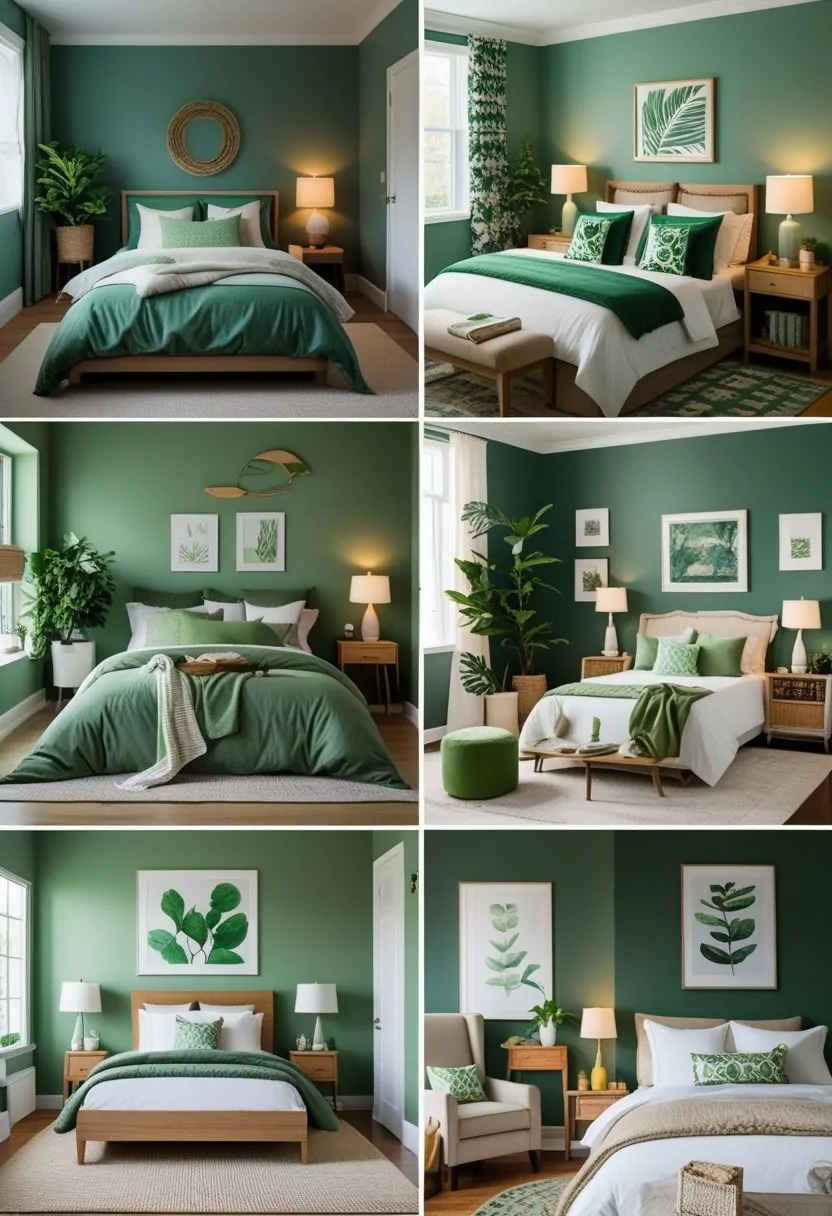
Selecting the right green palette depends on the desired mood, lighting, and room size. It involves balancing undertones and finishes to complement furnishings and create a cohesive space. Various approaches exist, whether opting for subtle, airy hues or deep, dramatic tones with strategic highlighting.
Soft Pastels and Light Green Tones
Soft pastel greens bring a refreshing, calming quality without overwhelming a room. Shades like pale sage, mint, or clary sage work well on green walls to create an airy atmosphere. These hues reflect light, making small bedrooms feel larger and more open.
Using light green paint, especially in matte or eggshell finishes, can enhance natural light. Pairing these tones with white or beige trims softens the look further. Soft greens coordinate effectively with natural wood furniture and subtle textiles, allowing for warmth and comfort in the design.
Bold Forest and Dark Green Shades
Dark green walls add depth and sophistication to a bedroom. Rich shades such as emerald, moss, or pine create an intimate feel suitable for larger spaces with ample natural light. These tones often contain blue or gray undertones, lending a modern edge.
Matte or satin finishes on dark green walls help reduce glare and enhance texture. Combining deep green paint with metallic accents like brass or bronze fixtures introduces contrast and a polished look. Careful lighting design, including dimmers, maximizes the room’s mood and functionality.
Accent Walls and Color Blocking
An accent wall painted in a bold green shade serves as a focal point without overwhelming the room. This technique works well with softer adjacent walls, creating a balanced, layered effect. Popular choices for a green accent wall include forest green or hunter green.
Color blocking with green and complementary neutrals, like beige or gray, defines spaces and adds visual interest. It can be achieved through paint or incorporating large-scale wall art in these hues. Accent walls enhance the room’s architectural features, such as headboards or built-in shelves, framing the bedroom’s design.
Layering Texture and Warmth with Green Textiles
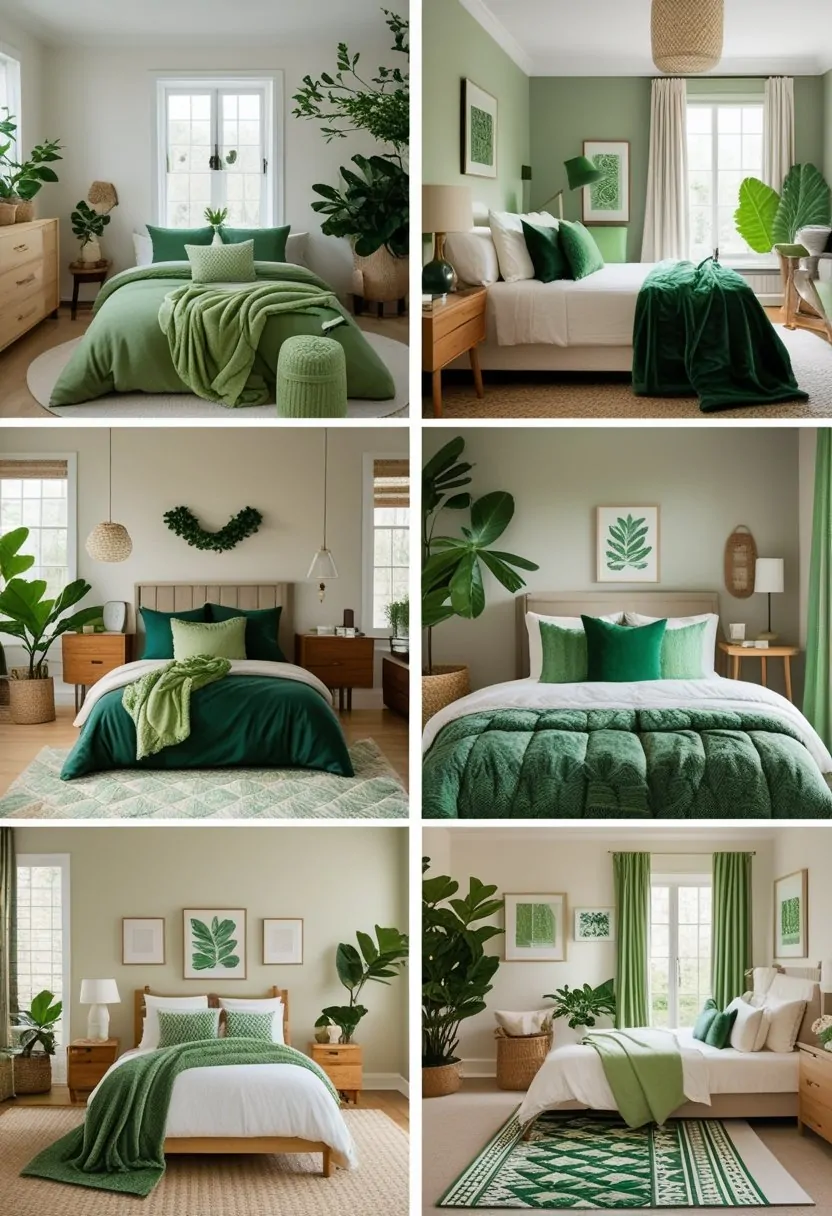
Creating a cozy green bedroom involves combining different textiles that provide both visual interest and tactile comfort. This approach uses a range of materials and shades, from lush linens to soft throws, carefully balanced to enhance warmth without overwhelming the space.
Green Bedding for Comfort
Green bedding forms the foundation of a soothing bedroom environment. Using fabrics like cotton or linen in varying shades—from pale sage to deep olive—adds depth while maintaining a restful tone. Bedding with subtle texture, such as a slightly nubby weave or embroidered details, increases tactile richness without sacrificing simplicity.
Choosing breathable materials is essential for comfort, helping regulate temperature and moisture. A soft green duvet or comforter layered with lighter green sheets can create a balanced look that invites relaxation. The careful selection of bedding color layers keeps the palette grounded and adds a distinct sense of calm.
Throws, Linens, and Bedspreads
Throws and bedspreads offer additional layers that contribute significantly to both warmth and style. A wool or mohair throw in emerald or forest green can introduce a rich, cozy texture. These pieces are ideal for draping over the end of the bed, adding variation and softness to the overall green theme.
Lightweight linens with subtle patterns, such as botanical prints or geometric designs, work well in softer green tones for daytime layering. Beyond aesthetics, these textiles offer functional layering, helping to create a tactile and inviting bed setup adaptable to changing temperatures.
Selecting Green Pillows and Cushions
Pillows and cushions in green textiles serve as key accents that can tie a room’s look together. Mixing solid colors with patterned or textured pillows creates visual interest and helps break up the monotony of a single shade. For example, velvet cushions in dark green paired with lighter linen pillows will add depth.
The choice of pillow size and shape also impacts comfort and style. Large square pillows provide support and set the color tone, while smaller rectangular cushions add detail and softness. Prioritizing plush, tactile fabrics ensures these elements contribute to the room’s overall cozy atmosphere.
Enhancing the Green Bedroom with Furnishings and Accessories
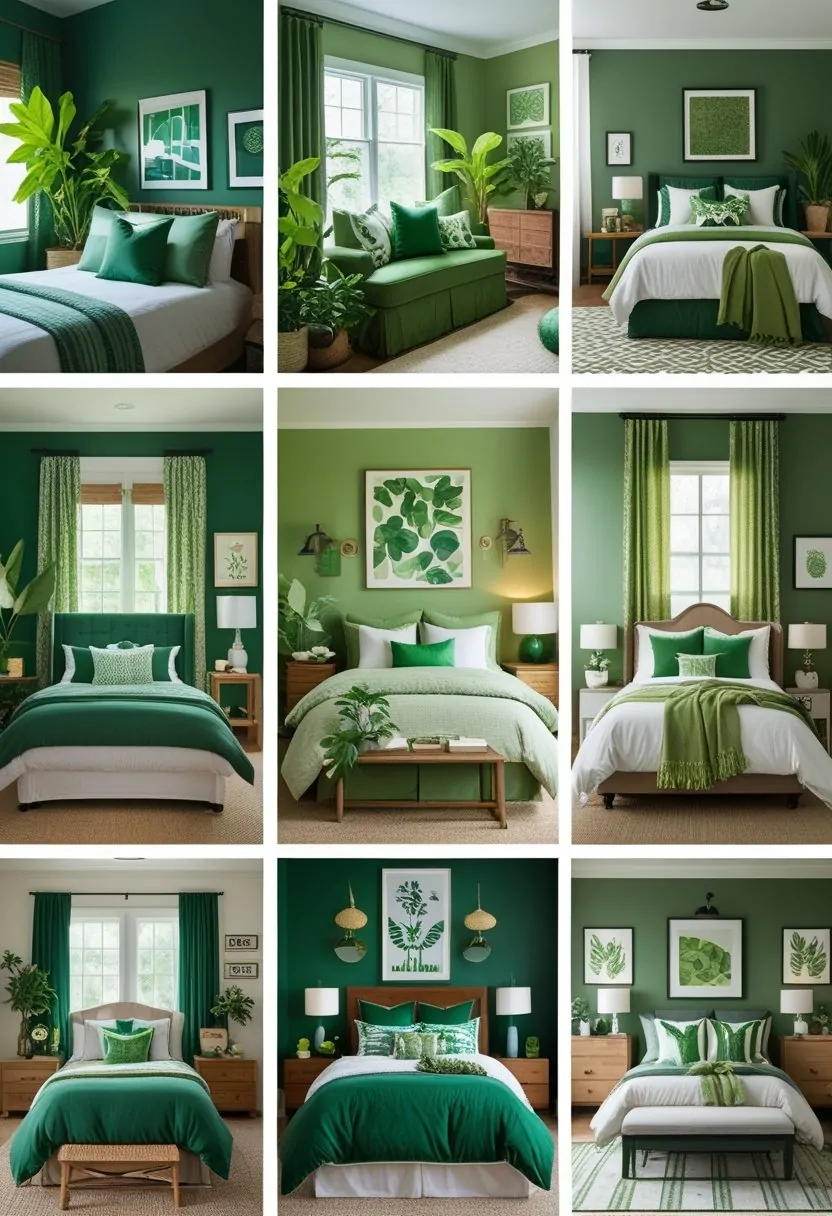
Selecting the right furnishings and accessories sharpens the bedroom’s green theme while adding texture, comfort, and style. Choices like natural wood tones, soft upholstery, and subtle metallic details work together to create a balanced and inviting space. Each element plays a distinctive role in defining the room’s character.
Wooden Beds and Furniture
Wooden beds and furniture bring warmth and organic texture to green bedrooms. Solid wood pieces, especially in oak, walnut, or teak, complement various green tones—from sage to deep forest.
A wooden bed frame with clean lines grounds the room, adding natural appeal without overpowering the color scheme. Matching wood nightstands or dressers enhance cohesion and contribute to a serene, earthy ambiance.
Wood’s durability also makes it practical, supporting functionality alongside style. Its natural grain adds visual interest, which pairs well with minimal green décor or layered textiles.
Green Upholstered Headboards
Green upholstered headboards serve as focal points, offering softness and depth to bedroom design. Shades like olive, sage, or emerald provide a rich contrast to crisp white or neutral bedding.
Fabric choices such as velvet, linen, or cotton blend luxury with comfort. A green headboard can anchor the room’s palette and tie together surrounding accents and wall colors.
Its plush texture invites relaxation and adds dimension, particularly in modern or transitional bedrooms. Upholstered headboards in green also soften the overall look and can stand out without clashing with other materials.
Metallic Accents for a Touch of Luxury
Metallic accents elevate the green bedroom with subtle sophistication and reflective contrast. Brushed gold, polished brass, or matte black metal fixtures work well against wood and green textiles.
Items like bedside lamps, drawer pulls, picture frames, or mirror trims add elegant highlights while maintaining harmony with natural elements.
Using metallics sparingly prevents the room from feeling cold or cluttered. Instead, these accents create balance by catching light and introducing a refined element that complements the cozy green tones.
Incorporating Nature and Botanical Elements
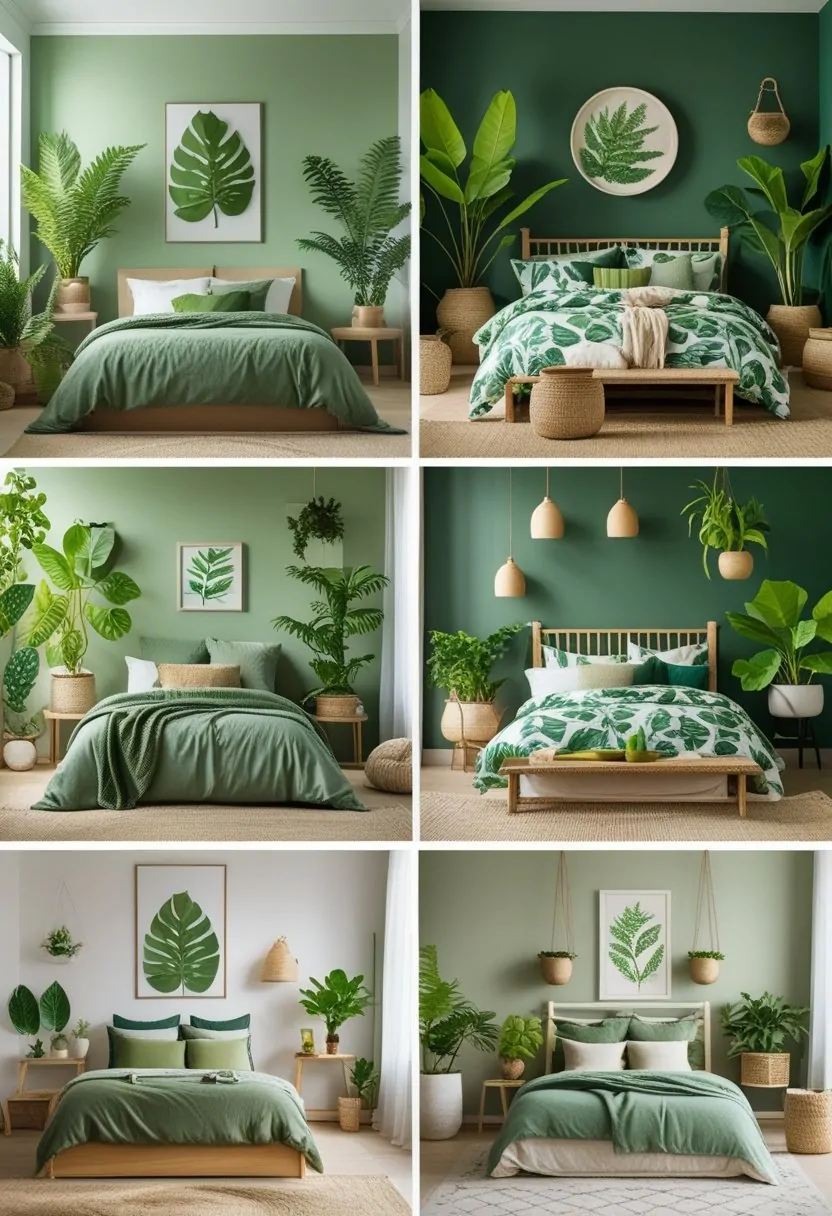
Nature and botanical details add texture, color, and vitality to green-themed bedrooms. Using live plants and botanical artwork enhances the sensory experience while supporting a restful and natural ambiance.
Indoor Plants for Freshness
Indoor plants play a central role in bringing life and freshness to any bedroom. Their natural ability to improve air quality and add subtle movement makes them essential for green-themed spaces. Popular choices include snake plants, philodendrons, and fiddle leaf figs due to their easy maintenance and visual appeal.
Placement matters; plants near windows receive natural light, ensuring healthy growth. Hanging planters or shelves with trailing vines create dimension without crowding floor space. Combining plants of different heights and leaf shapes introduces variety and natural rhythm.
Choosing pots in earthy tones or natural materials like terracotta, ceramic, or woven baskets helps maintain the botanical theme. Proper care, such as watering schedules and humidity control, ensures plants remain vibrant, contributing to a calming environment.
Botanical Prints and Wall Art
Botanical prints and modern wall art serve as a clean, lasting way to feature nature indoors. These visual elements extend the green palette beyond physical plants, providing texture and pattern in a low-maintenance form.
Popular options include framed leaf sketches, floral prints, or abstract art inspired by natural forms. Using modern wall art with minimalist frames or neutral backgrounds balances the organic patterns with contemporary style.
Displaying botanical art in groups or galleries helps create a focal point that complements furniture and textiles. Incorporating prints with different shades of green or soft pastels integrates smoothly with the room’s color scheme.
Selecting art that reflects local flora or seasonal changes personalizes the space, enhancing the connection with nature even when plants aren’t abundant. This approach works well for bedrooms with less natural light or limited space for live plants.
Maximizing Light and Airiness
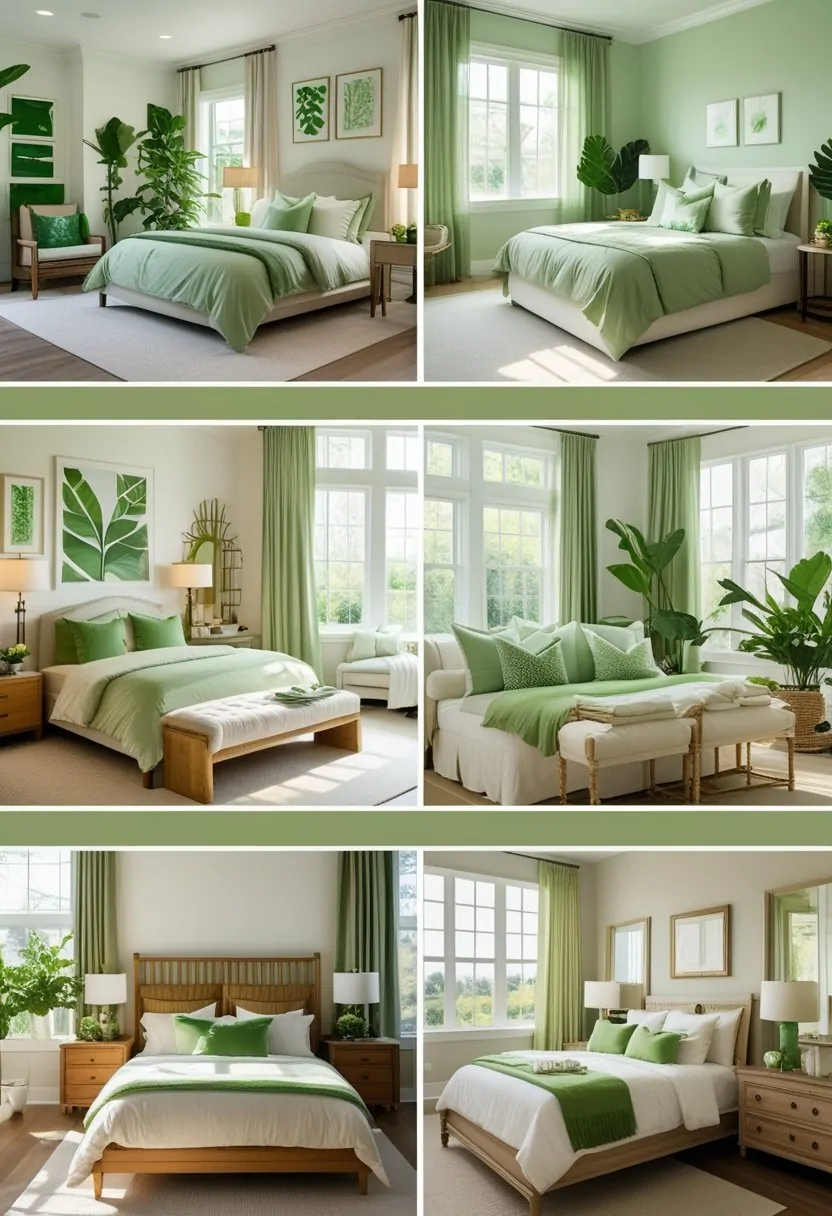
A bedroom’s sense of light and airiness depends largely on how natural light is managed and complemented by soft, balanced color choices. Thoughtfully selected textiles and window treatments enhance both brightness and the green color palette, creating calm yet lively interiors.
Optimizing Natural Light
Natural light is essential for making green-themed bedrooms feel open and fresh. It is best to avoid blocking windows with bulky furniture, allowing sunlight to flow freely into the room. Positioning mirrors opposite windows can reflect light, effectively doubling its presence without additional lighting.
Light green walls and decor amplify sunlight by reflecting it, while darker greens add depth without making the space feel cramped when used sparingly. Window orientations should guide furniture placement to prevent shadows and ensure the room remains bright throughout the day.
Using Green Curtains for Ambience
Green curtains offer a dual function of controlling light and reinforcing the room’s color scheme. Sheer green curtains filter sunlight softly, diffusing harsh rays and creating a gentle glow that complements the bedroom’s cozy atmosphere.
Heavier green drapes, especially in forest or olive hues, provide privacy and block excessive light when needed, but they should be balanced with lighter window treatments or open curtains during the day to maintain airiness. Selecting curtains in shades that harmonize with other green elements ties the design together elegantly.
Pairing Green with White Bedding
White bedding serves as a neutral counterpoint to varied greens in the room, brightening the overall look and enhancing the feeling of cleanliness and spaciousness. Crisp white sheets and pillowcases can make even the richest green tones appear more vibrant and fresh.
Incorporating textures like white quilts or duvet covers with subtle patterns adds dimension without detracting from the calming green theme. This pairing also simplifies maintaining a balanced light level in the bedroom by reflecting natural light more effectively than darker fabrics.


