
4 Budget-Friendly Flooring Ideas for Stylish Living Spaces
A variety of budget-friendly flooring ideas can enhance the look and feel of different spaces without overspending. This collage showcases four distinct examples: cork flooring in a bright home office, rustic wooden planks in an art studio, herringbone brick in a hallway, and dark-stained wood floors paired with a stone fireplace in a cozy living room. Each choice balances style, durability, and cost-effectiveness.

Affordable flooring doesn’t mean sacrificing quality or aesthetic appeal; cost-effective options exist for every room and design preference. Materials like cork and reclaimed wood offer warmth and texture, while brick and stained wood provide unique surfaces that suit both traditional and modern interiors. These options help homeowners create inviting, functional spaces within a reasonable budget.
Overview of Budget-Friendly Flooring Options

Affordable flooring choices balance cost, durability, and style. Selecting the right material involves understanding what qualifies as budget-friendly, the key benefits, and important factors to consider before installation. These insights help homeowners make informed decisions that suit their needs without overspending.
Defining Budget-Friendly Flooring
Budget-friendly flooring refers to materials that provide a cost-effective solution while maintaining acceptable quality and appearance. These options typically cost less per square foot compared to premium materials like genuine hardwood or natural stone.
Common types include vinyl plank, laminate, cork, engineered wood, and ceramic tile. These materials offer a range of aesthetics and durability levels suited for different spaces, including offices, living rooms, and entryways. Importantly, budget-friendly does not mean cheap or low quality; many affordable flooring options are engineered for long-term use.
Benefits of Affordable Flooring Materials
Affordable flooring materials make home renovations accessible without sacrificing form or function. They are often easier and faster to install, reducing labor costs significantly.
These flooring types tend to be low maintenance and resistant to daily wear such as scratches, stains, and moisture. For example, vinyl and laminate are waterproof options ideal for busy households. Additionally, budget-friendly floors accommodate a wide variety of styles, from rustic wood looks to modern textures.
They also help increase home value by updating spaces attractively at a controlled cost.

Factors to Consider When Choosing Cost-Effective Flooring
Choosing the right cheap flooring involves weighing durability, installation ease, maintenance, and style compatibility. Consider where the flooring will be installed—high-traffic areas require tougher materials like vinyl or tile, while bedrooms can accommodate softer surfaces like cork.
Budget constraints must also factor in upfront costs and potential future repairs. Homeowners should assess flooring thickness, warranty terms, and resistance to moisture or fading.
Personal lifestyle needs matter; families with children or pets might prioritize scratch resistance and easy cleaning. Finally, consider how the flooring complements existing decor, ensuring it enhances the room’s overall aesthetic and function.
Cork Flooring: Comfort and Sustainability

Cork flooring combines natural comfort with eco-conscious benefits, making it a practical choice for modern interiors. It offers unique physical properties alongside environmentally friendly features. Understanding its characteristics, suitability for specific spaces, and care requirements helps homeowners make informed decisions.
Key Features of Cork Flooring
Cork comes from the bark of cork oak trees, harvested without harming the tree, making it renewable. It naturally repels insects and provides good insulation against temperature and sound. Its soft, cushioned surface reduces fatigue from standing or walking for long periods.
Durability is moderate; cork can be prone to dents and scratches if heavy or sharp objects are dropped. The material is also biodegradable and recyclable, fitting well with sustainable building standards. Visually, cork flooring ranges from natural tones to printed patterns, accommodating various interior styles.
Pros and Cons for Home Offices
Cork flooring is comfortable underfoot, minimizing strain during long working hours, which benefits home office environments. Its sound-absorbing quality helps reduce noise distractions, creating a quieter workspace. The insulating properties maintain a stable floor temperature, enhancing comfort year-round.
On the downside, cork can be vulnerable to damage from high heels, pet claws, or office chair casters unless properly finished. Exposure to moisture should be managed carefully to avoid warping or staining. Choosing high-quality sealants improves resistance but increases initial costs.
Installation and Maintenance Tips
Before installation, cork flooring products like glue-down tiles or floating planks should acclimate to room conditions for 2-3 days to prevent issues like expansion. Avoid installing during highly humid periods, as moisture can affect adhesion and performance.
Routine cleaning includes sweeping or vacuuming to remove debris. Use a damp mop with mild cleaners designed for cork floors. Avoid excessive water or harsh chemicals. Regularly check and renew sealants every few years to maintain durability and appearance.
Properly installed and maintained, cork flooring can last 10 to 20 years or more, proving to be a sustainable long-term investment.
Rustic Wooden Plank Floors: Warmth and Character

Rustic wooden plank floors bring a rich texture and organic warmth to any space. They offer versatile styles ranging from lightly finished hardwood to deeply distressed planks, making them suitable for various interiors. Options differ in cost, installation complexity, and final appearance, which affects selection based on budget and skill level.
Affordable Wooden Plank Choices
Affordable options often include engineered hardwood and reclaimed wood planks. Engineered hardwood combines a real wood veneer with plywood backing, reducing cost and improving stability compared to solid hardwood. It resists moisture better, making it practical for diverse settings like art studios.
Reclaimed wood sourced from old structures provides an eco-friendly choice that carries natural character, often at a lower price than new hardwood floors. Planks with varied grain and color add unique visual interest without the premium of fresh hardwood.
Both materials can fit tight budgets while maintaining authentic rustic appeal.
Distressed and Rustic Aesthetics
Distressed finishes emphasize the imperfections, knots, and natural grain of wood, enhancing the handcrafted look of rustic floors. Techniques like wire brushing, hand scraping, and sanding expose texture and aging marks.
Natural oils and waxes protect while allowing tactile wood grain detail. Dark stains highlight rugged surfaces, whereas lighter whitewashed finishes soften the appearance for a more casual feel.
Selecting the right finish balances durability with design, complementing either a cozy living room or a lively studio space.

DIY and Professional Installation Options
Rustic planks can be installed as tongue-and-groove hardwood flooring or as floating floors with click-lock systems. DIY installation is feasible with engineered hardwood or prefinished planks designed for easy assembly.
Professionals handle solid hardwood and reclaimed boards that may need sanding, fitting, and sealing on site. Installation cost varies accordingly.
Preparation is key: subfloor leveling and moisture barriers extend the lifespan of hardwood floors. Proper installation ensures the rustic look endures and feels comfortable underfoot.
Herringbone Brick Flooring: Style on a Budget

Herringbone brick flooring offers a distinctive pattern that adds texture and visual interest to any space. It combines durability with a timeless look, making it an affordable option for homeowners seeking style without overspending. Understanding the benefits, installation method, and cost factors helps in making informed choices.
Advantages of Brick Flooring
Brick flooring is known for its strength and long lifespan. It resists scratches and dents better than many other materials, making it suitable for high-traffic areas like hallways. The natural variations in brick also help conceal dirt and wear.
Its thermal properties keep spaces cooler in summer and warmer in winter, improving comfort and energy efficiency. The rustic yet elegant look pairs well with various interior styles, from modern to farmhouse.
Brick tiles are often cheaper than hardwood or stone options. Their affordability combined with low maintenance makes brick a practical choice for budget-conscious projects.
Creating Herringbone Patterns
The herringbone pattern involves arranging rectangular tiles in a zigzag design, which creates a sense of movement and depth. This pattern is more complex to install than straight layouts, requiring precise cutting and alignment to maintain symmetry.
For DIY installations, pre-cut brick tiles that fit the herringbone pattern can reduce errors. Professional installers usually charge more due to the skill needed, but many consider the visual payoff worth the expense.
Choosing smaller brick tiles helps achieve cleaner lines and easier pattern matching. Proper subfloor preparation is essential to prevent shifting and ensure durability, particularly when using heavier brick material.
Budgeting for Materials and Labor
Brick tiles typically cost less than natural stone but vary based on quality and source. Common prices range from $2 to $5 per square foot. Opting for brick-look ceramic or porcelain tiles can further reduce costs while offering similar aesthetics.
Labor costs for laying herringbone brick flooring tend to be higher than basic tile because of the pattern complexity. Expect to pay 20% to 40% more for skilled installation.
To save, consider partial installation, like covering only key areas or using peel-and-stick brick tile options. Allocating budget for essential supplies like mortar, grout, and sealant is also important for a lasting finish.
Dark-Stained Wooden Floors: Classic and Cozy Living Rooms
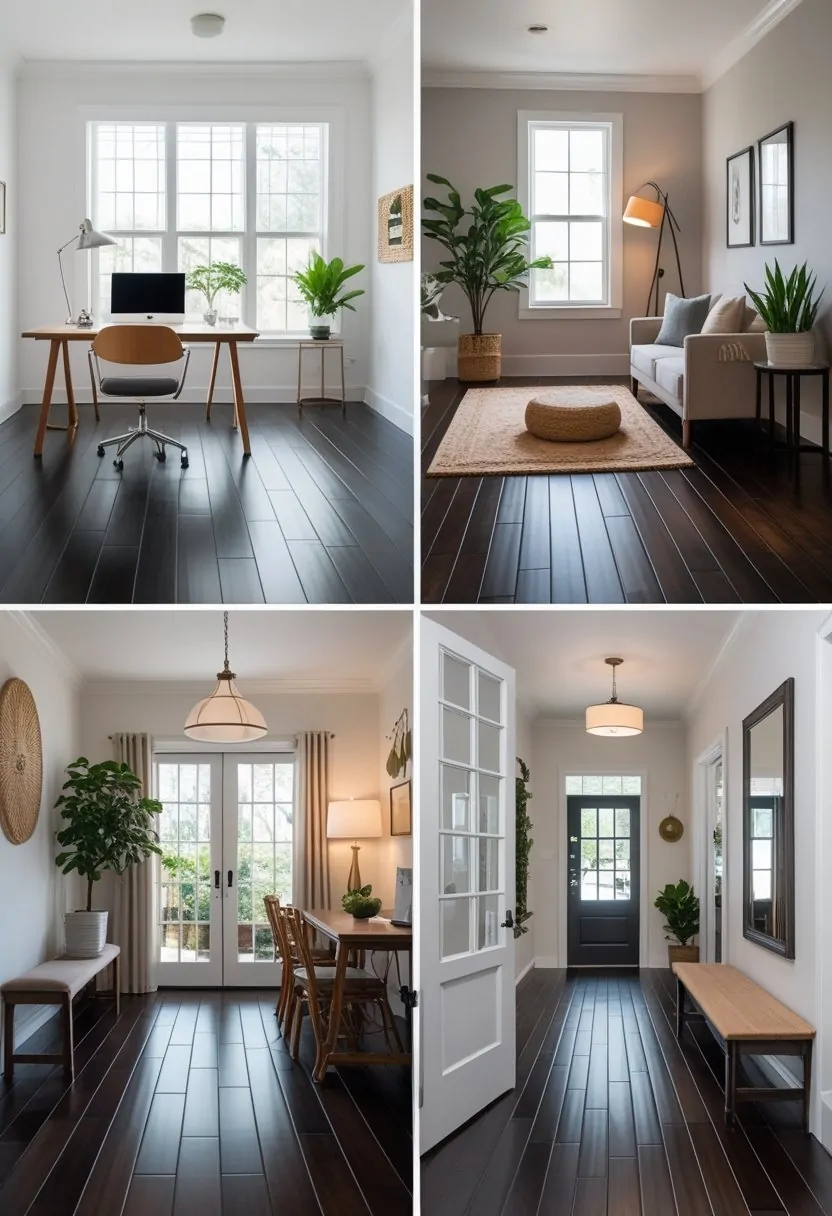
Dark-stained wooden floors add depth and warmth to living spaces, creating a timeless appeal. When combined with natural elements like stone fireplaces, they enhance the room’s inviting atmosphere. Selecting the right stain, finish, and affordable materials can maximize style without overspending.
Choosing Stains and Finishes
Dark stains range from espresso to rich walnut, each influencing the room’s mood. A cooler, blackened stain offers a sophisticated, modern look, while warmer browns create coziness. Sheen levels vary—matte finishes hide scratches best, satin offers a soft glow, and gloss enhances depth but can show wear faster.
Hardwood species also affect stain results. Oak and maple absorb stains unevenly, which can add rustic character. In contrast, cherry or walnut provide more uniform color.
For living rooms, finishes that balance durability and appearance are crucial. Polyurethane seals resist scratches and moisture without dulling the natural wood grain. Proper finishing protects the floor and maintains its classic vibe.
Enhancing Warmth with Stone Fireplaces
Stone fireplaces complement dark-stained wooden floors by introducing texture and natural warmth. The roughness of stone contrasts with the smooth wood surface, creating visual interest and a cozy feel.
Materials like limestone, slate, or fieldstone pair well with dark flooring tones. Choosing lighter or medium-colored stones brightens the space, preventing it from feeling too heavy or dark.
Positioning furniture near the fireplace and flooring emphasizes comfort. Adding soft textiles such as wool rugs or velvet cushions balances the floor’s richness and the fireplace’s ruggedness for a unified cozy environment.
Affordable Hardwood Alternatives
Real hardwood floors can be expensive, but there are budget-friendly options that mimic the look of dark-stained wood.
- Engineered hardwood: Thin layers of hardwood bonded to plywood offer durability and cost savings. They handle moisture better than solid wood.
- Laminate flooring: High-quality laminates replicate wood grain patterns and dark stains at a lower price. They resist scratches, making them practical for busy rooms.
- Luxury vinyl plank (LVP): LVP can imitate stained wood floors with waterproof and easy-to-maintain surfaces, ideal for those seeking cheap but attractive flooring.
These alternatives give the aesthetic benefits of dark hardwood floors while being more accessible for budget-conscious projects.
Other Cost-Effective Flooring Materials and Ideas

Several flooring materials offer affordability without sacrificing durability or style. These options vary in installation ease, maintenance, and appearance, making it important to match a choice with a room’s function and aesthetic.
Vinyl Sheet, Tile, and Planks
Vinyl flooring is highly versatile and budget-friendly. It comes in sheets, tiles, and planks, each suited for different spaces and installation methods. Vinyl tiles and planks mimic wood or stone at a much lower cost, providing good durability and water resistance.
Sheet vinyl offers a seamless surface, ideal for moisture-prone areas like kitchens and bathrooms. Vinyl planks are often thicker, providing comfort underfoot and an easy “click-lock” installation. Maintenance is simple; vinyl requires routine sweeping and occasional mopping. It performs well in high-traffic areas and is resistant to scratches and stains.
Laminate and Engineered Flooring
Laminate floors resemble hardwood but cost less and resist wear better in busy households. It consists of a photographic layer under a protective coating on fiberboard, providing scratch and impact resistance. Light to moderate moisture exposure is manageable, but prolonged water contact should be avoided.
Engineered wood contains a top layer of genuine hardwood over plywood layers. It balances the look of real wood with improved stability and typically costs less than solid hardwood. Both laminate and engineered flooring come with floating installation systems, making DIY possible for many.
Carpet and Carpet Tiles
Carpeting continues to be an affordable choice, especially for bedrooms and living rooms, where warmth and comfort underfoot are priorities. Carpet tiles provide versatile patterns and easy installation, allowing replacement of damaged sections without full re-carpeting.
Materials vary from synthetic fibers like nylon and polyester to natural options like wool. Synthetic carpets tend to be stain-resistant and budget-friendly, while wool is durable and maintains warmth but costs more. Proper padding under carpet enhances comfort and lifespan.
Concrete and Painted Flooring Solutions
Concrete floors are cost-effective in both new builds and remodels, especially in basements or industrial-style homes. Polished concrete offers a sleek, durable surface that requires only occasional sealing. It can stand heavy wear and resist moisture and stains.
Painting concrete floors is an affordable way to add color or pattern without replacing flooring. Special floor paints and sealers ensure durability and resistance to peeling or chipping. Both polished and painted concrete are low-maintenance and pair well with area rugs to add softness.