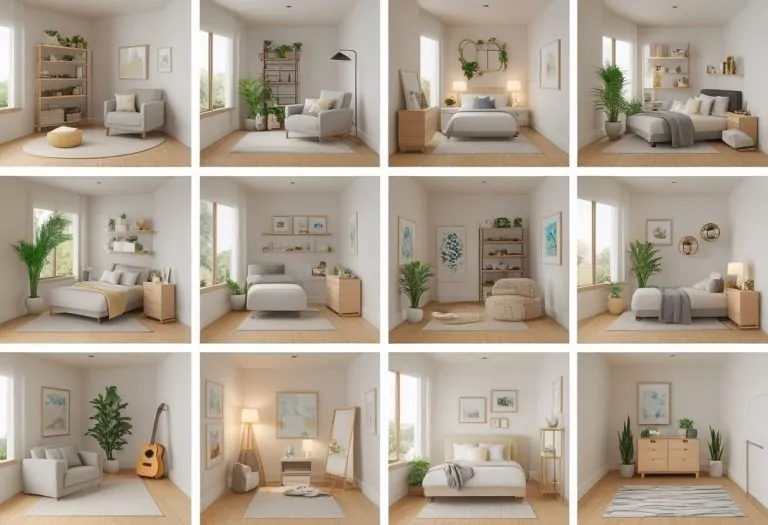

08-Small Double Bedroom Ideas for Maximizing Space and Style
Small double bedrooms can feel cramped, but they don’t have to sacrifice comfort or style. With thoughtful design choices and smart storage solutions, even limited space can be transformed into an organized, inviting retreat. Using light colors, multifunctional furniture, and clever layouts helps maximize space without making the room feel crowded.
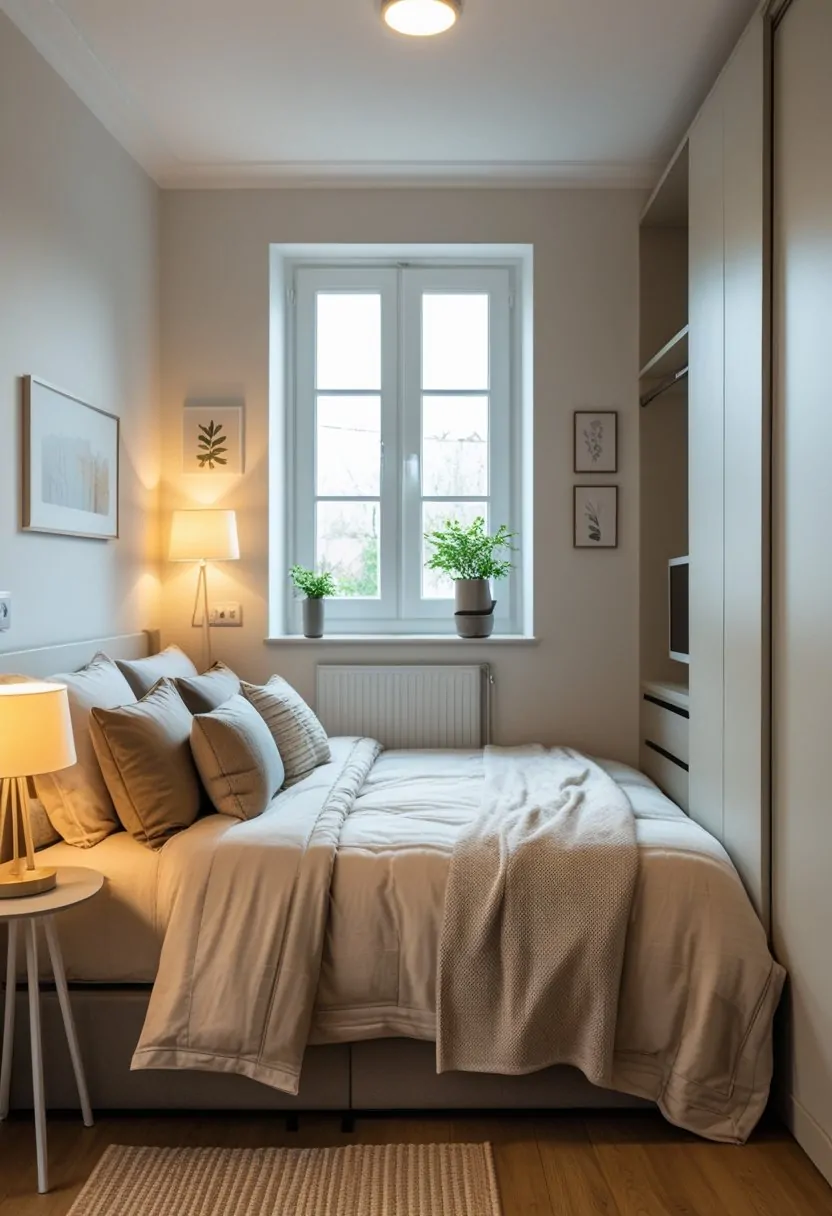
Focusing on neutral tones as a base and adding a few carefully chosen accent colors can visually open up the room while maintaining a coherent style. Incorporating furniture that serves more than one purpose, like storage ottomans or beds with built-in drawers, creates practical space-saving benefits.
Strategically placed mirrors and natural light enhance the room’s brightness and sense of openness. These approaches allow a small double bedroom to balance functionality and aesthetics, making the most of every inch available.
Prioritizing Small Double Bedroom Layouts

Efficient use of space is crucial in small double bedrooms to ensure comfort and functionality. Thoughtful planning of dimensions, pathways, and furniture placement helps avoid clutter and improves room flow.
Assessing Available Space
Measuring the room accurately is the first step. He or she should note wall lengths, ceiling height, window placement, and door swing areas. This allows for precise furniture fitting and prevents overcrowding.
It also helps to identify fixed features like radiators or built-in closets. These elements impact furniture arrangement and storage options.
Creating a scale floor plan, either on paper or with an app, provides a clear visual of available space. This practice aids in experimenting with different layouts before moving heavy furniture.
Creating Clear Pathways
Clear pathways are essential for easy movement. At minimum, a 60-70 cm walking space around the bed and furniture maintains comfortable access.
Prioritizing open routes reduces the feeling of confinement common in small rooms. Furniture should not block windows, doors, or key storage areas.
Using minimalist or slim-profile furniture can widen pathways. He or she should consider wall-mounted lighting or shelves to minimize floor clutter and keep circulation areas unobstructed.
Optimizing Bed Placement
The bed dominates a small double bedroom, so positioning it wisely is critical. Ideally, it should be placed against the longest uninterrupted wall.
Placing the bed under a window is generally avoided to reduce drafts and lighting issues. Instead, the bed should be positioned to allow access from both sides.
If space is extremely tight, choosing a bed with built-in storage or a raised platform bed can maximize room utility. Centering the bed helps balance the room and facilitates movement around it.
Maximizing Natural Light and Mirror Placement

Maximizing natural light and using mirrors effectively can significantly enhance the feeling of space in a small double bedroom. Combining bright, light colors with reflective surfaces works to amplify daylight and create depth, making the room feel larger and more inviting.
Enhancing Natural Light With Window Treatments
Choosing the right window treatments is critical to increasing natural light. Sheer curtains or light-filtering blinds allow sunlight to enter while maintaining privacy. Heavy or dark drapes reduce light and should be avoided in small rooms.
Keeping window areas clear of bulky furniture or large decor maximizes light flow. Using a light color palette near windows—such as soft whites, pastels, or muted neutrals—helps reflect incoming light instead of absorbing it.
Additionally, mounting curtains close to the ceiling and extending them past the window frame can give the illusion of taller windows, enhancing brightness and spatial perception.
Strategic Mirror Positioning
Mirrors amplify natural light by reflecting it throughout the room, substantially increasing brightness. Positioning mirrors directly opposite or adjacent to windows ensures that sunlight bounces further into darker corners.
Larger mirrors, such as floor-to-ceiling or mirrored closet doors, provide the greatest impact by doubling light and visually expanding the space. Mirrored furniture can also serve this function while adding storage.
Avoid placing mirrors where they reflect clutter or dark areas; instead, aim for clean, light-filled views to maintain an airy feel. Combining mirrors with light-colored walls or décor further enhances their effect by maximizing light reflection.
Smart Storage Solutions for Small Spaces
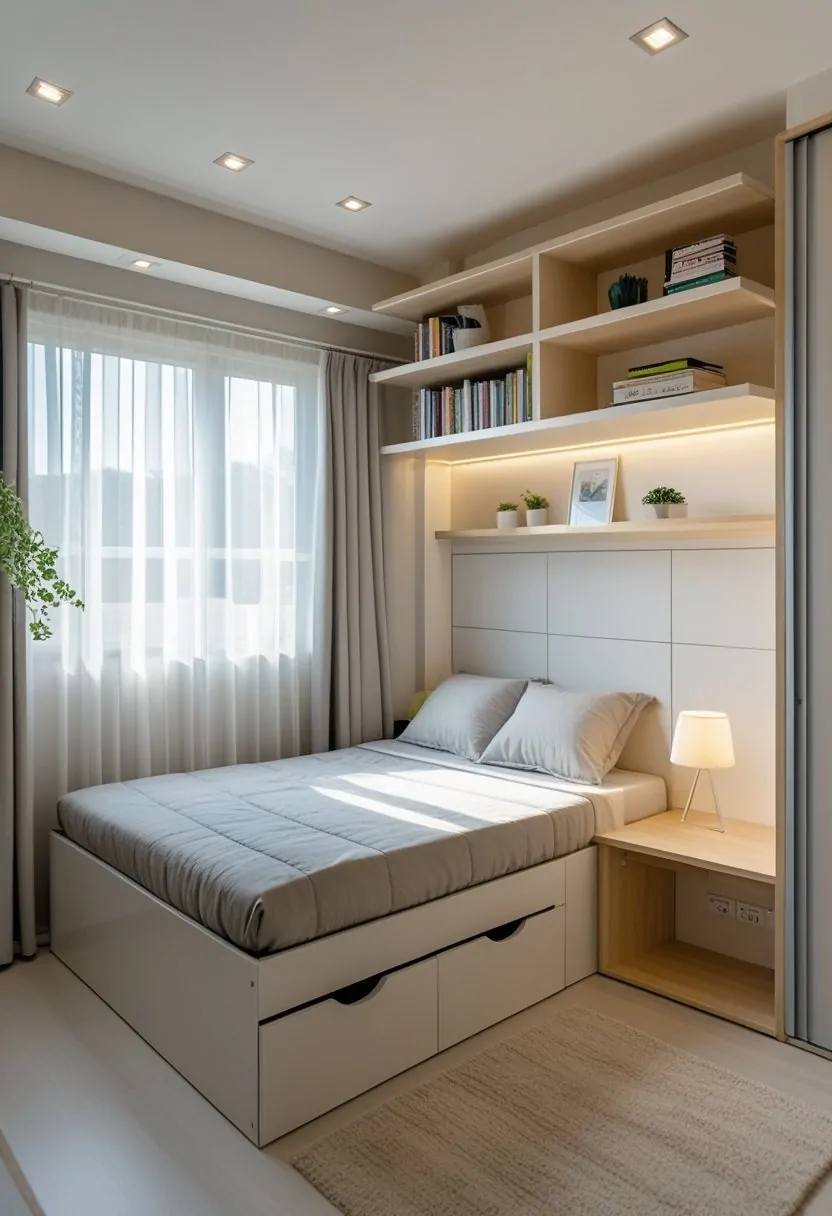
Maximizing storage in a small double bedroom requires thoughtful use of available space and smart design choices. Effective storage often involves integrating furniture and fixtures that utilize vertical and hidden spaces without overcrowding the room.
Utilizing Built-In Storage
Built-in storage adds a seamless, custom look while boosting storage capacity. It makes use of awkward or underused wall areas, such as around windows, corners, or alcoves. These units often combine hanging space, shelves, and drawers in one compact design.
A key advantage is that built-in wardrobes or cupboards can be tailored to the room’s dimensions, avoiding wasted space. Incorporating features like adjustable shelves or pull-out baskets enhances flexibility. Built-in units also minimize clutter by keeping items out of sight, helping the room appear larger and more organized.
Incorporating Under-Bed Storage
Under-bed storage is one of the most practical solutions for small double bedrooms. Utilizing drawers, rolling bins, or lift-up storage beds enables storage of bulky items like bedding, shoes, or seasonal clothing without taking extra floor space.
Choosing a bed frame designed for storage maximizes the space beneath, which is often overlooked. Clear or labeled storage boxes help maintain order and quick access. This approach frees up closets and dressers, reducing clutter and making the room feel more spacious.
Embracing Floating Shelves and Wall Storage
Floating shelves create extra storage while preserving floor space, making them ideal for small rooms. They can display essentials like books, decor, or personal items, keeping surfaces clear.
Wall-mounted units or pegboards also utilize vertical space effectively, adding storage for accessories or frequently used items. Installing shelves at different heights allows customization according to storage needs. Using neutral or light colors for shelves improves light flow and expands visual space.
Selecting the Right Bed for Compact Bedrooms
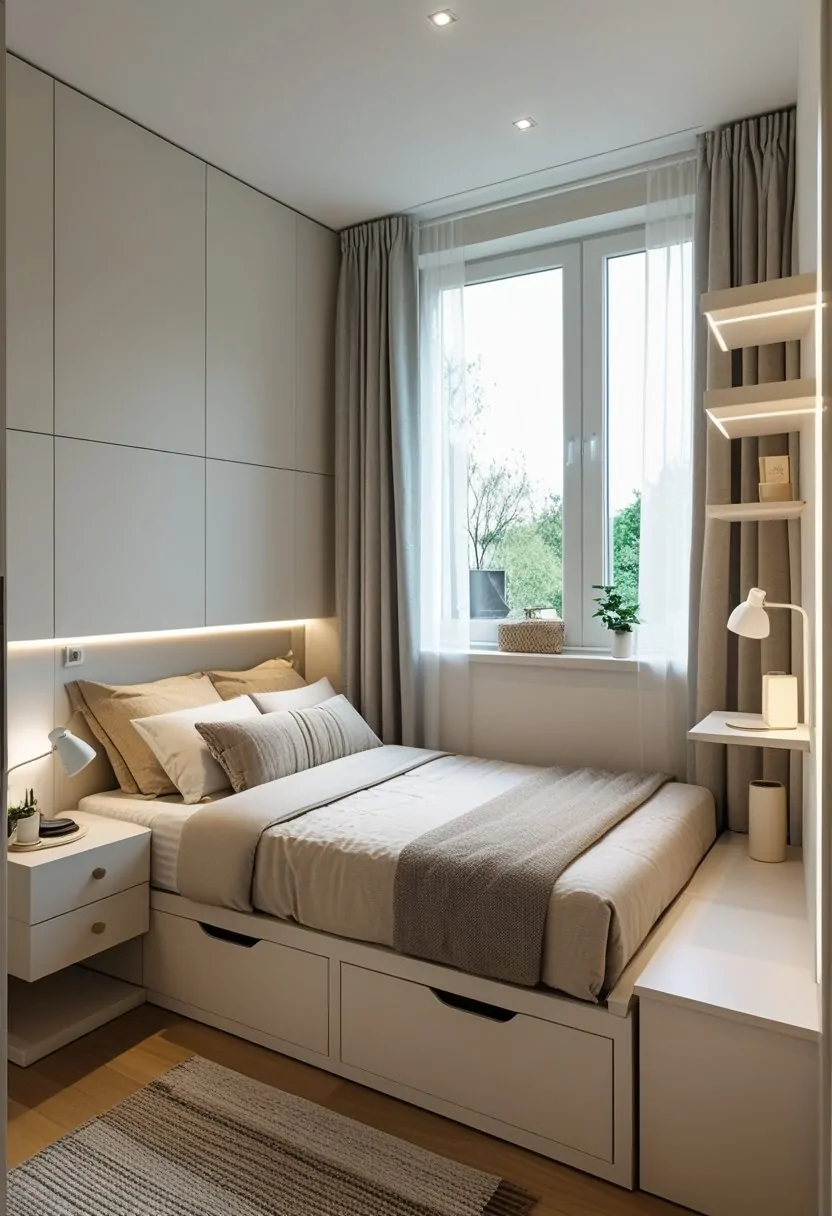
In a small double bedroom, the bed significantly impacts both style and functionality. The right choice balances comfort with efficient use of space, incorporating smart design elements to avoid overcrowding. This includes considering headboard design, bed types that save space, and versatile options like daybeds or trundle beds.
Choosing a Statement Headboard
A statement headboard can define a bedroom’s aesthetic while serving practical purposes. In compact bedrooms, a slim-profile or open-design headboard works best, as it allows more light to flow and prevents the room from feeling boxed in.
Materials such as metal or wood with vertical slats create an airy look. Upholstered headboards add comfort without bulk if kept minimal and streamlined. Bold colors or simple geometric shapes can act as a focal point without overwhelming the space.
Multi-functional headboards with integrated shelves or storage maximize utility. This reduces the need for extra furniture like nightstands, saving floor space and maintaining a clean layout.
Space-Saving Bed Types
Beds that optimize vertical or hidden space are vital in small rooms. Loft beds elevate the mattress, freeing floor area underneath for desks, seating, or storage.
Bunk beds can serve two sleepers in limited floor space but suit shared bedrooms or guest arrangements. Bed risers increase storage potential under a bed by raising its height to fit containers or baskets.
Murphy beds are ideal for multi-purpose rooms, folding up against the wall when not in use. These types allow a bedroom to serve dual functions without permanent clutter.
Daybeds and Trundle Beds
Daybeds combine seating and sleeping functions in one piece, making them perfect for small spaces with guests. They often resemble sofas and fit easily into corners or against walls.
Trundle beds store a second mattress underneath the main bed frame. This hidden bed can be pulled out when needed, ideal for occasional use by guests or children.
Both options enhance versatility, offering comfort and saving space. Daybeds and trundle beds prevent the room from feeling crowded by reducing the need for extra beds or bulky furniture.
Furniture and Decor to Enhance Visual Interest
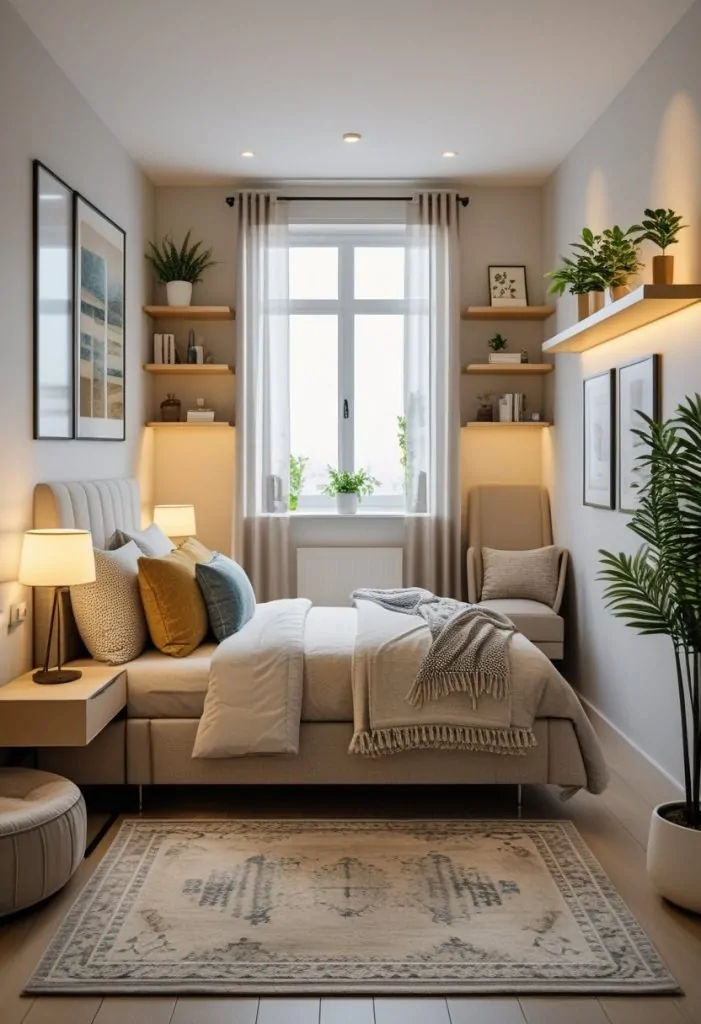
Creating a visually interesting small double bedroom requires a balance between style and function. Thoughtful furniture choices and decor details can add character while keeping the space clutter-free and comfortable.
Opting for Minimalist Multi-Functional Pieces
Minimalist furniture with built-in storage is essential in a small bedroom. Items like beds with drawers underneath or nightstands that double as shelves reduce the need for extra pieces. This approach keeps surfaces clear and floors open.
Multi-functional pieces such as fold-out desks or ottomans with storage compartments help maximize space. Their clean lines and simple shapes prevent visual overcrowding.
Choosing neutral tones or light finishes for furniture supports an open feel. Avoid bulky designs; instead, select sleek, streamlined items that serve multiple purposes and maintain order.
Incorporating Visual Texture Without Clutter
Visual texture adds depth without adding physical clutter. Textiles like a woven rug, linen curtains, or a textured throw bring interest without occupying extra space.
Wall decor with subtle dimensionality, such as fabric panels or framed prints with relief elements, creates focus areas. Mirrors or reflective surfaces also contribute to visual texture and enhance light flow.
Avoid overly complex patterns or too many small decor items, which can overwhelm the room visually. Use texture strategically to maintain a clean, inviting atmosphere.
Adding Artistic Accents
Artistic accents provide personality and draw the eye, giving the room character without using up space. A statement piece above the bed or a curated gallery wall works well.
Opt for pieces with colors that complement the room’s palette to unify the design. Select artwork in various sizes but keep frames simple to avoid clutter.
Sculptural objects or decorative lighting fixtures can double as art. These accents emphasize style and create subtle focal points while preserving overall spaciousness.
Optimizing Corner Spaces and Wall-Mounted Lighting

Maximizing every inch of a small double bedroom often means focusing on corners and light sources. Efficient use of corner spaces can add function without clutter, while strategic lighting enhances both ambiance and perceived room size. Both elements work together to increase usability and comfort.
Transforming Unused Corners
Corners in small bedrooms are often overlooked but can serve multiple purposes with minimal effort. Installing corner shelving units or floating shelves allows for the display of books, plants, or personal items without sacrificing floor space. These shelves can be arranged vertically to utilize height, freeing up room elsewhere.
Creating a small nook with a compact chair or floor cushion can turn an unused corner into a reading or relaxation spot. Alternatively, a corner desk or makeup station fits neatly without crowding the main area. The key is choosing slim, functional furniture that fits the room’s scale.
Installing Wall Sconces
Wall sconces are ideal lighting solutions for small bedrooms because they free up bedside surfaces and floor space. Mounted at eye level or above the bed, they provide focused light for reading or ambient illumination without bulky lamps.
LED wall sconces with adjustable arms or dimmable features offer control over brightness and direction, enhancing comfort and style. Selecting fixtures with slim profiles and neutral tones helps maintain a clean, uncluttered look. These fixtures improve functionality while contributing to a cozy atmosphere.
Frequently Asked Questions
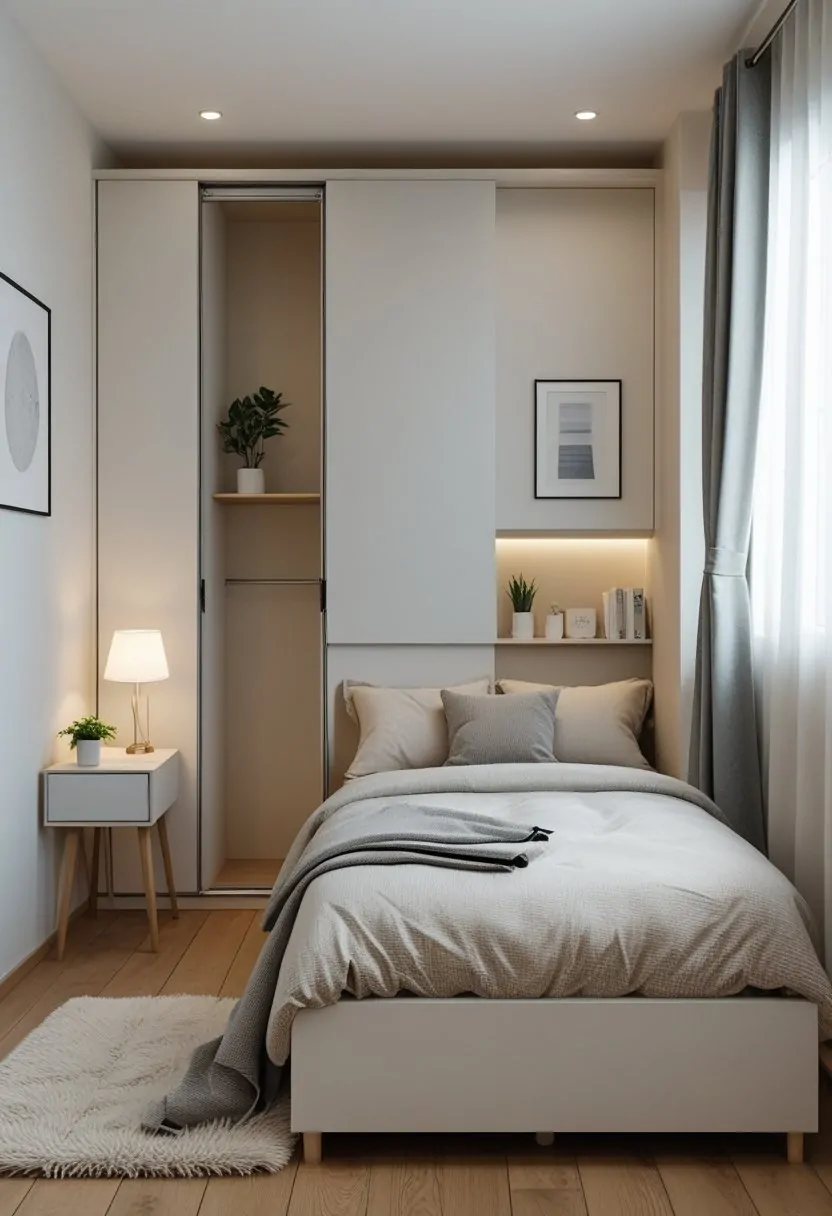
Small double bedrooms require careful planning to optimize space, balance comfort, and maintain a functional layout. Strategic furniture placement, smart storage, and appropriate design choices are essential to making the most of limited square footage.
How can I effectively arrange furniture in a small double bedroom?
Positioning the bed against a wall or in a corner saves floor space compared to centering it. Avoid blocking windows to maintain natural light. Multi-functional furniture, like a bookcase headboard or bedside tables with storage, enhances usability without clutter.
What are some modern design strategies for small double bedrooms?
Incorporate minimalist furniture with clean lines and avoid bulky pieces. Use mirrors to reflect light and create visual depth. Remove or replace large closet doors with curtains or open shelving to open up the room visually.
What storage solutions work best for small double bedrooms?
Built-in wardrobes maximize vertical space. Under-bed storage drawers or boxes use often-wasted space effectively. Wall-mounted shelves and multi-functional furniture with hidden compartments provide extra room for clothes and personal items.
How can couples maximize space in a small double bedroom?
Couples should opt for shared storage units like double dressers and dual bedside tables. Clear pathways by minimizing unnecessary furniture helps movement. Coordinating storage and layout prevents overcrowding and improves harmonious living.
Are there specific color schemes that make a small double bedroom appear larger?
Light, neutral colors such as whites, beiges, and pastels open up the space visually. Using one or two accent colors sparingly adds interest without overwhelming. Bright finishes for furniture and reflective surfaces enhance brightness and depth.
What are the minimum dimensions required for a comfortable small double bedroom?
A practical small double bedroom typically measures around 9 feet by 9 feet (2.7 by 2.7 meters). This dimension allows space for a double bed with minimal clearance on each side for walking and small storage pieces. Rooms below this size require very tight planning to maintain comfort.