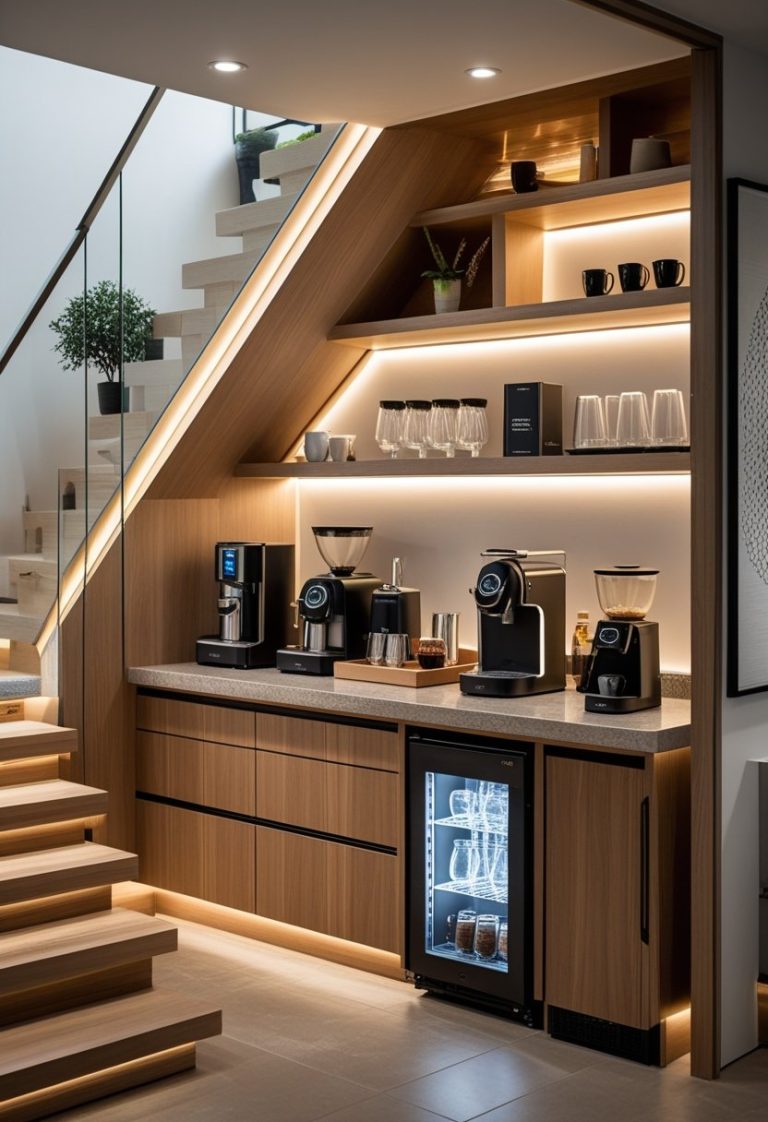
Stylish & Space-Saving Under-Stairs Laundry Room Ideas
Under-stairs spaces often go unused, but they offer a prime opportunity for efficient laundry room setups. These designs show how washing machines and dryers can be neatly integrated beneath staircases, turning overlooked areas into highly functional laundry zones.
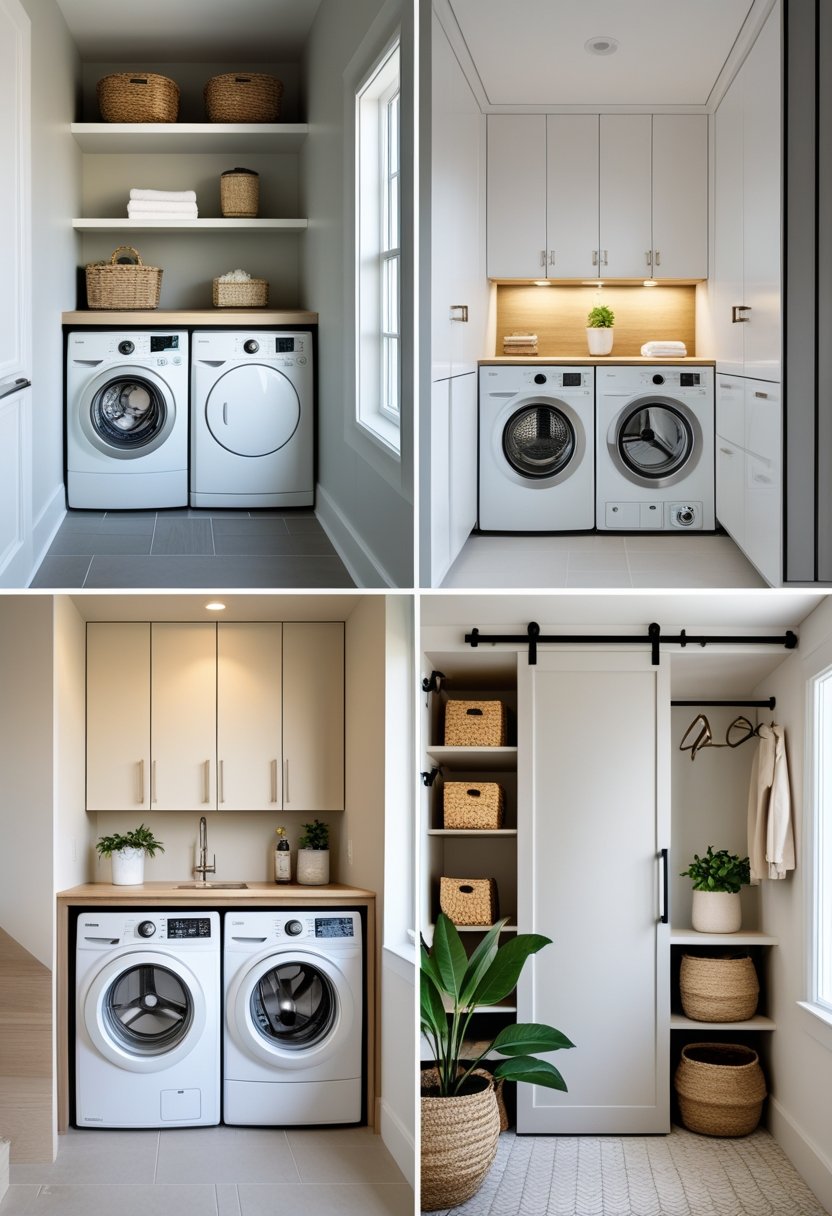
The collection features four distinct styles that blend practicality with style, from open shelving with woven baskets to sleek built-in cabinetry that conceals appliances. Warm wood tones, neutral palettes, and decorative touches like plants and jars create laundry spaces that are both organized and visually pleasing.
Each layout maximizes space without sacrificing aesthetics, proving that even small or awkward areas under stairs can become valuable parts of the home. This approach suits busy households seeking smart, stylish solutions in limited square footage.
Under-Stairs Laundry Room Essentials
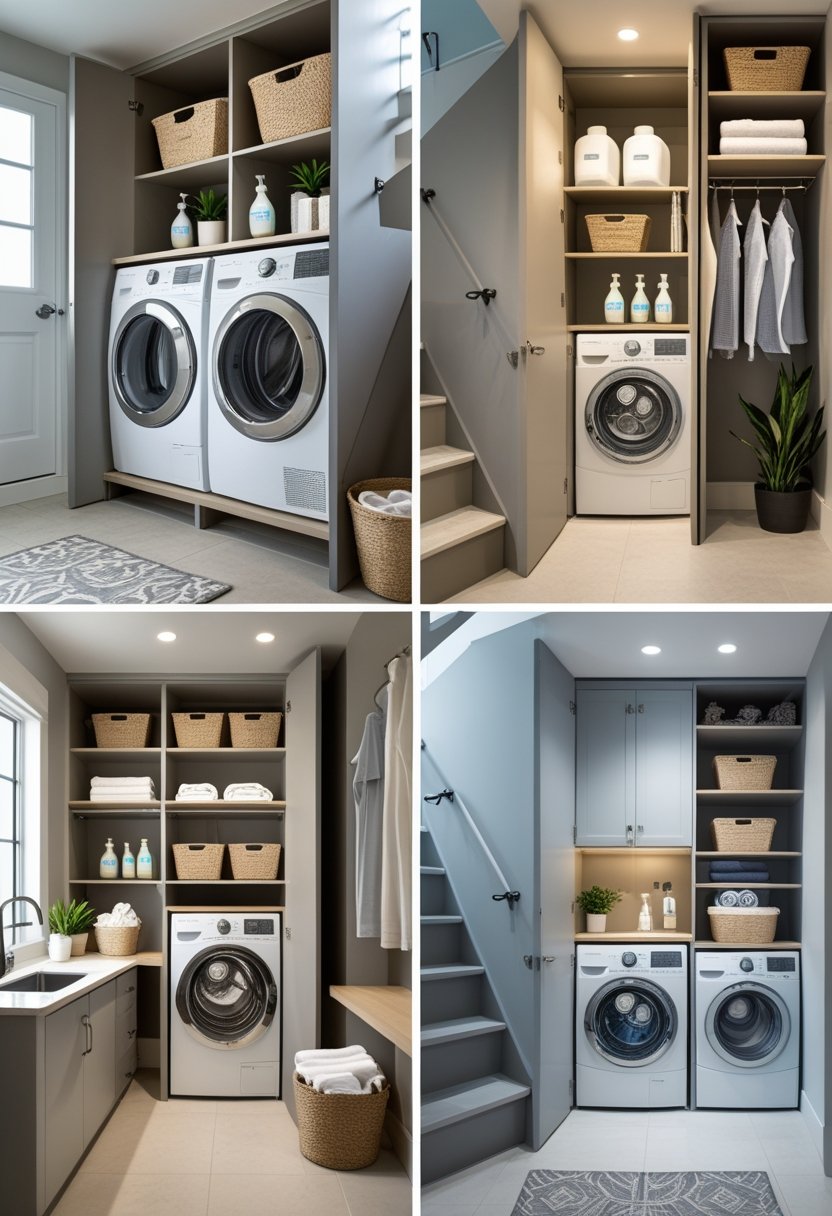
Creating a functional laundry area under the stairs demands smart use of space, carefully selected appliances, and an efficient workflow. Proper planning ensures the installation accommodates necessary machines and storage without compromising ease of use or design.
Maximizing Space Beneath Staircases
The area below stairs is often irregular in shape, so maximizing space requires custom solutions. Built-in cabinetry can conceal appliances and provide clean lines, while open shelving introduces extra storage for laundry products, baskets, and folded items.
Using vertical space is key. Shelves or cubbies stacked above washers and dryers optimize every inch. Woven baskets and containers help keep supplies organized and visually tidy. Corner shelving or pull-out drawers improve access to smaller items, turning awkward spaces into practical storage zones.
Gentle lighting enhances visibility and makes the space more inviting without bulky fixtures. Combining functional storage with decor elements like plants or jars can elevate the overall aesthetic while keeping the laundry essentials at hand.
Choosing Laundry Appliances for Compact Areas
Selecting the right washer and dryer is critical for under-stairs laundry setups. Front-loading machines generally take up less depth, fitting neatly into narrow or shallow spots. Compact appliances designed for small spaces offer the benefit of stacked configurations or side-by-side setups, depending on available width and height.
Energy-efficient, quiet models improve performance and reduce noise in confined areas. Models with smart technology may add convenience, including customizable wash cycles suited for smaller loads.
Measuring space carefully before purchasing ensures the appliances fit well without blocking doors or movement. Consider machines with integrated storage on top or adjacent to keep detergent and other supplies accessible yet organized.
Optimizing Laundry Workflow Under the Stairs
Efficient workflow begins with positioning machines and storage for easy loading, unloading, and sorting. Placing washers and dryers at a comfortable height reduces bending. If built-in cabinetry is used, doors that open fully or slide away prevent obstruction.
Sorting bins and hampers near the appliances streamline organization. Open shelving or pull-out racks for detergents, fabric softeners, and laundry essentials help maintain order and speed up routine tasks.
Creative use of under-stairs space includes incorporating a folding surface or a small hanging rod for air drying. Thoughtful design minimizes steps between washing, drying, folding, and storage, making laundry duties less cumbersome in a compact area.
Smart Layouts for Under-Stairs Laundry Rooms

Effective use of under-stairs space involves practical storage solutions combined with thoughtful design. Maximizing every inch includes options like cabinetry for a clean look, open shelving to display essentials, hidden compartments for clutter-free organization, and countertops that add workspace for folding and sorting.
Built-In Cabinetry for a Sleek Look
Built-in cabinetry provides a seamless, streamlined appearance by enclosing the washer and dryer. It conceals appliances and laundry supplies behind clean, flat panels that can be customized to match surrounding wood tones or paint colors.
These cabinets often include adjustable shelves or internal compartments, allowing customized storage for detergents, cleaning tools, and linens. Floor-to-ceiling units maximize vertical space and create a unified look that blends with the home’s interior.
This layout is ideal for those seeking a minimalist style while maintaining full functionality. Cabinet doors can be installed with soft-close hinges to reduce noise, improving the room’s overall feel.
Open Shelving With Decorative Baskets
Open shelving focuses on easy access and visual organization. Shelves are installed above or beside the washer and dryer, often made of warm wood or painted materials.
Decorative baskets on these shelves contain laundry essentials such as clothespins, dryer sheets, and folded towels. These baskets add texture and warmth while keeping items neatly grouped.
Open shelving suits small spaces by encouraging vertical storage and maintaining an airy atmosphere. It also allows quick visibility of supplies and promotes routine tidiness without the bulk of cabinetry.
Hidden Compartments and Pull-Out Drawers
Hidden compartments and pull-out drawers optimize underutilized spaces, offering flexible storage that stays out of sight when not in use. Drawers beneath machines or within cabinetry can hold smaller items like stain removers, sewing kits, or laundry bags.
Pull-out hampers or drawer systems support sorting laundry efficiently, making them practical for busy households. Compartments behind panels or disguised within cabinets keep clutter controlled while preserving the room’s clean aesthetic.
This approach combines functionality and tidiness, allowing thorough use of every nook in the under-stairs area.
Incorporating Countertops and Folding Space
Adding a countertop above washer and dryer units creates a dedicated surface for folding, sorting, and treating clothes. Countertops can be made from durable materials such as laminate, wood, or stone to withstand moisture and wear.
This workspace eliminates the need to relocate laundry tasks to other rooms, improving workflow. When combined with nearby cabinetry or open shelves, it completes a joint system for storage, sorting, and cleaning.
Integrating folding space directly into the laundry setup maximizes efficiency, making the best use of the compact under-stairs area.
Styling Your Under-Stairs Laundry Space
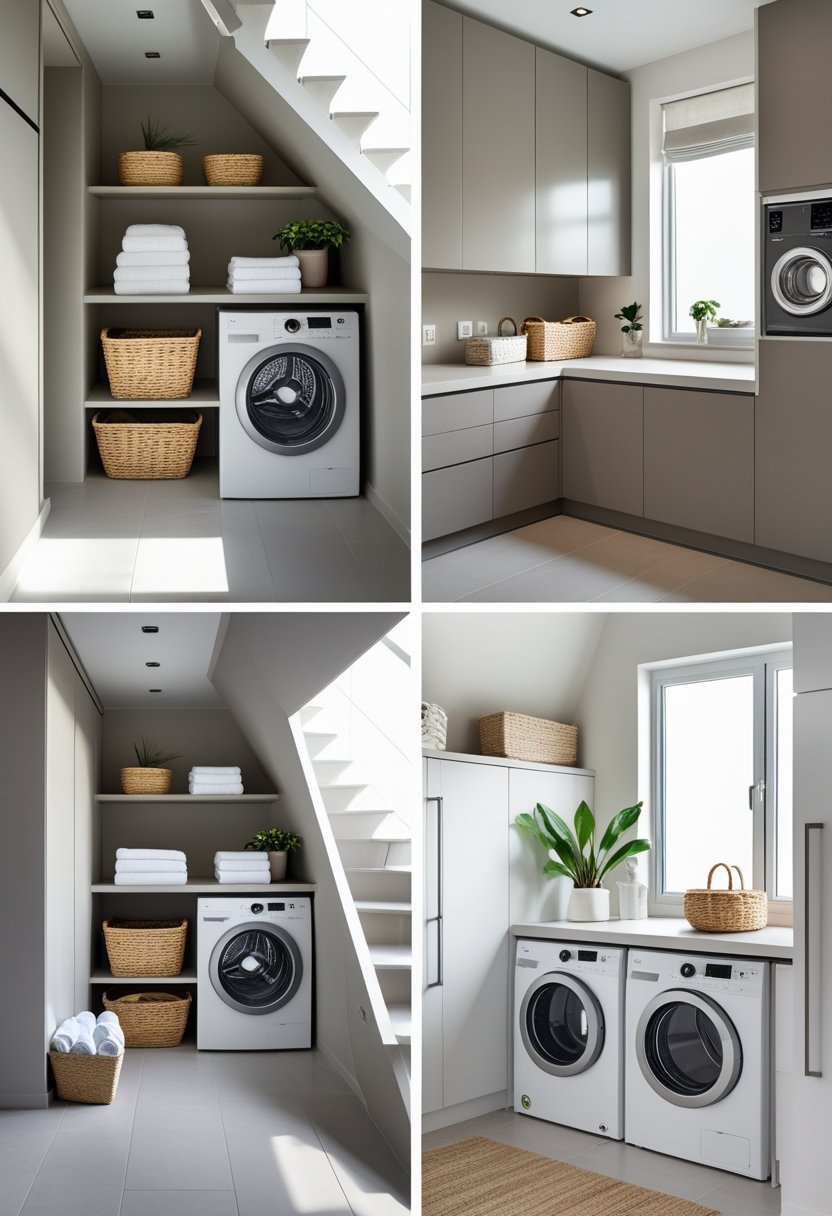
Creating an under-stairs laundry area that is both functional and inviting requires careful attention to color, materials, and lighting. Thoughtful choices in these areas help the space feel integrated with the rest of the home while enhancing usability and visual appeal.
Neutral Colors and Warm Wood Accents
Neutral tones such as soft grays, whites, and beiges serve as a versatile foundation for under-stairs laundry spaces. These shades brighten small, enclosed areas and provide a calming backdrop.
Incorporating warm wood accents adds texture and natural warmth, preventing the space from feeling cold or clinical. Wooden shelves, cabinetry, or trim contrast well with neutral walls and help blend the laundry nook with broader home decor styles. Matte or lightly stained finishes work best, emphasizing simplicity while maintaining durability.
Choosing neutral colors paired with wooden elements creates a timeless aesthetic. It balances clean lines and practicality with a welcoming atmosphere that invites frequent use.
Decorative Elements: Plants, Jars, and Accessories
Adding decorative items personalizes the laundry space without cluttering it. Small potted plants bring life and color, improving air quality and softening hard edges. Succulents or low-maintenance greenery are ideal choices for this purpose.
Clear jars filled with detergent pods, clothespins, or dryer balls combine visual appeal with storage. Labeling containers contributes to organization and keeps essentials within easy reach.
Other accessories like woven baskets or folded towels on open shelves provide texture while maintaining order. Choosing neutral or natural fiber baskets complements the wooden accents and overall design.
Incorporating Soft Lighting for Ambience
Soft lighting enhances the under-stairs laundry room’s usability and mood. Warm LED bulbs installed in recessed or under-cabinet fixtures reduce harsh shadows that can strain the eyes during laundry tasks.
Layered lighting, combining task lights with ambient sources, balances practicality and comfort. Motion-sensor lights offer convenience, automatically illuminating the space when in use.
Soft, diffused lighting makes the area feel larger and more inviting. It highlights decorative elements and facilitates smoother workflow without overpowering the senses.
Multi-Functional Under-Stairs Zones
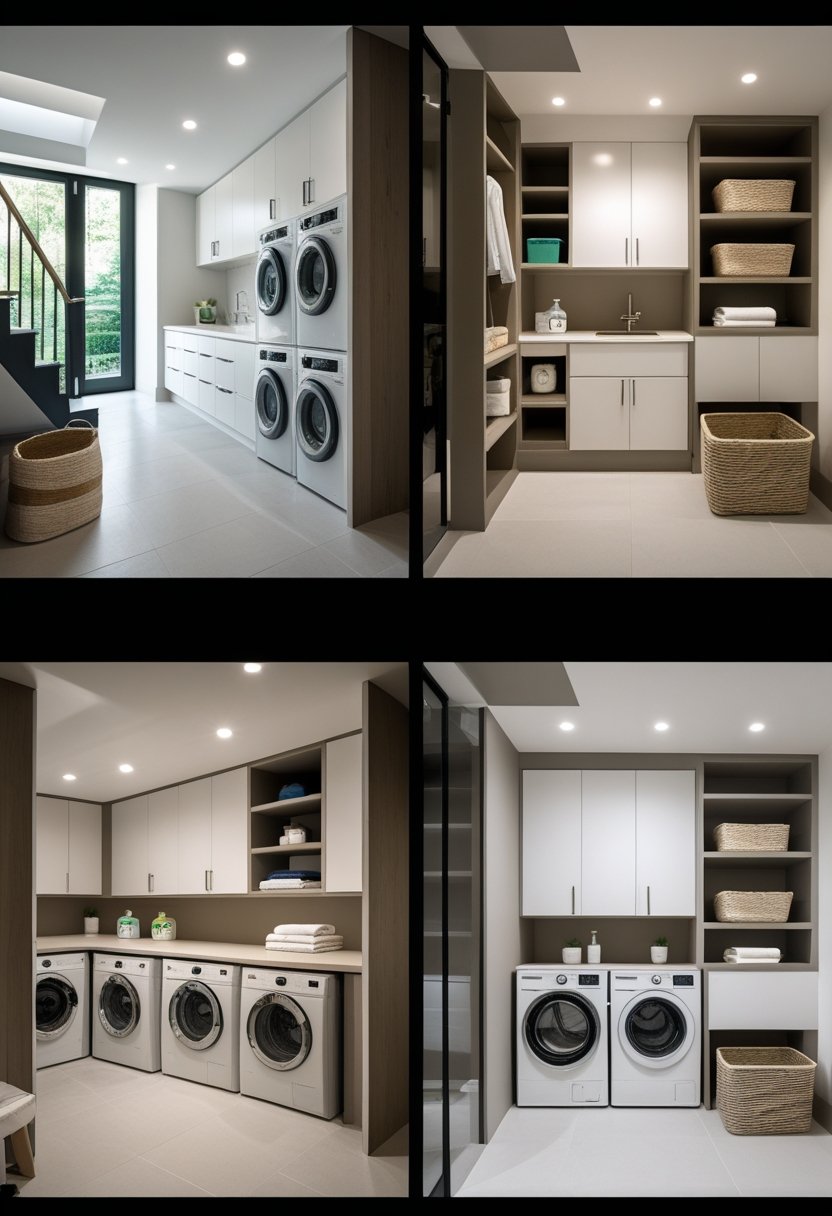
These under-stairs setups optimize limited space by blending laundry functions with practical storage and organizational features. They focus on integrating elements like hooks, shelves, and cabinetry that serve multiple purposes and maintain a tidy, accessible area.
Combining Laundry With Mudroom Features
Incorporating a mudroom within the under-stairs laundry space adds versatility. Built-in benches with storage provide seating while allowing shoes and outdoor gear to be stored neatly.
Coats and bags hang on hooks installed along the wall, keeping entryways clear. This setup reduces clutter and streamlines daily routines by merging laundry and drop-off zones.
The combination creates a compact, efficient area that supports both laundry tasks and mudroom needs without sacrificing style or usability.
Adding Hooks and Shelves for Everyday Organization
Hooks and open shelves are essential for keeping small items organized and easily reachable. Hooks hold frequently used accessories like keys, hats, and reusable bags, preventing them from being misplaced.
Shelves, whether floating or built-in, offer space for laundry essentials, baskets, and folded items. Using woven or labeled baskets on shelves maintains order and adds texture.
Placement is key—hooks near entry points and shelves above machines maximize vertical space and improve accessibility in tight under-stairs areas.
Integrating Extra Storage and Hidden Pantry Options
Extra storage under the stairs can include concealed cabinets or pantries to hide household items. Custom cabinetry with clean lines provides a sleek appearance while hiding detergents, tools, or pantry supplies from view.
A hidden pantry can store dry goods or cleaning products, doubling the utility of the laundry zone. Pull-out shelves or drawers ensure easy access without cluttering the space.
Using durable materials resistant to moisture preserves functionality and keeps the area neat, making this design choice a practical addition to multifunctional laundry rooms.
Creative Storage Ideas in Laundry Nooks
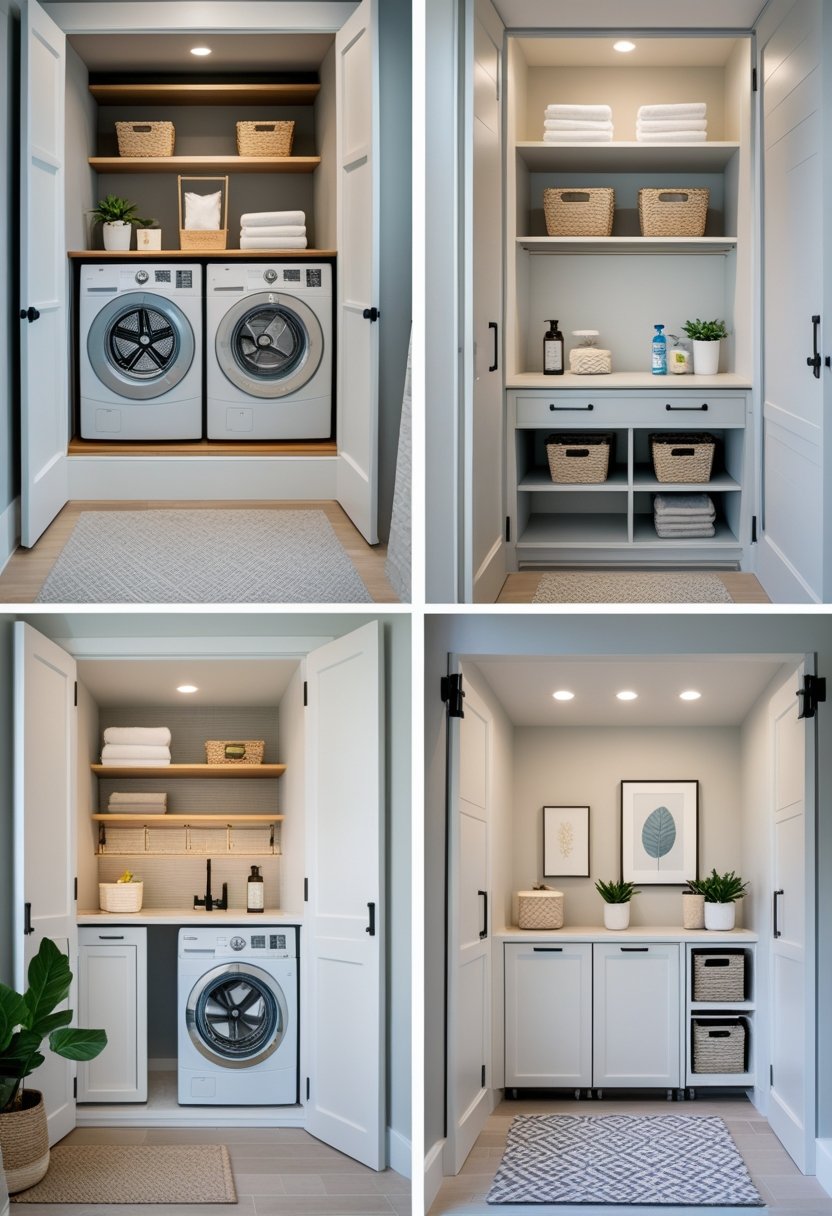
Maximizing under-stairs laundry spaces requires storage that is both accessible and visually tidy. Combining open and closed options helps balance functionality with style. These targeted storage techniques enhance organization and contribute to a well-designed area.
Floating Shelves for Essentials
Floating shelves provide practical storage without taking up floor space. They work well for frequently used items like detergent, fabric softener, and stain removers. Positioned at eye level, these shelves keep essentials within easy reach.
Using materials like wood or metal allows shelves to blend seamlessly with the overall design. Their open structure encourages neat stacking of bottles and folded cloths, eliminating clutter. Shelves also create opportunities for adding small decorative touches such as a plant or stylish container.
Installation under the stairs can follow the natural rise of the steps, creating a stepped shelving effect that makes the most of vertical space. This setup keeps laundry routines efficient without crowding the area.
Woven Baskets for a Cozy Touch
Woven baskets add both texture and practical storage in under-stairs laundry rooms. They are ideal for holding loose items like dryer sheets, cleaning rags, or kids’ socks. Their flexible design means they can be moved easily for laundry day or cleaning.
Baskets made from natural fibers such as wicker or rattan introduce warmth and softness against harder surfaces like cabinetry and appliances. They also hide miscellaneous items, keeping visible spaces clean and orderly.
Grouping baskets on open shelves or within cubbies creates an inviting, cozy feeling in the nook. Labeling baskets enhances organization, especially in homes sharing laundry duties.
Glass Doors and Chic Storage Displays
Glass doors offer a sophisticated solution for laundry storage under the stairs. They conceal clutter while allowing visibility of neatly arranged contents, combining protection with style.
Using clear or frosted glass within wooden or metal frames can match various decor schemes. Inside, shelves hold folded towels, jars of laundry pods, and fabric softeners arranged in matching containers.
This setup encourages maintaining order for a visually pleasing display. Glass doors also protect contents from dust and moisture, increasing shelf longevity. Adding subtle lighting inside the cabinets further highlights the organized display.
Designing for Aesthetics and Functionality
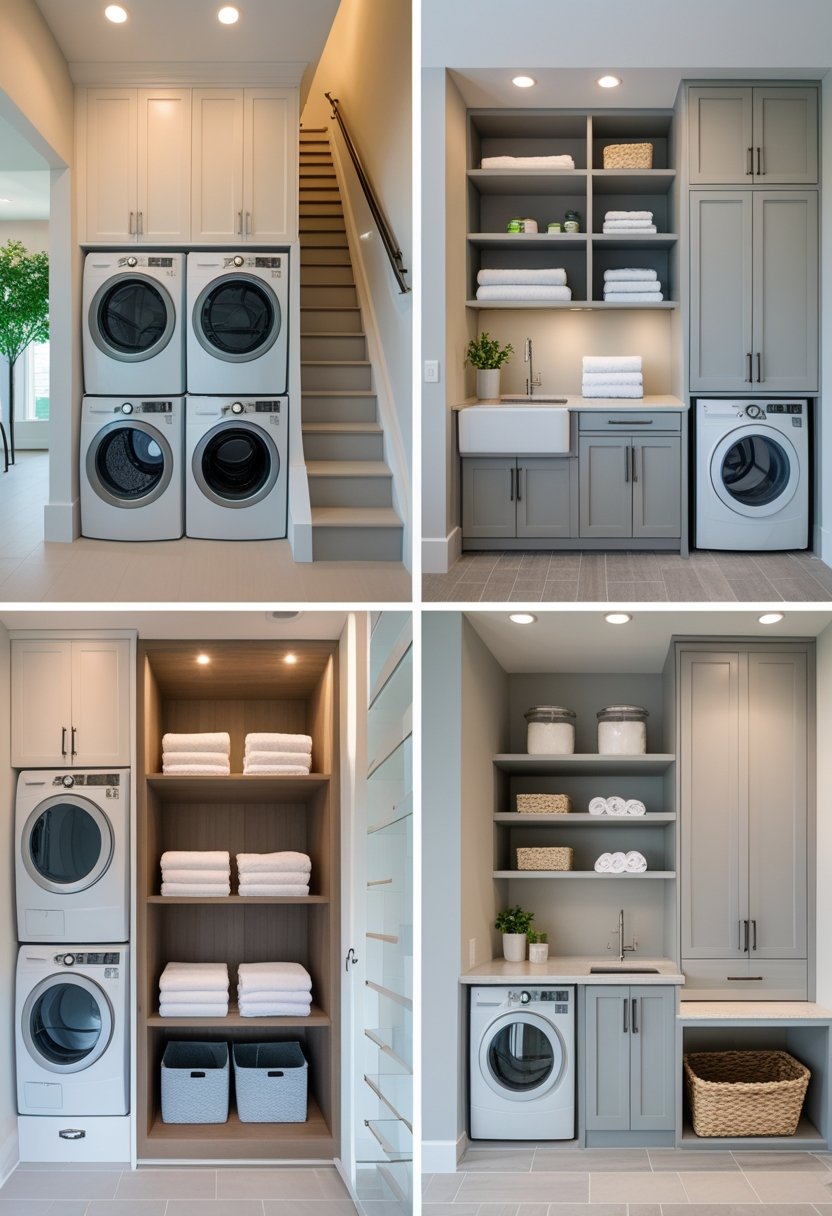
Creating an under-stairs laundry area requires deliberate choices that marry style with practicality. Effective designs consider both visual coherence with the home and convenient daily use, ensuring the space feels integrated and accessible.
Modern Aesthetic Versus Traditional Styles
Modern under-stairs laundry designs often emphasize clean lines, minimalism, and neutral palettes. Sleek cabinetry with handle-less doors and built-in appliances create an unobtrusive look. Materials like matte finishes, glass, and metal accents support a contemporary feel.
Traditional styles, by contrast, incorporate warm wood tones and classic details. Open shelving with woven baskets and folded towels adds texture and a cozy atmosphere. Decorative elements such as vintage jars or plants enhance the charm while maintaining storage efficiency.
Each style requires balancing visual appeal with usable features, but modern designs focus on subtlety and concealment, while traditional designs highlight warmth and accessibility.
Blending Laundry Spaces With Home Decor
Integrating laundry spaces beneath stairs depends on matching colors, textures, and materials to adjacent rooms. Neutral shades—whites, beiges, and grays—help the laundry zone blend unobtrusively with living spaces.
Using natural wood finishes or coordinating cabinetry ties the laundry area to the home’s overall decor. Decorative accents like houseplants or glass jars provide visual interest without clutter.
Functional elements such as open shelves or pull-out hampers should complement the style of surrounding rooms. This synchronization turns a typically utilitarian space into a cohesive part of the home’s interior design.
Ensuring Accessibility and Ease of Use
The placement of washers and dryers beneath stairs must prioritize user convenience. Machines should be at a comfortable height, with sufficient clearance for doors and loading.
Open shelving or pull-out baskets within arm’s reach make folding and sorting effortless. Thoughtful lighting improves visibility, preventing strain during laundry tasks.
Durable, easy-to-clean surfaces withstand moisture and frequent use. Clear organization prevents clutter, ensuring the small space remains practical and efficient. Accessibility does not compromise aesthetic, but enhances the space’s functionality.