
Easter Preschool Door Ideas with Bunnies & Floral Wreaths
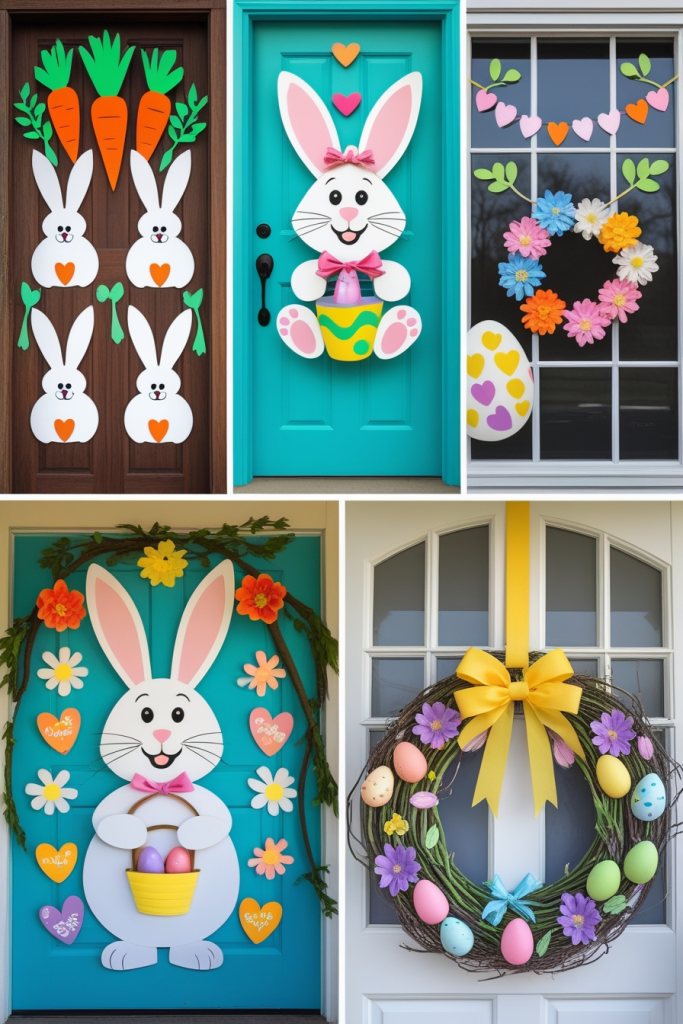
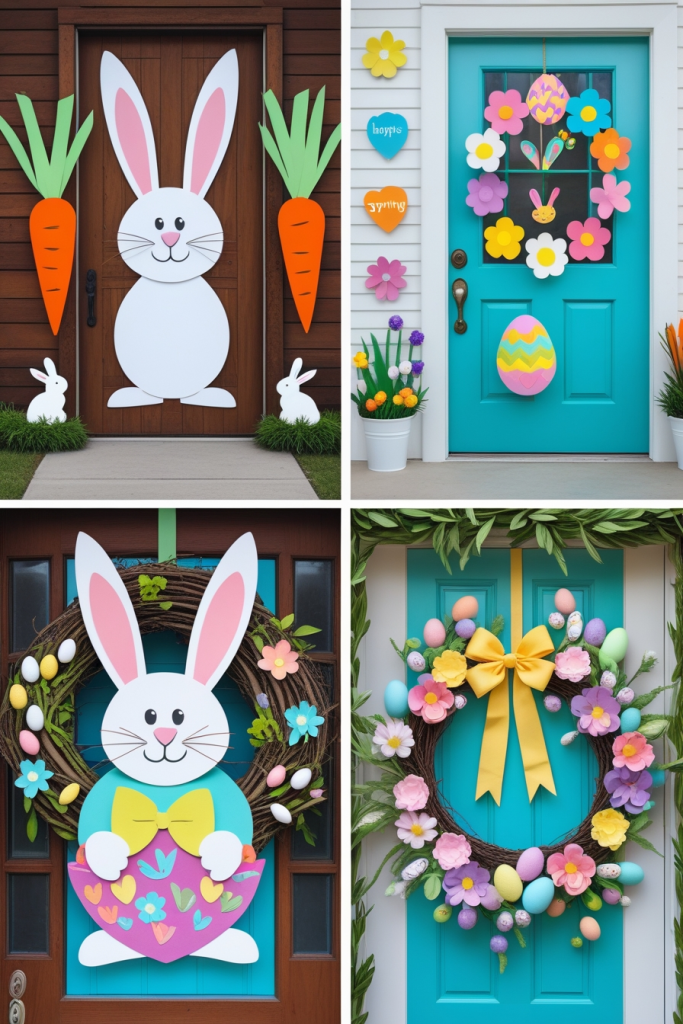
A collection of Easter preschool door decoration ideas showcases bright and playful designs that capture the spirit of the season. The top row features three distinct doors: one with white bunny cutouts and carrot accents on a wooden background, a turquoise door with a cheerful bunny holding a decorated egg surrounded by flowers and birds, and a window display with colorful hearts and flowers poured from a white watering can.

The bottom row highlights festive wreaths and decor, including a vibrant bunny shape made from rolled paper flowers, a natural twig wreath decorated with greenery and painted eggs, and a lush floral wreath with cascading blooms, bunnies, and pastel eggs. These decorations provide creative, easy-to-execute ideas that bring Easter joy to any preschool environment.
Essential Elements of Easter Preschool Door Decorations
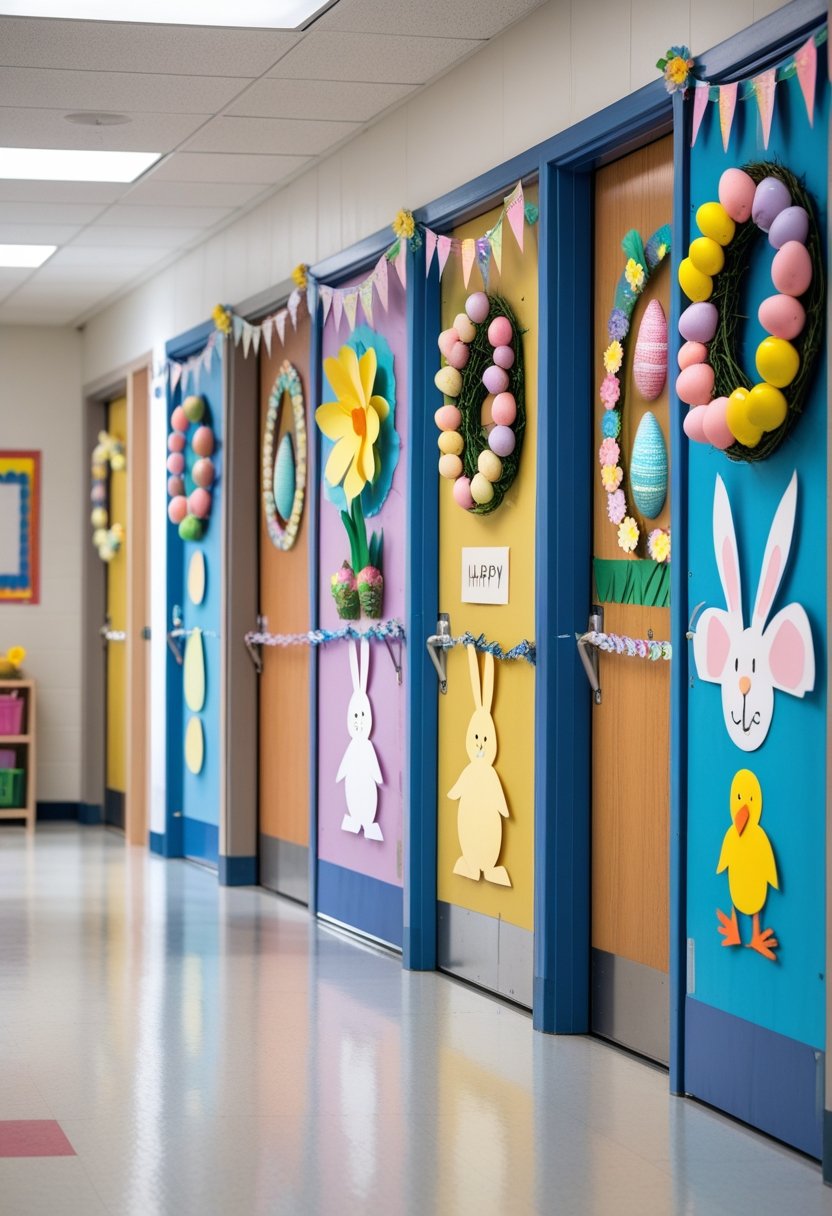
Effective Easter preschool door decorations combine safety, symbolism, and color to create engaging and festive displays. Attention to material choice, meaningful Easter symbols, and coordinating color schemes ensures decorations are suitable for young children and visually appealing.
Choosing Age-Appropriate Materials
Materials must be safe, durable, and easy for preschoolers to interact with during decoration activities. Lightweight paper, felt, and foam are common choices because they are soft and tear-resistant. Avoid small parts that could pose choking hazards or materials that require sharp tools.
Non-toxic adhesives and child-safe glitter enhance creativity while maintaining safety. Reusable materials are also ideal, allowing decorations to be refreshed yearly or adapted for other classroom themes.
The focus should be on components that promote fine motor skills without causing frustration. For example, pre-cut shapes and sticky-backed elements simplify assembly and encourage children’s participation in creating Easter door decorations.
Fundamental Easter Symbols
Clear, recognizable symbols help preschoolers connect with the Easter theme. Bunnies and eggs are the most common motifs, representing springtime renewal and new life. Including simple flowers, carrots, and baskets reinforces these ideas while remaining accessible.
Classroom door decoration ideas often use smiling animals, painted eggs with simple patterns, and natural elements like leaves or twigs. Religious symbols such as crosses or “He is Risen” phrases may be incorporated sensitively, depending on the school’s focus.
Combining several symbols in one design adds variety and depth. For example, a bunny holding an Easter egg surrounded by flowers encourages visual interest and educates children about seasonal significance.
Color Schemes for Spring
Soft pastels combined with bright accents define classic Easter color palettes. Light pinks, greens, yellows, and blues evoke spring and freshness. Pastel tones should dominate large areas, with strategically placed bright colors to draw attention.
Colors can coordinate with classroom themes or seasonal items. For example, a turquoise door decorated with yellows and whites adds vibrancy without overwhelming young children’s senses.
Using a consistent palette unifies various elements like wreaths, cutouts, and banners. It improves visual appeal and makes preschool Easter door decorations appear polished and thoughtfully arranged.
Classic Bunny and Carrot Door Designs
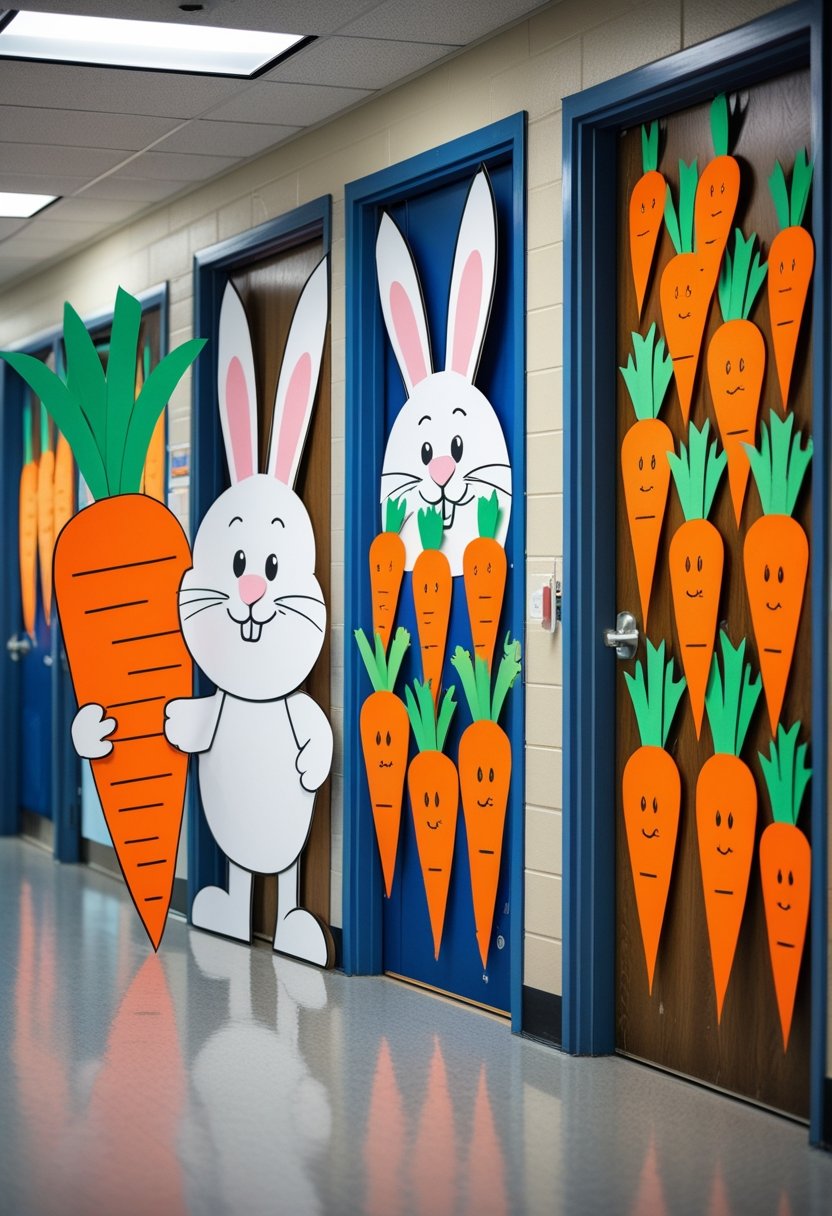
Traditional Easter door decorations often focus on iconic symbols like bunnies and carrots, combining simple shapes with natural elements. These designs highlight clean lines, playful themes, and the inclusion of greenery to create vibrant, welcoming displays.
Crafting Bunny Cutouts
Bunny cutouts serve as a key focal point in many preschool Easter door decoration ideas. They are usually made from sturdy materials like cardstock or foam board for durability.
The shapes are kept simple, featuring rounded ears and a soft outline. Facial details can be added with markers or glued-on eyes to give each bunny character without being overly detailed.
Using white or pastel tones for the bunnies contrasts well against colorful door backgrounds. For added texture, some designs add cotton tail accents or light fur fabric. This keeps the decorations lightweight and child-friendly.
Incorporating Carrot Accents
Carrot accents emphasize Easter themes and add bright pops of orange and green to the door decor. Typically, carrots are cut from colored paper, felt, or lightweight wood.
Large carrot cutouts are often arranged vertically or hung in clusters. Pairing them with bunny figures creates a playful narrative on the door.
For visual interest, using layered paper or painted details on the carrot body—such as ridges or highlights—gives a more realistic appearance while maintaining a simple style. These accents work well around branches, wreaths, or as standalone features.
Creative Use of Greenery
Greenery enhances the classic bunny and carrot designs by bringing natural textures and colors. Leaves or vines are often made from craft paper, silk foliage, or real branches secured tightly to the door.
Adding green elements softens hard edges and connects the whimsical figures to a springtime setting. It frames cutouts and wreaths visually and provides contrast to bright colors like orange and white.
Sometimes, the greenery is arranged to mimic natural growth, supporting elements such as carrots “growing” on branches or bunnies nestled among leaves. This tactile detail elevates the door decorations with subtle realism and depth.
Vibrant Easter Wreaths for Preschool Doors
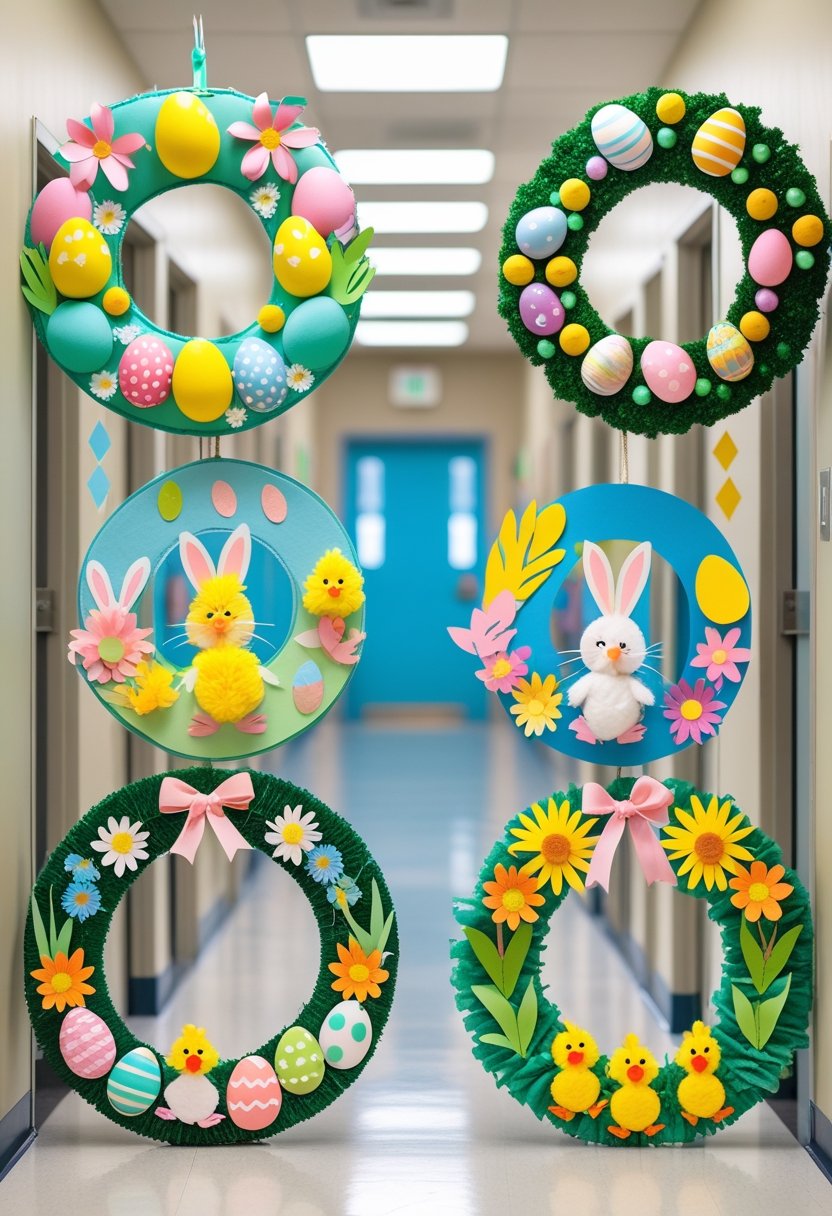
Bright colors, playful shapes, and nature-inspired elements are key to eye-catching Easter wreaths. Using a range of materials from paper flowers to natural twigs allows for designs that are both festive and durable.
These wreaths bring a welcoming, joyful touch to preschool doors, inviting curiosity and celebration.
Bunny-Shaped Floral Wreaths
Bunny-shaped wreaths made from rolled paper flowers offer a three-dimensional, textured look. They typically use vibrant hues like reds, yellows, and purples to keep the design lively and engaging for children.
The bunny outline is clearly defined by the flower arrangement, making it recognizable and playful. Paper flowers also provide durability against weather and handling, ideal for preschool settings.
Such wreaths can be mounted easily and do not require extra embellishments because the floral colors themselves create the visual impact.
Egg-Centric Twig Wreaths
Twig wreaths provide a natural base that contrasts well with colorful Easter decorations. Adding painted Easter eggs, small fresh or faux flowers, and green leaves creates a balanced composition.
A bright yellow bow placed at the top adds a focal point and injects a cheerful tone. The eggs can be real or crafted from lightweight materials, painted in pastel or vibrant colors to stand out.
This style offers a rustic yet festive appearance, perfect for preschool doors where simplicity and recognition matter. It’s also easy to customize with seasonal finds.
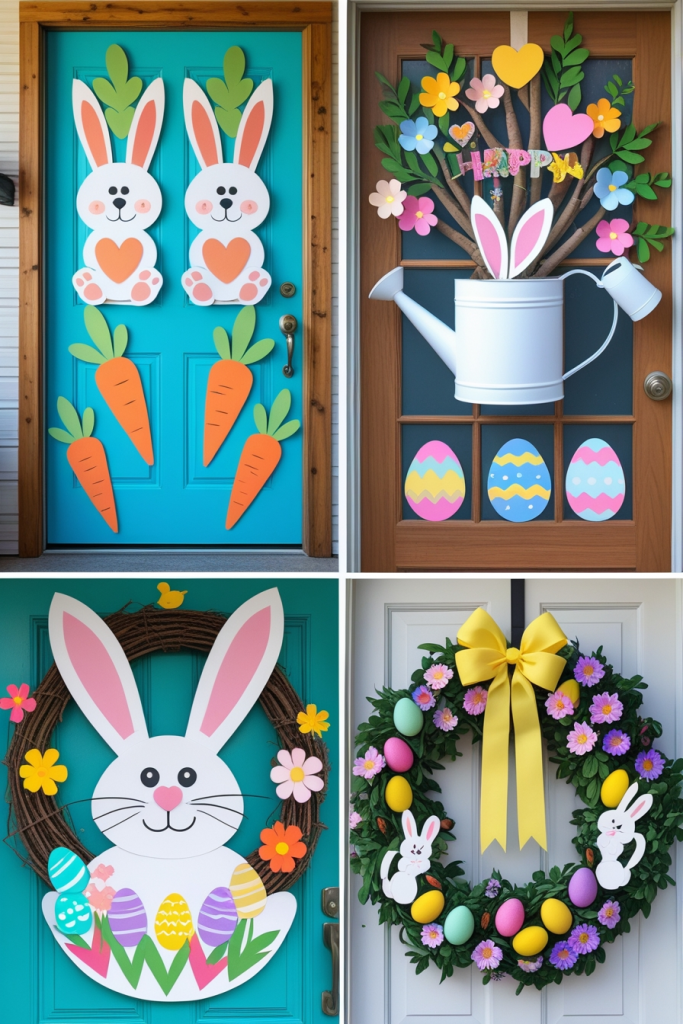
Pastel and Flower Cascade Designs
Wreaths featuring cascading flowers in pastel tones, such as purples and whites, offer elegance while retaining a child-friendly aesthetic. Adding small bunny figurines and pastel-colored eggs tucked among the blooms enhances the springtime theme.
These wreaths often have volume and motion because of the floral cascade, making them visually dynamic. The pastel palette complements a variety of door colors and blends well with adjacent decorations.
Such floral wreaths are ideal for classrooms or entrances that desire a soft, inviting look without overwhelming the space.
Interactive and Collaborative Decoration Ideas
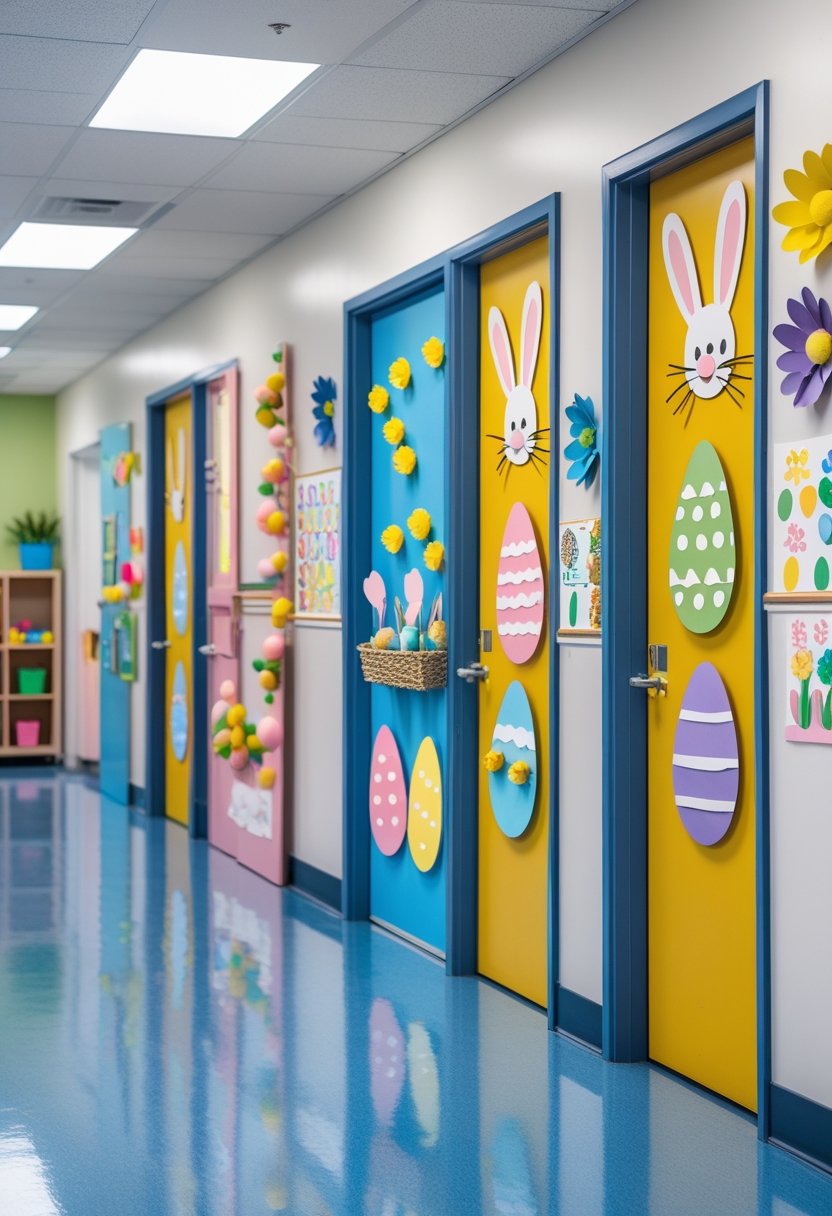
These decoration ideas encourage participation from preschoolers and promote teamwork. They combine simple crafting techniques with colorful visuals that transform classroom doors into vibrant displays. Each project uses accessible materials and allows children to express creativity while contributing to a shared outcome.
Handprint and Paper Plate Crafts
Handprint crafts provide a personal touch to classroom decorations. Children can dip their hands in safe paint and imprint them on paper to create shapes like bunny ears, chicks, or flower petals. These colorful handprints can be arranged on the door to form a large Easter bunny or a spring garden scene.
Paper plates offer versatile bases for creative Easter projects. They can be cut, folded, or painted to become bunny faces, Easter baskets, or blossoms. With glue and craft supplies like cotton balls, pom-poms, and markers, children decorate the plates, which teachers then assemble onto the door for a lively and textured effect.
This hands-on activity supports fine motor skills and fosters excitement as each child sees their contribution displayed as part of the classroom decor.
Giant Collaborative Easter Eggs
Creating large Easter eggs as a group project focuses on teamwork and design coordination. A sizable cardboard or foam board base serves as the canvas, which children decorate piece by piece. They use materials such as colored paper strips, glitter, stickers, and markers to add patterns and details.
Dividing the egg into sections allows each child or small group to customize one part, making the process manageable and inclusive. Once complete, the giant egg becomes a centerpiece on the classroom door, showcasing students’ combined effort.
This project encourages sharing ideas and embracing differences in artistic expression while producing a visually striking and festive door decoration.
Egg Carton and Recycled Projects
Egg cartons provide an eco-friendly base for creative Easter crafts. Preschoolers cut, paint, and assemble carton cups into flowers, caterpillars, or bunnies. Adding googly eyes, pipe cleaners, and glitter transforms simple recycled materials into cheerful decorations.
Recycled paper, bottle caps, and fabric scraps also integrate easily into classroom door projects. They give children an opportunity to explore textures and colors while learning about sustainability. Teachers can guide students in creating mixed-media collages or 3D displays using these supplies.
These projects engage young learners in hands-on crafting and reinforce environmental awareness through practical classroom door decoration ideas.
Creative Themed Approaches to Door Decor
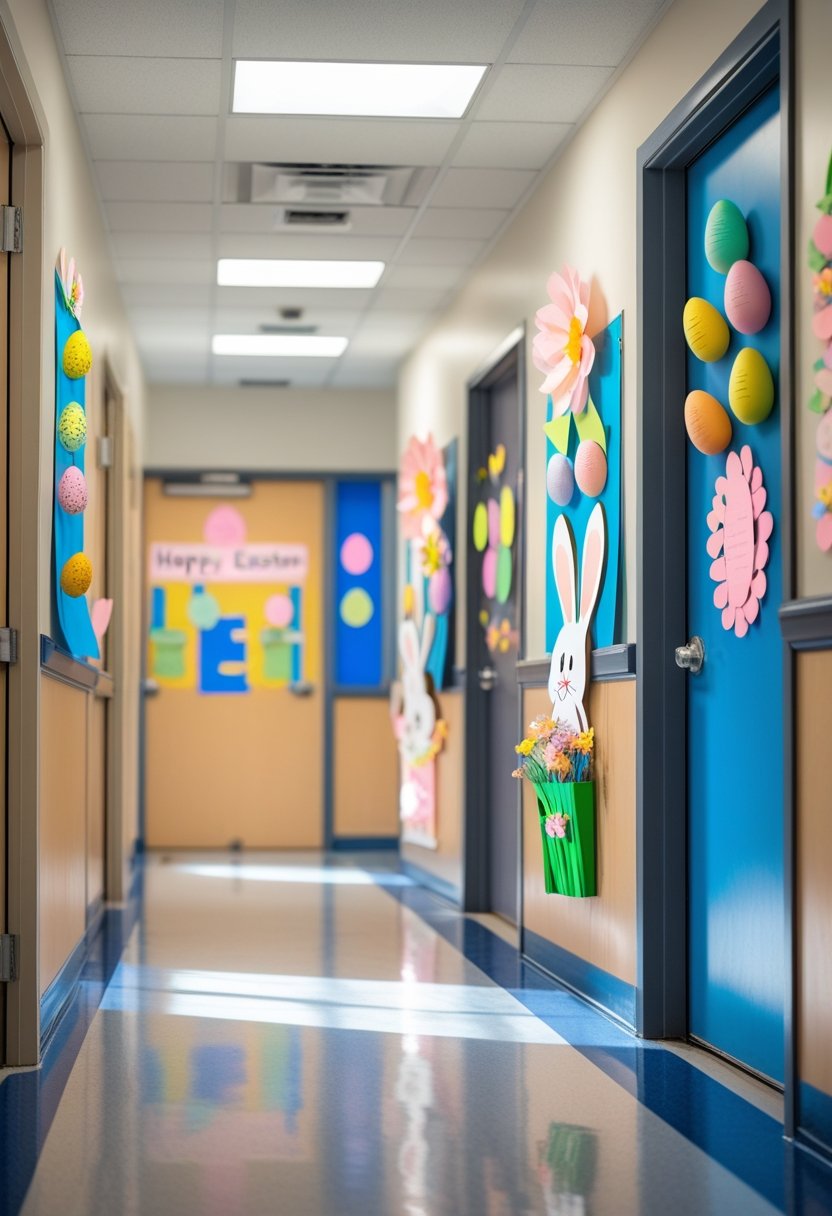
Easter door decor offers a variety of distinct themes that can suit different spaces and preferences. These range from nature-inspired designs to playful scenes and sleek, modern arrangements. Each approach highlights specific elements like color, texture, and imagery to create an inviting and festive atmosphere.
Spring Gardens and Bloom Motifs
This theme emphasizes natural elements like flowers, leaves, and bright greenery. It often features floral wreaths or paper flower arrangements shaped into bunnies or eggs. Green leaves and pastel-colored blooms add freshness and brightness to the overall look.
Incorporating painted Easter eggs or watering cans pouring hearts or flowers enhances the garden feel. These decorations create a soothing and lively backdrop, ideal for preschool classrooms aiming to connect children with the season. The use of natural materials such as twigs or rolled paper flowers adds texture and depth.
Whimsical Wonderland Themes
Whimsical decorations often include cartoonish or oversized characters like smiling bunnies, colorful Easter eggs, and playful birds. This approach uses bold colors and fun shapes to create an energetic and joyful impact.
Banners with seasonal messages like “SPRING” help tie the decor together. The design encourages creativity and interaction, making it perfect for dynamic preschool settings. Elements like branches holding bunny cutouts or large carrot accents add storybook charm without overwhelming the design.
Minimalist and Modern Styles
A minimalist approach focuses on simple shapes, clean lines, and limited color palettes. This style might use just a few cutouts—such as heart and flower shapes—arranged with precision for maximum effect.
Pastel ribbons, subtle wreaths, or small bunny figures create an elegant and understated look. Minimalist Easter door decorations suit classrooms or homes seeking a neat, contemporary feel. This style reduces clutter while maintaining festive appeal through carefully chosen accents.
Safety Tips and Classroom-Friendly Decoration Practices
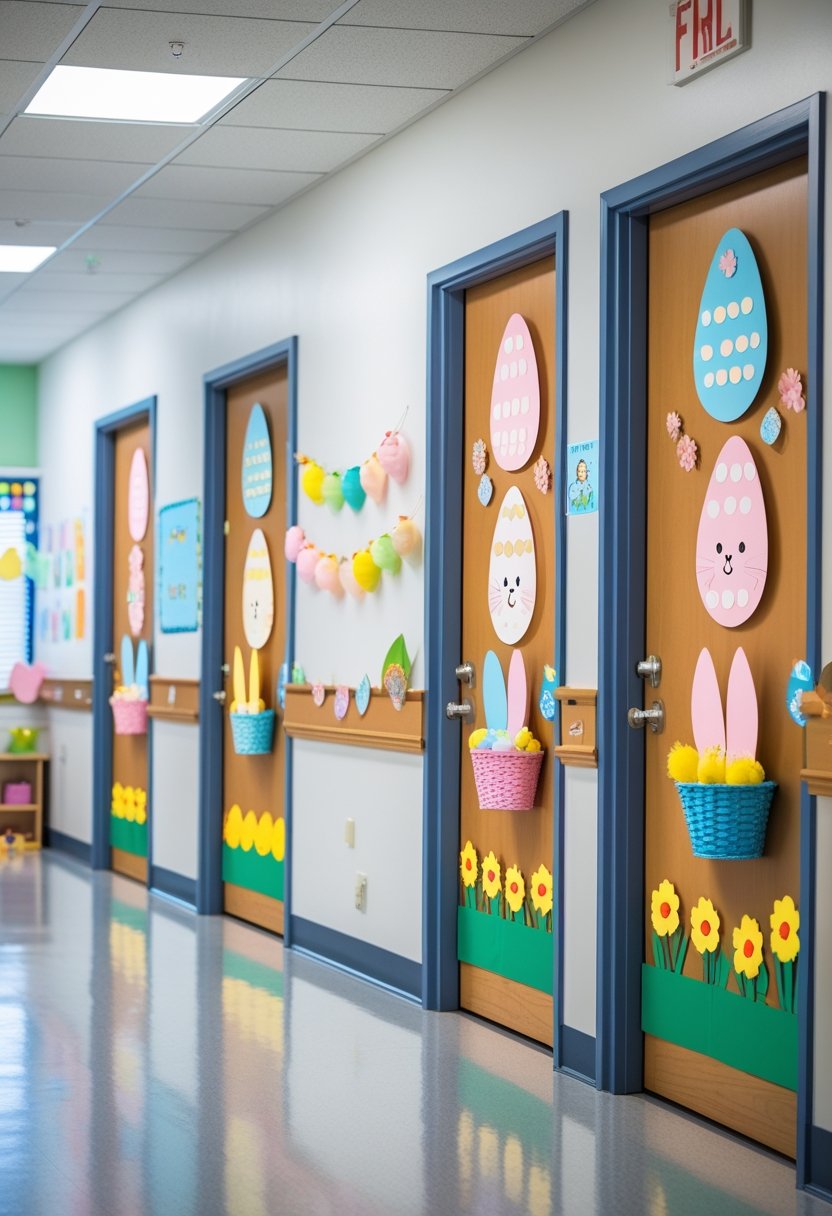
Preschool Easter door decorations must balance creativity with safety and durability. Attention to the materials used, fastening methods, and child involvement ensures a secure and engaging environment.
Ensuring Durability for Little Hands
Decorations should withstand frequent touching and accidental pulling. Using sturdy materials like laminated paper or lightweight foam helps maintain shape and resist tearing.
Secure attachments are essential. Strong tape, reusable adhesive putty, or Velcro strips keep door decor fixed without damage to surfaces. Avoid staples or pins that can pose hazards.
Heavy or fragile items, such as glass or ceramic decorations, are unsuitable. Instead, opt for soft materials or reinforced crafts designed to tolerate rough handling by preschoolers.
Non-Toxic and Safe Craft Supplies
Only non-toxic, child-safe materials should be used for Easter door decorations to avoid potential health risks. Paints, markers, and glues must meet safety standards for preschool use.
Avoid small parts that could be choking hazards, such as tiny beads or loose glitter. Decorations should be large enough to minimize risk while maintaining visual appeal.
Labels indicating safety compliance or “AP Certified” should guide product selection. Water-based and low-odor adhesives and paints are preferred to reduce Fumes in enclosed classroom spaces.
Involving Children in Safe Decorating
Involving preschoolers in decoration activities encourages creativity but requires close adult supervision. Assign simple, low-risk tasks suited to their motor skills.
Use pre-cut shapes and safe tools like blunt scissors. Emphasize hand washing after handling craft supplies to maintain hygiene.
Adults should model safe behavior with adhesives and hanging methods, ensuring children understand boundaries. This also helps build responsibility while keeping decorations secure and safe.


