Rustic Vintage Kitchen with Lush, Nature-Inspired Charm
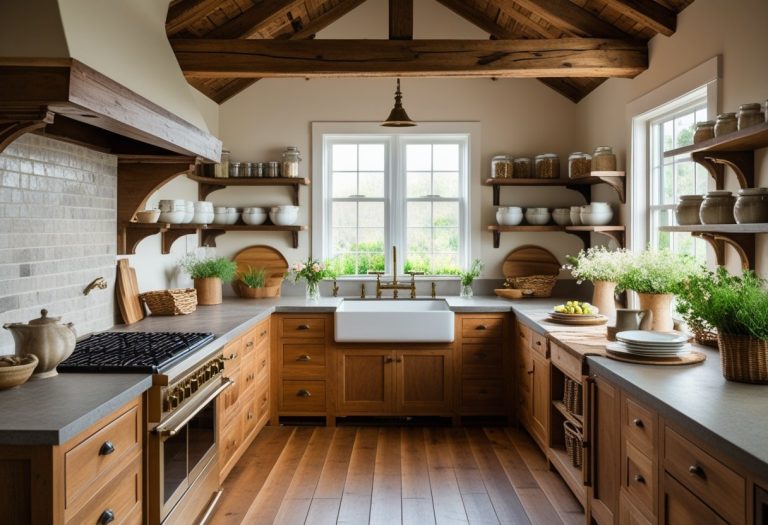
A charming rustic kitchen that blends vintage design with a nature-inspired aesthetic creates a space both inviting and full of character. Featuring weathered teal cabinetry, a black vintage-style oven, and exposed brick walls, the kitchen adds warmth through rich, earthy tones. Natural light floods the room through a large skylight ceiling and tall arched windows, highlighting the abundant greenery that brings freshness and life to the environment.

This kitchen balances timeless vintage charm with organic elements, making it both functional and warm for everyday use. Open shelving displays jars, cookware, and decorative items, enhancing a cozy and lived-in atmosphere. Copper pendant lights above a central wooden island and a patterned rug on the wood floor contribute additional traditional touches that complete the farmhouse or cottagecore style.
Core Elements of a Charming Rustic Kitchen

This kitchen blends vintage design with a strong nature-inspired feel, using specific materials and colors that create a cozy, lived-in atmosphere. Key features include distinctive cabinetry, unique appliances, textured walls, and natural light that highlight the rustic charm and farmhouse aesthetic.
Blending Vintage Design With Nature-Inspired Aesthetics
Combining vintage accents with greenery and natural elements is essential to a rustic kitchen’s appeal. The use of open shelving to display cookware and vintage jars adds authenticity and warmth.
Abundant plants, both hanging and potted, introduce fresh color and life. This interplay between aged materials and living elements creates a balanced, inviting space.
Natural light flooding through large skylights and arched windows enhances the connection to the outdoors, reinforcing the earthy, grounded atmosphere central to rustic kitchen design.
Choosing Weathered Teal Cabinetry and Black Vintage-Style Ovens
Weathered teal cabinetry serves as a distinctive focal point, bringing color while maintaining an aged, rustic look. The distressed finish adds texture and depth, complementing the natural materials throughout the kitchen.
A black vintage-style oven pairs well with the cabinetry to reinforce the farmhouse aesthetic. Its retro design contrasts subtly with the softer tones, grounding the space with a touch of classic durability.
Together, these elements provide both style and functionality, embodying a practical yet charming rustic kitchen design.
Embracing Exposed Brick Walls and Earthy Tones
Exposed brick walls contribute warmth and texture, creating an earthy backdrop central to rustic charm. The natural, reddish-brown hues complement wooden floors and furniture, enhancing the kitchen’s organic feel.
The brick surface offers visual interest without overwhelming other design elements. Its rough texture contrasts with smoother finishes like polished countertops or bright copper fixtures.
This combination highlights traditional farmhouse kitchen characteristics, delivering an authentic and cozy environment that balances history with everyday use.
Maximizing Natural Light and Greenery

This kitchen uses architectural features and plant placement to enhance brightness and organic warmth. Careful design balances sunlight with lush greenery, making the space feel open, inviting, and closely connected to nature.
Installing Large Skylight Ceilings
The large skylight ceiling is a key element for filling the kitchen with natural light. It allows sunlight to flood the space from above, reducing the need for artificial lighting during the day.
The natural light highlights the textures of natural materials like wood and exposed brick. This illumination enhances the room’s warm, earthy tones, emphasizing rustic kitchen ideas.
Skylights should be strategically placed to avoid harsh glare but maximize brightness. In this kitchen, their size and position bring light deep into the room while maintaining a comfortable atmosphere.
Highlighting Tall Arched Windows
Tall arched windows contribute both architectural interest and significant natural light. Their shape adds softness to the rustic design, complementing elements like weathered cabinetry and exposed brick.
These windows frame outdoor views, strengthening the connection between indoor and outdoor environments. They encourage cross-ventilation, improving air flow in the kitchen.
Using unadorned or minimally treated window frames keeps focus on the natural light and the surrounding greenery outside. This approach supports the garden-inspired, cottagecore look.
Incorporating Abundant Cascading and Potted Greenery
Greenery is essential in bringing freshness and life to this rustic kitchen. Cascading plants suspended from ceiling beams or shelves soften hard edges and introduce vertical interest.
Potted plants placed on counters and shelves add layers of texture and color. Choosing diverse species with varying leaf shapes and sizes enhances visual appeal.
Using natural materials like terracotta or wooden planters fits the farmhouse aesthetic. Greenery placed near windows benefits from the natural light, which helps plants thrive and maintains the kitchen’s vibrant, organic atmosphere.
Showcasing Functional and Decorative Features

The kitchen balances practicality with visual appeal through thoughtful storage, carefully chosen decorative items, and ambient touches. These elements work together to enhance the rustic charm while maintaining a functional workspace.
Utilizing Open Shelving for Display
Open shelving in the kitchen serves as both storage and a design feature. It allows easy access to daily items while showcasing a curated collection of cookware and vintage accents. Shelves crafted from reclaimed wood or distressed finishes reinforce the rustic aesthetic.
Positioned near the main prep area, the shelves display functional pieces such as pots, pans, and frequently used utensils. This encourages organization without sacrificing style. The openness also invites natural light to penetrate deeper into the room, contributing to the airy and inviting atmosphere.
Showcasing Jars, Cookware, and Decorative Items
Decorative jars filled with dried herbs, grains, or spices add texture and color to the kitchen. Their strategic arrangement on the shelves balances utility with charm. Cookware, especially items with a patina or vintage look, contributes to the authentic rustic feel.
Accents like enamelware, copper pots, and wooden bowls further complement the space’s nature-inspired tones. Grouping these items intentionally creates focal points while avoiding clutter. The overall effect is a kitchen that forecasts use and life, enriched by carefully selected details.
Creating a Lived-In, Cozy Ambiance
The kitchen’s warm, welcoming atmosphere is enhanced by layering soft elements over solid rustic features. A patterned rug on the wood floor adds comfort and a touch of traditional style, inviting barefoot movement and warmth underfoot.
Copper pendant lights provide focused illumination while doubling as decorative highlights. The presence of greenery, both trailing from high shelves and placed in pots, softens the harder textures like brick and wood. Together, these features craft a space that feels both practical and intimately lived-in.
Curating Materials and Textures for Authenticity
Authenticity in a rustic kitchen comes from carefully choosing materials that echo natural elements and craftsmanship. Combining weathered surfaces with tactile textures creates visual depth and a genuine sense of place.
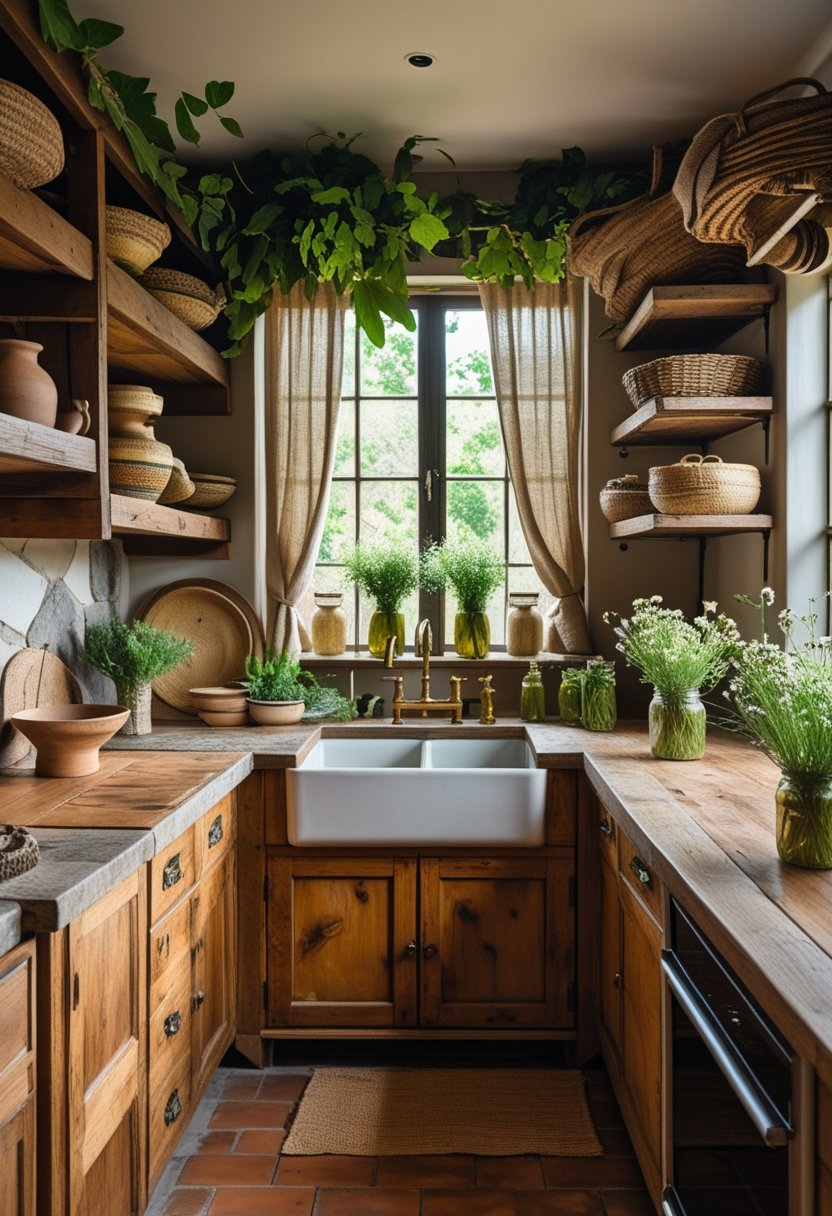
Incorporating Reclaimed Wood and Stone Walls
Reclaimed wood adds history and unique character to a kitchen. Its worn grains and natural imperfections bring warmth and texture to cabinetry, shelving, or flooring. Using reclaimed wood reduces environmental impact while offering a story behind each piece.
Stone walls complement reclaimed wood by introducing rugged, organic surfaces. Exposed stone anchors the room and injects earthy tones that contrast well with painted cabinetry. Rough stone textures highlight handcrafted details, reinforcing the kitchen’s rustic charm. Together, these materials build a tactile, grounded foundation for the space.
Selecting Butcher Block Countertops
Butcher block countertops provide practical durability with a natural aesthetic. The smooth wood surface is ideal for food preparation while contributing warmth through rich wood tones.
Choosing wide, thick wood strips enhances the look of handcrafted quality. Proper sealing is essential to protect against moisture and stains without compromising the material’s natural feel. Butcher blocks often age gracefully, softening over time and deepening color, which complements the kitchen’s vintage style.
Highlighting Exposed Beams
Exposed beams introduce structural interest and a sense of history. Leaving wood beams visible emphasizes natural materials and craftsmanship.
Beams can be left raw, or lightly treated to preserve their texture and grain. Their warmth contrasts with cleaner lines like cabinetry edges or metal fixtures, creating depth in the room. Visibly aged beams reinforce the rustic kitchen’s cozy cottage atmosphere while supporting the design’s focus on organic authenticity.
Lighting, Hardware, and Focal Points

This kitchen’s lighting and hardware create a strong rustic character while maintaining functionality. Key elements like copper and iron fixtures enhance the vintage feel. Strategic use of accent rugs and a wooden island anchor the space and add texture and warmth.
Choosing Copper Pendant Lights
Copper pendant lights bring warmth and a subtle glow that complements the teal cabinetry and exposed brick. Their metallic sheen reflects natural light from the skylight and windows, creating a balanced brightness without overpowering the room.
The color of copper contrasts softly with darker elements like the black vintage-style oven. These lights serve as a practical illumination source directly above the wooden island, making tasks easier while reinforcing the rustic charm. Choosing pendant lights with simple, clean lines ensures they harmonize with both vintage and natural elements.
Integrating Iron Light Fixtures for Rustic Appeal
Iron light fixtures add strength and an authentic rustic edge to the kitchen. Their dark, matte finish pairs well with other dark accents like exposed hardware or black oven details.
Common iron fixtures include wrought iron chandeliers or sconces, which add an old-world feel. Iron’s durability makes it ideal for spaces that balance aesthetics with heavy use. Combining iron with copper lighting introduces layered textures without clashing, keeping the rustic design cohesive.
Accent Rugs and Wooden Islands
An accent rug featuring traditional patterns softens the wood floor’s hardness and adds visual interest. It anchors the central island, defining the workspace and injecting color and comfort underfoot.
The wooden island itself acts as a focal point, combining storage and preparation space with rustic appeal. Its natural wood grain and finish emphasize the organic theme. Together, the rug and island create a practical, inviting heart for the kitchen, reinforcing the cottagecore and farmhouse aesthetics.
Balancing Modern Functionality With Rustic Warmth
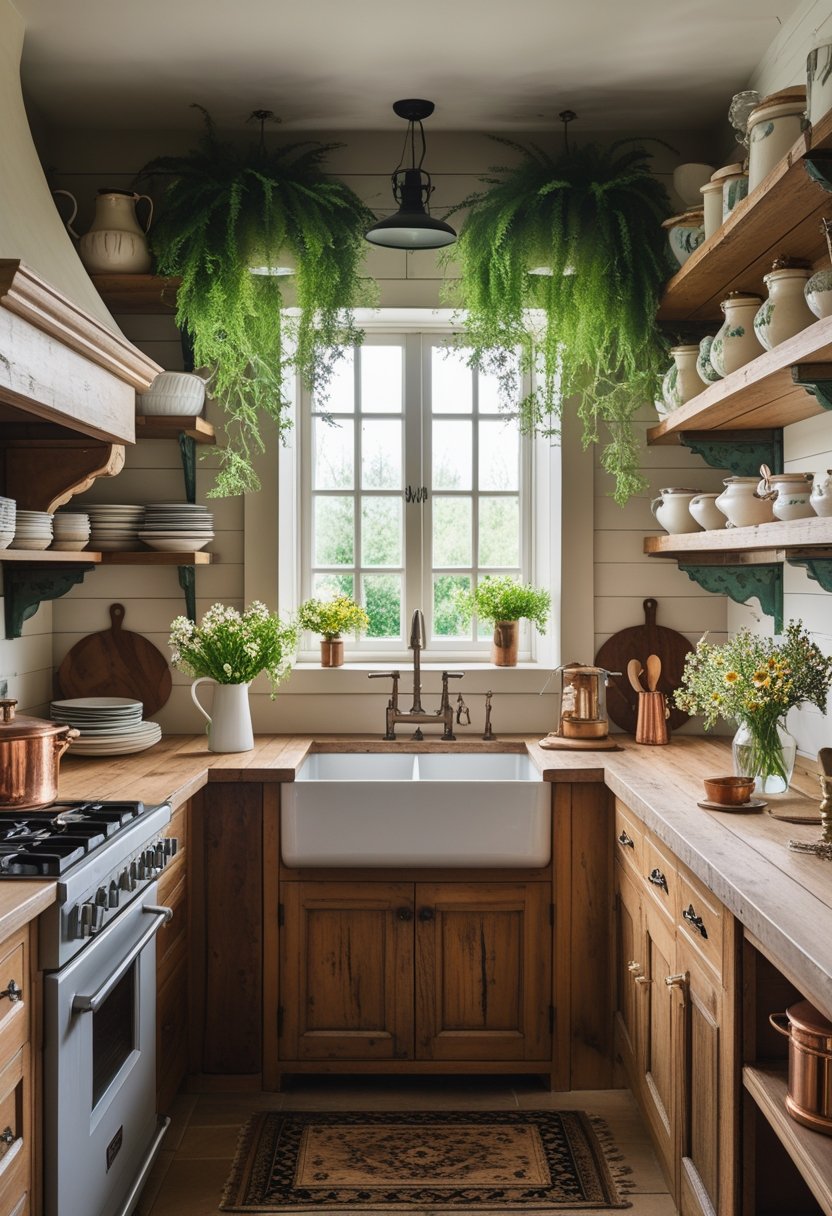
The design integrates practical elements like durable appliances and easy-to-clean surfaces without sacrificing the inviting, homey feel. Thoughtful choices in materials and lighting create a kitchen that works well for daily use while showcasing rustic charm.
Combining Stainless Steel Appliances With Traditional Finishes
Stainless steel appliances bring efficiency and a sleek look to a rustic kitchen but must be balanced to avoid feeling too industrial. Placing them alongside weathered cabinetry or exposed brick walls softens their modern edge.
Matte or brushed finishes on appliances contribute warmth without compromising functionality. Integrating a black vintage-style oven can serve as a focal point that links the modern with the traditional. Positioning appliances to maintain smooth workflow enhances usability, especially around the central island.
Modern Backsplash Ideas for Rustic Kitchens
Backsplashes in rustic kitchens can both protect walls and add visual texture. Popular choices include natural stone tiles, distressed wood panels, or subway tiles with a matte glaze. These options harmonize with exposed brick and wooden elements.
Using neutral or earthy tones like cream, beige, or soft gray helps maintain warmth. Installing easy-to-clean surfaces behind cooking areas ensures durability while fitting the farmhouse or cottagecore style. Simple grout lines and minimalistic patterns prevent the backsplash from overpowering other rustic features.
Maintaining Farmhouse and Cottagecore Coziness
To keep a farmhouse or cottagecore kitchen cozy, layering natural textures is essential. This includes wooden beams, soft textiles, and live plants placed around the room. Open shelving displaying ceramic jars, cookware, and handmade décor adds a personal, lived-in touch.
Lighting plays a key role: copper pendant lights and warm under-cabinet illumination create inviting pockets of light. Rugs with traditional patterns on wooden floors introduce softness and visual interest without disrupting the rustic vibe. This balance retains welcoming comfort while supporting functional living.