
15 Modern Living Room Entertainment Setup Ideas
Contemporary living room entertainment setups blend modern aesthetics with functional design to create inviting, stylish spaces. This collection of twenty designs highlights clean lines, balanced symmetry, and warm lighting that together establish a calm and elegant atmosphere.

Key features include a large flat-screen TV mounted on a wall with vertical wooden slats and integrated warm LED backlighting, providing depth and ambiance while maintaining a minimalist look. The dark-toned media unit beneath the TV offers a practical combination of open shelves and closed cabinets, perfect for storage and display. Decorative accents like candles, vases, figurines, and potted plants soften the space and add personality without clutter.
Additional elements such as a glass-front display cabinet and a discreet fish tank introduce subtle visual interest and functionality. The light gray tiled floor with a wood grain texture reinforces the modern, minimalist feel, making these setups ideal for those who appreciate refined simplicity with thoughtful details.
Key Elements of a Contemporary Living Room Entertainment Setup

A well-designed living room entertainment center balances style, storage, and ambiance. Attention to materials, lighting, and layout creates a clean and inviting space suited for relaxation and display.
Modern Entertainment Center as a Focal Point
The entertainment center anchors the living room with a large flat-screen TV wall-mounted against vertical wooden slats. These slats incorporate warm LED backlighting, adding depth without overpowering the space.
Below the TV, a dark-toned media unit offers both open shelving and closed cabinets. This combination allows for practical storage of electronics and cables, while open shelves display decorative items such as candles, vases, and potted flowers. This setup integrates aesthetics with function, creating a stylish yet organized living room entertainment center.
Role of Symmetry and Clean Lines
Symmetry plays a critical role in refining the look of the entertainment area. Matching elements on either side of the TV create balance, such as a glass-front display cabinet opposing open shelves. This cabinet can house collectibles or even a carefully placed fish tank, adding subtle life to the room.
Clean, straight lines dominate the design, reducing visual clutter and reinforcing modernity. The minimalist décor complements this clarity, focusing on a few personalized accents without overwhelming the senses. This approach highlights the entertainment center’s dual role as both a technological hub and a decorative focal point.
Impact of Light Gray Wood Grain Tile Flooring
The choice of light gray tile flooring with a wood grain pattern enhances the room’s modern aesthetic. The floor’s subtle texture introduces warmth and organic appeal while maintaining minimalist ideals.
Light colors help make the space feel open and airy, contrasting effectively with the darker tones of the entertainment unit. Additionally, the flooring’s durability and ease of maintenance suit the functional demands of a living room entertainment area. It supports a clean, cohesive environment by visually connecting furniture and décor.
TV Wall Design: Wooden Slats and Integrated LED Lighting

This design combines vertical wooden slats with carefully placed warm LED lighting to create a TV wall that adds depth and character without overpowering the space. The use of wood and light makes the entertainment area both functional and visually appealing, while maintaining clean lines and a modern aesthetic.
Vertical Slatted Wood Panels for Depth
Vertical slatted wood panels serve as a textured backdrop for the TV, breaking the monotony of a plain wall. The panels, often made from light-toned wood like oak, introduce natural warmth and subtle visual interest without clutter.
Spacing between the slats is kept consistent to preserve symmetry and neatness. This vertical emphasis draws the eye upward, enhancing the room’s height and creating a sense of spaciousness.
The panels also act as a subtle frame around the screen, helping the TV blend seamlessly into the living area. This approach balances style with the necessity for a clean, organized entertainment unit.
Warm LED Backlighting Techniques
LED backlighting behind the wooden slats uses a warm color temperature, typically around 2700K to 3000K, to add an inviting glow. This lighting creates depth by casting soft shadows between the slats, emphasizing their 3D effect.
The LEDs are installed discreetly along the edges or behind the panels, so the source remains hidden. This indirect light reduces eye strain when watching TV and enhances the atmosphere without being distracting.
Smart dimming options or adjustable brightness controls allow users to tailor the ambiance for different occasions. This makes the lighting both practical for viewing and effective at setting mood.
Balancing Ambiance and Functionality
The integration of vertical slats and LED lighting works hand-in-hand with the floating media console below the TV. The dark-toned media unit offers a sleek contrast to the lighter wood, featuring open shelves for decor and closed cabinets for storage.
Decorative accents on the shelves add warmth and personality without overcrowding the setup. A glass-front display cabinet positioned to the side echoes the clean lines and symmetry, while also housing additional décor or practical items like a fish tank.
The combination ensures the space remains uncluttered, maintaining focus on the TV wall but supporting daily living needs with ample, organized storage and stylish presentation.
Modern Media Units: Storage, Display, and Functionality

Modern media units combine aesthetics with practicality, supporting a clean and organized living room. They incorporate a mix of open and closed storage to balance display and concealment. Additionally, effective cable management enhances the sleek appearance and ensures easy access to electronic devices.
Sleek Dark-Toned Media Consoles
Dark-toned media consoles create a strong visual anchor beneath a large TV. Their smooth surfaces and matte or semi-gloss finishes contribute to a polished, sophisticated look. This type of console often uses materials like wood veneer or laminate for durability and ease of maintenance.
The dark color palette contrasts well with lighter flooring or walls, emphasizing the entertainment area. Typical designs feature minimalist hardware or hidden handles to maintain clean lines. The console size should fit proportionally with the TV, providing enough surface area for decor without overcrowding.
Designing Open Shelves and Closed Cabinets
A balance between open shelves and closed cabinets optimizes both display and storage. Open shelves showcase decorative items such as candles, vases, or books, adding personality. They also provide accessible space for frequently used electronics or media components.
Closed cabinets offer concealed storage to keep clutter away, especially for items like remotes, cables, or DVDs. Designs often feature soft-close doors or push-to-open mechanisms for smooth functionality. Arranging shelves and cabinets symmetrically reinforces modern clean-line aesthetics.
Optimizing Storage Solutions
Effective storage solutions within a media unit address both organization and versatility. Adjustable shelves accommodate electronics of different sizes, while drawers can store smaller accessories out of sight. Compartments designed for specific devices maintain order and prevent mismatched cables or clutter.
Choosing modular or customizable units allows homeowners to tailor storage to their needs. Integration of decorative elements within storage spaces can enhance appeal without sacrificing function. Prioritizing storage behind doors or inside drawers keeps the visible space tidy.
Cable Management Systems
Cable management systems are essential to maintain a streamlined look in modern entertainment setups. They hide tangled wires and allow for easy connection between devices. Common solutions include built-in cable channels, grommets, and clips located at the back of media units.
Proper cable routing prevents dust accumulation and reduces the risk of accidental disconnections. It also simplifies cleaning and maintenance around the TV stand area. Many media consoles now incorporate discreet power strips or USB charging ports to centralize connectivity within the unit.
Decorative Styling for Personalization and Warmth
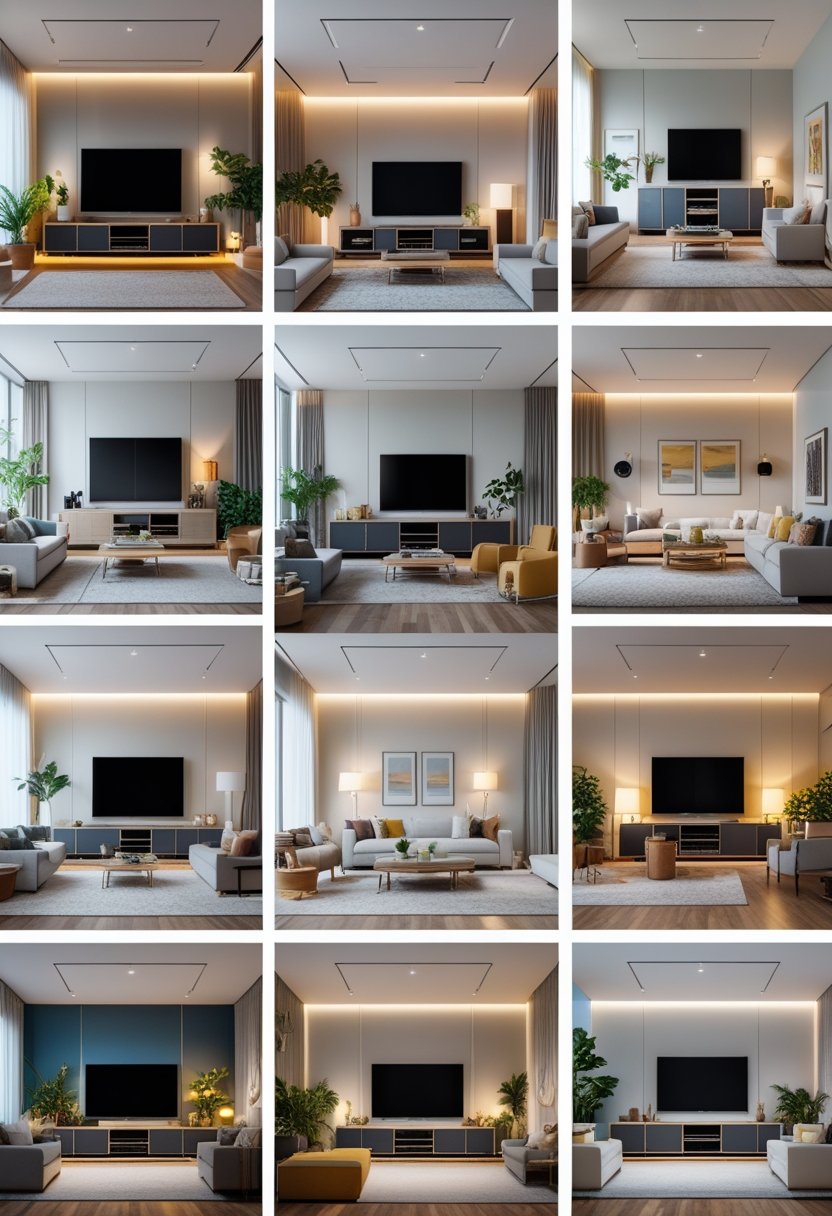
Personal touches bring life and warmth to a clean, modern living room. Carefully chosen decorative objects and natural elements create an inviting atmosphere without disrupting the minimalist style. Thoughtful placement on shelves and cabinets supports both functionality and aesthetics.
Incorporating Candles, Vases, and Figurines
Candles add subtle illumination and a cozy mood when placed on open shelving or the media unit. Opt for simple, unscented varieties in neutral colors to maintain the clean aesthetic.
Vases should have sleek, modern shapes and come in muted tones or transparent glass to complement the dark media unit. These serve as focal points without overwhelming the space.
Small figurines bring personality and interest. Select minimalist or geometric designs that align with the room’s contemporary theme. Grouping items in odd numbers can create a visually pleasing arrangement on shelves.
Styling with Potted Flowers and Greenery
Potted flowers and greenery soften the structured lines of the entertainment area. Choose low-maintenance plants with compact foliage for easy care and to avoid clutter.
Place plants in understated pots that coordinate with the overall color scheme—matte or ceramic finishes in gray or earth tones work well. They can sit on floating shelves or on the media unit, breaking up linear lines with organic shape and color.
The addition of greenery also balances the technological elements, making the space feel breathable and inviting without compromising its sleek appearance.
Using Woven Baskets for Texture
Woven baskets introduce natural texture that contrasts with smooth surfaces like tiled floors and glass cabinets. Their tactile quality enriches the sensory experience in the room.
They work well on lower shelves of the media unit as storage for electronics, remotes, or magazines, keeping clutter out of sight while contributing style. Choose baskets in neutral shades such as beige, gray, or black that coordinate with the room’s palette.
This functional decorative solution enhances warmth while supporting the clean and efficient layout.
Arranging Decorative Objects for Visual Balance
Visual balance is key in a contemporary setup, especially with multiple decor pieces on display. Arrange objects asymmetrically but maintain a balance of size, shape, and height to avoid overcrowding.
Group smaller items like candles and figurines with a taller vase or plant to create layered interest. Leave breathing room to preserve the minimalist feel, especially on floating shelves.
Consider repetition of colors or materials across shelves to unify the design. This strategy keeps the space orderly, elegant, and thoughtfully styled.
Showcasing Collections: Display Cabinets, Fish Tank, and Accent Pieces

This living room setup balances functionality and style by combining carefully curated display pieces with practical storage. The installation highlights a sophisticated blend of glass-front display cabinets, dynamic aquatic elements, and strategically placed lighting to emphasize collection pieces and decorations.
Glass-Front Display Cabinets as Showpieces
Glass-front display cabinets serve as a focal point by presenting decorative items clearly while protecting them from dust. These cabinets often incorporate open shelving and closed storage below, allowing for organization of everyday items out of sight.
In this design, the cabinet showcases candles, vases, and small figurines arranged to create variety in height and texture. The transparency of the glass fronts makes the display feel open and inviting without cluttering the space.
The integration of warm lighting inside the cabinet subtly enhances the visibility of the items and adds to the ambient lighting of the room. This feature also ties the cabinet visually to the media unit’s LED backlighting, maintaining harmony.
Integrating a Fish Tank for Visual Interest
The fish tank placed adjacent to the display cabinet introduces motion and a natural element to the room’s modern decor. It functions both as an aesthetic accent and a relaxing visual feature, catching light in a way that contrasts with the structured shelving.
Selecting a tank with clean lines and minimal framing supports the room’s sleek, minimalist style. Its proximity to the cabinet allows decorative objects and the aquatic life to complement each other, creating a layered display effect.
Maintenance considerations include ensuring the tank does not overpower or clutter the display area, keeping the focus balanced. The fish tank adds a dynamic, living element that breaks up the linearity of the media units and cabinetry.
Accent Lighting for Display Items
Accent lighting is critical in creating depth and focus within an entertainment center setup. Here, LED strips are installed behind the vertical wooden slats and inside the display cabinet, producing soft, warm illumination that enhances textures and highlights decor.
The lighting uses a warm color temperature to contrast the cool gray tones of the tiled floor and dark media unit. This choice helps make decorative pieces more prominent without overwhelming the viewer.
Small spotlights or LED puck lights can be added within shelves to highlight specific objects, such as a favorite figurine or a potted flower. Properly layered lighting increases visual interest and maintains the room’s clean, elegant aesthetic.
Contemporary Variations and Additional Features
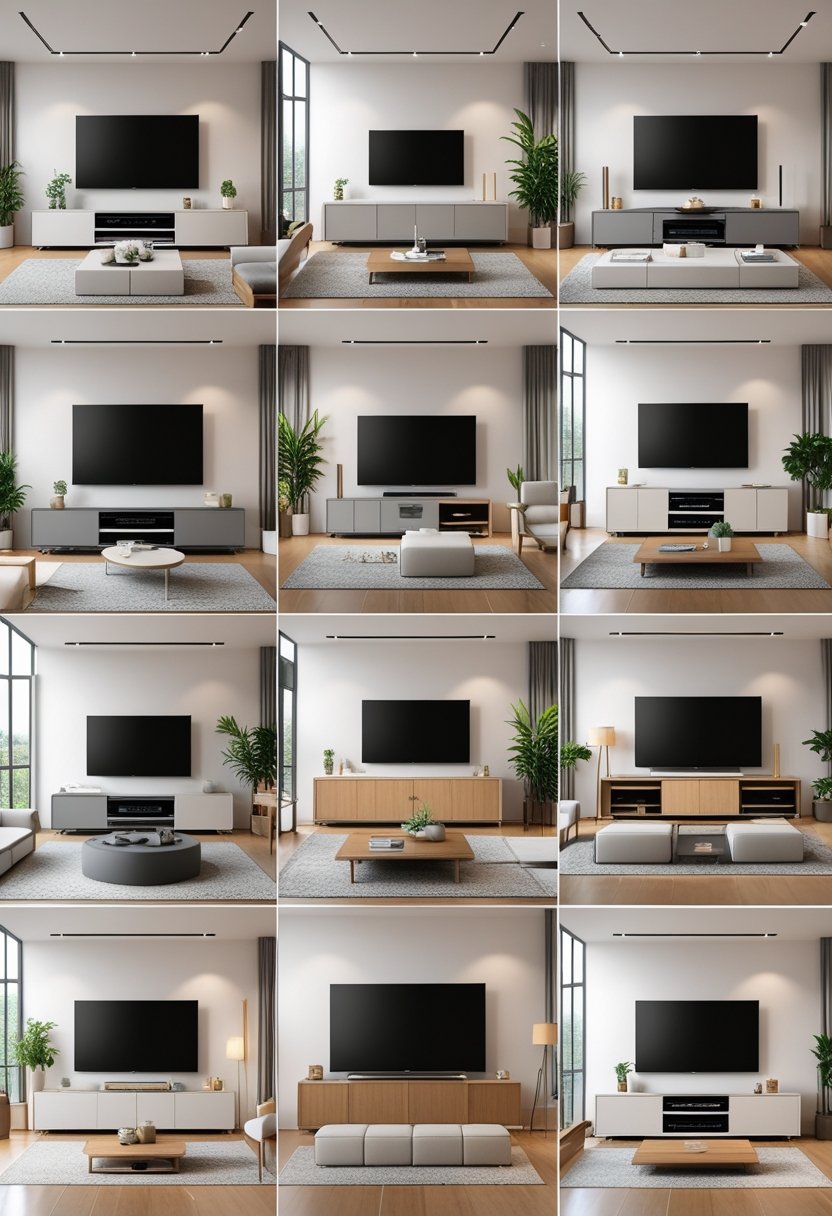
Contemporary living room setups benefit from thoughtful integration of versatile elements that enhance style and function. Strategic choices in lighting, shelving, materials, and furniture offer a balance between aesthetics and practicality.
Incorporating Electric Fireplaces
Electric fireplaces add warmth and ambiance without the complexity of traditional fireplaces. They fit seamlessly into modern media walls, often placed beneath the TV or within a media console.
This feature typically provides adjustable flame effects and heat settings, contributing both visual appeal and comfort. It supports the clean lines of contemporary design by eliminating bulky chimney structures.
Electric fireplaces often come with slim profiles, allowing installation in spaces with limited depth. Their safe operation and low maintenance make them suitable for apartments or homes where gas or wood fireplaces are not feasible.
Exploring Floating Shelves and Consoles
Floating shelves are key to maintaining an uncluttered look, promoting the sense of open space. They support decorative accents like candles, vases, or artwork while keeping surfaces clear.
A floating media console combines storage and display without overwhelming the room’s architecture. It keeps cables hidden and allows for easy cleaning underneath.
Both enhance symmetry and minimalism. They are often crafted from wood or metal, finished in neutral tones to blend with surrounding decor.
Mixing Materials and Finishes
Blending materials such as wood, glass, metal, and stone creates tactile and visual contrast. For example, a wall with vertical wooden slats and integrated LED lighting contrasts well against a sleek, dark-toned media unit.
Glass-front cabinets add gloss and transparency, softening heavier, solid finishes. Mixing matte and glossy surfaces gives depth without clutter.
Choosing finishes that complement the tiled floor or upholstery ensures cohesiveness, resulting in an integrated, elegant presentation.
Freestanding vs. Built-in Entertainment Centers
Freestanding entertainment centers offer flexibility in arrangement and style variety. They can be swapped out or moved to suit evolving needs but may occupy more floor space.
Built-in units maximize use of available wall space, creating a seamless and custom look. They often include integrated storage and display zones, maintaining clean lines and reducing visual noise.
Each option affects room flow differently. Built-ins tend to suit permanent layouts, while freestanding pieces accommodate frequent changes or rentals.


